Sunday of Orthodoxy


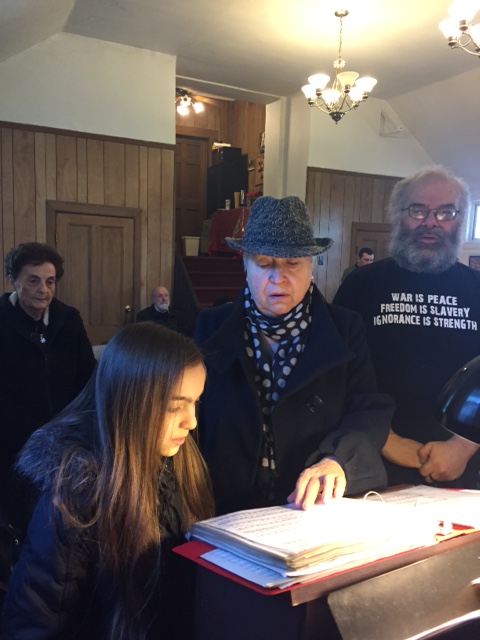
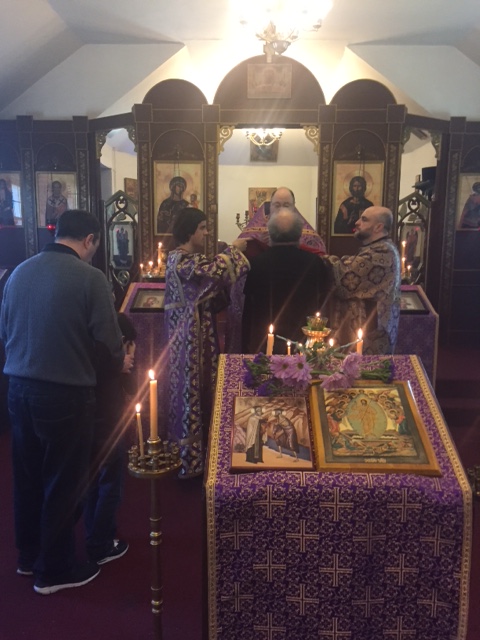
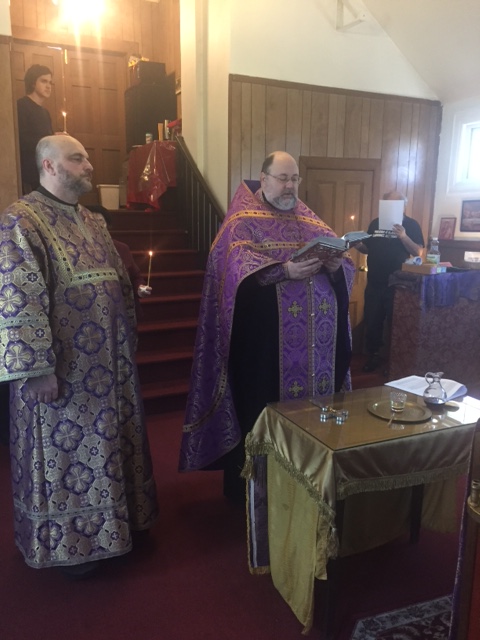
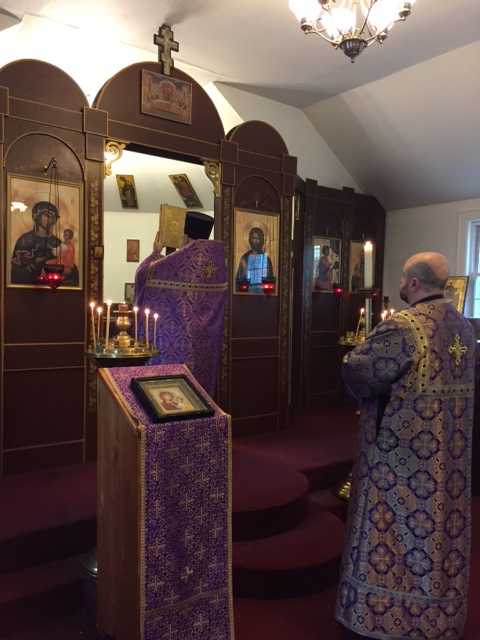
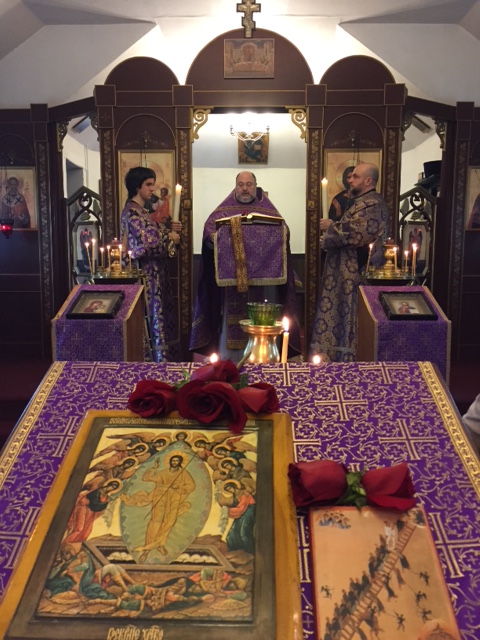
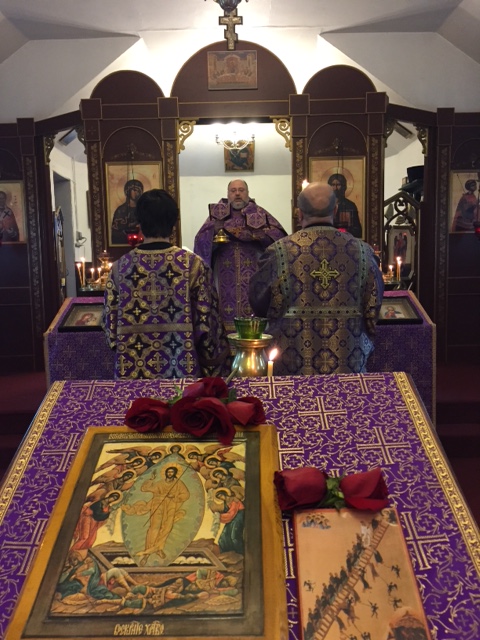
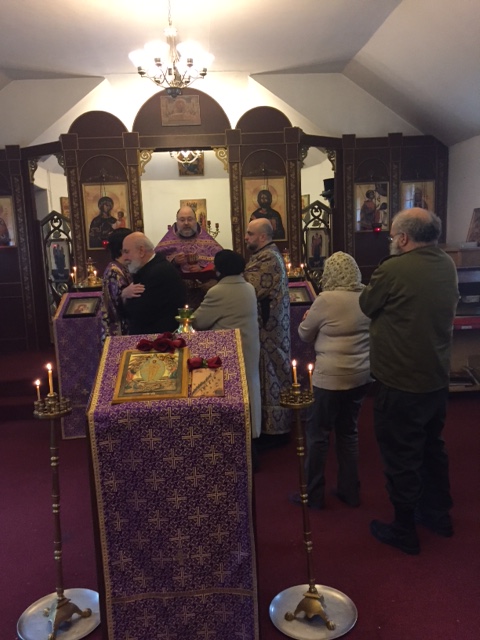
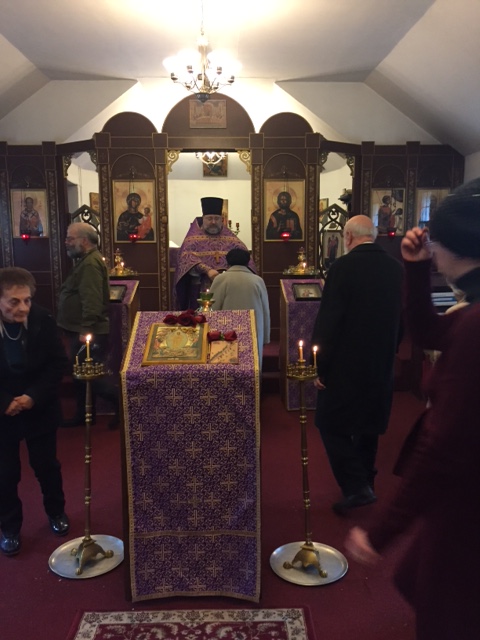
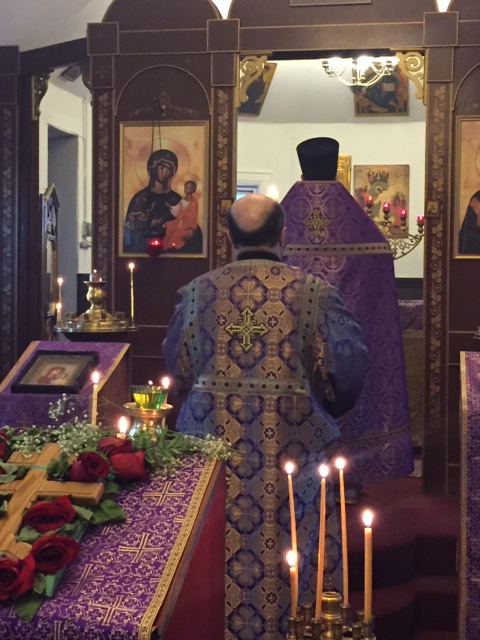
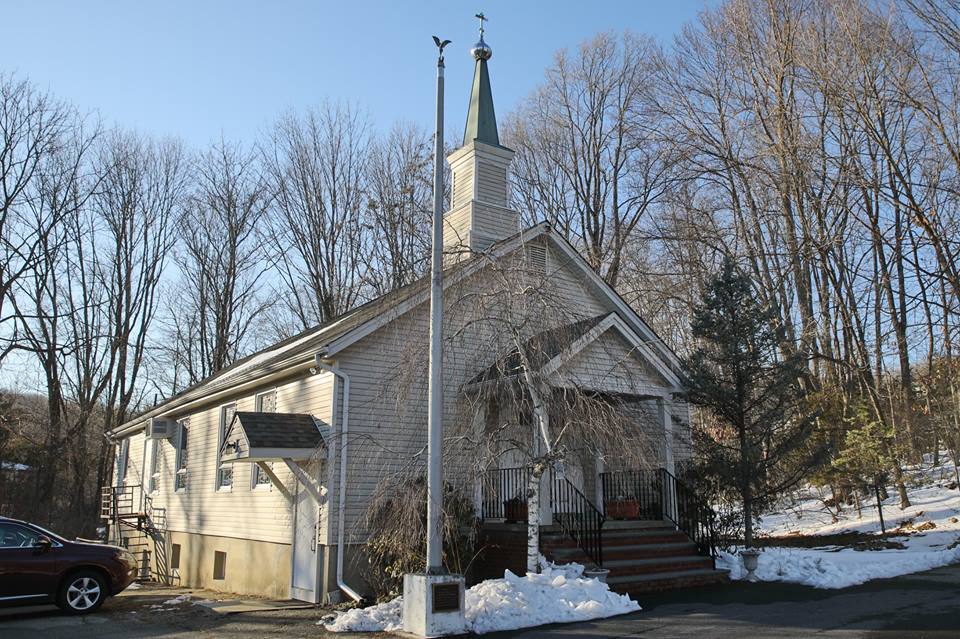
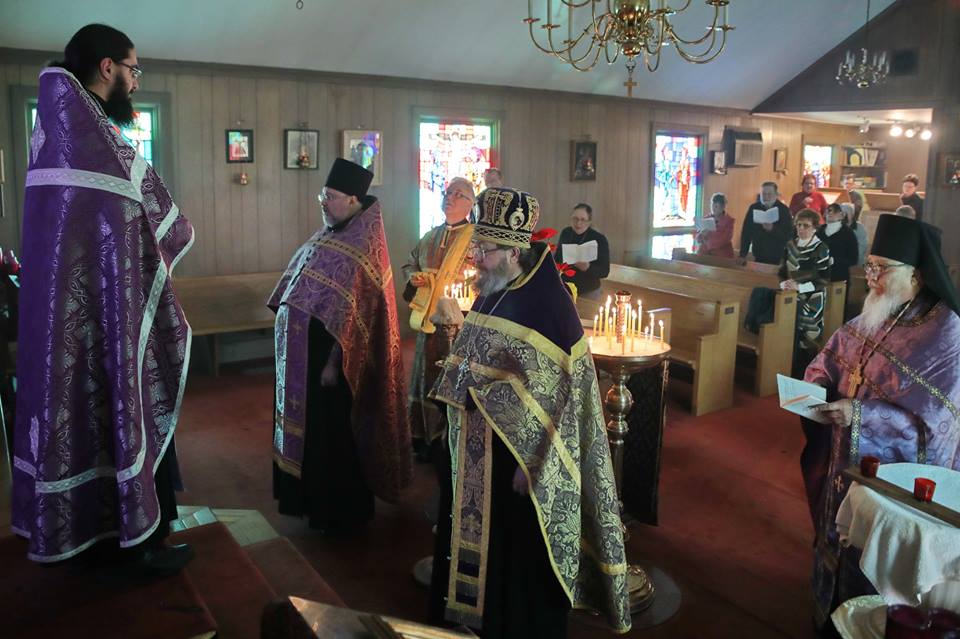
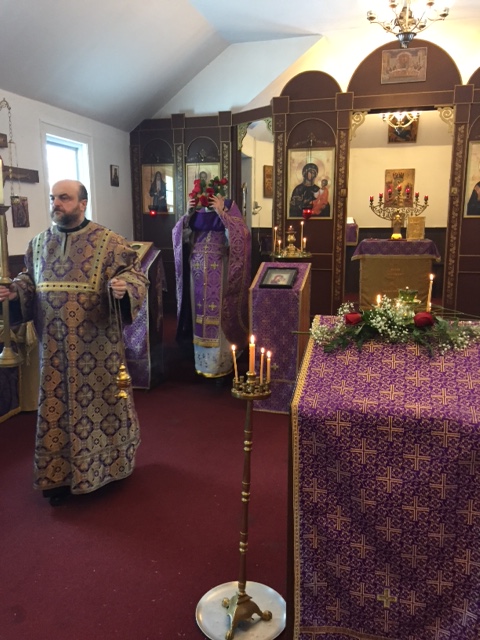
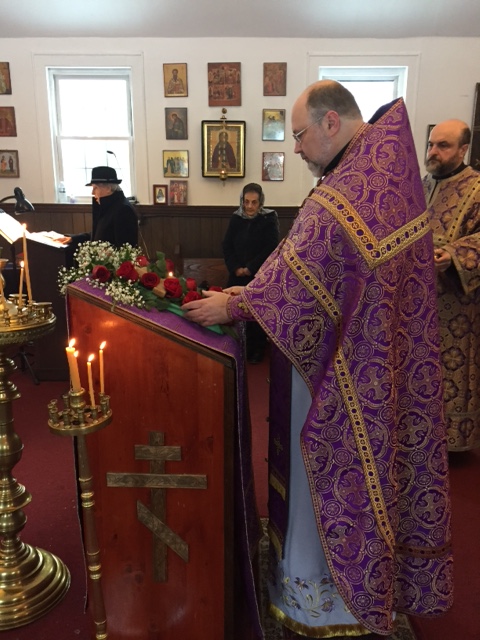
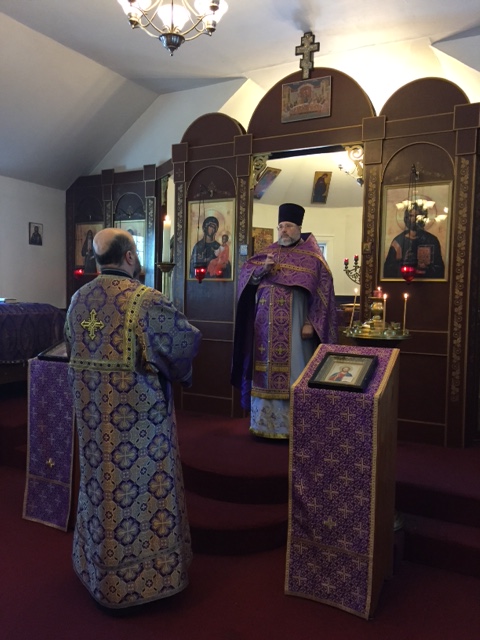
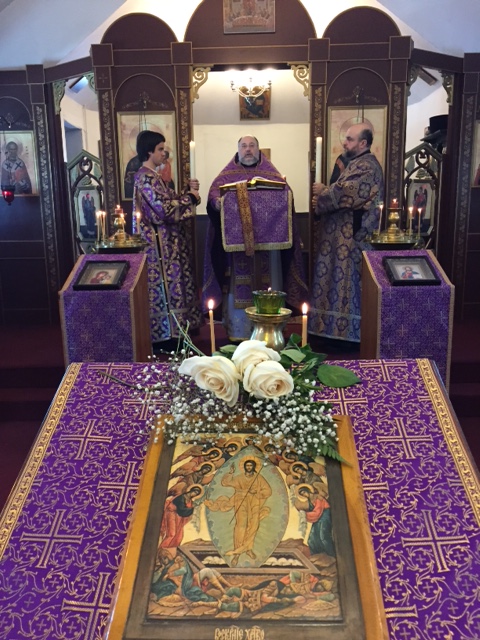
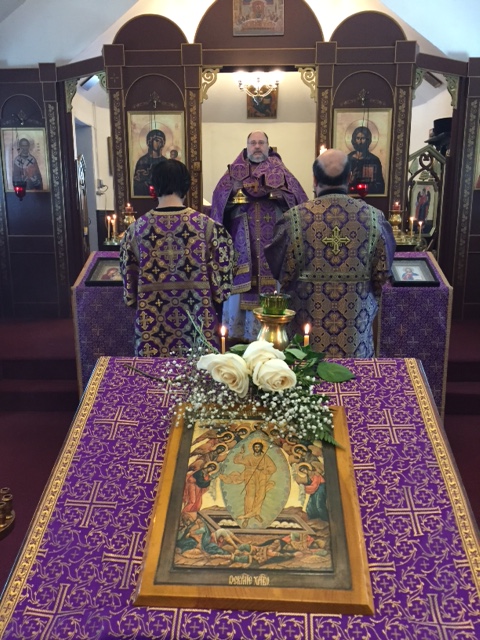
On March 5 the Church celebrated the First Sunday of Lent, also known as Sunday of Orthodoxy. On that occasion we had a beautiful celebration at St. George Church. Our Rector, Archpriest Igor Tarasov served the Divine Liturgy of St. Basil. After the Gospel lesson he preached a homily in Russian.

In his homily the Rector pointed out that if we consider Lent to be a symbolic journey of returning to paradise, the initial stage of that journey is the first week of Lent. It is known for a strict fasting and repentance. Now when that first week is over, on the First Sunday of Lent we may take some rest and see where are now spiritually. First of all, we should realize that God is always with us. We may not see or feel His presence but He is with us always. In today’s Gospel lesson we heard about the encounter of our Jesus Christ with one of His future disciples, Nathanael. Nathanael suddenly believed that Jesus is the Son of God when Christ told him that He saw Nathanael when he was under the fig tree (Jn. 1, 48-49). We do not know exactly what was going on when Nathanael was under that fig tree, but it is certain that being there Nathanael had to experience some very personal and intimate moment. He thought that he was there alone. But God saw Him; God was there with him. This is why Nathanael believed that Jesus is the Son of God. And this why Jesus being God and knowing Nathanael’s inner thoughts could say about him that he is “an Israelite indeed in whom there is no deceit” (Jn. 1, 47).
Thus, another important lesson for us today is to be a person with no deceit, a good person with no evil thoughts and evil deeds. Only being such a person we could return to paradise, to enter the Kingdom of heaven.
However, we may say that all of us are sinful and we are unable to live this life and avoid being evil. But the Lord is with us even in this situation. He does not turn away from a sinner. He gives us an opportunity to repent and to live a pious life. And He does it through the Orthodox faith the triumph of which we celebrate today. God leads us to eternal life through His Holy Orthodox Church and gives us guidance, so we may not deviate from the right way. Therefore, the third and final lesson of today’s Sunday is to adhere to the Orthodox faith. Only through that true faith we will be able to accomplish our journey back to the Kingdom of heaven, to God’s paradise. Then the prophetic words of our Savior which we heard in today’s Gospel will be fulfilled: “Most assuredly, I say to you, hereafteryou shall see heaven open, and the angels of God ascending and descending upon the Son of Man” (Jn. 1, 51).

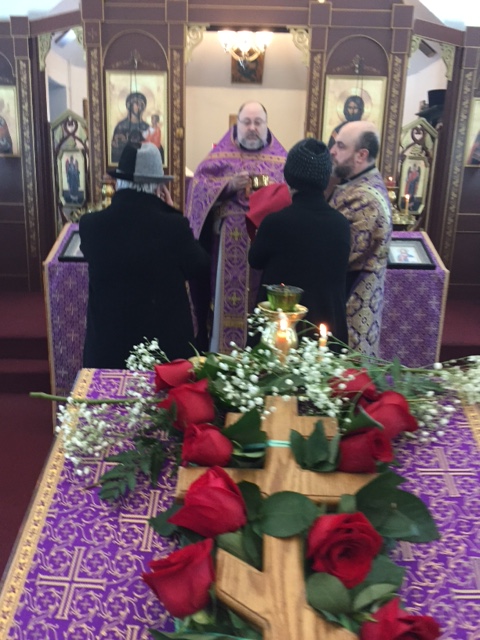
Before the Liturgy dismissal the Rector performed prayer service of the Sunday of Orthodoxy solemnly declaring the Orthodox faith and proclaiming eternal memory to the champions of that faith and the polychronion to the Church hierarchy and Orthodox Christians.

Following the dismissal the Rector preached a short sermon in English stressing the main thoughts of his Russian homily.


Cheesefare Sunday


On February 26, on the Cheesefare Sunday, we had a nice and prayerful celebration in our parish. Rector of St. George Church, Archpriest Igor Tarasov served the Divine Liturgy. After the reading from the Gospel he preached the following homily in English:

“Today, on Cheesefare Sunday, on the last day before the beginning of Lent, the Holy Church commemorates the expulsion of the first man from paradise. This remembrance is offered for our spiritual reflection, so we could become aware what we lose when we commit a sin. Adam, being the first man and God’s favorite creation, had everything to enjoy eternal blessedness because he was with God. Adam was given the only commandment: to abstain from the forbidden fruit. This was a commandment of obedience and abstinence. And it was not difficult to keep because there were a lot of other fruits in the Garden of Eden which Adam could eat and enjoy. But the enemy of the human kind tempted Adam sowing the seed of distrust to God in Adam’s soul. He made the first people think that they could live without God and become “like gods” themselves.”
“This is an insane, a futile, a disastrous, and a terrible idea that man can exist without God!”
“But the devil tempted the first people and said to them, “Did God tell you the truth? No! If you disobey Him, you won’t die, but become like gods”. And first people believed the devil. They decided to violate God’s commandment. And they did.”
“Dear brothers and sisters! This Lent that starts tomorrow is given to us to teach those two important virtues, the virtues of obedience and abstinence. And we could learn how to follow them through repentance, through the awareness of our sins. Such awareness was offered to Adam and Eve by God Himself. He did not expel them from paradise right away when they committed their sin. He spoke with them and attempted to incline them to repentance. But Adam became afraid and, instead of asking for forgiveness, began to justify himself saying that it is not his fault. He said that the wife God gave him, she brought the fruit, so he ate. Thus Adam did not see that he was guilty, but he blamed his wife and he also blamed God who gave him the wife.”
“Very often we also complain about our life and blame others for our misfortunes. We blame other people with whom we interact in our life. We say that it is their fault. Or we blame the circumstances of our lives. But we cannot choose the time and place of our birth. If we were born in this age, from these parents, then it was God’s will. And if we are unhappy with God’s will, we repeat Adam’s fault. And we may even dare to say that it is God’s fault that we commit sins.”
“In a similar manner, when God spoke with Eve, expecting her repentance, she also failed to ask for God’s forgiveness. She blamed the serpent. She said, “This is the devil’s fault, not mine!” This can also remind us, dear brothers and sisters, of how we blame the devil for our sins. We blame him and we forget that the devil is not able to force us to sin. We ourselves decide. And if we did not wish, we would never commit a sin.”
“Therefore, the first man and the first woman did not have a spirit of repentance, so their connection with God became broken. And thus because of violation of God’s commandment the sin came into this world, and along with the sin there came death. This happened because when Adam and Eve were expelled from paradise, they have lost the main thing – the communion with the Source of life. Therefore, the diseases, sufferings and death came into the world. This is why in these days before Lent the Church is reminding us about those biblical events, so in them we may see the history of our own falls. In them we should see our own sins. And seeing them, we should do what Adam and Eve failed to do – to repent.”
“The all-merciful Lord is expecting our repentance. He opens to us the doors of repentance and calls us to unite with Him. Dear brothers and sisters! Let us hear that call! Let us ask for His blessing for the coming time of Lent, a time so needed for our improvement and purification.”

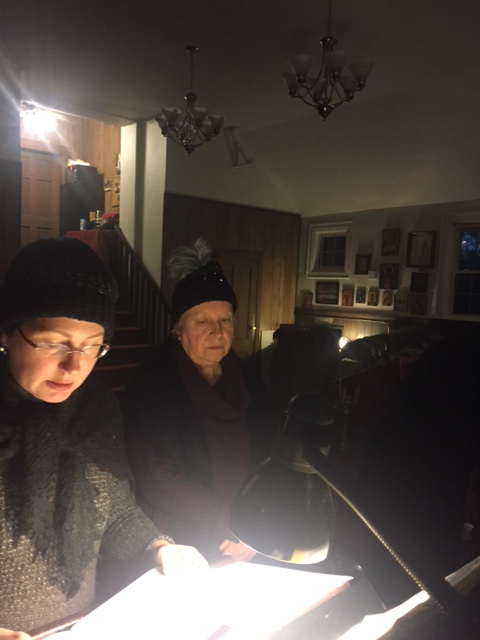
The choir beautifully performed the hymns of repentance at the time of the preparation for Holy Communion.

Following the Divine Liturgy the Rector performed Vespers with the Rite of Forgiveness. After the singing of the Great Prokimenon he changed his priestly vestments to the Lenten color of black.

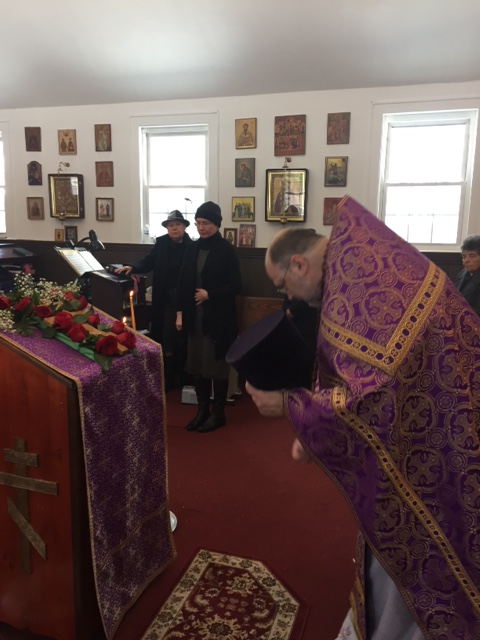
After the Vespers dismissal the Rector preached a sermon in Russian which was a short version of his homily preached at the Liturgy in English. After finishing the sermon he asked for forgiveness bending his knees. The parishioners also knelt down and asked their pastor for forgiveness. Then each one of the faithful could come to the Rector to kiss the cross and to express the forgiveness.

Following the services of this special day the Rector and parishioners joined at the Blini Lunch. We enjoyed delicious meals, especially the blini, nicely prepared by our ladies.

Sunday of the Prodigal Son. Feast of the Three Hierarchs


On February 12, on the Sunday of Prodigal Son, as well as feast of the Three Hierarchs, Basil the Great, Gregory the Theologian and John Chrysostom, we had a nice celebration in our parish church. St. George’s Rector, Archpriest Igor Tarasov served the Divine Liturgy. After the lessons from the Sacred Scripture he preached a homily in Russian. An English translation of that homily is as follows:

“Dear brothers and sisters in Christ! Today is another Sunday preparing us for Lent. It tells us about the Prodigal Son, giving us a perfect example of repentance. “Open me the doors of repentance,” – the Church is praying these days of the preparation for the saving time of fast. It is for us now to understand how much important is to practice repentance.”
“Today we also celebrate a memory of the Three great Hierarchs and Teachers of the Church, St. Basil the Great, St. Gregory the Theologian and St. John Chrysostom. Those holy men lived in the 4th and 5th century and did a lot to define the teaching of the Church. All three of them were revered by the Christian people and each one of them had a day of commemoration in the month of January. However, after several centuries some pious people began to consider St. Basil to be more important, yet others venerated St. Gregory more than other hierarchs, and, finally, St. John also had his own followers. A great number of Christians became divided in their veneration. But all three Hierarchs appeared in a dream to some pious bishop named John and told him that all three of them are equally blessed by the Lord and should be equally venerated by the Christian people. Some time after that appearance the Church introduced a new holy day to honor those three Hierarchs together. This feast we celebrate today. The Three Holy Hierarchs resemble of the Most Holy Trinity being united by one faith and one spirit but being three different persons. As such, they had different personalities but served one purpose of glorifying God and ministering to the Holy Church. In the same way all members of the Church are different, but together we represent a unity in faith.”
“But if all of us are different in our personal traits, we are all similar in one thing – all of us commit sins and need to repent. If last Sunday we could say that most of us could not relate to the Pharisee and to the publican, because those two men are the examples of some extreme way of life, today we should acknowledge that all of us resemble the Prodigal Son. We are all like him. This is due to the whole condition the human kind has – the condition called sin. As the Prodigal Son from today’s Gospel parable, the human race journeyed to the far country, away from God. And it is able and it should come back to the Father’s house.”
“The Almighty and all-merciful God is the Creator of man. Man is God’s most final creation. We were made according to the God’s image and likeness. Thus, we are the children of God, and God is our Father. We were created good and perfect, and we could eternally stay at our Father’s house, in paradise. But like the younger son in today’s parable, we left our home. Enjoying the free will, an ability to choose, having our portion of the Father’s inheritance, we decided to leave Him. Adam and Eve disobeyed God and were driven away from paradise to a far land of sin. The whole human race became remote from God and wasted its precious possession, the divine gifts of grace, through the sinful life. It had to endure all kinds of misfortunes, just as the Prodigal Son had to be starving in the far country. But the Son of God, our Lord Jesus Christ came to that land of misery and redeemed the man who was enslaved by sin. He came to restore the fallen image of God the Creator in us. He showed us the way of coming back to the Father’s house. And He ensured us that the doors of that house are now open to us. More than that, the loving Father is expecting us and is willing to run to meet us and to embrace us! Now, through Him, we acquired back the right to call God “the Father” and use the Lord’s prayer beginning with the words “Our Father”.”
“To complete such a safe return home, we need to follow our Lord’s instruction of repentance. Only the doors of repentance will lead us to the Father’s house. There is no other way. And the image of such repentance is shown in the conduct of the Prodigal Son. We first need to come to our senses, as the Prodigal Son “came to himself”, and realize our sinful state. Then we have to come to a decision to repent, to return to the Father. Then we must arise, we must act upon our resolution. And we must return, come back, repent, confess our sins and ask forgiveness. We have to humble ourselves and declare: “Father, I have sinned against heaven and before you, and I am no longer worthy to be called your son!” (Lk. 15, 21). Then, the all-merciful Lord will accept our repentance, will embrace us with His love, enrich us with His grace and order to begin a celebration in our honor.”
“Therefore, let us begin loving and practicing the saving deal of repentance. Let us seek the doors of returning to the Father’s house, our home and hope to meet our loving Father at the steps and to enjoy His eternal blessing.”

During the time of preparation for the Holy Communion the choir prayerfully performed the penitential hymns as well as the hymns dedicated to the Three Hierarchs.

After the Liturgy dismissal the Rector preached a short sermon in English stressing the main ideas of his Russian homily. He also congratulated a young parishioner Maria on the occasion of her past name day, as well as her past birthday. Traditional Polychronion was proclaimed.

Our celebration continued during the coffee hour when the Rector and parishioners enjoyed delicious meals and a nice company.


Sunday of the Publican and Pharisee. Synaxis of the New Martyrs and Confessors of the Russian Church


On February 5, on the Sunday of the Publican and Pharisee, as well as the feast of the New Martyrs and Confessors of the Russian Church, our parish family held a beautiful celebration. The Rector of St. George Church, Archpriest Igor Tarasov served the Divine Liturgy in our temple. Following the Scripture readings he delivered a homily in English:

“Today’s Sunday is supposed to prepare us for the blessed and saving time of Lent. We heard the parable of the Publican and Pharisee, about the two different men. Today we also celebrate a commemoration of the New Martyrs and Confessors of the Russian Church. Thus we had two lessons from the Holy Gospel.”
“The first Gospel lesson is telling us about two men who came to the Temple to pray. All about them was different. Their social status and their moral reputation were different. Their prayers were different also. And the outcome of their prayers was totally different. One of them went down to his house justified, yet another did not. We would think using our human logic that God blessed the one who was considered morally upstanding. And not justified would be the one who is despised as a public sinner. But our Lord Jesus Christ reverses the expected conclusion. God’s reasoning is different from the man’s logic. In the eyes of God the publican is justified because of his humility. The Pharisee is condemned because of his pride.”
“If we try to evaluate those two men, let us listen to their prayers. The Pharisee states with satisfaction that he is not like other men – extortioners, unjust, adulterers. He is not lying. He behaves better than those bad people. He further states that he fasts twice a week. Very well, we are supposed to do the same, but who knows whether we actually fast on Wednesdays and Fridays. The Pharisee also tells that he gives tithes of all he possesses. This is much more than most of us do. No parishioner of this church gives tithes meaning 10 percent to his parish. Therefore, we must say that the Pharisee appears to be a much better person that most of us are.”
“As to the publican, he appears to be worse than most of us. As we mentioned last Sunday, the publicans, or tax collectors were public sinners, crooks, extortioners, corrupted criminals, cheaters of the people and collaborators with the Romans. They committed many crimes and offended many people. Most of us are not so evil. Yet that kind of man, a despised evildoer, went down to his house justified.”
“Despite that the Pharisee was a public just man and the tax collector was a public sinner, God judged them in the opposite way. The reason of such an outcome is the attitude those two men had. The Pharisee was proud. He prayed, but his prayer was so preoccupied with his own goodness that he forgot about God. He actually talked to himself, not to God, in his prayer. He praised himself. And he judged others, particularly the publican. All that attitude of self-righteousness, self-exaltation and judging the others condemned him. The publican’s attitude was the opposite. He is aware of his indignity. His posture, his words of prayer express deep humility and contrition. God loves this kind of attitude. He does because it is the most fair and honest understanding of our human nature, our abilities and our position. Our nature is imperfect and corrupt. Our abilities are limited, and we are often inclined to sin. Our position is much lower than God’s position. Therefore, we need not to be proud and self-exalting. We need to be honest with ourselves and acknowledge our weakness, imperfection and evil propensities, as well as our evil deeds committed in the past. Then we will be exalted by God. The publican did and became justified. God opposes the proud, but exalts the humble.”
“Therefore, dear brothers and sisters, let us avoid pride and self-exaltation of the Pharisee and let us imitate humility of the publican, so we will be blessed and justified in the fairest eyes of God.”
“Let us also imitate the publican in his repentance. After finishing our celebration of Christmas and Theophany we keep hearing about repentance. This was the main theme of the first preaching of Christ. We need to repent because we are sinful people. And in another spiritual aspect, when we commemorate Holy New Martyrs and Confessors of the Russian Church, we need to repent because so many persons among the members of our community, of the Church of Rus’, were persecuted. The sad historical experience of our Church calls us for repentance. Of course, most of us did not persecute and did not hurt those holy people. But, unfortunately, it is a fact that our ancestors in our old country, at least most of our ancestors, were either the persecutors or the persecuted ones. Those of us who were born in the old country are the heirs of either New Martyrs of Rus’ or their adversaries. And that calls for repentance, not for a pride. It may be heard now that many Russians are proud of their Soviet past. It is sad. Of course, there were the acts of heroism among the Soviet people, however our attitude must be of humility and repentance for the godless past, and not an attitude of pride. Therefore, dear brothers and sisters, let us imitate the repentance of the publican, his humility and awareness of his sins and not the Pharisee with his pride.”

During the time of the preparation for the Holy Communion the choir prayerfully performed the hymns from the Lenten Triodion which begin to be sung on this Sunday, starting with the words “The door of repentance open to me, o Giver of life…”. After those hymns the singers also sung the hymns dedicated to the New Martyrs and Confessors of Rus’.

Following the Ambo Prayer the Rector performed a memorial service (Litia) to commemorate all the deceased who suffered during the time of godless persecutions.

After the Liturgy dismissal the Rector preached a brief sermon in Russian stressing the main points of his English homily.

32nd Sunday after Pentecost


On January 29, on the 32nd Sunday after Pentecost, we had a nice celebration at St. George Church. Our Rector, Archpriest Igor Tarasov served the Divine Liturgy. After the Gospel lesson he preached a homily in Russian. An English translation of that homily is as follows:

“Today’s Sunday is the first of the five Sundays preparing us for Lent. And today’s lesson from the Gospel of St. Luke is about Zacchaeus the publican. Why this reading is selected for today? Because it is about conversion, about how a soul can change. Change of the soul is the purpose of the Christian life. So, we may observe how the soul of the publican named Zacchaeus changed because of the encounter with our Lord Jesus Christ.”
“Zacchaeus was a publican, a tax collector. It means that he was a very sinful and evil man. Publicans were known to be corrupt, crooks and evildoers. And Zacchaeus was a chief tax collector, thus he was the worst of the lot. Interestingly, that the name “Zacchaeus” means “the just one” or “the fair one” in Aramaic, the language spoken by the people in the Middle East at the time of Jesus. So, he did not live up to his name. And yet when our Lord Jesus Christ passed through the city of Jericho, Zacchaeus changed.”
“First of all, he probably decided to seek the Lord. All his actions demonstrated that wish. Then he started looking for Jesus who passed by. Zacchaeus climbed the tree to see Jesus. The trees are mentioned several times in the history of salvation. Adam and Eve were expelled from paradise because of the tree. Now their heir, a sinful man Zacchaeus uses a tree to acquire salvation. This was a sycamore, a fig tree. The fig leaves were used by Adam and Eve to cover their bodies after they sinned and became aware of their nakedness. Now another sinner being aware of his transgressions uses a fig tree to receive back the grace of the Creator. The Gospel tells us that he climbed it up because of his short stature. There is no doubt that it’s true. But any sin makes us smaller in the spiritual sense, so it is hard for us to see God. But Zacchaeus made an effort to see the Lord. Many people never make any effort to get closer to God. If it is easy for them to receive the grace, they get it. But if it becomes harder and requires an effort on our part, we do not bother to act. Zacchaeus acted and was successful. Jesus noticed him and spoke to him.”
“When Jesus expressed His willingness to visit the house of Zacchaeus, the latter made haste, came down the tree, and received the Lord joyfully. This is the sign that a sinful man rejoices becoming closer to the Lord, having Him under his roof. Conversion means being open to God to come and dwell within us, to work by His grace in us.”
“Further, Zacchaeus makes a statement saying: “Look, Lord, I give half of my goods to the poor, and if I have taken anything from anyone by false accusation, I restore fourfold.” (Lk. 19, 8). Now this is a real conversion. Zacchaeus not just declares that he becomes a changed man, he promises to give away a half of his wealth. He also wishes to restore justice by compensating the people he defrauded. And not just by giving back what he acquired by false accusations, but by returning fourfold! It was really a great conversion and true change that occurred in that man whose name was Zacchaeus, “the just one”. Now he began to live up to his name.”
“Observing the actions of Zacchaeus we should notice that he decided to change, struggled to do so, accepted God’s grace and made a proper resolution to convert truly. These are the four steps of conversion everybody should take if we truly wish to become changed or better. We must decide to convert, then struggle, make an effort to do it. Then we have to accept joyfully the Lord’s help, His divine grace. And, finally, we have to make a resolution to restore justice and to live up to our name, to our spiritual purpose. Our name, the name of a man, a human being, is great and our purpose is to be saved.”

Following the Liturgy dismissal the Rector preached a short sermon in English to stress the main thoughts of his Russian homily. He also congratulated our young parishioner and altar server Anton Malyshew on the occasion of his tomorrow’s name day, the memory of Venerable Anthony the Great. Traditional Polychronion (Mnogaia leta!) was proclaimed.

Our celebration continued during the coffee hour held on this day. The Rector and parishioners enjoyed coffee and refreshments, as well as a nice conversation.


Why Orthodox Christians Stand During Divine Services

In performing divine services will it matter like the saints, Whom the God-inspired prophets Isaiah, Micah Daniel and St. John the Theologian saw “standing in the heavens next to the throne of God” (Isaiah 6:2; I Kings 22:19; Daniel 7:10; Apocalypse 7:11), Christians similarly should not sit during divine services, but stand.
The custom that Orthodox Christians stand during prayer and church services is not only a representation of spiritual service in the Heavenly Church, but also in the Church of the Old Testament.
In the description of the blessing of Solomon’s temple it is said: “The Levites and all the singers, being arrayed in white linen and having cymbals and psalteries and harps stood at the east end of the altar” (II Chronicles 5:12); “All the congregation of Israel stood” (II Chronicles 6:2).
Another example from the Bible occurs in the description of the reign of Josaphat. In order to protect his homeland from the Ammonites and the children of Moab, he “stood in the congregation of Judah in Jerusalem, in the house of the Lord before the new court. And all Judah stood before the Lord, with their little ones, their wives, and their children” (II Chronicles 20:5, 13).

Ezra and Nehemiah, speaking of the services of the Jews after the Babylonian captivity, say: “And they set priests in their apparel with trumpets, and the Levites the sons of Asaph with cymbals, to praise the Lord, after the ordinance of David, King of Israel” (I Ezra 3:10); “And the Levites stood according to their rank and cried with a loud voice unto the Lord their God, and the Levites caused the people to understand the law; and the people stood in their place” (Nehemiah 9:4,5; 8:7; also Matthew 6:5).
To stand during prayer was thus a customary rule among the Jews, as is proven in their writings, in the manner of the Heavenly and the Old Testament Church, Orthodox Christians have maintained the custom, since apostolic times, of standing during divine services. The correctness of such a practice is evident from New Testament scripture, where we find the words of Christ: “When ye stand praying” (Mark 9:25), and in apostolic tradition, where it is often proclaimed “Let us stand well.”

Christians, according to the apostolic teachings, all had to stand during the reading of the Gospel and the “Liturgy of the Faithful.” During other readings and homilies some would stand, others would sit. Tertullian, in the year 190 A.D., mentions the practice of standing during services. He says: “Some, in preparation for prayer, throw off their cloaks, and some think it their duty not to stand, but to sit, and we are not to imitate these. It is especially improper to pray while sitting at the very time that a multitude of angels stand before the face of the Lord in fear and trepidation; sitting shows that we are somehow praying unwillingly, carelessly, in a lazy manner.” Blessed Augustine, when discussing standing in church, says: “Moved by fatherly love, I have advised those who have an affliction of the legs, or are burdened by other sickness, that they should sit quietly and listen attentively during lengthy readings. But now even some of our healthy daughters think that they should do this all the time…. Even worse, they engage in idle talking not listening themselves, nor allowing others to listen. Thus, I ask you noble daughters, and implore you with fatherly concern, that none of you should sit during readings or homilies, unless a profound weakness of the body forces you to do so.”
In the early works of the Holy Fathers a reverent attitude during services was shown to be an important and sacred duty. In one such writing it says: “One must stand and not look around, nor lean against a wall or pillar, nor stand with a cane, nor shift one’s weight from one foot to the other.”
To stand before God and His holy saints during the church services is the only acceptable posture for the faithful, both for the ones who art serving, and the ones praying, for does a servant sit before his master The faithful are all servants of the Lord, redeemed by His blood (Luke 17: 10; 1 Cor. 6:19, 20).

The entire life of an Orthodox Christian, according to the Scriptures should be a continuous Spiritual uprightness and attentiveness toward God. The Apostle Paul says: “Watch ye, stand fast in the faith” (I Cor. 16:13); ”Stand, therefore, having your loins girt about with truth (Ephes. 6:14); “Stand fast in the Lord, my dearly beloved” (Philippian 4:1). If a Christian must always stand on guard spiritually over his salvation then he must do so even more during, the divine church services, which serves as an expression and an enrichment to private everyday service to God. If the spirit of the ones serving and praying strives toward the Highest, will it not also lift up the body which is subject to it? Standing during church services shows us to be humble servants, ready, attentive and willing to serve God. Not unlike the Old Testament sacrifice: the faithful, standing and becoming fatigued during services, themselves symbolically become offerings to God, as the Apostle says: “Present you bodies a living sacrifice, holy, acceptable unto God, which is you reasonable service” (Romans 12:1).

From Orthodox Life, Vol. 33, No. 6, pp. 48-49. This is an excerpt from the book The Concern of the Orthodox Church for the Salvation of the World by Rev. G. S. Debolsky. Translated from the Russian by Maria Naumenko.
Source: http://orthodoxinfo.com/praxis/whystand.aspx

Sunday after the Theophany


On January 22, on the Sunday after the Theophany, Rector of St. George Church, Archpriest Igor Tarasov served the Divine Liturgy in our parish temple. Following the reading from the Holy Gospel he preached the following homily in English:

“Dear brothers and sisters in Christ! Today we celebrate Sunday after the Theophany. Last week we had a great holy day of Theophany, which is the Baptism of Christ. The Gospel of today says that after Christ was baptized, He began to preach the same theme as St. John the Baptist did. He appealed to the people saying, “Repent for the Kingdom of heaven is at hand” (Mt. 4, 17). Why? Because after we have been baptized, we are always tempted and the only way to end temptation is to repent. Our Gospel lessons proclaimed on Sundays do not tell us all the details of the life of Christ, but those lessons are rather some short messages telling us about His teaching. But if we read the Gospel of Matthew we would learn that after being baptized Jesus was led by the Holy Spirit in the wilderness to be tempted by the devil. Christ did not fall after temptation and began His ministry. Thus His first sermon to the people was to repent because the Kingdom of heaven is near. But what exactly do these words mean? What is repentance? What is the Kingdom of heaven?”
“Sometimes we hear how people say, “We are sinful, but we will repent…” They may imagine that repentance is some abstract thing, a mood or an idea. But it is not just an idea, a thought. First of all, it is an action. Repentance is a change of mind which leads to a practical and visible change in our way of life. It does start in our mind, but it must produce action.
“Repentance is a conversion to God. Every time we repent, we must undertake a mini-conversion. Because if we commit a sin, especially a grave sin, we turn away from God, and we need to come back. It is like being lost on some road. Very often if we took a wrong highway we need to exit and go back. Our highway system is very comfortable. We can easily find our way. If we are lost we usually take an exit and go back to get to a proper route. Thus, repentance is like an exit from the wrong highway. We get out, come back and find the right way.”
“If this is repentance, what then is the Kingdom of heaven? First of all, the Kingdom of heaven is Christ Himself Who spoke these words to the people of that time, before whom He stood. The Kingdom of heaven was indeed at hand, for He stood before them. Secondly, the Kingdom of heaven is at hand and stands before us here and now. The Kingdom of heaven is here and now, but it depends on our willingness to accept Christ. At this very moment each one of us is in fact able to meet God and enter into His eternal joy, but only if we wish to do so through deep repentance. The joy of the Kingdom of heaven is a state of our soul, a state of our mind, and it is open to all those who wish to accept Christ.”
“Yes, it is true that our well-being does depend on whether we have a roof over our heads, enough money to pay our way in the world. But none of these things is absolutely essential, for there are people who have all these things but are still unhappy, they do not have the Kingdom of heaven. And there are people who have none of these things and yet they are happy, they have the Kingdom of heaven.”
“Some people marry and then divorce, remarry and re-divorce and do this even several times, and each time blame the others for the divorce. In fact it is them who bear the problem inside themselves, in their selfishness and hardness of heart. Some people may go from country to country and from job to job, blaming each failure on others. In fact the problem is carried in their suitcase, the problem is with the instability of the person, their inability to get on with others.”
“Dear brothers and sisters! The presence of the Kingdom of heaven depends ultimately not on our circumstances but on us, on our interior disposition, on our ability to repent. Indeed it is only if we repent that the Kingdom of heaven at hand. Therefore, let us ask our Lord baptized in the Jordan to grant us a desire and an ability of true repentance.”

The choir beautifully performed the hymns of the Theophany during preparation of the faithful for Holy Communion.

After the Liturgy dismissal the Rector preached a short sermon in Russian to convey the ideas of his English homily.

Bishop John performed the Great Blessing of Water of the Atlantic Ocean


At midnight, January 19, the great feast of the Baptism of our Lord and Savior Jesus Christ, the Administrator of the Patriarchal Parishes in the USA led the Great Blessing of Water of the Atlantic Ocean. His Grace was co-served by clergy of St. Nicholas Cathedral in New York City. At the conclusion of the service, many braved the cold temperatures as well as the freezing ocean water and took part in the long-standing tradition of plunging into the sanctified waters.

Theophany, or Baptism of the Lord


On January 19th Orthodox Church celebrates great feast of the Theophany, or Baptism of the Lord. Our parish had a beautiful celebration of that holy day conducted by our Rector, Archpriest Igor Tarasov. He served the Divine Liturgy in our temple. Following the Gospel lesson the Rector preached a homily in Russian.

In his homily the Rector pointed out that according to the words of the Gospel “no one has seen God at any time. The only begotten Son, who is in the bosom of the Father, He has declared Him (Jn. 1, 18). Only our Lord Jesus Christ manifested God to the people. And such appearance of God occurred at the Baptism of Christ. God one in the Holy Trinity had appeared during that event.
Jesus condescended to us, the sinners, accepted a visible image of repentance, willing to be baptized in order to help us to do proper repentance. Because we do know that we need to repent, but we possess no proper spirit to perform it. The Holy Spirit is assisting us, the weak and the sinners. We do know what is the will of God, but the voice of God is now being heard in our hearts sanctified by the holy Baptism, as it was heard from heavens at the Baptism of Christ: “This is My beloved Son in Whom I am well pleased” (Mt. 3, 17).
St. John the Baptist said that he is unworthy to touch the sandals of Christ because the greatness of the Son of God is in His service to the human kind. Each one of us could serve his neighbor; someone could even lay his life for his friends. But only God who became Man could bear the sins of all of us and the sins of each one. And only He is able to grant us His true grace to change our lives. For He united divinity and humanity, and through Him we became the dwellers of heaven, because He opened for us His eternal heavens and granted us eternal salvation. We only need to be faithful to Him, to keep the Orthodox faith and to come to the temples for prayer, asking His grace in our daily life.
Being in the temple of God we possess a great happiness because Christ is now with us. And we not only touch His sandals – no! We partake of His Most Pure Body and His Precious Blood. And He stays with us sanctifying and comforting us.

After the Prayer behind the Ambo the Rector performed the Great Blessing of water.

Following the Liturgy dismissal the Rector and the altar servers came before the icon stand and performed the rite of glorification singing the troparion, kontakion and magnification of the Theophany. Then Fr. Igor congratulated parishioners on the occasion of the great holy day.

Sunday before the Theophany


On January 15, on the Sunday before the Theophany, we had a nice celebration in our parish temple. Rector of St. George Church, Archpriest Igor Tarasov served the Divine Liturgy. Following the Gospel reading he preached a homily in Russian.

In his homily, the Rector said that on Sunday before the feast of the Theophany in all the Orthodox churches we read the first chapter of the Gospel of Mark. If on Sunday before Christmas we read the beginning of the Gospel of Matthew, today we listen to the beginning of the Gospel of Mark. It tells us about St. John the Baptist who preached in the wilderness. The people came to the wilderness to hear his words. St. John was the Forerunner of Christ, the one who was coming before the Messiah to prepare His appearance to the world. But St. John called the people themselves to be prepared. He called them: “Prepare the way of the Lord; make His paths straight” (Mk. 1, 3).
Often we complain that God does not help us in our life. When we have troubles, sorrows and sufferings, it may seem that God abandoned us. But for God to be with us in our sorrows and for Him to bless us in our lives we need to prepare our souls top receive Him. We need to follow the call of St. John the Forerunner and make an effort, perform a spiritual labor.

The choir prayerfully sang the hymns during the preparation for Holy Communion.

After the dismissal of the Liturgy the Rector preached a brief sermon in English addressing the main ideas of his Russian homily.
Following the Rector’s sermon our parish Warden Olga Roussanow congratulated Fr. Igor on the occasion of his past birthday and presented him with a small gift. Traditional Polychronion (“Mnogaia leta!”) was proclaimed.

At the request of Malyshew family the Rector also performed a memorial service (Litia) in commemoration of Maria Malyshew’s deceased mother Irina.

Our celebration continued at the trapeza table where the Rector and parishioners enjoyed delicious meals and a nice company.