23rd Sunday after Pentecost

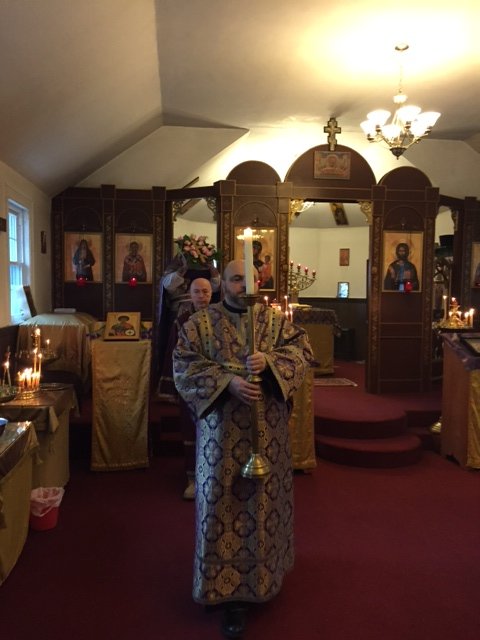
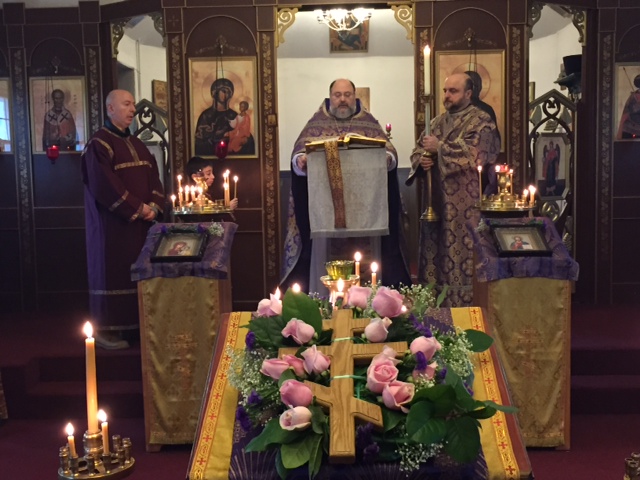
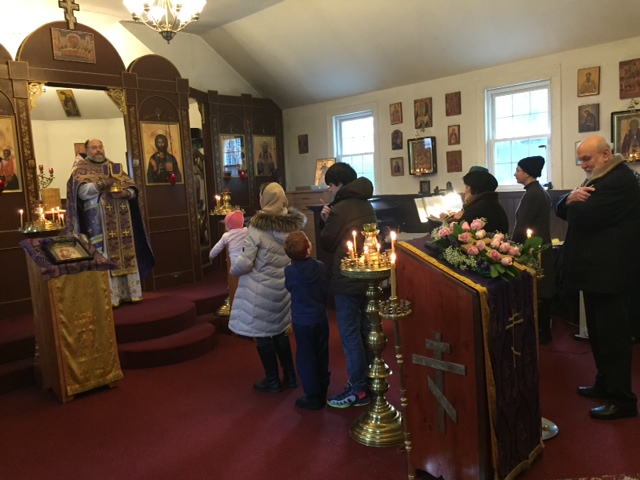
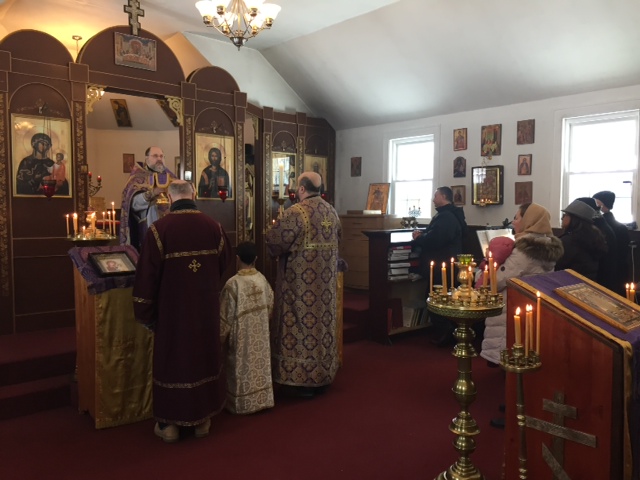
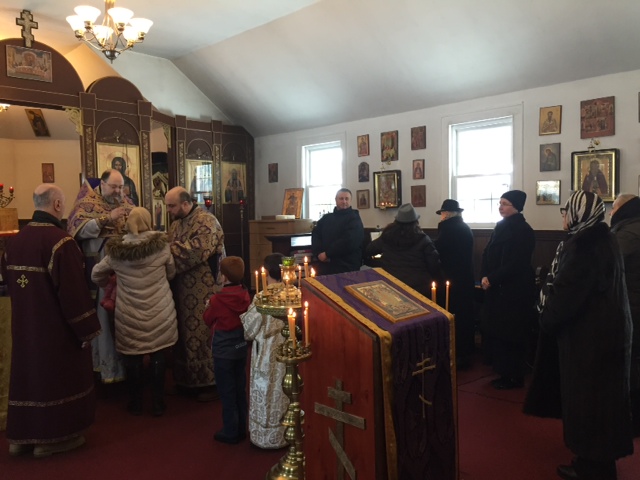
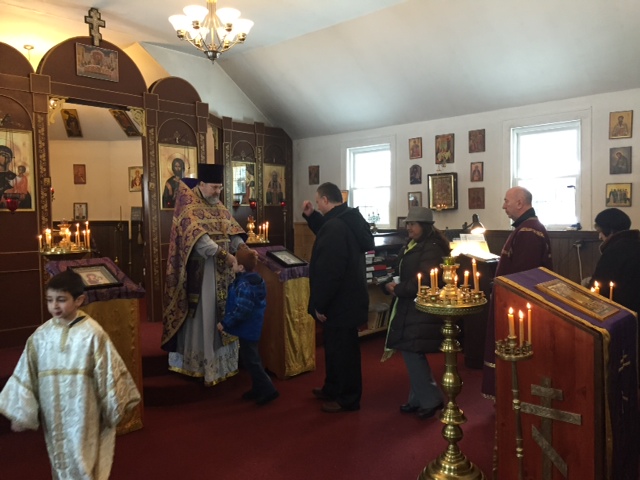
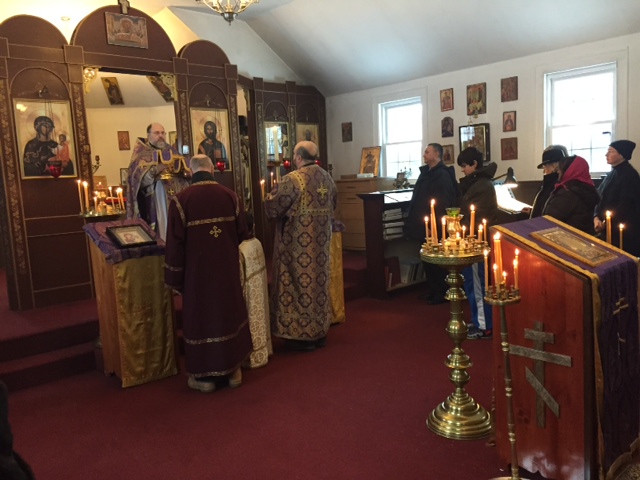
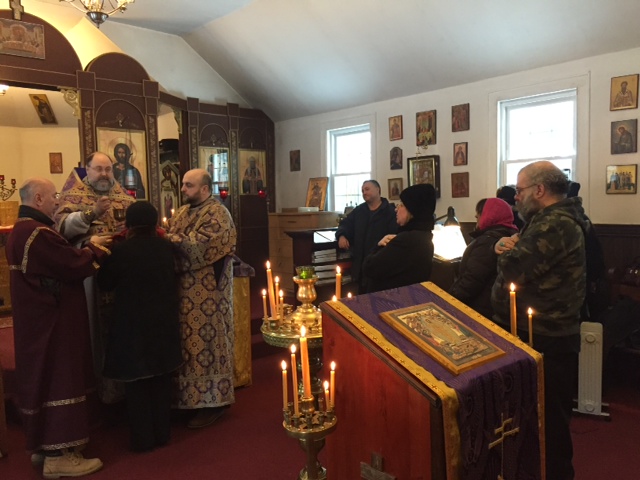
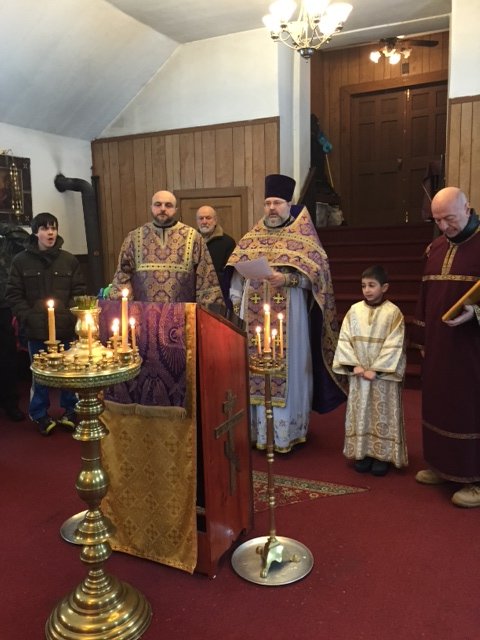
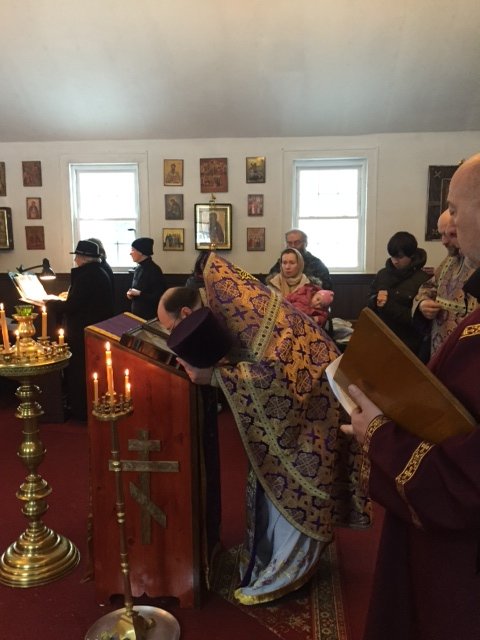
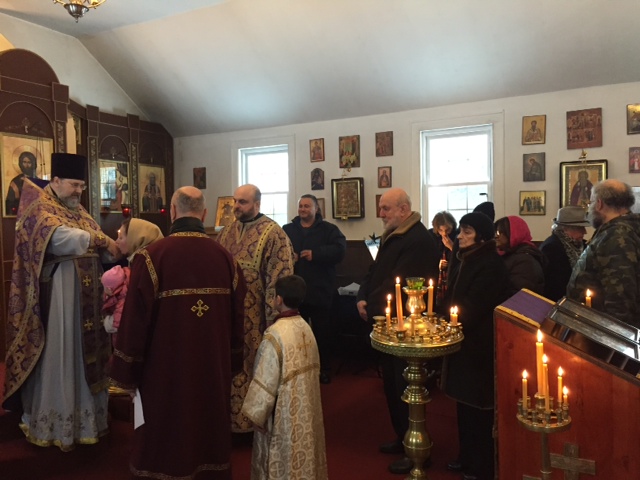
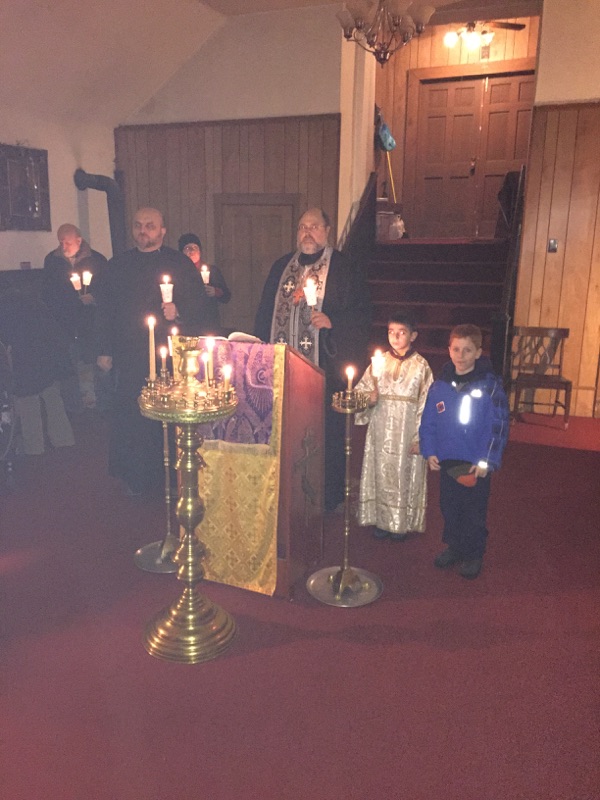
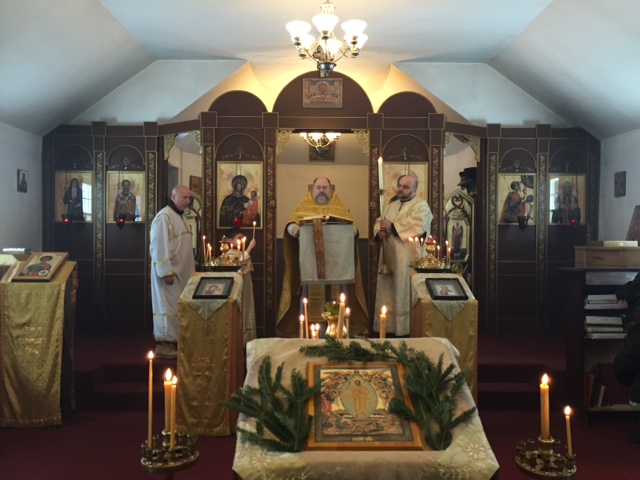
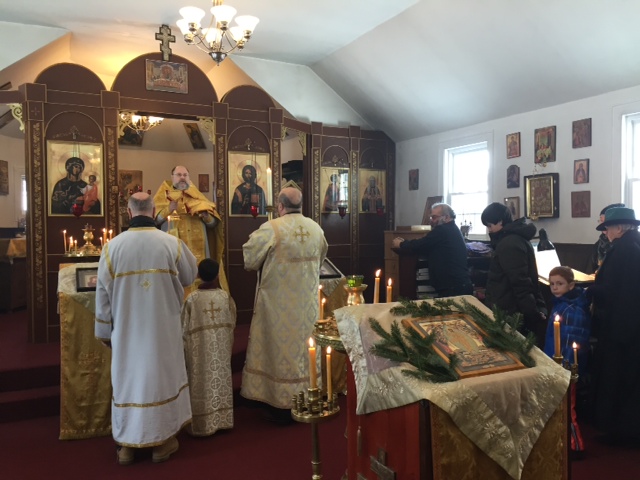
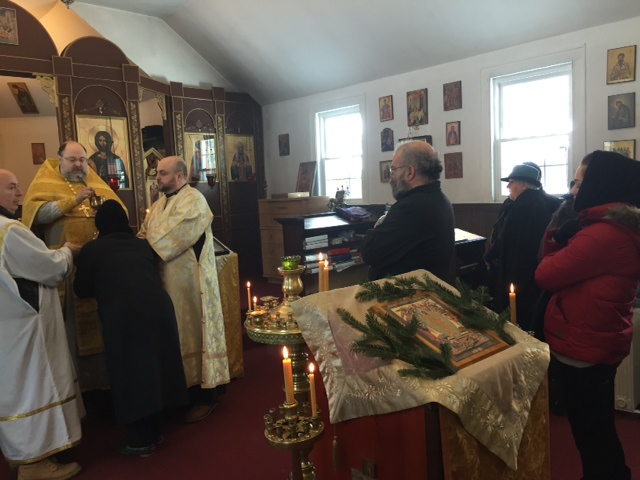
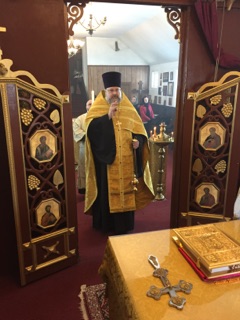
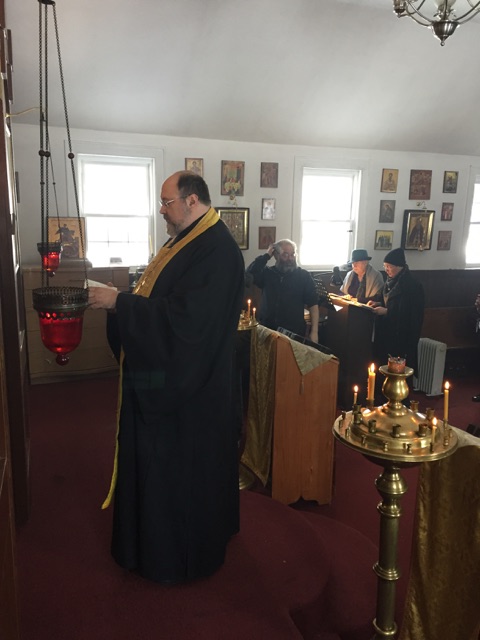
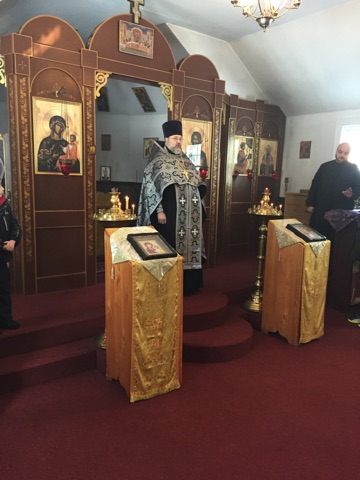
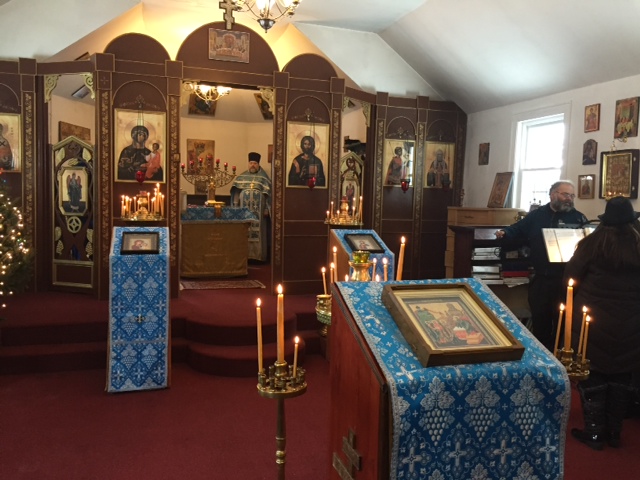
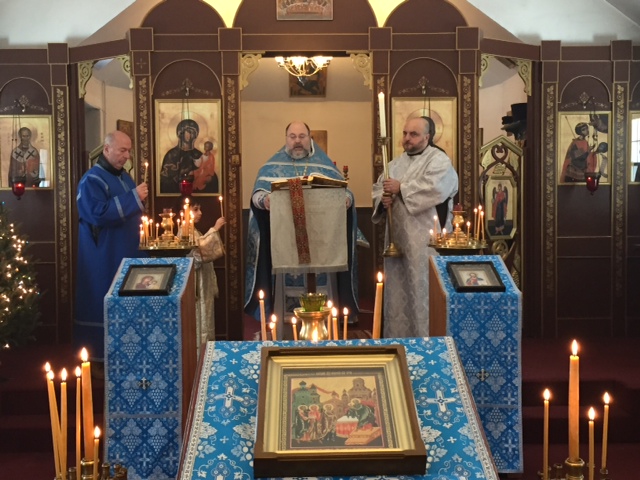
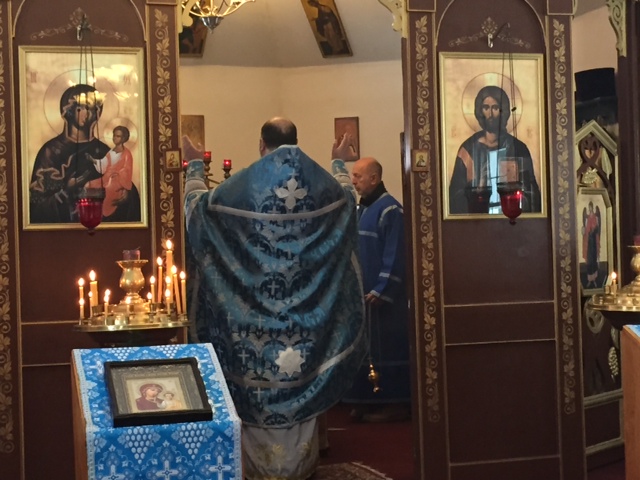
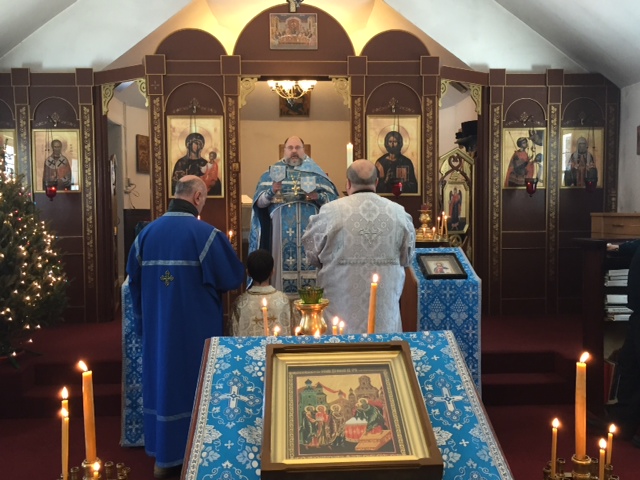
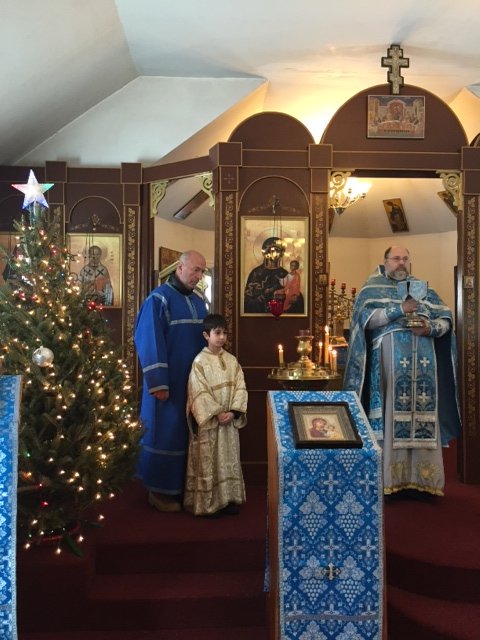
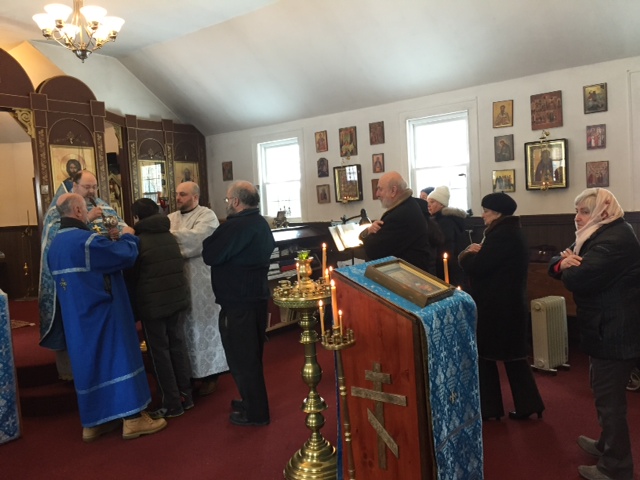
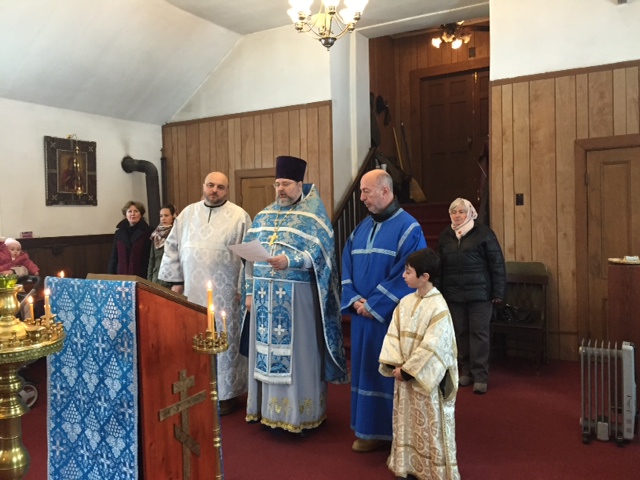
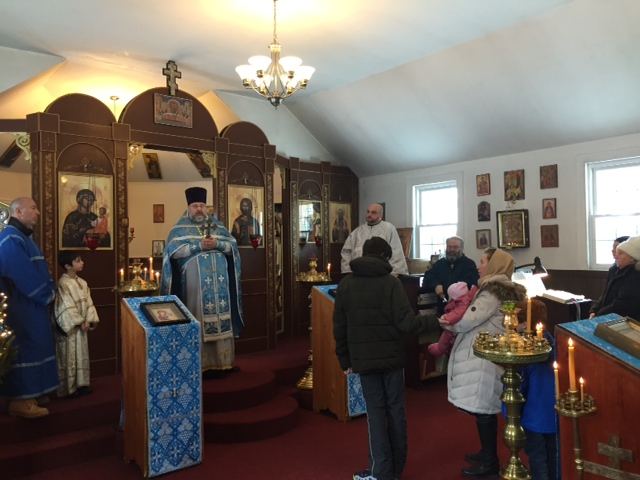
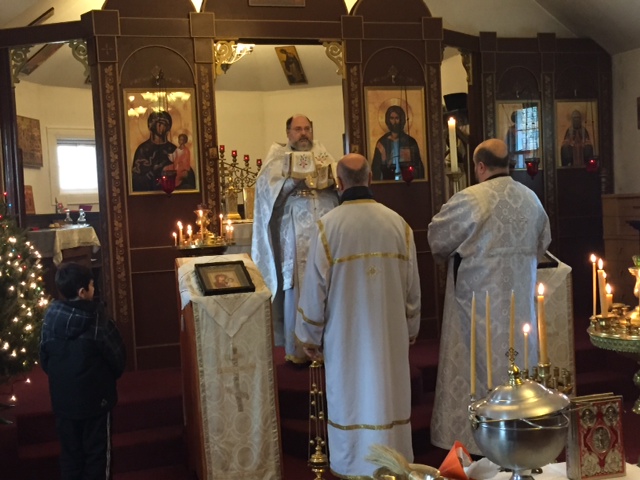
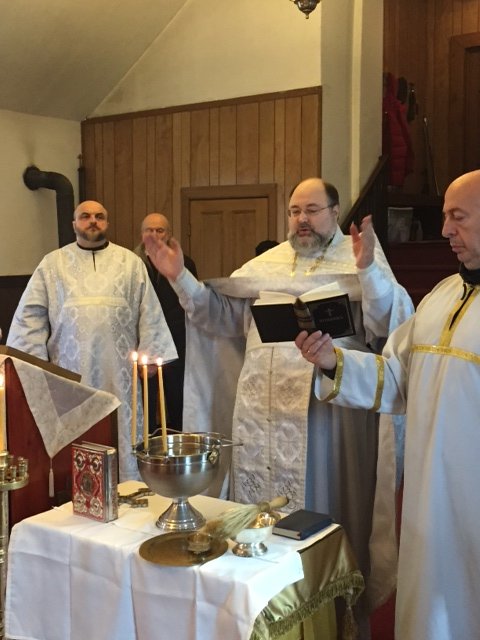
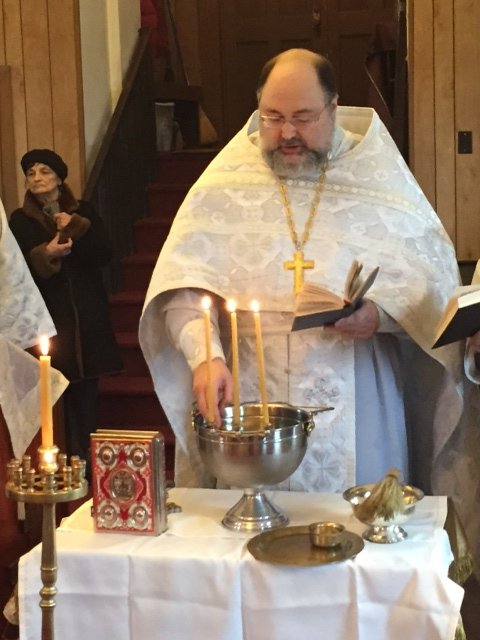
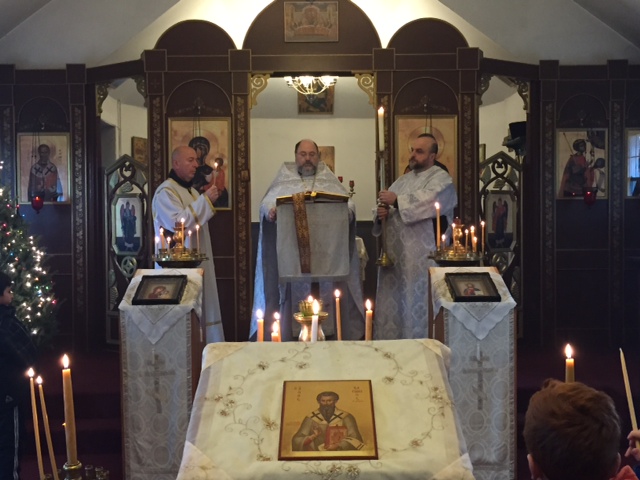
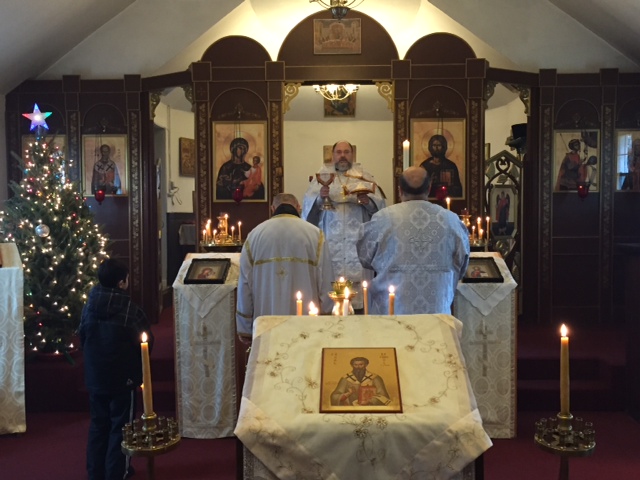
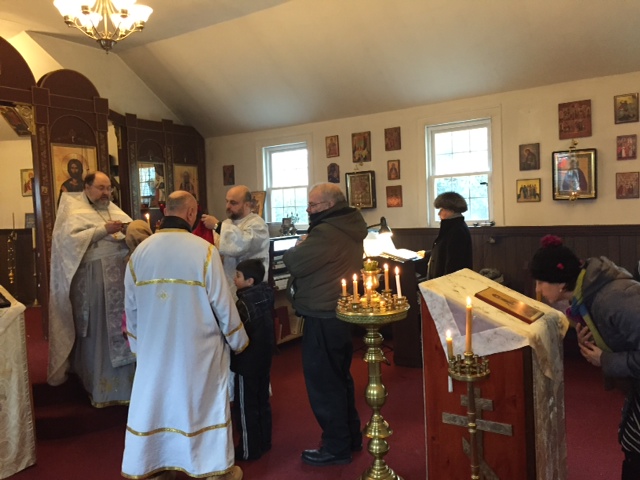
On November 16, on the 23rd Sunday after Pentecost, along with Sunday resurrectional celebration St. George Church marked one of the days that commemorate our parish Patron. On that day the Church remembers consecration of St. George Church in the city of Lydda. Thus it could be considered a little Patronal feast of our Parish. As usually, our Rector, Archpriest Igor Tarasov served the Divine Liturgy. Following the Scripture lessons he preached a homily in Russian. The English translation of that sermon is the following:

“Today’s reading from the Gospel of St. Luke again shows us the divine power of our Lord Jesus Christ. He heals a sick woman and raises a little girl from the dead. Again we see how the Lord was bringing healing and life to the world full of illness and death. So, today we will try to look at the death of the young people, to reflect upon it in some spiritual sense.”
“We all know that an elderly person will die for sure, but a young person may die also. Death is capable of taking a young and healthy girl who could have all life ahead of her in the same way as it may take an aged gray-headed man who has a long life behind him. The children’s mortality is not so high any more in the rich countries as it used to be, but it is still a problem for the poor nations. Children our days still die because of diseases, poverty and starvation. Young people die also because of drugs, crimes and fatal accidents. Any of such deaths looks very cruel, merciless and unreasonable. But what is more troubling is spiritual death of the young generation.”
“In today’s Gospel lesson Jesus came to the house of Jairus whose daughter just died, took the little girl by the hand and called saying, “Little girl, arise” (Lk. 8, 54). When we read this story in another Gospel, of St. Mark, we can learn those words in Aramaic language, for St. Mark gives us the exact words of Jesus in the original: “Talita, kum”(Mk. 5, 41). It is interesting that nowadays there is a singer in Ukraine who took those words as a stage name. We can only hope that she really knows and understands what those words mean. And they mean that the young person should arise, wake up.”
“In the same way our Lord is willing to give a hand to the modern young girls and boys and to tell them to arise from spiritual sleep or death. Many of them are in that state because of the world surrounding them. Today’s children and young people are often born to the parents who himself do not practice spiritual life, live in sin and away from the life-giving source of divine grace which is the holy Church. Those young people are raised in a spirit of this world. But even if they are growing up in a good religious environment, the world is attacking them all the time. Those attacks come from television, radio, magazines, friends, even from school. In our days we also have computers, the internet. How can you escape all these attacks of the evil influence? You can’t take your children away and live in a wilderness. But even there you would not be immune. A holy elder who lived in the desert once had to visit a city and to take a young monk along with him. Being in the city they encountered a harlot who approached them and said to the elder, “You have been working on this young man for many years to teach him a holy life, but now I can destroy all your work in a couple of minutes!” The elder responded that he believes her because it is much easier to roll down from the hill than to climb it.”
“A strange thing is happening: instead of avoiding evil things we are being drown to them due to their attractiveness. St. Paul described that saying, “What I will to do, that I do not practice; but what I hate, that I do.” (Rom. 7, 15). If this is a problem for an adult, how much more difficult it is for children who are tender, inexperienced and spiritually weak? The problem exists because of the sinful state of the humanity. Unfortunately, in our days the very word ‘sin’ is not taken seriously. Meanwhile the concept of sin is very important in any religion. And basic rules of religious morality may be found in any secular ethics. Here we should have a common ground even with those who do not believe in God, but still wish good to our society and to the young generation. But instead of fulfilling the task of proper upbringing of children this society does the opposite. The radio, television, books and internet instead of teaching the youngsters to adhere to the moral norms, teaches how to violate them.”
“Our Lord Jesus Christ is always ready to take the young people by their hands and to say, “Arise”. But He wishes to act through us, dear brothers and sisters!. We should try to become those hands of Jesus and take those youngsters and bring them to spiritual life. We may argue and say that we often have no control over them and over the whole situation in the world. That’s true. But remember that there is nothing impossible with God. Let us try what we can and able to do, especially as the Church. Sometimes we will succeed and it will appear that the young person is not dead, but asleep. If so, she can be risen back to life.”

After the Liturgy dismissal the Rector congratulated faithful on the little St. George’s Day. He further explained the content of his homily preached in Russian to the English-speaking parishioners.

Fr. Igor also expressed his condolences to Joseph and Sophia Kay who lost their four-year-old nephew Zaza.

Following the service the Rector and parishioners enjoyed the delicious meals and a nice company at the coffee hour.
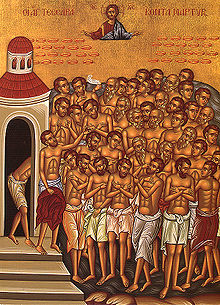

Our Warden Olga Roussanow attended the Meeting of the Bishop’s Council

On Friday, November 14, St. George Church Warden and Choir Director, Olga Roussanow attended a meeting of the Bishop’s Council of the Patriarchal Parishes in the USA. Olga is an alternate member of the Council elected in April of this year.

This meeting will mark Bishop John’s first Bishop’s Council meeting since his appointment as Administrator of the Patriarchal Parishes in the USA in August of this year. A number of different issues had been discussed. The detailed information can be found on the Patriarchal Parishes website at http://mospatusa.com/news_141114_1.html.

22nd Sunday after Pentecost

On November 9, on the 22nd Sunday after Pentecost, parishioners of St. George Church gathered for Sunday celebration. The Divine Liturgy was served by the Rector, Archpriest Igor Tarasov. After the reading from the Gospel he preached a homily:

“The Gospel reading of today shows us again how great was the power of our Lord Jesus Christ. Truly, this was the power of the Almighty God. Jesus is the Son of God, He is all-powerful God Himself. He healed the sick, cleaned the lepers and raised the dead. Today’s reading from the Gospel of St. Luke tells us that He also drove away the evil spirits.”
“God is the only one who has the power over the creatures of the invisible world, over the angels and demons. He created them and He may control them. In today’s Gospel story we hear that the unclean spirits who possessed the poor man in the country of Gadarene feared the Lord Jesus and acknowledged His power. When the possessed man saw Jesus, he cried out and said, “What have I to do with You, Jesus, Son of the Most High God? I beg You, do not torment me!”(Lk. 8, 28). In these words the demons stated that they despise God, but fear Him and that they recognize Jesus to be the Son of the Most High. Further they beg Him not to torment them before such time comes. Jesus casts them out and permits them to enter the herd of swine. Thus the power of evil is not unlimited. God is the only one who has unlimited power, not the devil. In fact, the devil must obey God when God demands it.”
“Our Lord Jesus Christ was a great Conqueror of all evil. He fought any kind of evil things in the life of man: illness, disease, and death. He also fought directly the evil spirits, as it was described in today’s story. Some modern thinkers or scientists may say that the case shown in that story is about mental disease and not about a demonic possession. Our Christian interpretation is just the opposite. We say that every evil thing happening to a man is some kind of demonic possession. Every illness or disease, every pain or suffering, and finally, every death is a result of human condition called sinfulness. And every sin is slavery to the evil forces. If we commit sins we turn away from God and from the good, we turn to the evil and please the devil. He becomes happy because of that and feels important. A similar thing happens when we become sick or injured. The evil force receives its little victory, maybe for some time. Thus every bad thing in the world is some kind of the devil’s triumph. But such triumph may never last long.”
“Since God is almighty and all-powerful, He has the last word to say. Our Lord Jesus Christ manifested that power of God by fighting the evil things in human life, by crushing the enemies of the human race and by destroying the power of the devil. But He also wishes that we may cooperate with His power and become His co-workers. The man freed from demonic possession wished to do so by following Jesus. He begged Jesus that he may stay with Him. But the Lord gave him another task. He told him: “Return to your own house and tell what great things God has done for you” (Lk. 8, 39). Jesus elects this person to become the preacher of the Gospel. And we read that the man “went his way and proclaimed throughout the whole city what great things Jesus had done for him.”  (Lk. 8, 39).Thus the man freed from the demons became the first apostle, first successor of Christ for this pagan city, for his countrymen who had no faith in true God.”
“We should also become co-workers of our Lord in doing good things and affirming his almighty power over evil. We may do so by living a Christian life, by trying to please God and by referring to God in all our needs and tribulations. If evil attempts to overcome us by sickness, pain, passion, imperfection, or fear of death, let us turn to the almighty Lord to help us and to destroy the evil forces. He is the only one who may do so. He is the only one who may destroy our enemies and grant us true happiness.”

Following the Liturgy dismissal the Rector preached a short sermon in the Russian language to stress the main ideas of his homily preached previously in English.

21st Sunday after Pentecost

On November 2, on the 21st Sunday after Pentecost, Rector of St. George Church, Archpriest Igor Tarasov served the Divine Liturgy. Following the Gospel lesson he preached a homily:

“Today’s Gospel reading is teaching us about death and life after death. The parable about the rich man and Lazarus is about life beyond the grave. It is very much on point today since yesterday the Church celebrated Memorial Saturday, called the Demetrius Saturday. We had to pray for our deceased relatives and other people who departed from this life. Since we did not have a service yesterday, we are going to take a litany for the deceased during today’s Liturgy. We will commemorate the Orthodox Christians who departed from this earthly life. We may recall that these days of fall also Western Christians commemorate the deceased. Today is Catholic Day of the dead, and yesterday was feast of All Saints. Both these days are used to remember the departed. We also know that a couple of days ago many people celebrated Halloween. It also has a connection to the life beyond the grave. But that connection is not Christian. It is a pagan celebration which is reintroduced in the American society. And, of course, we, Orthodox Christians should not participate in that celebration which is rather pagan and satanic. Thus it is very good that today we have to listen to the Gospel lesson talking about life beyond the grave and giving us a Christian, an Orthodox understanding of that.”
“Today we heard what happened to the rich man who lived a good and happy life, but ended up in a place of torment after death. And we heard what happened to a poor beggar named Lazarus who, when he died, was carried by the angels to the bosom of Abraham.”
“As every Gospel lesson, this one contains a lot of thoughts and a lot of important spiritual ideas. First of all, the name of the beggar in the parable. Usually, our Lord Jesus Christ did not give names to the persons in His parables. But here He says that the beggar’s name was Lazarus. This is not famous Lazarus whom Jesus raised from the dead or any other known man. We assume that the person is made up. But the Lord wants us to remember his name. The name Lazarus was popular among the Jews. It means “God the Helper”. A poor but just man, a humble and faithful person whom Lazarus was could hope that when he dies God will help him. “The Lord is my Shepherd” – we hear in the Psalm (Ps. 22, 1) read by the Western Churches at funerals. We, on the other hand read Psalm 90 at our memorial services which starts with the words “He who lives in  the help of the Most High” (Ps. 90, 1). In any time, in any place and in any circumstances God helps and leads His people.”
“Another important aspect of today’s parable is that everyone will be judged after death and receive his proper reward. The rich man received torments in hell while Lazarus received eternal happiness on Abraham’s bosom. Here we should note that neither poverty nor riches, in themselves, may gain us salvation or condemnation after death. The rich man goes to hell not because of his wealth, but because of his hardness of heart. His wealth and luxury became only his aids to be indifferent to Lazarus and to his needs, however those riches could become the aids to help Lazarus. Wealth itself does not lwead tp eternal condemnation. Many rich people became Saints. Even today we celebrate the memory of the Great Martyr Artemius. He was a wealthy man, a high-ranked official of the Roman Empire, a general of the imperial army. St. Artemius lived when Christianity became recognized religion in the Empire. He served holy Emperor Constantine. But later, the new Emperor Julian decided to restore paganism and to reject Christianity. In a similar way our modern American society tends to restore pagan culture and to forget its Christian roots. One of those aspects of restoration of paganism is celebration of Halloween. In the 4th century Emperor Julian, called the Apostate, also desired to make Roman society forget about Christian faith. But St. Artemius disagreed. He publicly rebuked the Emperor and refused to renounce Christ. For that he became tortured and executed. St. Artemius was tormented for Christ in this life but received a crown of a Martyr in the eternity. His wealth and a high position did not close the gates of heaven in front of him, for he used that position to defend holy faith.”
“In the same way the rich man in today’s parable could use his wealth to deserve eternal blessedness. He could use it to help Lazarus. But he did not. He did not even notice the poor beggar. Since help from men never really came to poor Lazarus in his earthly life, his only Helper became all-merciful and loving God. Once again we may see why Jesus calls the poor man by this name, “God the Helper”. Helped by God after death Lazarus finds himself on Abraham’s bosom. But again this happens not because Lazarus was poor, but due to his humble faith and righteous life. His poverty could become a great temptation for Lazarus. He could become angry with people or with God for his position; he could be evil, deceptive and become a criminal. But he did not. Thus not riches or poverty save or condemn us, but our deeds, our use or misuse of them.”
“The last aspect we may touch today is that we all should prepare for the hour of our death and secure our salvation. The rich man asks Abraham to send Lazarus to the five brothers of him who are still alive. He wishes to warn them that if they will continue to live with a hardness of heart and indifference toward the needs of others, they will also end up in that place of torment. But Abraham refuses. He says that the living have Moses and the Prophets whom they should hear. He goes further saying that if they “do not hear Moses and the prophets, neither will they be persuaded though one rise from the dead.” (Lk. 16, 31). This is a harsh sentencing. If we who are living do not hear the Law of God, do not keep His Commandments, do not follow the teaching of our Lord Jesus Christ, do not observe the holy traditions of the Church, then we are not going to be persuaded even by a miracle, even if someone will rise from the dead. The fact of a miracle will not convince us to change our life. Only faith is able to inspire us to repent, to turn away from hardness of heart, to do the works of mercy and charity. Only faith and life according to that faith will prepare us for the time of our death. And only faith implemented in the deeds of righteous and humble life will secure our salvation.”

After the Liturgy dismissal the Rector had a short sermon in the Russian language conveying the content of the homily preached before in English.

After the liturgical celebration, the Rector and parishioners enjoyed delicious meals and a good company at the coffee hour.


20th Sunday after Pentecost

On October 26, on the 20th Sunday after Pentecost, our Parish had a nice liturgical celebration. Our Rector, Archpriest Igor Tarasov served the Divine Liturgy. Following the Scripture readings he preached the following homily:

“Today, in addition to the Sunday celebration, we honor the Holy Fathers of the 7th Ecumenical Council. This was the last Council known as Ecumenical which means that this was the gathering representing the whole Universal, Ecumenical Orthodox Church. It defined our faith in veneration of the holy icons. This last Council proclaimed that the images of Christ, of the Most Holy Mother of God, and of the Saints have to be venerated among Orthodox Christians. We do not worship the icons because only God can be worshipped, but we do venerate the images of God incarnate and His Saints.”
“Another feast that we celebrate today is directly related to the veneration of the holy images. Today the Church has a minor feast in honor of the icon of the Most Holy Mother of God, the Icon of Our Lady of Iveron. As many other imagеs of the Theotokos, this icon became miraculous. And thus it confirmed the faith proclaimed by the Holy Fathers of the 7th Council. It manifested that the icons are very important and helpful in the life of the Orthodox people. Today’s celebrated icon was known to be saved from the unfaithful persecutors by some woman, a widow in Nicaea, the same city were later the 7th Council took place. That woman placed the icon upon the waves of the sea. We know that most of the icons are written upon the wood. So, that woman decided to rely on the mercy of God and on the power of the Theotokos to preserve the icon. So, the icon was thrown into the sea. Later it found its way to Mount Athos, a holy place where many Orthodox monks are living in endeavors of ascetic life. The icon was discovered in the water because the monks saw the pillar of light shining upon that place in the waters. This ocon became miraculous on Mt. Athos and it was kept in the Monastery called Iveron.”
“In the 17th century a copy of that icon was requested by the Orthodox Christians of Moscow. It had been made and brought to Moscow at the time of Patriarch Nicon and the Czar Alexey Mikhailovich.  The icon showed a number of miracles for the city of Moscow. Thus it very revered in that city and in the whole Russian Church.”
“Today’s first Gospel reading tells us a very famous parable of the sower who went out to sow his seed. We all understand that the sower is a preacher of the Word of God, a missionary who is spreading the good news of the Christian faith. The sower should also be understood as our Lord Jesus Christ Himself. He came to sow the seed of His teaching and His salutary faith. The parable is telling us about different kinds of soil where the seed falls. Those kinds of soil are different kinds of people’s souls receiving the preaching of the Word of God.”
“Our Lord Jesus Christ explained the parable Himself, and we heard that interpretation. We have to admit that there is nothing we can add to His interpretation of His own parable. All the attempts to add or complete our Lord’s interpretation would be just paraphrasing what He Himself said. This is why today we should reflect about possible examples of the souls receiving the Word of God, examples of the soil taking in the seed from the divine Sower.”
”The seed on the wayside can be compared to the people who occasionally hear the preaching of the Gospel, are generally familiar with Christian faith. But somehow that word does not get to their souls. Jesus says that the devil takes away the word out of their hearts. There are many people in such a position in today’s world. We may see them even coming to the church to baptize the kids or to get married. They listen to you, but they do not really get the message.”
”The seed on the rock are the people who had no chance to know about true religion before, but one day they found it. They convert, become very interested in their faith. Jesus says that they receive the word with joy. Yes, they are happy and excited and they often become more zealous and pious than those who were born and raised in that faith. But the danger is that they have no root, as Jesus points it out. Not all of them will stay in the faith. Any temptation, any problem, any misunderstanding may turn them away from their acquired religion.”
“The seed fallen among the thorns are many regular people who may know their faith, who often consider themselves practicing believers and members of the Church. However, they are too much preoccupied with their earthly lives. They care too much about earthly achievements, material possessions, carriers, jobs, pleasures of life. This always leads to the neglect of what is spiritual and everlasting. Riches and pleasures, but sometimes just everyday cares and problems are choking the seeds of faith in their hearts just as the thorns choke the seeds of some plant. These people never have time for God, for a prayer or for the attendance of the church. Or if they do “squeeze” God into their busy schedule, they are not able to receive His grace or appreciate the richness of His teaching. Their faith becomes formal and official, but not deep and real. So they “bring no fruit to maturity”, as Jesus says.”
“Finally, our Lord says that the “good ground” are those who “keep the word and bear fruit with patience”. The key words here are to keep the word and to be patient. Keeping means preserving true faith, holy rites and customs, salutary traditions of the Church. It means not changing or altering them. And being patient means to endure in that religious life, to persevere in the works of faith and piety. Only people who do that may truly receive the Word of God, keep it and grow the seeds of divine teaching and then bear abundant fruits of faith, virtue and holiness.”

After the dismissal of the Liturgy the Rector said a brief sermon explaining today’s feast in the Russian language. It was especially interesting because among our parishioners we have a big family from Moscow and a family from Georgia as well. At both those places Orthodox Christians love and honor the holy Icon of Our Lady of Iveron.


19th Sunday after Pentecost

On October 19, on the 19th Sunday after Pentecost, Archpriest Igor Tarasov, Rector of St. George Church served the Divine Liturgy in our temple. Following the Gospel reading he preached a homily in Russian. The English version of that homily is as follows:

“Today we celebrate 19th Sunday after Pentecost, but the Gospel lesson assigned for today is from the 20th Sunday. Today we also celebrate feast of the Holy Apostle Thomas. This is why we had two Epistle and Gospel readings.”
“St. Thomas was one of the Twelve Apostles of Christ. Today’s second Gospel lesson tells us about him when he doubted the Lord’s Resurrection but came to believe. After seeing a proof that the Lord was truly risen from the dead, after seeing the Lord’s risen body, after examining the wounds from the nails and from the spear, Thomas believed. This faith made him a fervent preacher of the Gospel. His life account says that St. Thomas went very far to the East and ended up in India where he founded Christian Church. Even today a number of Christian communities in India trace their origin from St. Thomas. Although most of them are not within the Orthodox Church, they bear witness of Christ before the pagan or Muslim society of India.”

“Today’s first Gospel lesson tells us about rising of the son of the widow of Nain. This story can be found only in the Gospel of St. Luke. It shows that our Lord Jesus Christ had a great compassion towards people. Here we have a woman who first lost her husband and now was burying her only son. In the society of those days such a woman was predestined to live a poor and miserable life. Her husband was taking care of her. When he died, her son remained her only provider. Now she lost him. This is why Jesus seeing the funeral procession and being probably told about the situation, felt for that woman so much, as every kind man would feel. But Jesus goes further than that. He comes forth and says to the widow: “Do not weep”. And He touches the coffin and says to the dead young man: “Young man, I say to you, arise.” He performs the miracle and the young man comes back to life. In that we see the difference between Jesus and any kind man. Jesus is not just a kind man, He is the Son of God, He is the Lord.”
“As the Lord Jesus Christ performed great and astonishing miracles. One of them is described in today’s Gospel. Raising the dead young man was done by Jesus to show His power over life and death. Such a power could be possessed only by the Lord of the universe, only by God who created life and who is giving it to His creatures. We also remember that Jesus raised Jairus’s daughter and Lazarus. All these events had to demonstrate the power of God given to Jesus. Finally, Jesus was Himself risen from the dead. But we should note that all three raisings of the people described in the Gospels were acts of resuscitation which is different from resurrection. They were brought back to life, but would eventually die again. But their new life manifests Christ’s divinity, and gives assurance of His Resurrection and ours, a transformation to glory. Those miraculous acts also glorify God as the Giver of life and His Son, Jesus who would be specially glorified in His Resurrection.”
“This miracle teaches us that our Lord is the Master of our life and our death. He is the source of our existence. He created us and bestowed His gift of life on every one of us. However, this gift does not seem to be enduring forever. More than that, it seems to be vulnerable and perishable. Many unpleasant things threaten that gift: illnesses, accidents, crimes, wars, stresses and so on. They all may endanger our life and cause its termination. We try to preserve that precious gift, but we often fail. Realizing such a condition we should not despair. God gave us another precious gift – a gift of faith. It is supposed to make us strong and wise during the course of our earthly life. It has to teach us to make right choices and to believe that earthly life is not the only life we possess. We believe that eternal life of the soul awaits us after death. We also believe that eternal life of the risen body awaits us after the resurrection of the dead.”
“Our faith tells us also that earthly death came to existence due to the sin of our ancestors. Adam and Eve did not have to die. God explicitly said to them when they will die: if they would eat the forbidden fruit. After eating that fruit Adam died spiritually and became subjected to physical death of the fallen and corrupted body. Only our Lord Jesus Christ, the Son of God and the Son of Man could trample death by His Resurrection. He destroyed that enemy of humanity. No one else could do it, but God. No one else could give the son of the widow back to his mother. And no one else after death can give our soul to our body again. Although death still exists and takes its toll from the sinful mankind, we all live and die with the great hope for the eternal life with God and for our own resurrection with Jesus. One day He will come and say to every one of us: “I say to you, arise.” And we will. We will begin everlasting life.”
“Dear brothers and sisters! As Jesus spoke to the dead young man in Nain, he also speaks to us in many different ways. To St. Thomas Jesus spoke saying, “Do not be unbelieving, but believing” (Jn. 20, 27). And to us He says, either “Arise” when we fall into a sin, or “Be believing” when we doubt or fall into despair. Therefore, let us cherish our faith in order to be prepared to the eternal life announced to us in today’s first Gospel lesson. Let us prepare for it by good works of faith, hope and love.”

After the Liturgy dismissal the Rector said a very brief sermon in English to convey the main ideas of his previous Russian homily.

The Rector and parishioners continued their celebration at the table enjoying delicious refreshments at the coffee hour.


18th Sunday after Pentecost

On October 12, on the 18th Sunday after Pentecost, Rector of St. George Church, Archpriest Igor Tarasov served the Divine Liturgy after coming back from his leave. Following the Scripture readings he preached a homily:

“Today’s reading from the Gospel of St. Luke presents us a very difficult advice our Lord Jesus Christ gives. He says: “Love your enemies, do good, and lend, hoping for nothing in return” (Lk. 6, 35). It seems to us that it is something unnatural, not normal to love bad people, especially those who are against you, your enemies. It is also strange to hear that we have to lend without hope of receiving back. These words may seem to be weird, strange and even stupid. However, these are the words of the Lord, the words of Jesus. And if we recall the whole life of our Lord here on earth, we may realize that He acted that strange way. Jesus did not hide from His enemies, did not run away from the danger being apprehended and killed. When He was taken by His enemies He said nothing to avoid being crucified. And when He was tortured and crucified He prayed for His enemies and executioners: “Father, forgive them, for they do not know what they do” (Lk. 23, 34). Therefore, if we think that a commandment to love the enemies is a strange and unnatural, let us remember that Jesus Christ gave us an example of that.”
“Having such an example of our Lord Himself we still may wonder how it is possible for us to love our enemy or to lend without hope to receive back. And it is really a difficult question. In today’s Gospel lesson our Lord tells us: Just as you want men to do to you, you also do to them likewise” (Lk. 6, 31). This advice does not raise any questions in our mind. We know and it seems to be natural to do what you expect the other people to do to you. This is called a “golden rule” which was always in the hearts of men and which was stated by many great thinkers. Our Lord here repeats that golden rule. But stating again that natural order of things Jesus goes further and says: “But if you love those who love you, what credit is that to you? For even sinners love those who love them” (Lk. 6, 32). The sinners love those who love them and do good to those who do good to them. But when someone does something bad to them? They hate that person. The sinners behave like capricious children: if parents let them do whatever they want, they love them; but if they say ‘no’ to such a child they hear right away: “I hate you!” Our Lord tells us not to be like those children, but to be mature. Thus, if someone does something wrong to us, we should not jump into conclusions. But even if it is obvious that someone is our enemy, let us at least try to act as the Lord did. Let us try to love them. It is very hard. But was it easy for Jesus to humble Himself to the death on the Cross?”
“Another thing that we should keep in mind is that our enemies are also human beings. And every human being can make mistakes. We make them also, and we may also cause trouble to the other people. But God loves all of us. Today we heard the words that God is “kind to the unthankful and evil” (Lk. 6, 35). Sometimes we wonder why God allows bad things to happen and let bad people to live, sometimes live long lives and even prosper. It is because God is kind. We are all His children, good and bad. “And He makes His sun rise on the evil and on the good, and sends rain on the just and on the unjust” (Mt. 6, 45). We also commit sins, and when we do so, we are not quite good. No, we are evil. But God forgives us when we repent. Being the children of God, we should love each other. God does it to us. He awaits our conversion and repentance if we do something wrong. If we do not repent at all, then God will judge us at the end of times. But not now.”
“Therefore, let us not judge our enemies at this point but let us wait for the Last Judgment of the Lord. Let us ask God to give us a soft heart to love our enemies in order to be similar to our Lord Jesus Christ who loved His enemies and prayed for them. Let us also pray for them, so the Lord will grant us according to our prayers.”

Upon the Liturgy dismissal the Rector congratulated our parishioner, Maria Malyshew, on the occasion of her past name day and wished her a special God’s help in her life as a young mother. Traditional “Mnogaia leta” were sung.

Following the dismissal Fr. Igor also announced that our parish property sustained some loss after the two recent windstorms. The falling tree branches damaged our gate and the gutter of the church building. Since we are facing some spendings for repair, the Rector asked the parishioners to show generosity in supporting the church. He also expressed his gratitude to Alexandru Surdu who performed voluntary work at our church property helping to remove the branches from the fence and the church roof.

13th Sunday after Pentecost

On September 7, on the 13th Sunday after Pentecost, Archpriest Igor Tarasov, Rector of St. George Church, performed liturgical celebration in our temple. Following the reading of the Hours the Rector served the Divine Liturgy.
After the Gospel lesson Fr. Igor preached the following homily:

“Today’s Gospel reading tells us a parable about evil tenants of the vineyard. This parable was told by our Lord Jesus Christ a few days before His suffering and death, in the beginning of the time we call the Holy Week. The story was addressed to the leaders of the Jewish people, to those who did not accept Jesus as their Messiah and who wished to destroy Him. We may have different ideas flowing from this parable, but let us simply see what our Lord wanted to say to His opponents.”
“The landowner in the parable is God the Father. He planted a vineyard which is Israel, the holy nation of God, the Church of the Old Testament. The tenant vinedressers are the leaders entrusted with the care of God’s people. According to the parable they did not wish to give the owner His share of grapes. God sent His servants to them. Those landowner’s servants are the Prophets, sent by God in the times of the Old Testament to proclaim His word. The tenants beat and killed the servants. The Jewish leaders persecuted the Prophets and really killed some of them. Since those God’s servants were mistreated and not listened, God sent His Only-begotten Son. The leaders might honor the Son of God, our Lord Jesus Christ. But in their envy and impiety they murdered the Son as well. Our Lord Jesus Christ was cast out of the holy city of Jerusalem and crucified, just as the landowner’s son in the parable was cast out of the vineyard and killed.”
“At the end of His story Jesus is asking the listeners: “When the owner of the vineyard comes, what will he do to those vinedressers?”(Mt. 21, 40). The answer was that he will punish those wicked people and lend the vineyard to other vinedressers who will render him the fruits in their seasons. Leaders of the Jews were punished. Very soon Jerusalem was taken by the Romans and the Temple destroyed. The Jews had to scatter everywhere in the world. But it is not so important how God punished them; it is His right and privilege. What is important for us is to be the new and worthy tenants of God’s vineyard.”
“Now the Church of the New Testament is God’s vineyard. The new tenants are the people rendering the fruits in their seasons, the new people of God. We are called to be those people. After the parable Jesus said to the Jews: “Therefore I say to you, the Kingdom of God will be taken from you and given to the nation bearing the fruits of it.” (Mt. 21, 43).  That sentence is not included in today’s reading, but it follows in the Gospel right after. The Kingdom of God is now given to us. But we must bear the fruits of the Kingdom and to render the fruits in their seasons.”
“What fruits we are talking about? There are lots of them. As laborers in the vineyard of the Lord we are called to honor God, to serve Him, to love our neighbors, to worship God in a right way, to keep the Commandments, to be obedient to the Church. All our deeds and choices are the fruits we render to the true Owner and Master of the world. What kind of fruits do we render?”
“Dear brothers and sisters! Let us bring forth good and best fruits of our piety, love and virtue. And let us beware of the attitude of the evil tenants which is now overspread in the world. Many people now forgot about God, His Commandments and about true worship of Him. They ignore the servants of God whom He sends to remind them of their duties. They would be capable of murdering His Son again if He came to tell them the truth. Therefore, dear brothers and sisters, let us spend our life watchfully to be good tenants in the Lord’s vineyard.”


12th Sunday after Pentecost

On August 31, on the 12th Sunday after Pentecost, Rector of St. George Church, Archpriest Igor Tarasov served the Divine Liturgy.
Following the Scripture readings the Rector preached a homily in Russian language discussing and interpreting the Gospel lesson.

After the Liturgy dismissal Fr. Igor made a number of announcements concerning the schedule and parish events in the coming month of September.

Following the service the Rector and parishioners enjoyed delicious meals and a nice company at the coffee hour.

Dormition of the Most Holy Mother of God

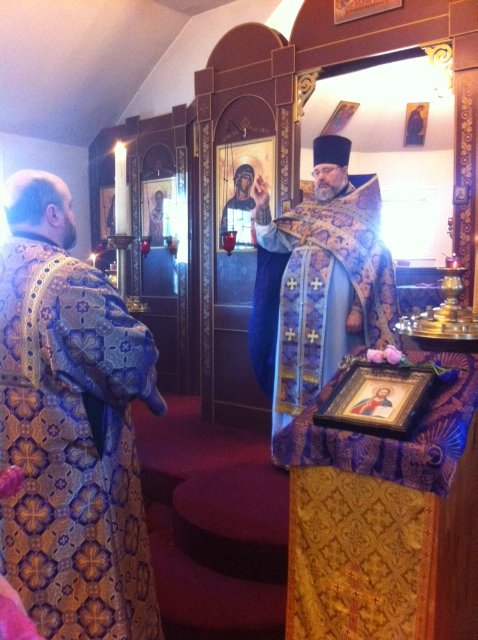
On August 28, holy day of the Dormition of the Most Holy Mother of God, we had a nice celebration in our temple. St. George’s Rector, Archpriest Igor Tarasov served the Divine Liturgy. Following the reading from the Gospel he preached a sermon:

“Celebrating today’s feast of the Dormition, the Falling-Asleep of the Most Holy Mother of God, we celebrate Pascha of the Theotokos. In the same way as for our Lord Jesus Christ, His greatest holy day is His Resurrection, Holy Pascha, so for His Blessed Mother, Her glorious Falling Asleep is Her Pascha. It is not exactly Her resurrection, but definitely Her passing from earthly to heavenly life. Also, celebrating that feast we come to the ending of the Church year. We are reminded that the liturgical year begins in September with the Birth of the Mother of God and ends with the feast of Her Falling Asleep.”
“Today’s feast also explains to us the origin of the hymn that we sing to the Mother of God: “More honorable than the cherubim, beyond compare more glorious than the seraphim”. These are not simply beautiful words that a pious Church writer composed, they have an origin in a spiritual revelation.”
“This feast reminds us of how our Lord from the Cross entrusted the care of His Mother to the Apostle John the Theologian. Tradition tells us that us the Holy Virgin, when She was about 60 years old, was visited by the Archangel Gabriel, who long before had announced to her the conception of Christ in her womb. He now announced to Her that in 3 days She will fall asleep. When it did happen the Apostles were miraculously brought to Jerusalem to make their farewells. The Virgin gave away all her earthly possessions to poor widows as she made ready for her burial in Gethsemane, next to Her parents St. Joachim and Anna and also Her spouse St. Joseph.”
“Tradition further tells us that the Most Holy Mother of God comforted the grieving.  Her house was filled with light, Her face shone and Her body was fragrant, as Christ came with the Angels to take Her soul, as we can see from the icon of this feast. We are reminded how Her soul was taken up by Her Son, together with the cherubim and the seraphim, and now we understand the origin of our hymn: “More honorable than the cherubim, more glorious beyond compare than the seraphim”. We remember how the Apostles, singing in procession, took Her body to the tomb which then they sealed.”
“We recall that Holy Apostle Thomas arrived later and wanted too to make his farewell; and so the tomb was unsealed and found empty except for the burial clothes and the wonderful fragrance. And from the very beginning we Orthodox have piously taken this to mean that the body of the Holy Virgin was so pure that it too had been taken up to heaven, and that is why we have nowhere any bodily relic of the Mother of God.”
“And we understand by this that the first in the Kingdom of heaven after Christ is the Holy Virgin. We understand by this that even given the weakness of human nature it is possible for our bodies to attain to utmost holiness. The Mother of God is, after Christ, the first-fruit of the Resurrection and shows us the way to the life of the Resurrection.”
“Of course there are people who will tell you that none of this is written in the Bible. But for us Orthodox the Holy Scripture is only part of the ongoing Revelation of the Holy Spirit, which we call the Tradition. We are not dead to the Spirit, the Spirit speaks to us still, with ever more revelations about the life of the coming Kingdom.”

“We began by saying that with this feast we come to the end of the Church year. It reminds us of the ending of human life on earth. It is indeed our destiny to die; it is the only certain thing in this life; every day that passes we draw one day nearer to our deaths. However, whatever our destiny, our ambition is not to die, but rather to fall asleep, in the manner of the Virgin, and have our souls taken to heaven by the holy Angels, that death might become a mere passage from mortal life to immortality, from this life to eternity in the everlasting Kingdom of Christ and all His Saints.”
“This is why, dear brothers and sisters, let us pray to the Blessed Virgin to pray for us and to save us!”

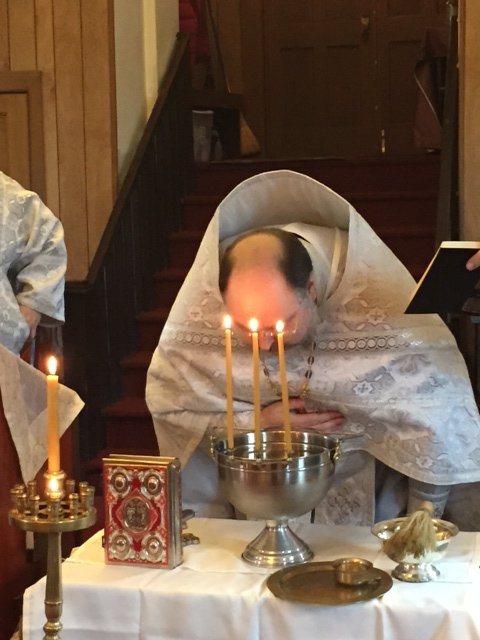
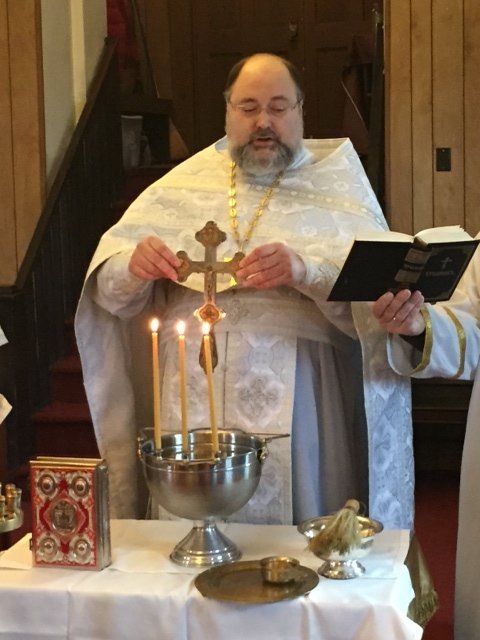
Following the Liturgy dismissal the Rector and the altar servers came out of the sanctuary and performed the rite of glorification in front of the icon of the Dormition. They have sung the troparion, kontakion and magnification of the feast.