Sunday of the Blind Man


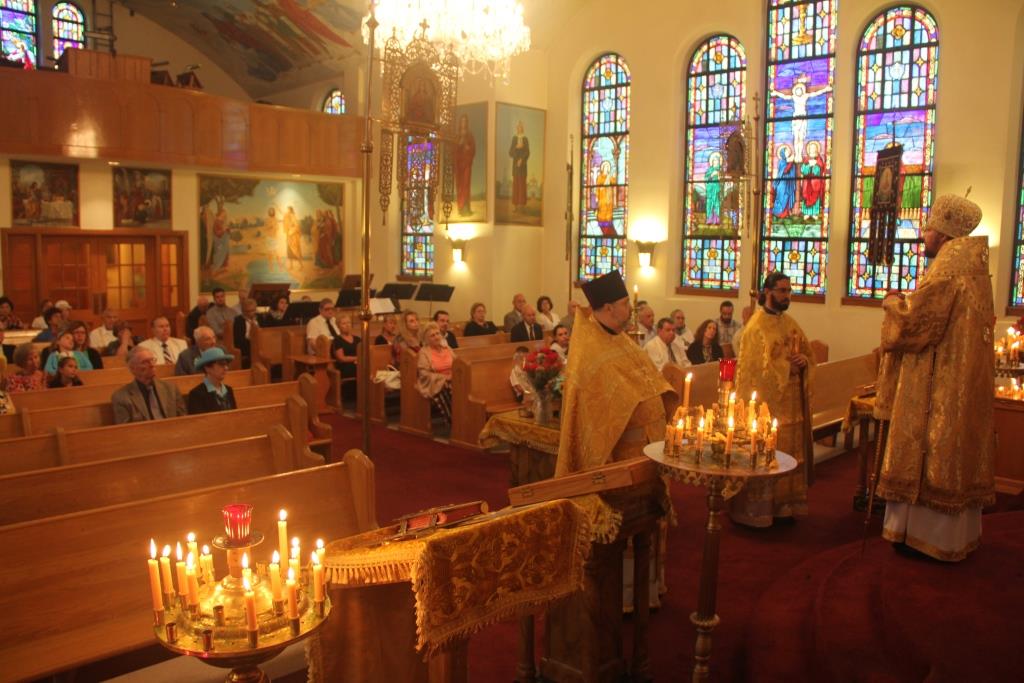
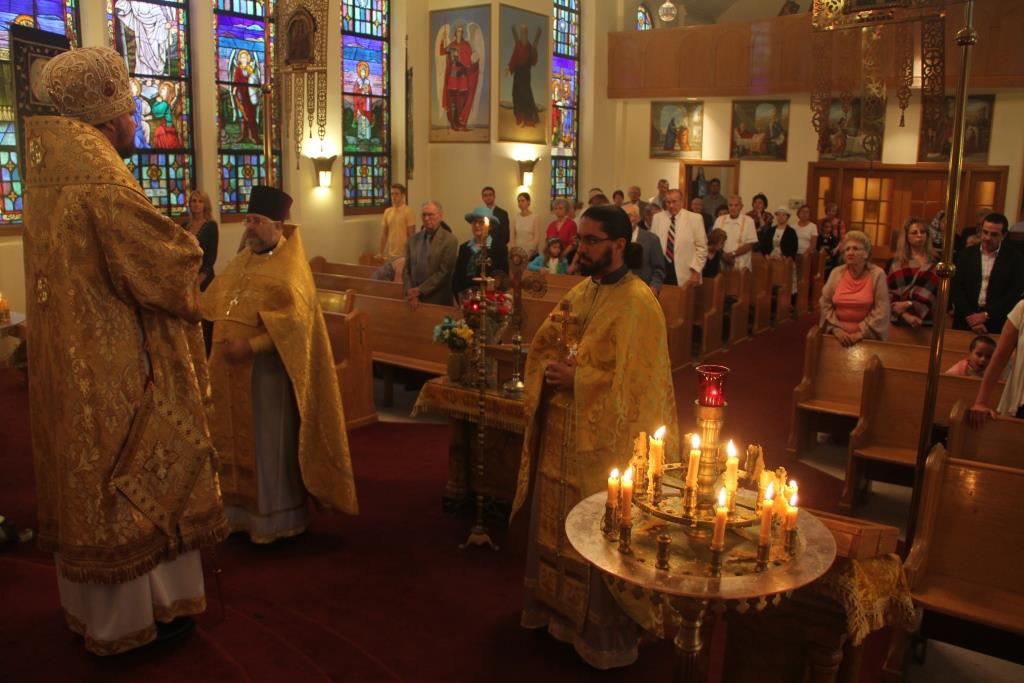
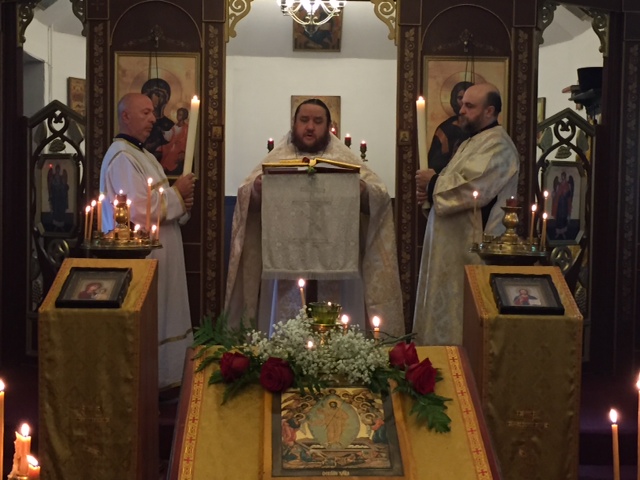
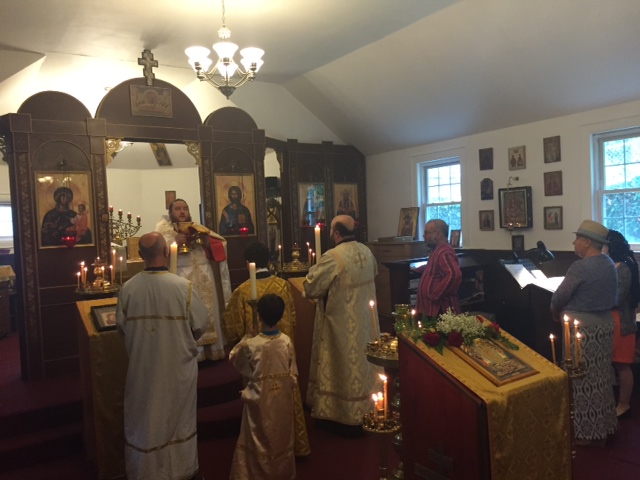
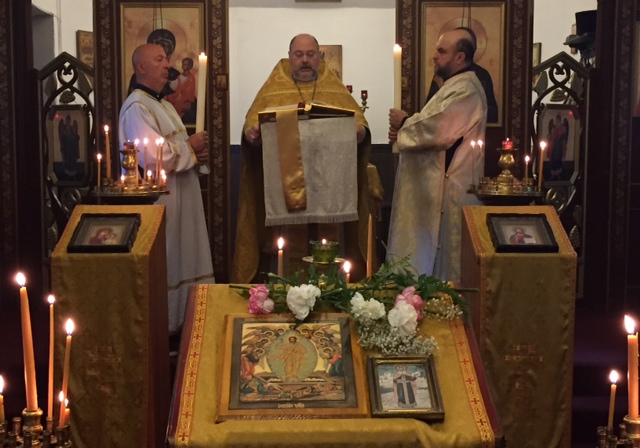
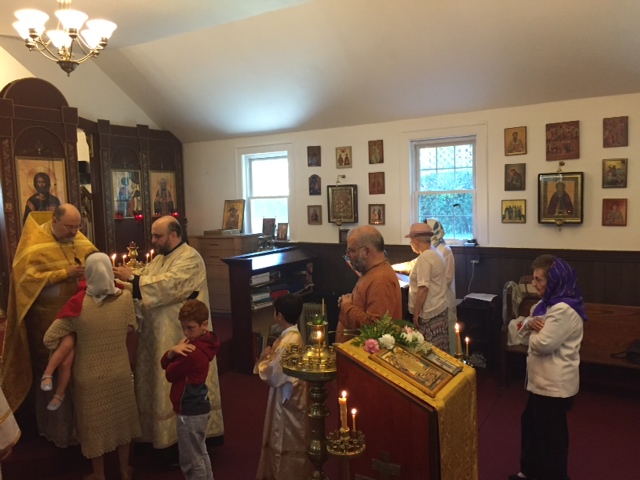
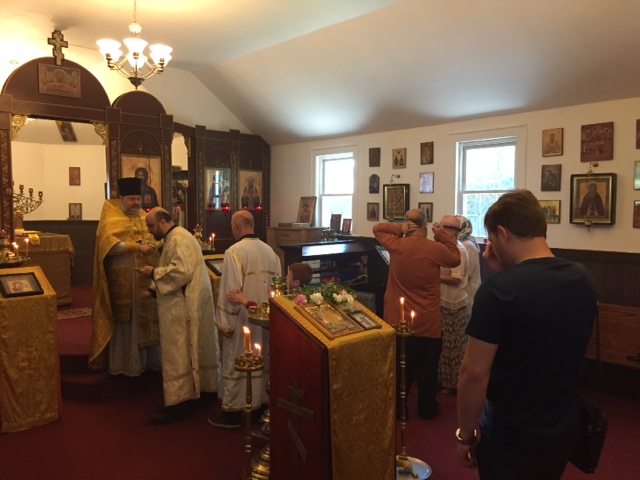
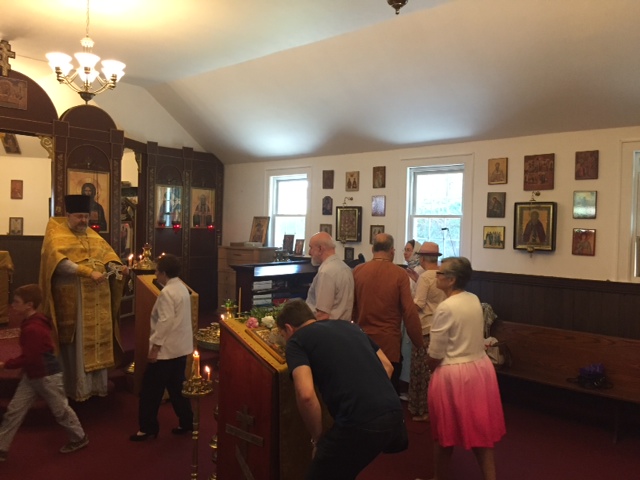
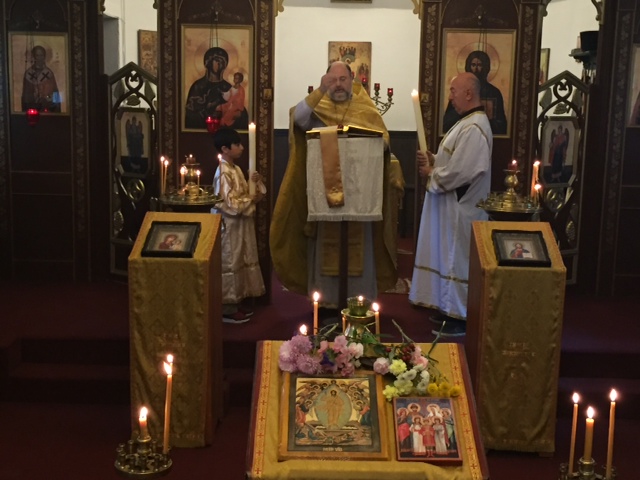
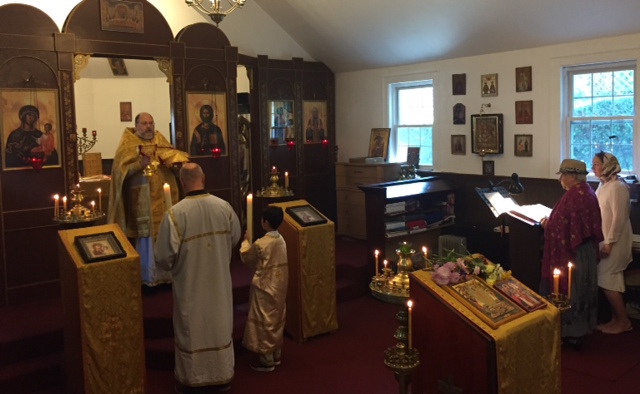
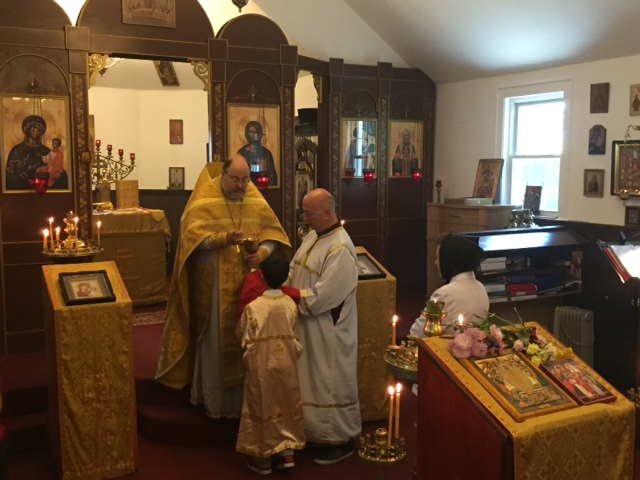
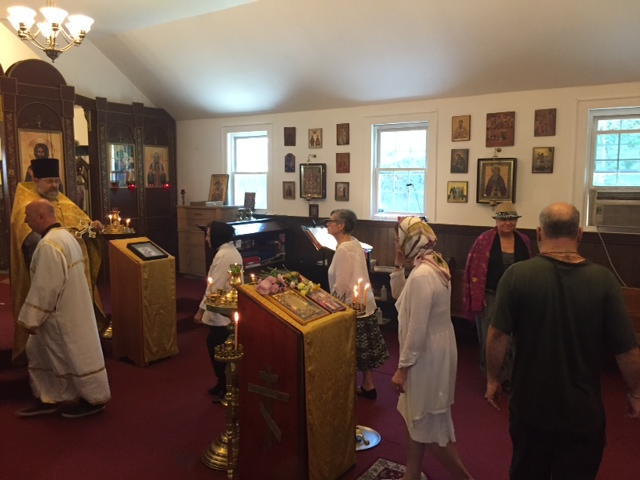
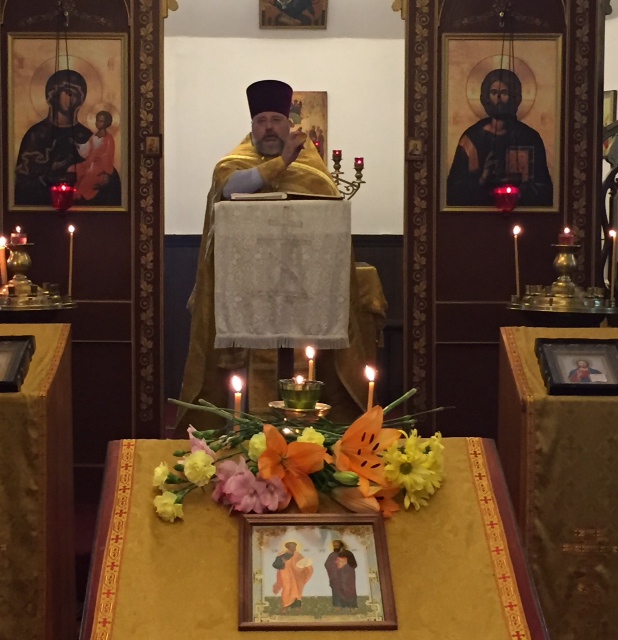
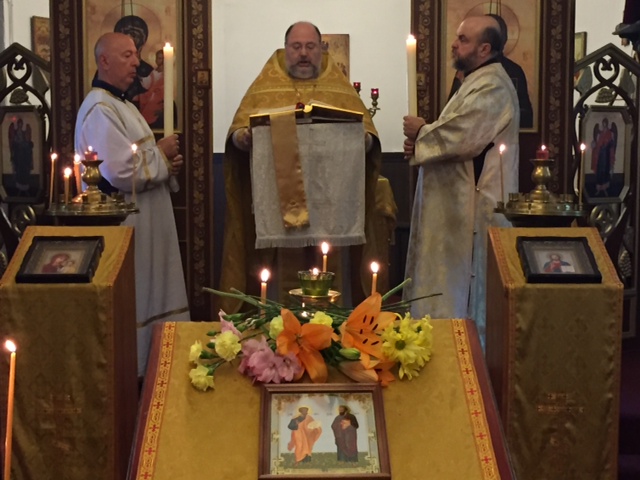
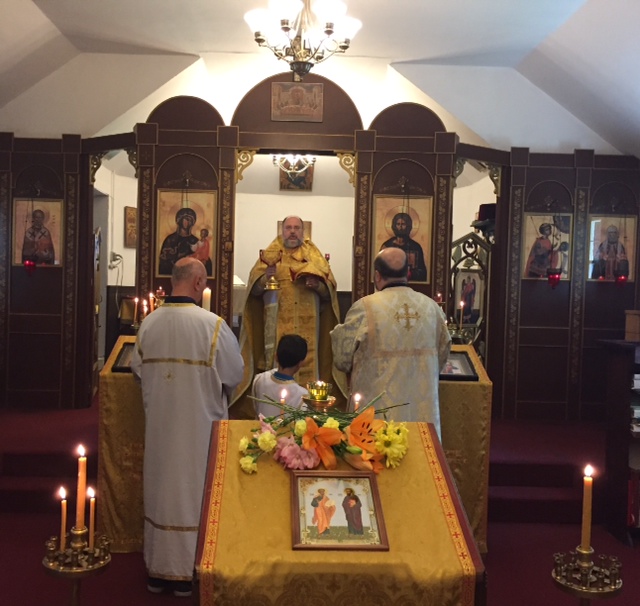
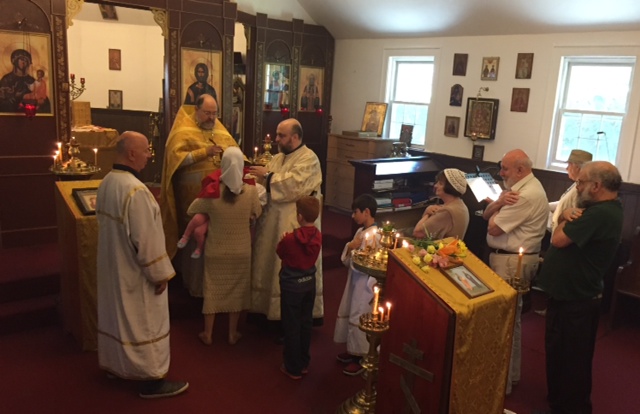
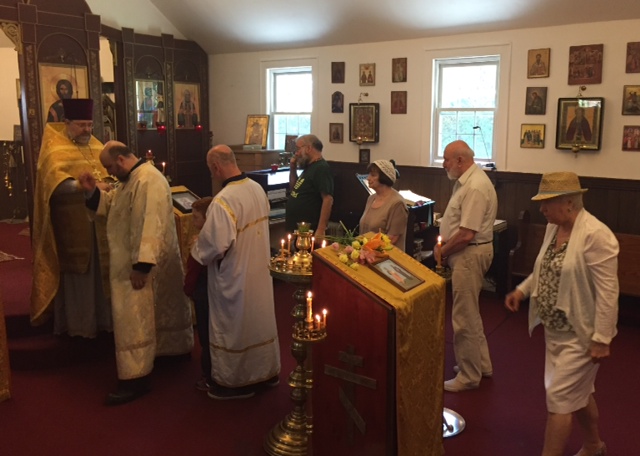
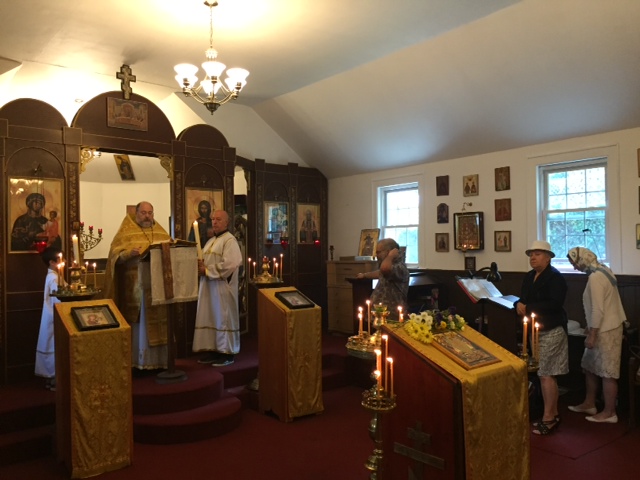
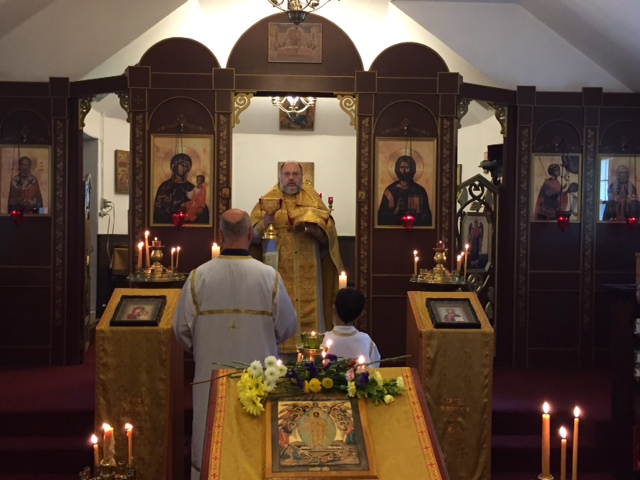
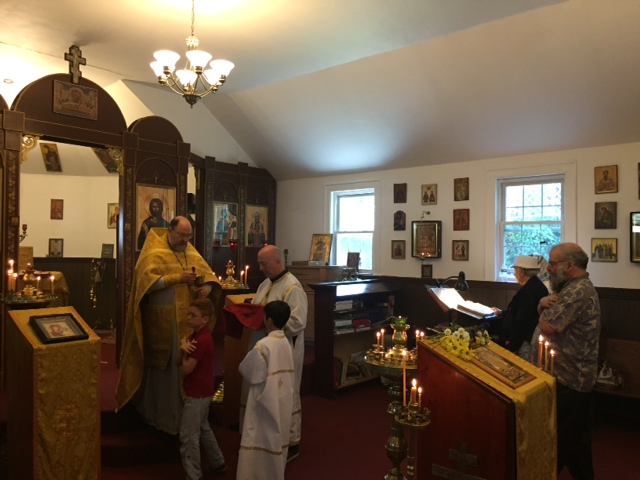
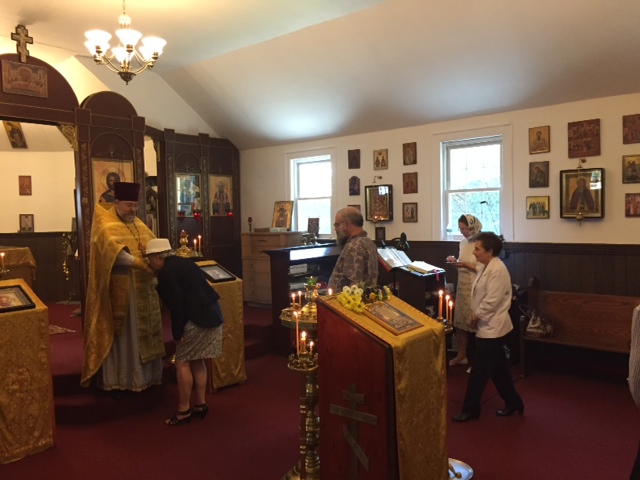
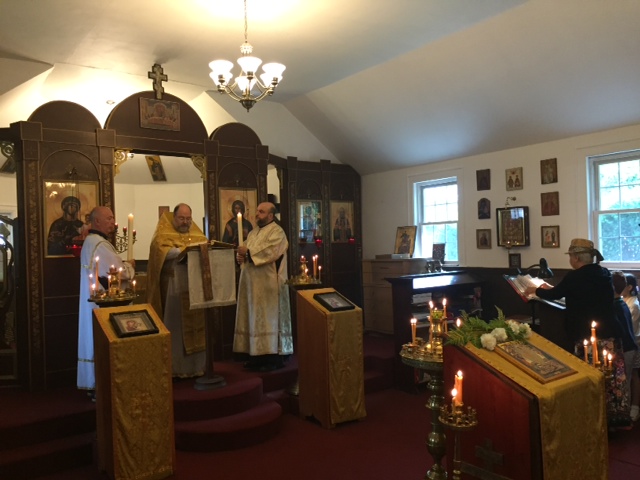
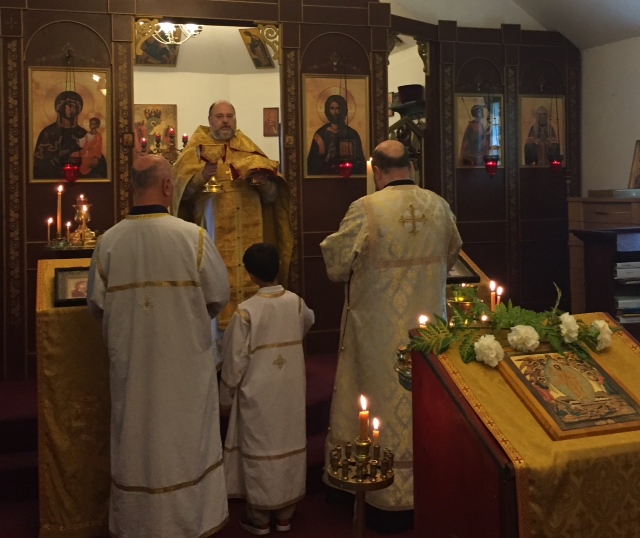
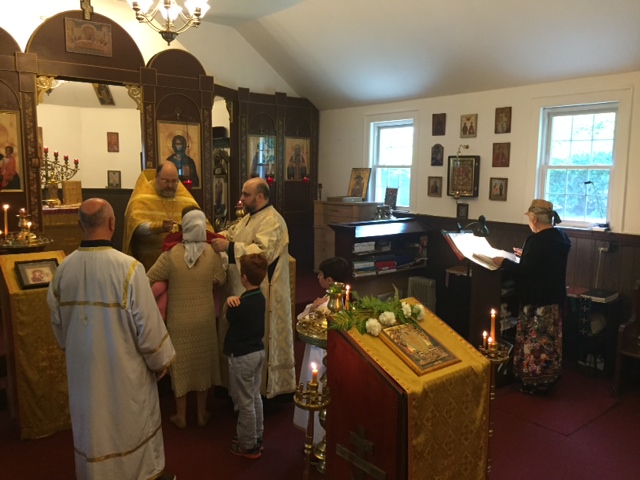
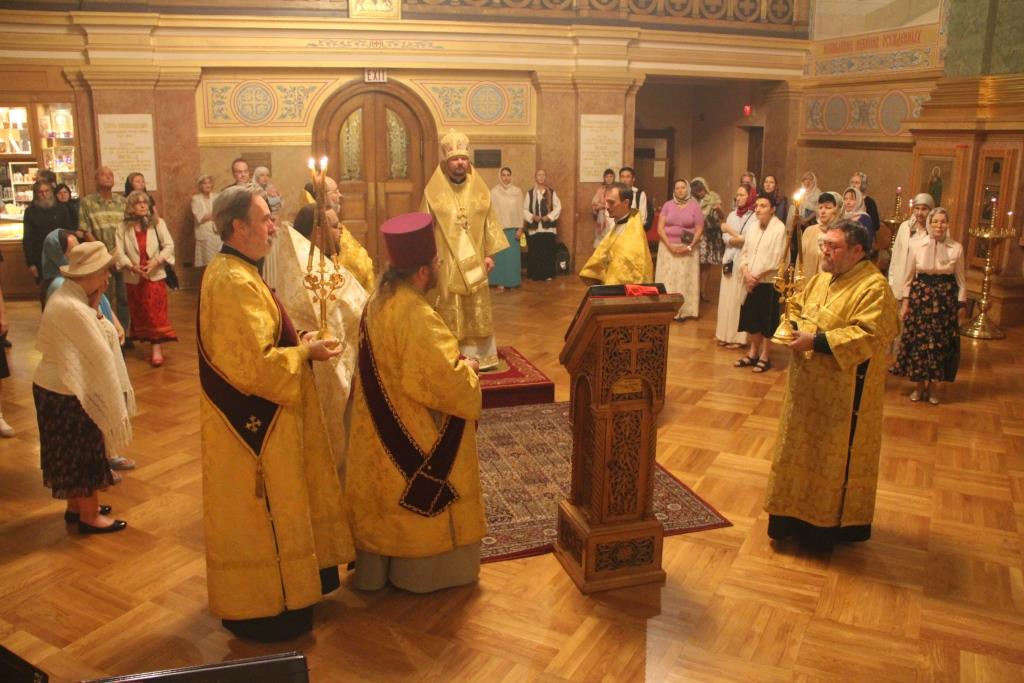
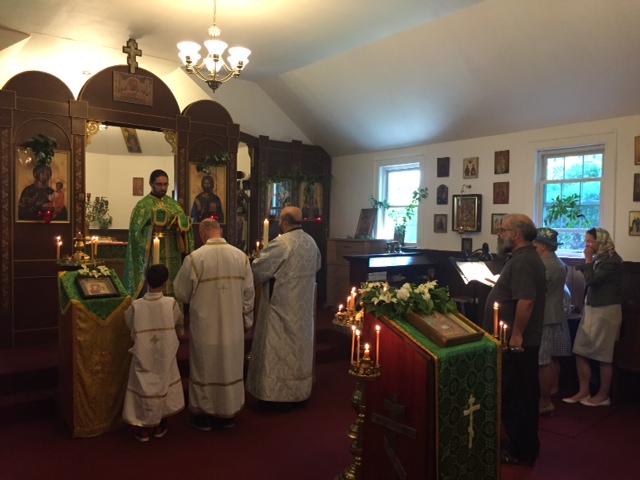
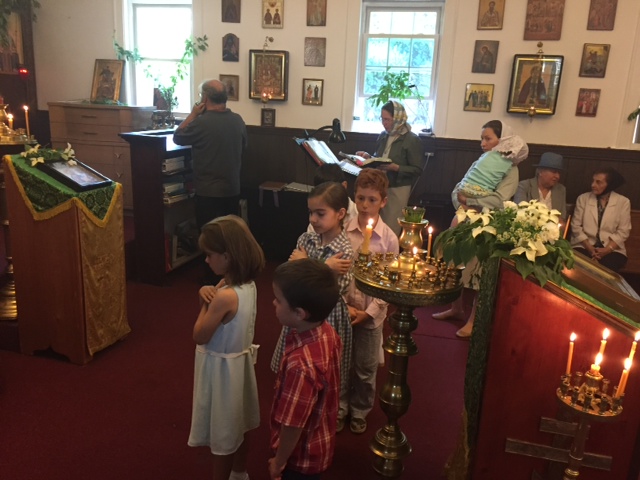
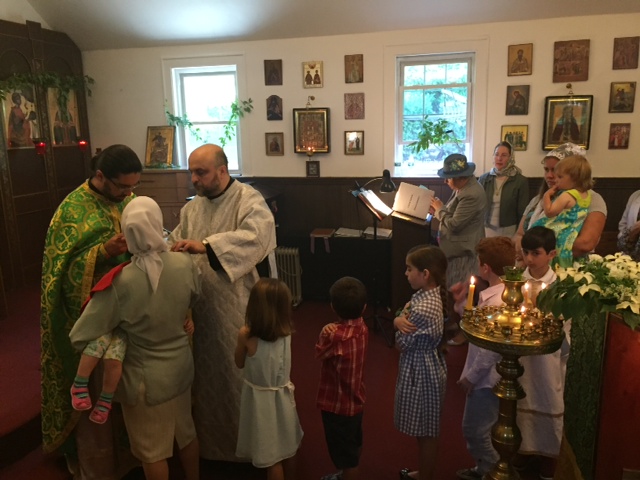
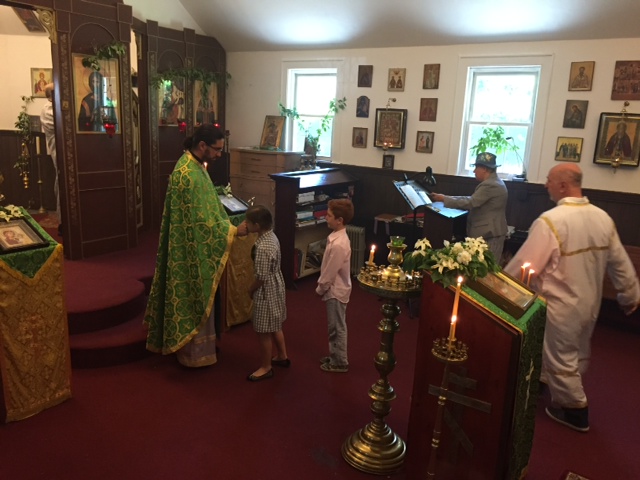
On June 5, on the Sunday of the Blind Man, Rector of St. George Church, Archpriest Igor Tarasov served the Divine Liturgy in our parish temple. Following the Gospel lesson he preached a homily in Russian. An English translation of that homily is as follows:

“Today we celebrate the last Sunday of the Paschal period which is called “Sunday of the Blind Man”. To be precise, it should be called “Sunday of the Man Born Blind”, as it is called among many other Orthodox nations. For today’s Gospel lesson tells us about granting sight to a person who was born without being able to see, born even without eyes. This was the greatness of that miracle that the Savior not just granted the sight to a blind man, but created the organs for this man’s vision. However, the bodily sight granted by Christ to this man, should point us to the importance of the spiritual sight.”
“It is a great happiness to possess bodily sight. Most of the people have this gift but do not fully appreciate it. But if you imagine for a moment that we lost our vision and we won’t see anything we saw before, that we won’t see the blue sky and the green grass, won’t see the light of the sun and the faces of the people who are dear to us, then we may become grateful to have the sight. However, many of us are not able to imagine how bad is to live without spiritual sight, and it is hard for us to define what is spiritual sight. The spiritual sight is to see the things the way they are and to understand that they are created by God. The spiritual sight is an ability to believe in true God and to follow Him. And in today’s reading from the Holy Gospel we heard how the Lord granting the bodily vision to a man, gave him an ability to acquire spiritual sight.”
“The man born blind after obeying Christ and washing in the Pool of Siloam became not only having a vision, but he also understood that Jesus, who did it to him, is the Son of God and the Savior. “He said, “Lord, I believe!” And he worshiped Him” (Jn. 9, 38). That tells us that he acquired spiritual vision.”
“Before the coming of the Savior almost all the people in a spiritual sense were similar to a man born blind. Everybody was born with a spiritual defect, with an original sin of Adam, and being unable to see the truth. Only some righteous men and women could achieve spiritual vision but it was not truly clear. The Jewish people, chosen by God, who formally knew and worshiped the one and true God, was very often spiritually blind. And today’s Gospel lesson gives us an opportunity to see that. The Pharisees and the scribes, instead of recognizing their Messiah in Jesus, do everything to fight Him. After seeing the miracle of granting a vision to a man born blind, instead of believing in Christ and worshiping Him, as that blind man did, they conduct the whole investigation. They interrogate the healed man, they interrogate his parents, and remain disappointed in the results of their investigation. They hypocritically ask the man to praise God because, as they say, Jesus is “a sinner” (Jn. 9, 24). But now this uneducated man teaches those learned scribes a good lesson: he says he does not know about the sins of Jesus but he does know that He opened his eyes and that God does not listen to the sinners (Jn. 9, 31).”
“Our Lord Jesus Christ enabled the whole mankind to acquire spiritual sight through the holy faith and through the following in His steps. But today also many people in this world continue to stay in spiritual darkness. First of all, this darkness shows itself when people refuse to believe in Christ. The Jews continue to stay in such darkness. They praise themselves as being the God’s chosen people, but in fact they had lost the light of the divine truth long ago. It is not surprising that they began to believe in different superstitions and occult teachings known under the name of cabbalism. What the Jews consider a great wisdom of the Cabbala is, in fact, a mixture of pagan views about the world and a search of some secret knowledge, all covered by the terms taken from the Old Testament religion. This is why the Lord criticizing the Pharisees and the scribes, whose followers are the modern Jews, called them the “blind leaders of the blind” (Mt. 15, 14). Not better in their spiritual blindness, and sometimes even worse, are the Muslims, the Buddhists and the followers of the pagan cults.”
“But the spiritual darkness is not only a refusal to believe in Christ. Such darkness also engulfs us, faithful Christians, when we commit sins. By the mercy of God sometimes we receive spiritual sight, but very often, being blinded by sin, we lose the light of the faith in Christ and we wander in our life in the darkness, thinking that we are able to see. Our intellect influenced by our flesh and concentrated on the cares of everyday life, loving only material goods, always leads us to oppose the teaching of the Lord. The heart of a spiritually blind person becomes hard and cruel. Such a person hears by his ears and sees by his eyes but does not listen to them. That person begins to oppose God, and then God leaves such a person.”
“Venerable Seraphim of Sarov said, “If man knew what it is to see God, he would agree to come to Him through any darkness”. For everyone of us the darkness is the multitude of our sins. Therefore, dear brothers and sisters, let us beware to sin and let us repent if we do sin. And may everyone, according to his or her prayers, the Lord grant spiritual sight, that is an ability to distinguish the sins and the good things, and to acquire a vision of the holy and such a beautiful Countenance of the Savior which is shining from the most true Orthodox faith!”

Before the Holy Communion the choir prayerfully sang the Paschal hymns for the last time in this year.

After the dismissal of the Liturgy the Rector preached a short homily in English to convey the main thoughts of his Russian homily.

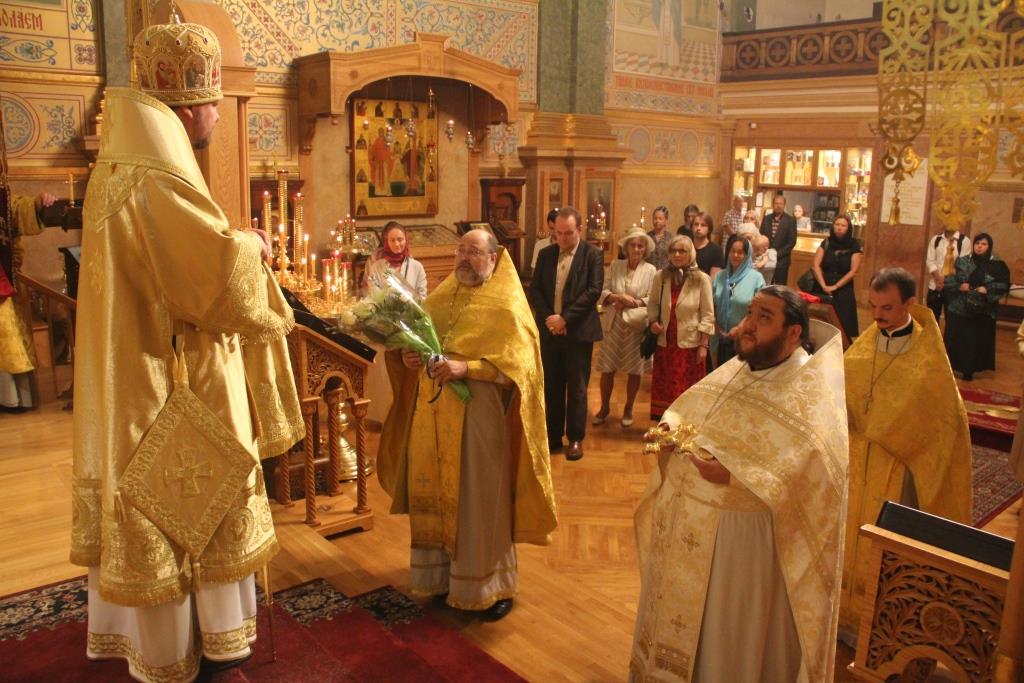
Following the sermon the Rector congratulated the Malyshew family on the occasion of the past name day of their daughter Elena celebrated on June 3. Fr. Igor wished our youngest parishioner God’s blessings and intercession of her heavenly patron, Holy Equal to the Apostles Empress Helen. Traditional Polychronion (“Mnogaia leta!”) was sung.


Summer Service Schedule

Please, note that beginning with Sunday, June 5 we switch to our Summer Schedule. Sunday services will start at 9:00 AM.
For more information please check our monthly Service Schedule.

Sunday of the Samaritan Woman


On May 29, on the Sunday of the Samaritan Woman, St. George Parish family had a nice liturgical celebration. The Divine Liturgy was served by Priest Aleksiy Paranyuk who substituted our Rector.

Following the Gospel lesson Fr. Aleksiy preached a homily in English.

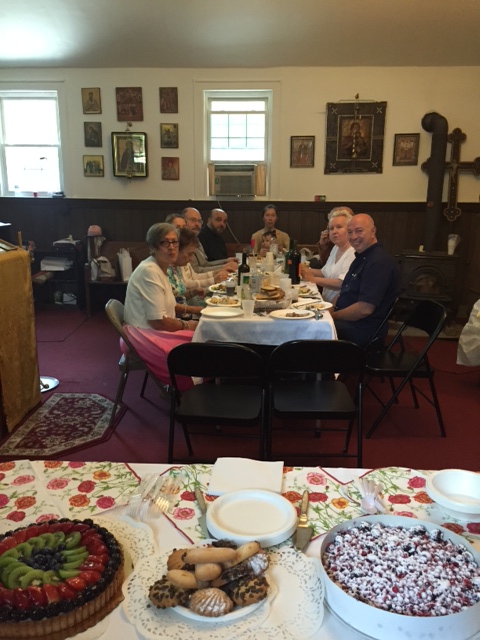
After the Liturgy the priest along with our parishioners enjoyed delicious meals and a nice company during the coffee hour.


Sunday of the Paralytic


On May 22, on the Sunday of the Paralytic, as well as on the feast of the Transfer of the Relics of St. Nicholas the Wonderworker, we had a nice celebration in our temple. Our Rector, Archpriest Igor Tarasov served the Divine Liturgy. Following the Gospel reading he preached the following homily in English:

“Dear brothers and sisters! Today we celebrate Sunday of the Paralytic. We commemorate the event described in today’s Gospel lesson: healing of the paralytic at the pool located at the Sheep Gate (Jn. 5, 1-15). The pool was called Bethesda which means the “House of mercy”, “Mercy house”.
”The state of paralysis reminds us of the state in which the whole mankind was living due to sin. The human kind was spiritually paralyzed. It needed a Savior, a great Healer. But who could become such a Healer, such a Savior? In many legends and myths people thought that it should be a great man, a hero. Even the Jews who believed in one God thought that the Messiah should be a human person. However, this was not possible for any man because human kind was sinful. It could be done only by God, but God willed to do it becoming also a Man.”
“The whole attitude of waiting for a man, for a hero to save is reflected in today’s Gospel. The paralytic says, “Sir, I have no man to put me into the pool when the water is stirred up…” (Jn. 5, 7). He put his trust on men and he was unsuccessful for many years. He should have learned from the Scripture saying, “Do not put your trust in princes, in the sons of men, in whom there is no salvation” (Ps. 145, 3). These words of the Psalm we sing every Sunday at the Divine Liturgy. People who attend the church should know them by heart. We should not put our trust in men but in God.”
“Jesus was the Son of God, thus He could help the paralytic. So, He can help all the people in need, in sufferings, in pain. He is able to do this because He conquered death, was risen from the dead.”
“On the other hand, the people who follow Christ, who are united with Him, can also become the partakers of His power. They continue His miracle working and the mission of salvation. In today’s Epistle we heard that Holy Apostle Peter was able to heal the paralytic also. And he was able to raise a recently dead young woman. St. Peter healed by the name of Jesus Christ (Acts 9, 34). And it is not accidental that today’s Epistle mentions that the followers of Christ were already called “Saints” (Acts 9, 32). People dedicated and belonging to God are saints. Such people are able to conduct the divine grace and the will of God. If we put our trust on God, He can act through such men.”

“One of such holy men was St. Nicholas the Wonderworker whose feast we celebrate today. On this day we commemorate transfer of his relics to the city of Bari. St. Nicholas was a man who became known for a number of great miracles. He performed them during his earthly life and after he passed away, when the faithful offered their prayers to him. But he did all these miraculous works not by himself. He was a conductor of the divine power, of the God’s grace. Jesus Christ is the Source of such power, and the holy men and woman are the partakers and conductors of it.”
“Dear brothers and sisters! Let us put our trust in God. Let us be faithful to our calling as Christians. Let us strive for being the partakers of our Lord’s grace and the conductors of His power. Let us also acquire this power in the Church where we can meet the people dedicated to God, the Saints of our days. The Church is our House of mercy, our healing place, a place of God’s graces. Let us belong here and become a part of our Lord’s Resurrection.”

Following the dismissal of the Liturgy the Rector preached a short sermon in Russian to explain the ideas of his English homily.


The New Sign for our Church


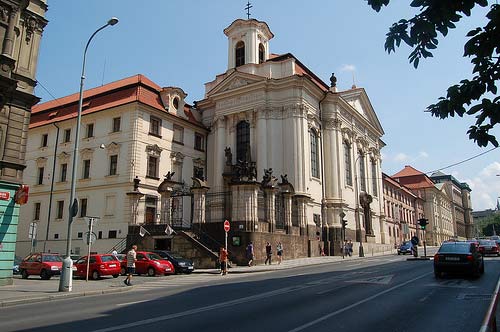
Recently a new sign of our church had been installed beside the building of our parish temple.

It was prepared in an artistic manner by our parishioners Vitaly and Andrew Malyshew. They put the new sign just before Pascha. Later they finished decorating the sign by making a beautiful mini-dome with a cross on the top of it.
We are very grateful to Andrew and Vitaly Malyshew for their dedicated labor and great assistance to our Parish!

Antipascha. Sunday of St. Thomas


On May 8, on the Sunday of Antipascha, or Sunday of St. Thomas, our Parish family gathered for a beautiful celebration. Our Rector, Archpriest Igor Tarasov served the Divine Liturgy in our temple.


Following the Gospel reading he preached a homily in Russian. In that homily the Rector spoke about the great value of faith when someone believes without any proof. However, for many people some proof may be helpful and may strengthen their faith. This was the case of the Holy Apostle Thomas who desired to believe in the Resurrection of Christ but needed a proof. And the Lord condescended to him and showed Thomas His risen body. Thus many people may doubt but a doubt should be positive, with a wish to believe. Then the Lord may help us and give us a chance to make our faith stronger.


After the Liturgy dismissal the Rector preached a short sermon in English explaining the ideas of his Russian homily.


Following the service the Rector distributed Paschal blessed bread, called the Artos, to the parishioners.

Parish Patronal Feast of St. George


On May 6 the Church commemorates Holy Great Victorious Martyr George. This is a Patronal feast of our Parish.

St. George parish family had a solemn and beautiful celebration. It was headed by our Archpastor, Most Rev. John, Bishop of Naro-Fominsk. His Grace arrived at 10:30 AM and was greeted by our Parish Warden Olga Roussanow at the entrance to the temple. Bishop John entered the church where he was met by the Rector, Archpriest Igor Tarasov.

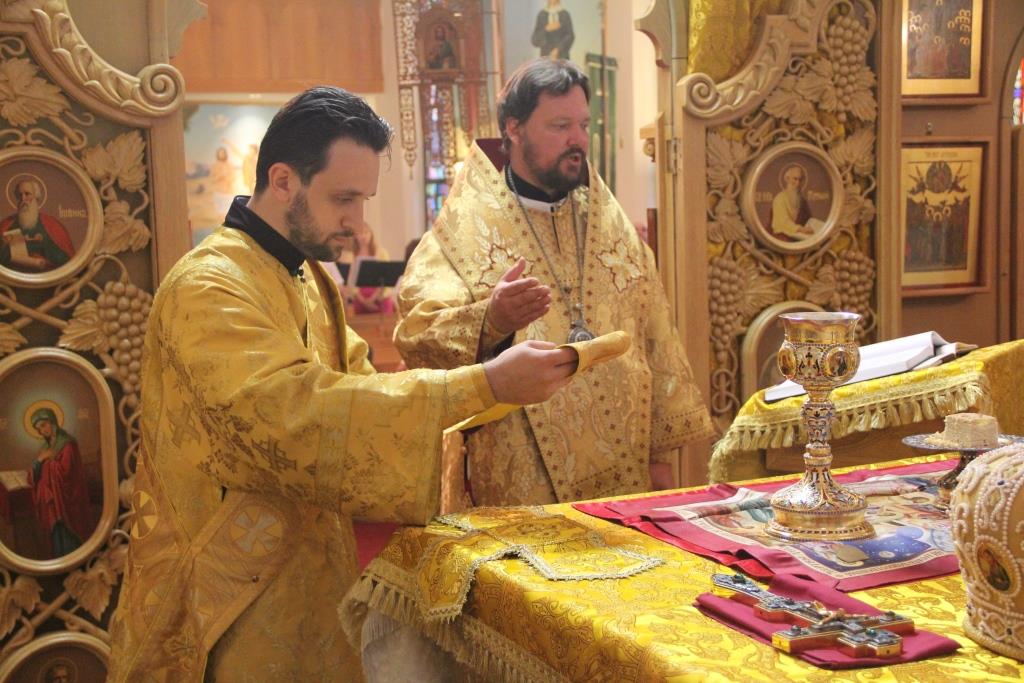
During the Paschal Hours the Bishop was vesting in the altar. Following the Hours His Grace began the Divine Liturgy. The Liturgy was concelebrated by our Rector, as well as by Hegumen Nicodemus (Balyasnikov), Secretary to the Bishop, Hieromonk Eutychius (Dovgan), cleric of the Synodal Cathedral (ROCOR), Priest Ion Arama, Rector of the Annunciation Church in Flushing, NY, and deacon Mark Rashkov. Service was also attended by our former Rector, Hieromonk Zosimas (Krampis) who prayed in the temple and sang along with the choir.

Following the Liturgy dismissal the Bishop along with the serving clergy came out of the sanctuary to the middle of the temple and performed the rite of glorification singing the troparia, the kontakion and the magnification in honor of St. George.

At the end of the Liturgy His Grace preached a sermon. He also congratulated the Rector and parishioners on the joyful Patronal feast of St. George. As a response to the Bishop’s speech Archpriest Igor Tarasov greeted His Grace in our temple. Traditional Polychronion (“Mnogaia leta!”) was sung.

After the liturgical service the celebration of our Patronal feast continued at the trapeza table where His Grace, the clergy, our parishioners and guests together enjoyed delicious food and a nice company.


HOLY PASCHA


On May 1 of this year 2016 all Orthodox Christians celebrated the greatest holy day, the Resurrection of our Lord Jesus Christ, Holy Pascha.

Celebration at St. George Church began at 11:30 PM on Saturday, April 30. Our Rector, Archpriest Igor Tarasov performed Midnight service at the Lord’s Tomb and transferred the holy Shroud to the altar.

Right after midnight joyful Paschal celebration began. The Rector assisted by the altar servers led faithful in the procession around the temple. At the end of the procession everyone stood in front of the closed church doors where Fr. Igor began Resurrection Matins and proclaimed the Easter greeting, “Christ is risen” in Slavonic, English, Greek and Georgian languages. Faithful responded and sung Paschal troparion. Then the priest opened the doors of the temple and faithful entered into the church.

After the Matins the Rector served the Divine Liturgy. The Gospel lesson on Pascha is traditionally read in several languages. The faithful had an opportunity to listen the verses of the reading in Greek, Latin, Hebrew, Church Slavonic, English, Russian, Ukrainian, Georgian, Serbian, Romanian, Belorussian, Polish and Spanish. Following the Gospel reading Fr. Igor proclaimed Catechetical Sermon of St. John Chrysostom on Pascha.


After the Liturgy dismissal the Rector greeted the parishioners on the occasion of the greatest Christian holy day, wished them to be blessed by the Risen Christ.

Following main services the Rector blessed Easter food.

Rector and parishioners continued their celebration of Pascha at the tables where they had an opportunity to enjoy delicious meals after the long time of Lenten restrictions.

         CHRIST IS RISEN!       ХРИСТОС ВОСКРЕСЕ!


Holy and Great Friday


On April 29, on the Holy and Great Friday we had two special services in our parish temple. This day is the most sorrowful day in Christian calendar. On Holy Friday we commemorate crucifixion of our Lord Jesus Christ, His death on the Cross, as well as His burial. St. George Church’s Rector, Archpriest Igor Tarasov served Vespers with the procession of the Shroud at 4:00 PM. At the end of this service holy Shroud had been solemnly carried out from the altar to the middle of the church and placed there for veneration.

At the end of Vespers the Rector preached a sermon in Russian. He pointed out that the people who surrounded our Lord Jesus Christ at the end of His earthly ministry can be divided into several types. In particular, according to the New Martyr, St. Seraphim, bishop of Dmitrov, those who caused His holy Passions and His death on the cross were Judas, the leaders of the Jews and Pontius Pilate. Judas betrayed the Lord because he was a materialist. Judas was seeking for material wealth and power. When he realized that Jesus is not going to be a powerful earthly ruler, and being with Jesus cannot make him wealthy he betrayed his Teacher. The leaders of the Jews, especially Caiaphas, were rationalists. They used their reason to kill Jesus in order to avoid the anger of the Romans. And Pilate although he knew that Jesus was innocent, could not free him, but let Him be crucified. Pilate was seeking political stability and was not able to act justly. However, there were the people who followed Christ. These were His Blessed Mother, the women disciples who stood beside the Cross, as well as St. John the Theologian. When Jesus died righteous Joseph of Arimathea and Nicodemus came and asked for His body. They buried the Lord. Thus, the Rector called the parishioners to imitate those persons who remained faithful to the Lord and to avoid resembling those who caused His condemnation and death. He also called the parishioners not to crucify Jesus again by inappropriate choices and sinful deeds.
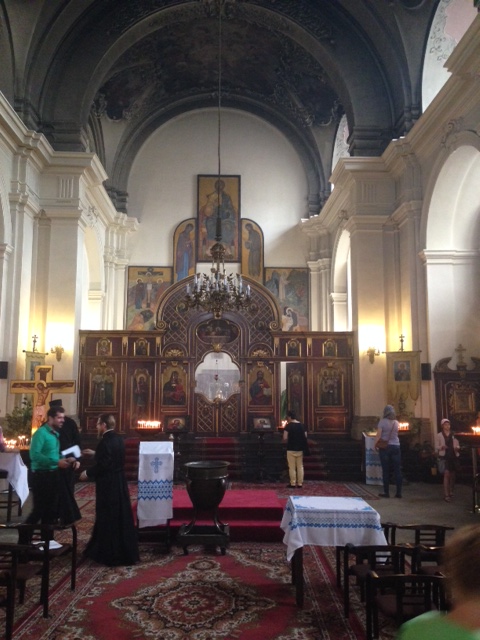
 At 7:00 PM the Rector celebrated Matins on the Lord’s Tomb. Most of this service was performed before the Shroud placed in the middle of the church. After the Great Doxologion the Rector, altar servers and parishioners performed the procession around the church. The priest carried the holy Shroud resembling burial of the Lord.


Holy and Great Thursday

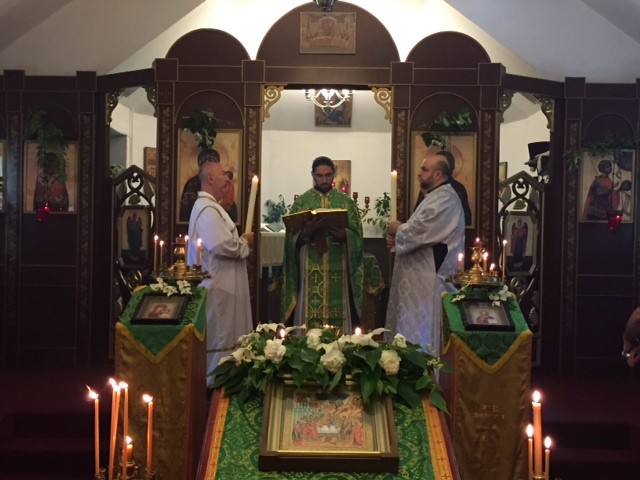
On April 28, on Holy and Great Thursday when the Church commemorates the Last Supper of our Lord Jesus Christ we had a service in St. George Church. Our Rector, Archpriest Igor Tarasov served Vespers with the Divine Liturgy of St. Basil the Great.

Following the Liturgy dismissal the Rector preached a brief homily in Russian about the significance of the special Gift of our Lord left to His followers, the Sacrament of the Holy Eucharist. This special Mystery is a remembrance of the Lord, of His Sacrifice on the Cross and of the Last Supper He had with His disciples.