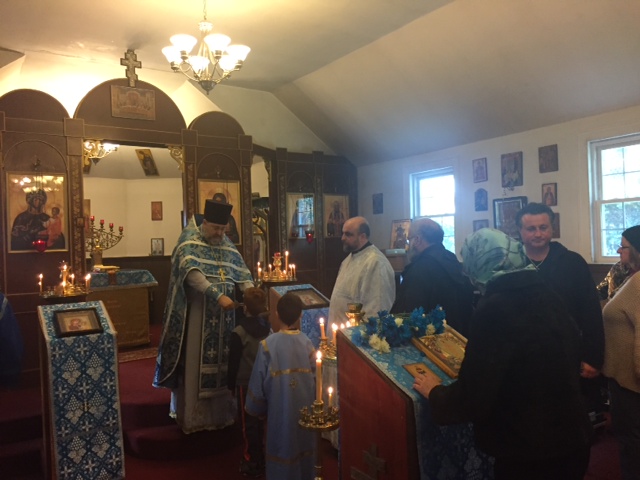
9th Sunday after Pentecost. Feast of the Holy Prophet Elias


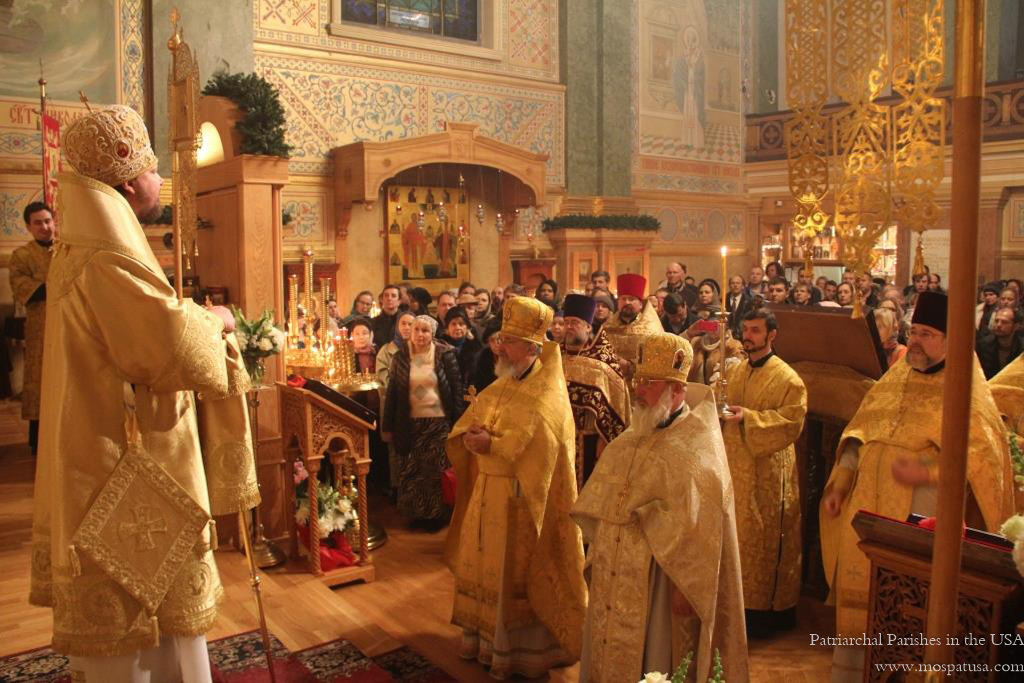
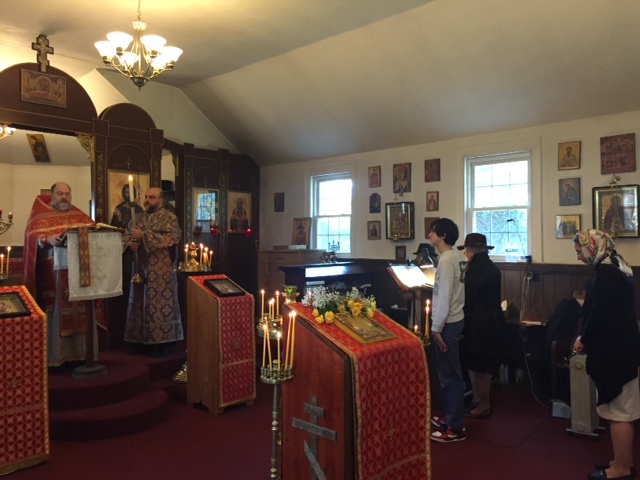
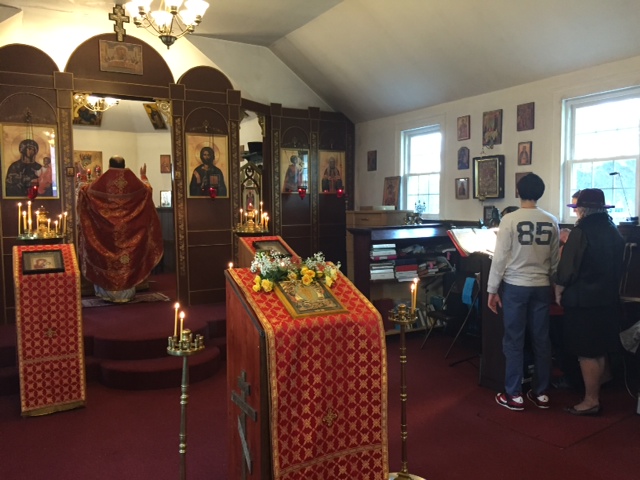
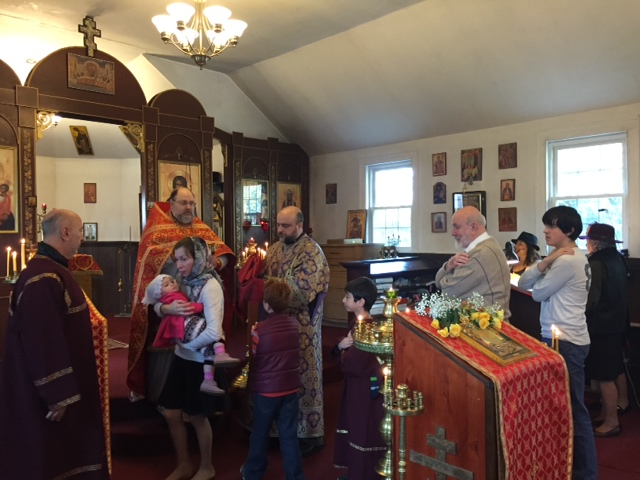
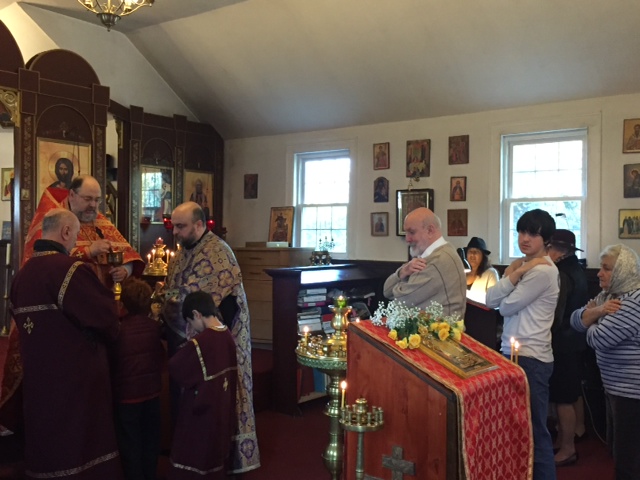
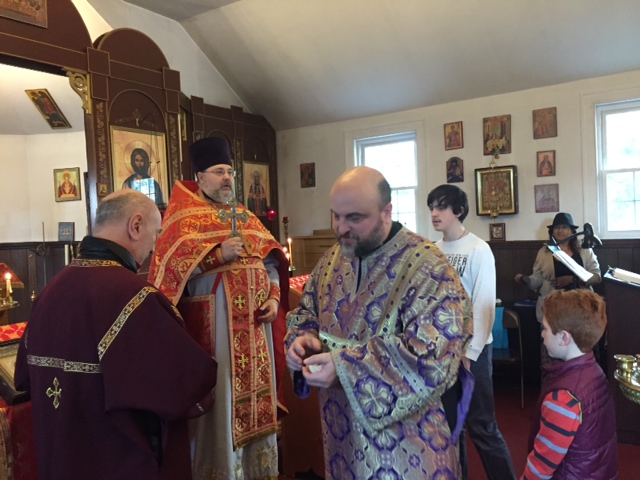
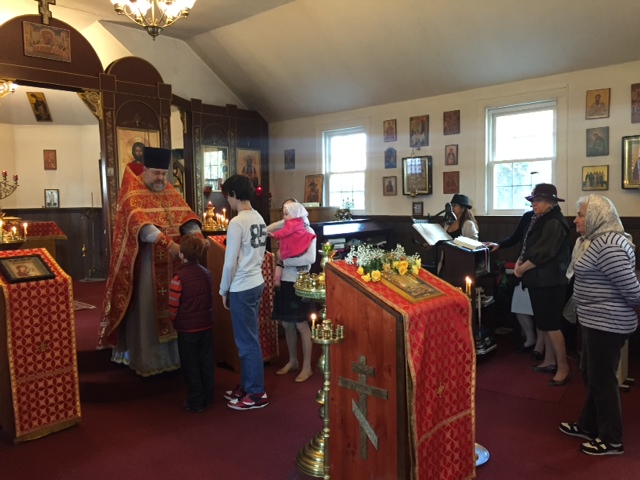
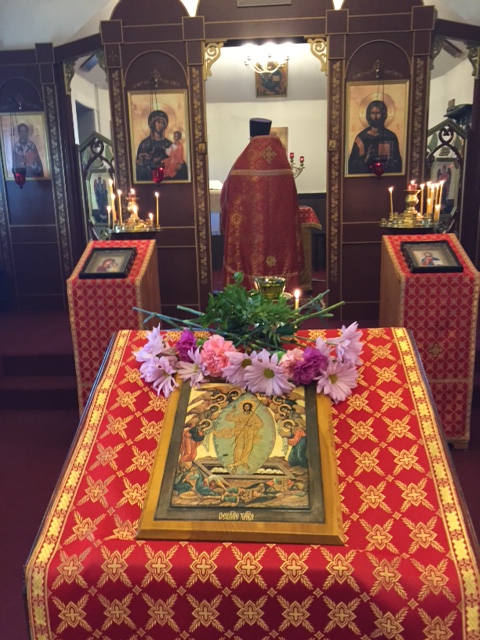
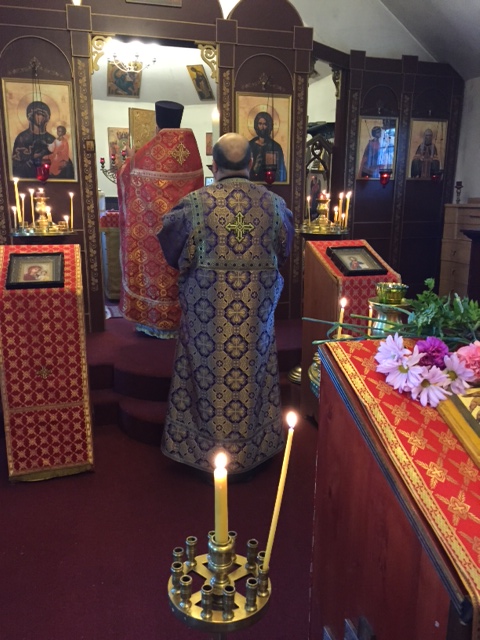
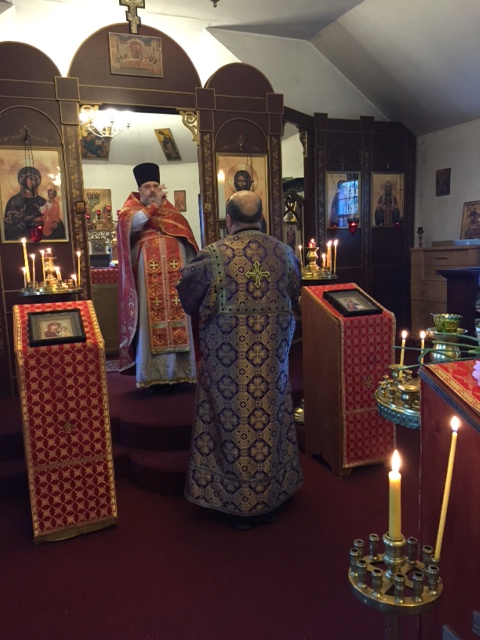
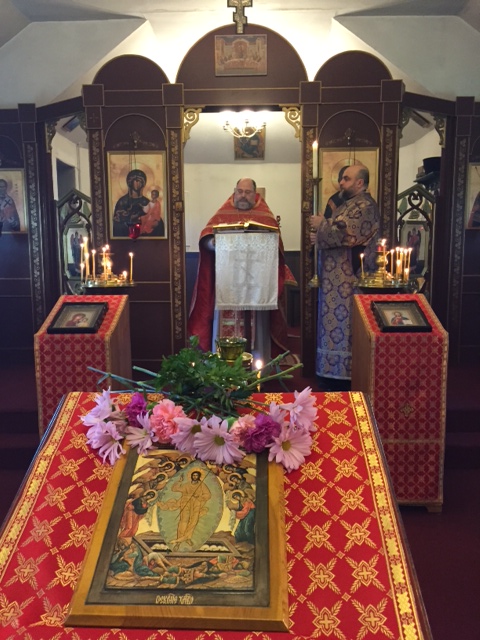
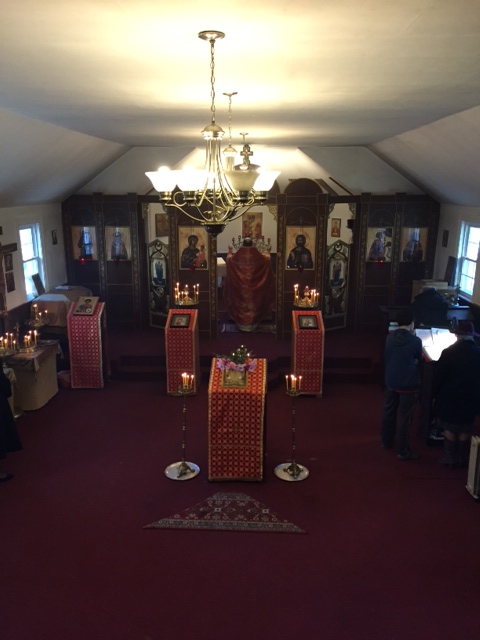
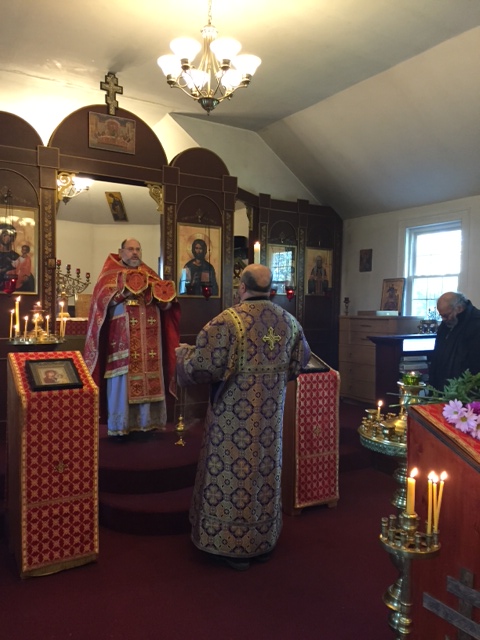
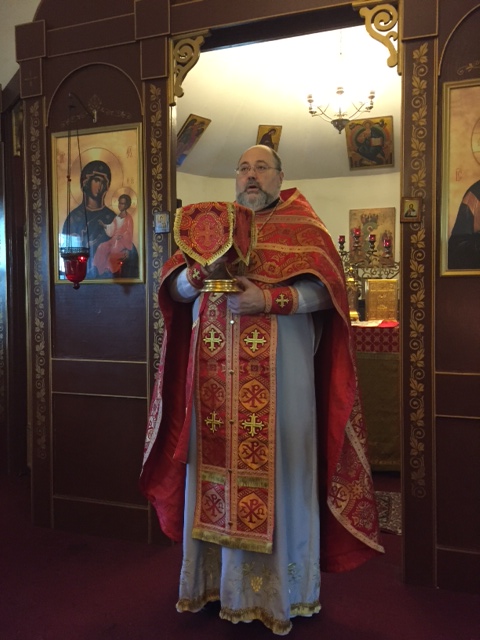
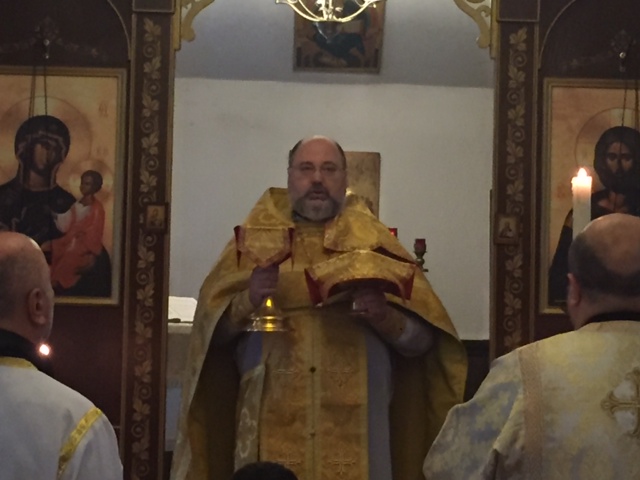
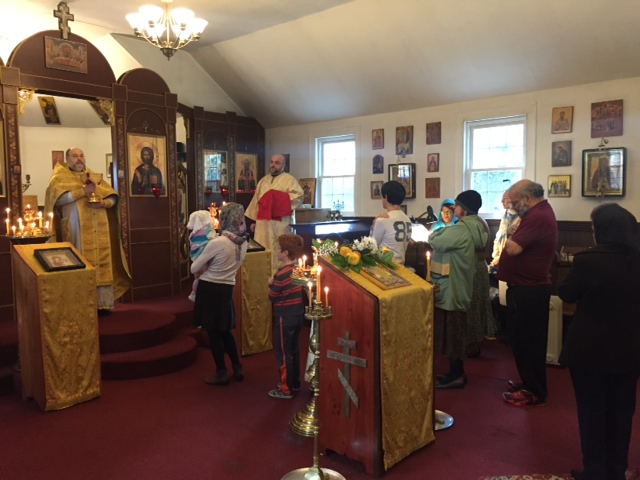
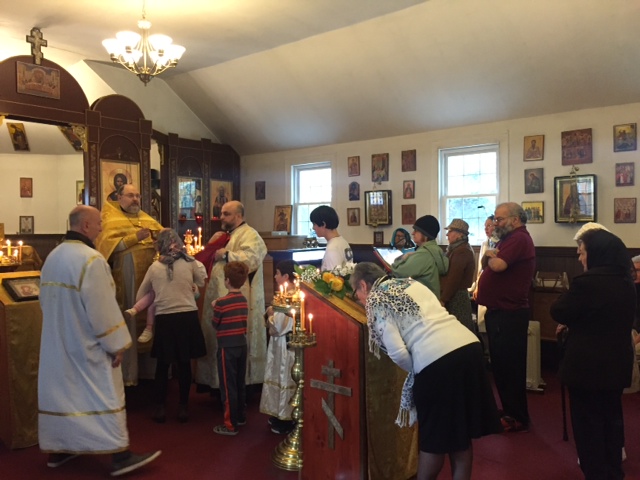
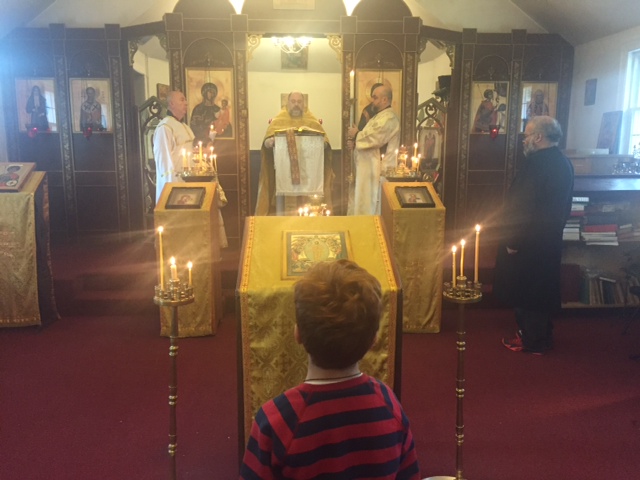
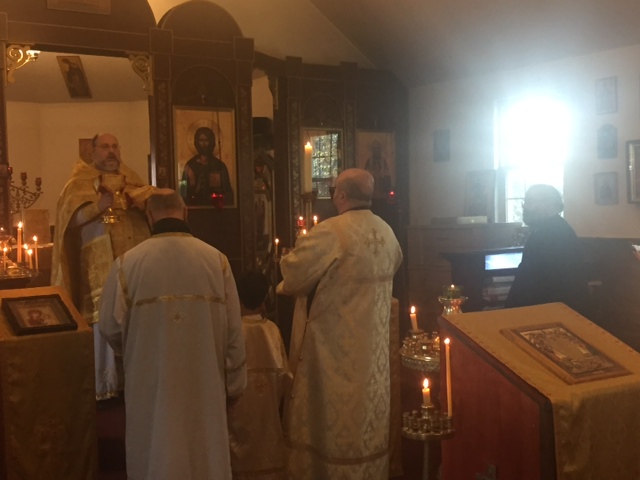
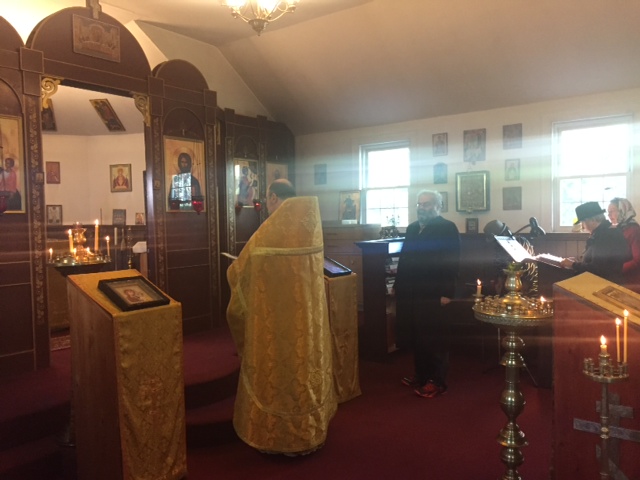
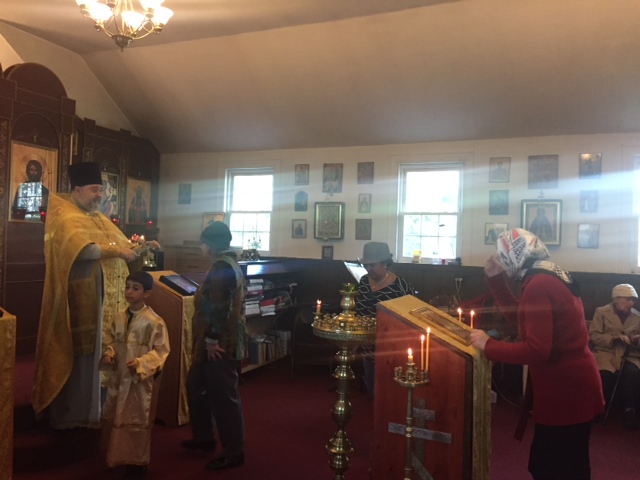
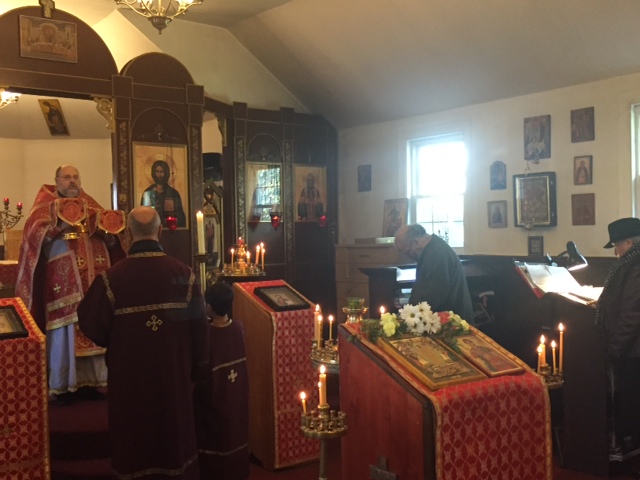
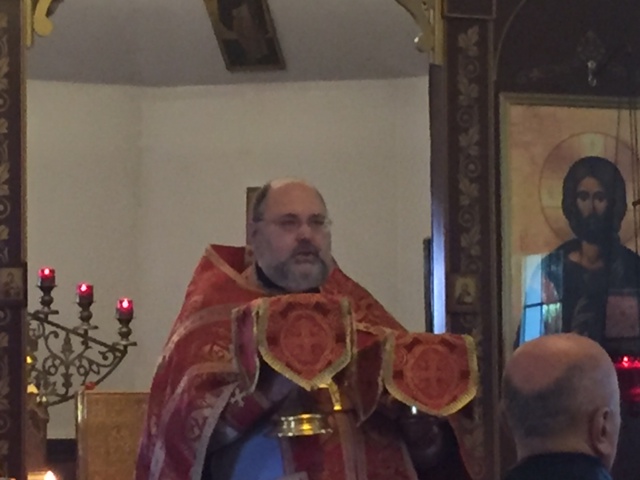
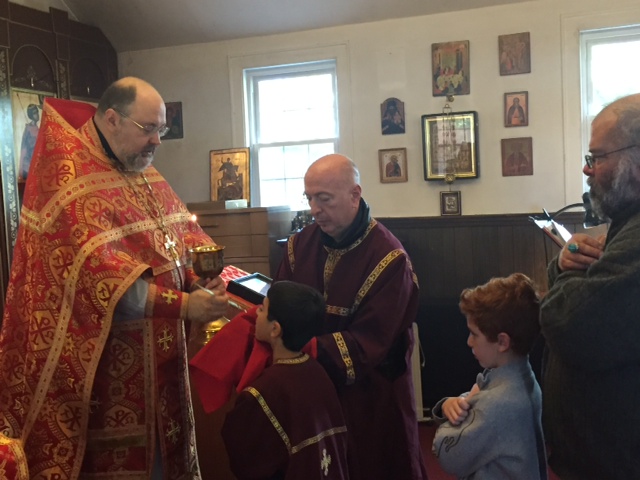
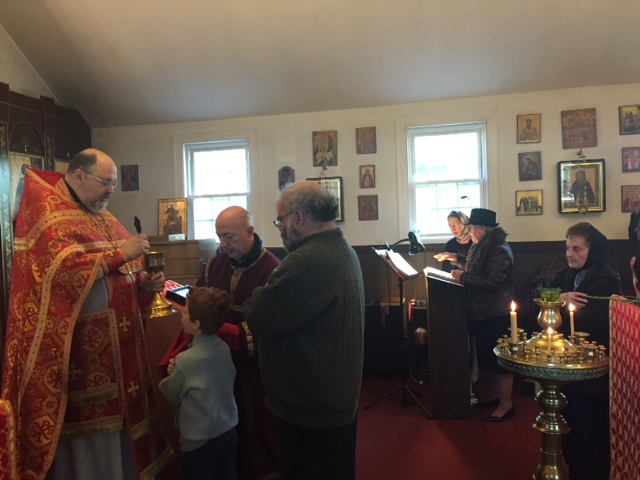
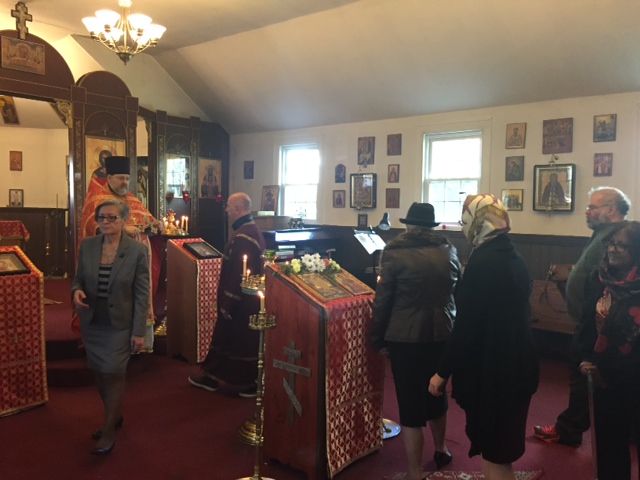
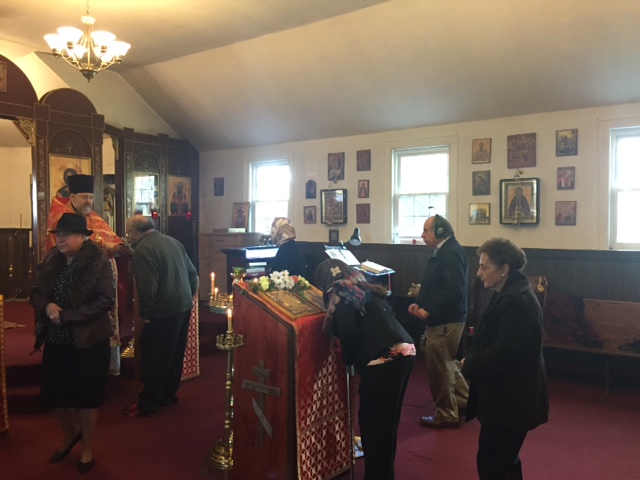
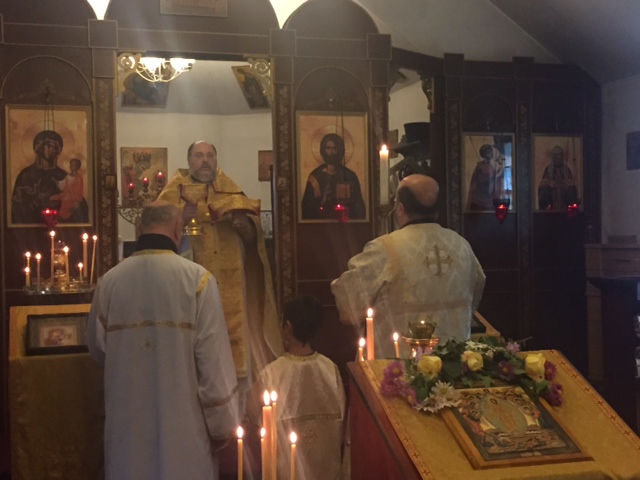
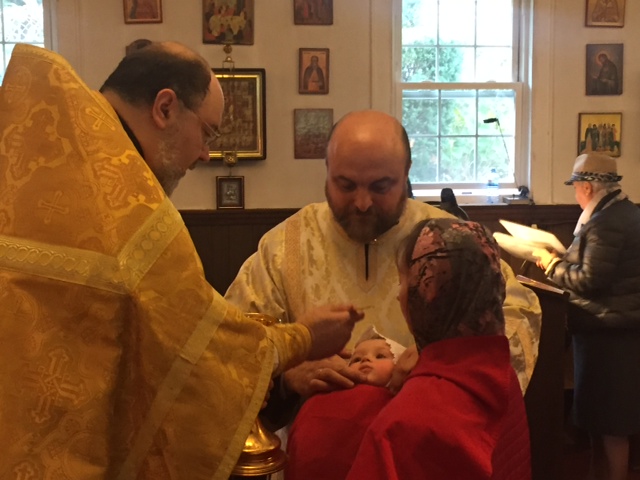
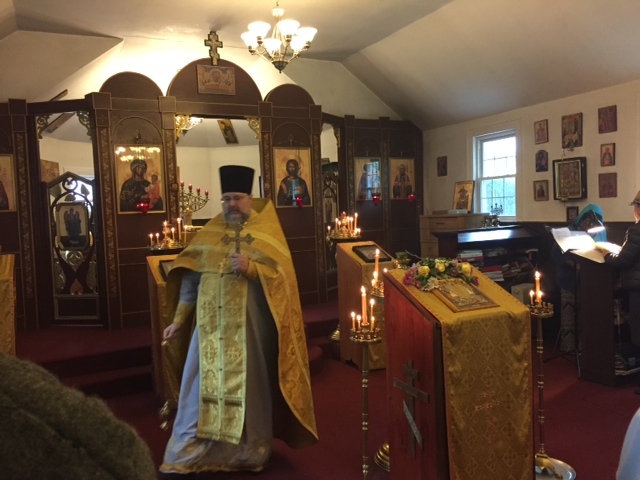
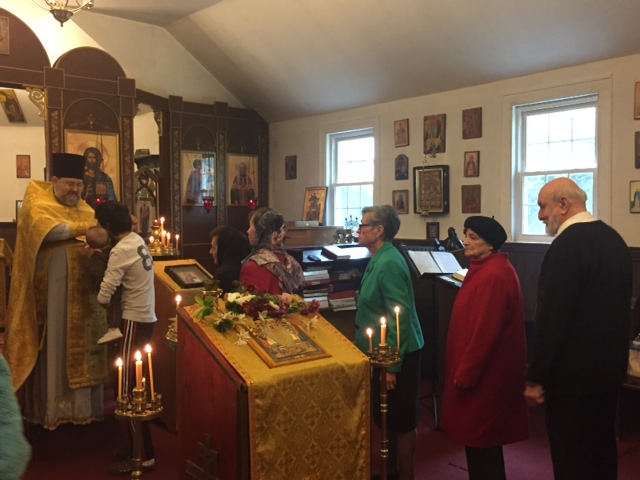
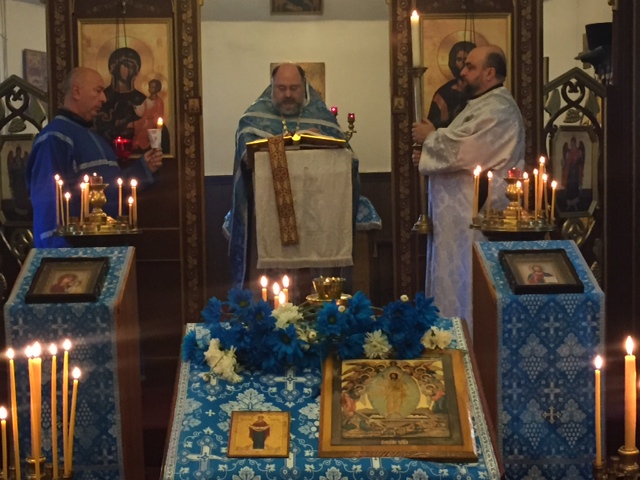
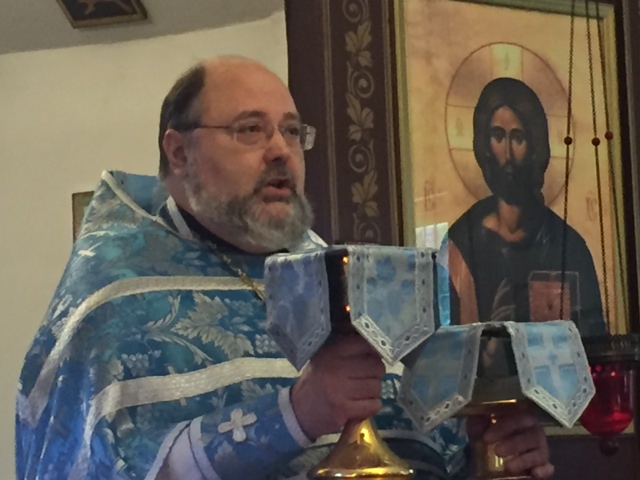
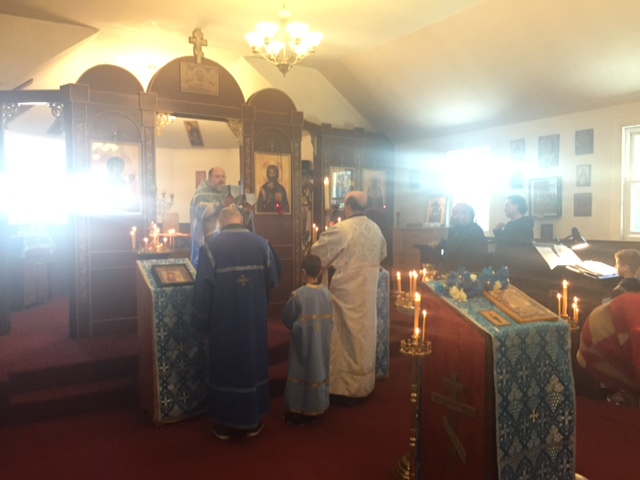
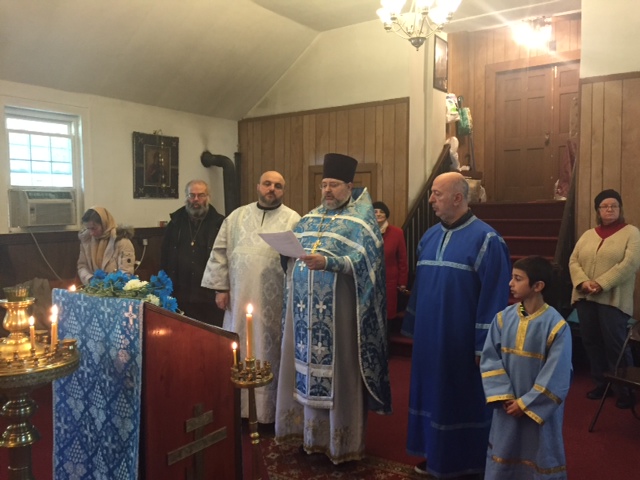
On August 2 the Church celebrates feast of the Holy Prophet Elias (Elijah). This year it fell on the 9th Sunday after Pentecost. Rector of St. George Church, Archpriest Igor Tarasov served the Divine Liturgy in our temple. Following the Scripture readings he preached a homily:

”In today’s Gospel we hear how our Lord came to His disciples walking on the water in the midst of a storm. We hear how St. Peter through faith joins Him on the water. Then Peter becomes distracted by the storm and cries out “Lord, save me!” (Mt. 14, 30). Our Lord reaches out and catches him and says “O you of little faith, why did you doubt?” (Mt. 14, 31).”
”In this Gospel we see the power of faith. We see that if we have faith we can perform miraculous things. Our Lord reminds of this when he says the following “If you have faith as a grain of mustard seed, you shall say unto this mountain, remove hence to yonder place; and it shall remove; and nothing shall be impossible unto you.” (Mt. 17, 20) and again “Truly I say unto you, If you have faith, and doubt not, you shall not only do this which is done to the fig tree, but also if you shall say unto this mountain, be removed, and be cast into the sea; it shall be done.”(Mt. 21, 21).”
“Celebrating today feast of the Holy Prophet Elijah we could recall another miracle with the waters. The holy man took his mantle, rolled it up and struck the water, and the water of Jordan divided, so Elias and Elisha could cross the river walking on the dry bottom (2 Kings, 2, 8). Many other miracles performed the holy Prophet. They all were done due to his firm faith. God worked them through His holy man. And the most astonishing miracle happened to Elijah was his taking up to heaven in a fiery chariot. We know that every man has to die due to the sin of Adam. But some holy people were exempt from that. The Old Testament Patriarch Enoch did not die but was taken by God (Gen. 5, 24). And Prophet Elijah was taken by God like into heaven (2 Kings, 2, 11-12). We should also recall that the Most Holy Mother of God was taken into heaven along with Her body and soul, after Her Dormition. But that happened after our Lord accomplished His mission of salvation, so heaven became open to the people. The Most Holy Theotokos was taken there along with Her body and She did not taste death. But before the redemption holy people could not reach Heavenly Kingdom. Enoch and Elijah did not die, but were not transferred to heaven. The Holy Fathers point out that they were taken by God to some secret place where they await the Last Judgment. All these astonishing things happened to them because of their great faith.”
“When we have faith we embark on a spiritual path that leads to God. That path often appears dangerous. As we see with St. Peter getting out of the boat and walking on water in the midst of a storm. Elijah also did have fears and doubts, but God comforted him and he proceeded on his path of godly life. But if we have any doubt as we walk this spiritual path then the troubles and cares of this world overwhelm us. We become preoccupied with the storms that are around us because we lose our focus on God. This is what happened to St. Peter when he began to sink. He lost his focus on the Savior and placed his focus on the storm around him. When he did this he lost the grace that was given to him when he stepped out of the boat in faith. This should remind us as our Lord said “without Me you can do nothing” (Jn.15, 5).”
”When we lose our focus on the Lord and get caught up in the storm of temptations around us we have a choice to make. That choice is, do we place our trust in the Savior to help us or do we allow the temptations to overcome us. This is the same choice that St. Peter was confronted with as he was sinking in the water. When we are in this situation we can do two things the first is call out as Peter did “Lord, save me!” or “curse God, and die.”(Job 2, 9) as Job’s wife told him in the midst of his afflictions.”
”If we choose to follow St. Peter’s example and cry out “Lord, save me!”, then we will find that the Savior is ready to reach out His hand and pull us out of the storm of temptations just like he did for Saint Peter in the Gospel. This example shows us that the Lord is always there for us. How can we not see that the Lord is there for us then why do we doubt? It is because we are fainthearted and do not place our trust in the Lord. There are many examples for us in the Scripture that show us that we should rejoice in the Lord and trust in Him when we are in our greatest affliction. As we said, some of those examples concern holy Prophet Elijah whom we honor today.”
“With the remembrance of these examples we should not be given over to despair but should be strengthened in our faith that the Lord will save us so that we can say as the Blessed King David said “In God have I put my trust: I will not be afraid what man can do unto me. Your vows are upon me, O God: I will render praises unto You. For You have delivered my soul from death: will not You deliver my feet from falling” (Ps. 56, 11-13).”

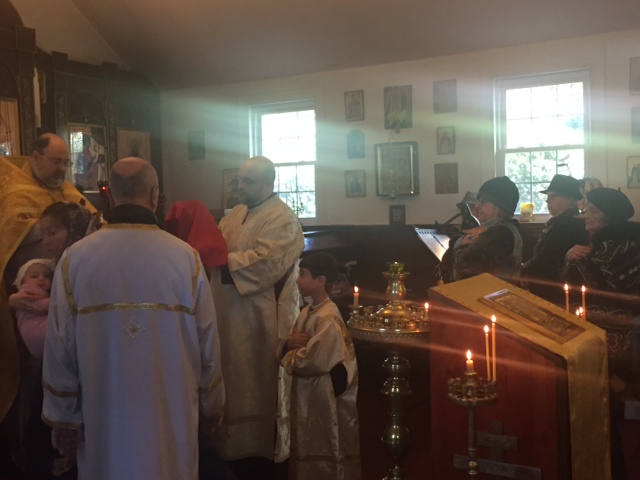
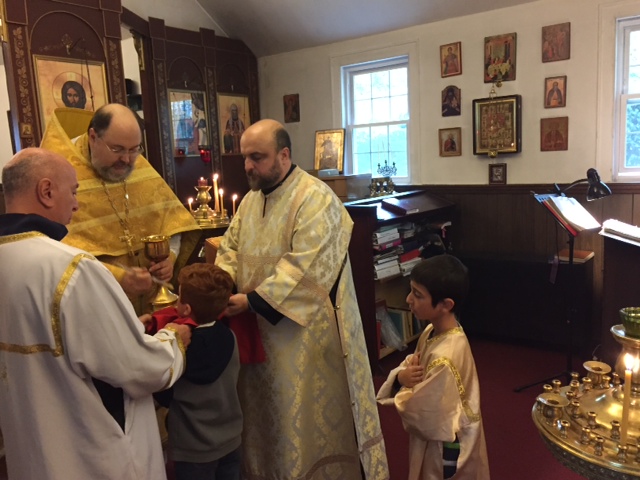
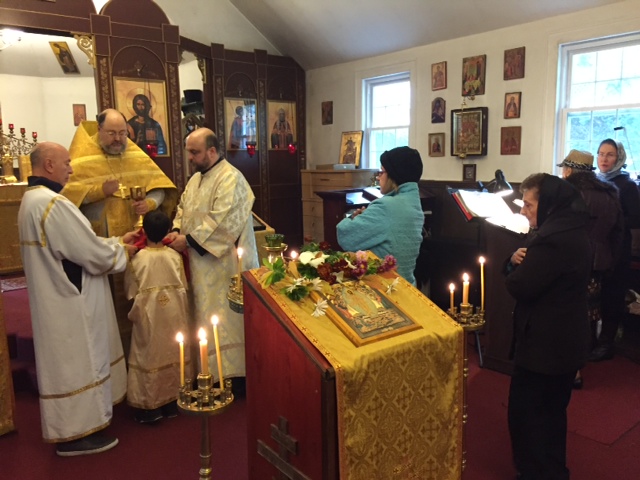
After the Liturgy dismissal the Rector preached a short sermon in Russian to convey the main ideas of his English homily. He also congratulated our younger parishioner and altar server, Ilia Kay, on the occasion of his name day. Fr. Igor praised Ilia’s great devotion to the serving in the altar and his great love for the Church services and wished him all God’s blessings and protection of his patron, Holy Prophet Elijah. Traditional Polychronion (“Mnogaia leta”) was sung.

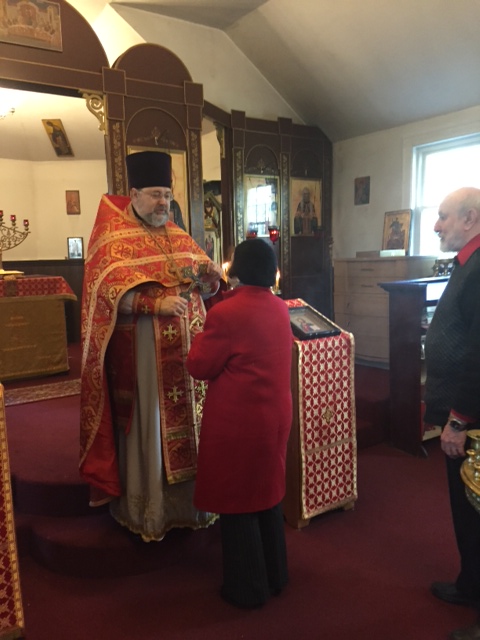
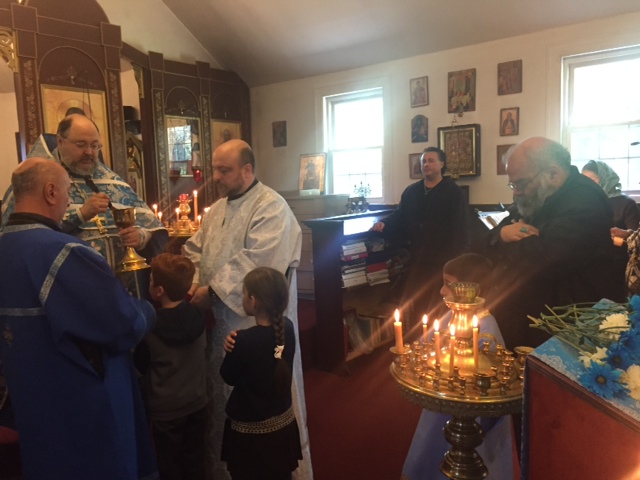
Following the service the Rector performed the blessing of the cars of some parishioners who desired to have it done on this feast of St. Elias who is honored as a patron Saint of the drivers.


8th Sunday after Pentecost. Celebration of the Millennium of St. Vladimir


On July 26 our parish celebrated 8th Sunday after Pentecost, as well as Sunday of the Holy Fathers of the six Ecumenical Councils. On that day we also celebrated feast of St. Vladimir which was transferred to Sunday due to this year’s Millennium jubilee of the Holy Equal to the Apostles Prince of Rus’.
St. George’s Rector, Archpriest Igor Tarasov served the Divine Liturgy. After the Scripture readings he preached a homily:

“Today we heard the Gospel story of a miraculous feeding of the five thousand people with five loaves of bread and two fish. Our Lord Jesus Christ worked a great miracle: a large number of people were fed with such a small amount of food. It is interesting that this miracle is described in all 4 Gospels. It makes us understand how important this event was among the other works of our Savior.”
“The Gospel of Matthew which we heard today tells that Jesus seeing so many people following Him He “was moved with compassion for them, and healed their sick” (Mt. 14, 14). After that, also due to His compassion He decides to feed these people with 5 breads. This is a very elementary work – to feed the hungry, a basic work of mercy. And the Lord does it in a perfect, miraculous way. We might consider that this is the fulfillment of His mission – to heal the sick, to feed the hungry and to make everybody happy. Many Jews expected their Messiah to do just that – to build a perfect society, to give enough food, a lot of wealth and to make Israel strong and independent country. But we should know that the real mission of the Son of God was not directly related to the things of this world. He brought us salvation from sin, not from poverty or starvation. He came to redeem us from the captivity of the evil one, and not to provide us with a good lifestyle. Our Lord wished to give us the real and eternal life, a life truly abundant, and not just good life here on earth.”
“Many people wished to build a better society, to make a good life only here, on earth. For instance, the Socialists used to exclaim: “First feed the hungry and then demand them to be moral!” They promised good life here if they overthrow the governments and the kings and build their societies based on social justice. But when they succeeded, they created much worse life with more oppression of the people, and they could not solve even social problems. The hungry were still around and even grew in their number.”
“This is why our Lord Jesus Christ in the very beginning of His mission, when He was tempted in the wilderness, rejected the proposal of the devil to command the stones to become bread. If He did He could feed all the hungry, to solve a social problem. But Jesus said: “Man shall not live by bread alone, but by every word that proceeds from the mouth of God” (Mt. 4, 4). Only the knowledge of the will of God can make us happy. Without that knowledge we won’t be able to solve any social problem.”
“Therefore, the significance of the miracle of feeding those 5 thousand people with 5 loaves of bread is not about giving food. It is about making the people partakers of the divine presence, making them connected to God. This miracle is the image of the Holy Eucharist, a mystery in which our earthly bread becomes the Body of Christ. The same Jesus Christ becomes multiplied as those 5 loaves of bread to be consumed not by 5 thousand men, but by all the faithful who are willing to receive Him. Christ is not divided; He remains the same. As it is written in today’s Epistle, Christ does not divide. Yet in every church, at every Divine Liturgy Christ is being distributed to the partakers of the Holy Communion. Christ cannot be consumed. Yet every time we receive Communion we consume Him. Isn’t that a miracle? And this miracle happens every time we participate in the Liturgy.”
The Rector further spoke about the great mission of St. Vladimir who baptized our ancestors, the people of Rus’, more than a millennium ago. In this way our holy Baptizer made our people also the partakers of the divine presence, made them members of the Body of Christ.
The Rector concluded saying, “Keeping this in mind, let us appreciate our Lord Jesus Christ and His saving gift of the Eucharist He gave us. Let us strive for eternal, spiritual and truly real things instead of temporary, material and passing things of this world. For were our treasure is, our heart will be also.”

Following the Liturgy dismissal the Rector and the altar servers came out of the sanctuary to the middle of the temple and performed the rite of Glorification before the image of St. Vladimir singing the troparion and kontakion in his honor.

After the service the Rector congratulated our Warden and Choir Director Olga Roussanow on the occasion of her past name day, the memory of the Holy Equal to the Apostles Princess Olga celebrated two days before. Traditional Polychronion (“Mnogaia leta”) was sung.

Our celebration continued at the trapeza table where the Rector and parishioners enjoyed delicious meals and a nice company. A toast to Olga Roussanow celebrating her name day was made by the Rector, and a “Mnogaia leta!” was sung again.


7th Sunday after Pentecost


On July 19, on the 7th Sunday after Pentecost, Archpriest Igor Tarasov, Rector of St. George Church, served the Divine Liturgy in our temple. After the Holy Gospel lesson he preached the following homily in English:

”Dear brothers and sisters in Christ! Today’s Gospel is about healings of the blind men and of a man who was demon possessed. There are many similar stories of healing in the Scripture. And we should notice that each time our Lord Jesus Christ performs the miracle of healing He asks: “Do you believe? Do you believe that I am able to do this?” When our Lord asks these questions he is knocking at the door of the hearts of men. He is looking for an opening to be let in, so that not only healing, but salvation may occur. This is described for us in the Book of Revelation of St. John where it says “Behold, I stand at the door, and knock: if any man hear my voice, and open the door, I will come in to him” (Rev. 3, 20).”
”While the Lord knocks at the door of our hearts, it takes action or faith on our part to let Him in. We must then also knock at His door and ask for salvation. This is confirmed in the words of our Lord when He says “And I say unto you, Ask, and it shall be given you; seek, and you shall find; knock, and it shall be opened unto you” (Lk. 11, 9).”
”We see both of these aspects of knocking at the door in today’s Gospel. The first knock is in the two blind men calling after Jesus “Son of David, have mercy on us.” (Mt. 9, 27) St. Simeon the New Theologian describes this knock at the door by the blind men in the following manner: “He who prays according to the flesh, and does not also have spiritual understanding is like the blind man that cried out “Son of David, have mercy on me!” But another blind man when he received his sight and saw the Lord, no longer saw Him as the Son of David, but as the Son of God. (Jn. 9, 35-38)” Thus, any knock at the door must be to bring us to God. This is why Christ does not immediately respond to these men. Jesus does not respond because He wants their thirst for God to increase.”
“The second knock is when Jesus asks them “Do you believe that I am able to do this?” (Mt. 9, 28). Our Lord does this so that they may publicly proclaim their action of faith when they say “Yes Lord.” This should remind us that our faith is not just a personal thing that we keep to ourselves. Faith is something that must be proclaimed in order to bring others to faith.”
“When the men respond with the words “Yes Lord”, they leave their fleshly or earthly understanding behind and embrace the spiritual understanding. This is accomplished through their use of the word ‘Lord’. They no longer recognize Jesus as the Son of David but as the Lord, the Son of God, the God-Man, the Savior of the world. Thus, they are not only healed of their infirmity but they are brought to salvation. This is confirmed by St. Paul in his Epistle to the Romans when he says “whosoever shall call upon the name of the Lord shall be saved” (Rom.10, 13).”
”All too often we seek after God through miraculous signs of His action in creation and fail to see the spiritual miracles that occur around us. St. John Chrysostom speaks of this in the following manner: “Do not therefore seek signs, but the soul’s health. Seek not to see one dead man raised; nay, for you have learned that the whole world is arising. Seek not to see a blind man healed, but behold all now restored unto that better and more profitable sight; and do you too learn to look chastely, and amend your eye.””
“So my dear brothers and sisters in Christ, seek not after miracles. Seek rather after salvation for Christ is knocking at the door of your heart. Open the door of your hearts to Him that you may enter into the New Creation and receive the spiritual miracles that will change you and the world around you. Though this change you will be able to respond truly: “Yes, Lord, I believe” and to receive according to our faith.”

After the dismissal of the Liturgy he Rector preached a short sermon in Russian to stress the main thoughts of his English sermon.

6th Sunday after Pentecost. Feast of St. Peter and Paul


On July 12, on the 6th Sunday after Pentecost, as well as feast of the Holy Major Apostles Peter and Paul, our parish held a nice liturgical celebration. Our Rector, Archpriest Igor Tarasov served the Divine Liturgy. After the readings from the Holy Gospel he preached a homily in Russian. An English version of that homily is as follows:

“Dear brothers and sisters in Christ! Today we celebrate the 6th Sunday after Pentecost and feast of the Holy Major Apostles Peter and Paul. Today’s first Gospel reading is a continuation of the story about our Lord Jesus Christ told last Sunday. A week ago we heard that Jesus was asked by the people of the country of Gargesines to leave their region. Thus “He got into a boat, crossed over and came to His own city” (Mt. 9, 1). This was the city of Capernaum which served as our Lord’s headquarters. Now we hear of another miracle Jesus performed: healing of the paralytic. The Gospel lesson of today tells us about the divine power of our Lord Jesus Christ. It shows us three signs of such a power Christ had as the Son of God.”
“First power is that He knew the secrets of hearts. Hearing that Jesus grants the paralyzed man forgiveness of sins, the scribes who were present there start thinking that Jesus is blaspheming. But Jesus reads their minds and argues with them openly. Only God can fully know the secrets of our hearts, only God can read our minds. Second power is that Jesus could grant the forgiveness of sins. No one but God can forgive sins. The scribes were correct in that. But they had no faith that Jesus is God. Thus He has a power to forgive sins. Here we see the third sign of the divine power of Christ – that He can heal the disease merely by His word.”
“Today’s first Gospel lesson may teach us also about our reception of the divine power coming from our Lord Jesus Christ. We ought to be His Church, a gathering of people which constantly practices the reception and acquiring of that power. And in order to be the Church we need faith.”
“Today’s second Gospel lesson is dedicated to the feast of St. Peter and Paul. It is also about faith necessary for acquiring the divine power from Christ. When Jesus asked His Disciples what they would say about Him, St. Peter expressed their faith and confessed, “You are the Christ, the Son of the living God” (Mt. 16, 16). That kind of faith of the Apostles made them able to receive the Holy Spirit and to become the Church. The Lord speaks about this Church in our second Gospel lesson. He tells Peter that on him, as on the rock, He will build His Church, and the gates of Hades shall not prevail against it (Mt. 16, 18). The Church is founded on a solid rock, on the faith of the Apostles expressed by Peter when he confessed that Jesus is the Christ, the Messiah, the Son of the living God. And that very faith allowed the Apostles to receive from Christ the power to bind and loose the sins of men. The Lord today in the Gospel is telling Peter, “And I will give you the keys of the Kingdom of Heaven, and whatever you bind on earth will be bound in heaven, and whatever you loose on earth will be loosed in heaven” (Mt. 16, 19). If in today’s first Gospel lesson the people are amazed that Jesus forgives the sins of the paralytic, then according to the second Gospel reading, a similar power is possessed not only by Christ, but also by His Church, personally by the Apostles. And that power the Apostles transmitted to their successors, the Bishops. And by today Christ continues to forgive our sins, but through His Church, through the power He gave to her because of the faith of His Disciples.”
“The faith of Peter was the same as the faith of other Holy Apostles. This is why we believe that all of them were that ‘rock’, that foundation on which Jesus could build His Church. Roman Catholics believe that Jesus gave His power only to St. Peter and to his successors, the Bishops of Rome. Thus Catholics think that the Bishop of Rome has universal jurisdiction over all the Church. We, Orthodox Christians, believe that not only Peter, but all the Apostles possessed that power and those keys of the Kingdom of Heaven because they shared the same firm faith with St. Peter.”
“Therefore, dear brothers and sisters, in order to receive the gift of the life-giving, healing and forgiving power of Christ, we need faith. We need such a faith that Jesus saw in St. Peter and in all His Apostles. Similar faith was seen in those people, the paralytic’s friends who brought him to Jesus. Their collective faith became a reason for Christ to perform the miracle of healing. And collective faith of the Apostles became a reason of granting them the power to bind and loose the sins of men. The same faith makes us the Church of Christ. And then not only on St. Peter, as Catholics think, but on all other Christians believing in Christ, the Son of the living God, the Lord founds and builds His Church. He founds it on a rock of faith. And we are called to be such a rock.”
“May our faith, the faith of Christ and the faith of the Apostles save us!”

After the Liturgy dismissal the Rector performed the rite of Glorification in the middle of the temple singing the troparion, kontakion and magnification of the feast.Following that the Rector preached a short sermon in English conveying main ideas of his Russian homily.

After the liturgical service we continued to celebrate feast at our trapeza enjoying delicious meals and a nice company.


5th Sunday after Pentecost


On July 5, on the 5th Sunday after Pentecost, Rector of St. George Church, Archpriest Igor Tarasov served the Divine Liturgy in our temple. After the reading from the Holy Gospel he preached the following homily:

“Today’s Gospel lesson is about casting out the demons who possessed two men in the country of Gergesines. It is telling us that our Lord Jesus Christ came into the world to bring salvation to the human race. Even before dying for us on the cross and being risen from the dead, He rescued people from different forms of evil. He healed the sick, but His sovereign power was not only over physical infirmity. Mental illnesses, demonic possessions were also subject to His miraculous power.”
“But today’s reading also shows us how limited is our human understanding of divine works, how ungrateful people may be towards their greatest Benefactor. After our Lord healed two demoniacs, the whole city came to meet Jesus and begged Him to depart from their region. Despite a great blessing He bestowed upon them, these people did not want Him to stay. To some extent, this was due to the fact that those people were pagans. As such, they could not appreciate mission of Christ. However, similar things always happen. The joyful fact is that the Lord wishes all of us to be saved. The sad fact is that not everybody wishes to respond to that willingness.        “
“After His Resurrection our Lord Jesus Christ commissioned the holy Apostles to “go and teach all the nations baptizing them in the name of the Father and of the Son and of the Holy Spirit” (Mt. 28, 19). They did so. Thus we sing honoring the Apostles: “Their line is gone out through all the earth, and their words to the end of the world” (Ps. 18, 4) Many pagan nations received the Gospel of Christ and became faithful to the Savior of the world. Presently, all the nations of the world have Christian people who follow the teaching of our Lord. But since the human nature is still imperfect and inclined to evil, there is a great resistance to the divine grace and the Word of God to be spread. Opposing the Word of God to be spread and resisting the divine grace to be bestowed upon them, people help only their enemy and act against themselves.”
”One of the forms of such opposition is persecution of the Church. St. Augustine observed the following: “The first persecution of the Church when Christians were forced to bring sacrifice to idols by threat of exile, torture and death, was carried out by force. The second persecution the Church endures is from false teachers and false brethren, and is carried out by means of craftiness and deceit. The third persecution will be from the Antichrist, and will be the most dangerous of all, because it will be accompanied by force, craftiness and deceit.” It seems like that third persecution is taking place in our days. In some places the force is being used against the Church. It was done in our old countries under the Communists. It is still done in some places ruled by Communists, like in North Korea. Recently we heard about terrible crimes against Christians committed by the Moslem extremists in the Middle East.”
”Now we also see many false teachings, as well as a lot of deceit and opposition to the true faith. Jesus is asked to depart again and again from our lives. In fact, He is asked to leave this country by some its inhabitants who don’t want prayer in schools, mentioning God’s name in the pledge of allegiance, who wish to remove God from the courts and other public places. They also became very successful in legalizing such hideous iniquities like murdering the unborn children and entering into same-sex relations. The Supreme Court of the United States approved abortions 41 years ago and it recently decided that same-sex marriage should be legalized in the whole country. What can we say?! Let these people beware! Because if they chase out God and Jesus who can make lives blessed, they invite evil into their lives, and that evil one will make their lives miserable. It is like we say in our Holy Week hymns about Judas, “Now he is leaving Christ and accepts the devil”.”
”Dear brothers and sisters! Reflecting upon all these unpleasant things, let us more appreciate the treasure of the true and orthodox faith we possess. Let us always welcome our Lord Jesus Christ into our lives, our works, our families. Let us be grateful for the salvation He performed for us and for delivering us from evil. Our Lord is the only one who can make us happy. Thus let us not ask Him to depart, but to stay with us forever.”

Following the dismissal of the Liturgy the Rector preached a brief sermon in Russian conveying the main thoughts of his English homily. He also congratulated our long-time parishioner Natalia (Dolores) Soho on the occasion of her past 84th birthday. Traditional “Many years” was sung.


4th Sunday after Pentecost


On June 28, on the 4th Sunday after Pentecost, St. George parish held a liturgical celebration in its temple. The Church Rector, Archpriest Igor Tarasov served the Divine Liturgy. Following the Gospel lesson he preached a homily in Russian. An English translation of that homily is as follows:

”Today’s Gospel reading tells us about a healing of a paralyzed servant of the Roman centurion. Our Lord Jesus Christ performed such a miracle even without seeing or approaching the sick person. It was done through faith and intercession of the ill servant’s master. Let us reflect upon this event described in the Gospel of Matthew.”
“A centurion was a Roman army officer who commanded 100 hundred men. This man mentioned in the Gospel was a Gentile. But he had a faith that Jesus is the One who can help his servant to be cured from the disease. Although Christ usually stressed that He came to save His own people, the Jews, the whole ministry and the whole message of His teaching was encompassing the whole human race, regardless of the people’s origin. Jesus is really the Savior of all. For Him ethnic or social distinctions are void. In the eyes of the Jews, especially the Pharisees who were always ready to criticize Jesus, coming to the house of a Gentile was inappropriate. If Jesus entered the centurion’s home, it would make Him unclean. However, the Lord could act without entering the Gentile’s house. Doing so, He showed that salvation will come upon all the people of faith.”
“In the words of the centurion we hear the recognition of Jesus’ authority. He calls Jesus the Lord. It was significant for a man who himself had authority. But although the centurion had the power over men, he understood that only Jesus had the power over disease. He also understood his own limitations and unworthiness. Therefore, he said to Christ: “Lord, I am not worthy that You should come under my roof “(Mt. 8, 8). But his sense of humility was perfected by his firm faith in the healing power of the Lord. Thus he continued: “But only speak a word, and my servant will be healed” (Mt. 8, 8).  The word of the Savior is enough for a man to be freed from his disease.”
“This event teaches us about the importance of faith. Our Lord Jesus Christ praised the faith of the centurion. He speaks highly about that Gentile person, lifting him up as an example. The Lord goes further and declares nullity of the Jewish supremacy, saying that many from other nations will share the heavenly blessings with the Jewish patriarchs. He prophesizes: “And I say to you that many will come from east and west, and sit down with Abraham, Isaac and Jacob in the kingdom of heaven. But the sons of the kingdom will be cast out into outer darkness” (Mt. 8, 11-12). We know that the sons of the kingdom are Jews, who had a sense of racial superiority as the chosen people of God. Coming of Christ demonstrated that not the Jews but all the people who believe in the Savior will become the chosen nation, the New Israel.”
“Therefore, let us keep and cherish our faith in the Lord Jesus Christ, our only Savior. Let us recognize His power and authority over the whole world and over any little thing in our lives. Let us believe that He can help us if we have faith. Let us also understand our limitations and unworthiness and humbly ask Him to help us. And lat us be worthy of the name of Christian that means to be among the chosen people of God, His holy nation which is prepared to sit down with Abraham, Isaac and Jacob, also with the Holy Apostles, Martyrs and other Saints in the Kingdom of heaven.”

After the dismissal of the Liturgy the Rector preached a short sermon in English to stress the ideas of his previously preached Russian homily.

3rd Sunday after Pentecost


On June 21, on the 3rd Sunday after Pentecost, Archpriest Igor Tarasov, Rector of St. George Church served the Divine Liturgy in our parish temple. Following the Gospel lesson he preached a homily in English:

“The Gospel lesson of the 3rd Sunday after Pentecost is a part of the famous Sermon on the Mount which our Lord Jesus Christ preached at the beginning of His ministry. Today’s fragment is dealing with the right preferences, right priorities we should have. Our Lord knew our attachment to the material goods, so He teaches to care more about the true good which is the Kingdom of God. He says: “Seek first the Kingdom of God and His righteousness, and all these things shall be added to you” (Mt. 6, 33).”
“Why we should be anxious about spiritual things? Because they never change and lead us to the blessedness. Spiritual values determine our place in the eternity. Through the merits of our Lord Jesus Christ, the Son of God, “the many dwellings” are prepared for us in heaven. There we will forever enjoy the good things which “eye has not seen, nor ear heard, nor have entered to the heart of man” (1 Cor. 2, 9). Those blessed things which belong to the Kingdom of God should be valued more than worldly, bodily pleasures, and we have to strive for those eternal things with all our soul in order to be happy after our earthly life.”
“When the Lord said “Seek first the Kingdom of God”, He meant not only life after death, but also our earthly life. Spiritual values have the greatest importance also for our earthly existence because they show us the true sense of life. God is a perfect and the happiest being. He is love, joy, peace and the source of happiness. And only a person who becomes close to God, can enjoy the true happiness, peace and pleasure. The one who became the temple of the Holy Spirit, who has God in his heart, always feels peace in the soul, the full satisfaction in life and the spiritual joy. Jesus said: “The Kingdom of God is within you” (Lk. 17, 21). It means that blessedness, happiness may be within us if we are close to God.”
”How can we acquire that state of blessedness, the Kingdom of God within us? Jesus tells us to seek that Kingdom and “His righteousness”. That means that we need to seek the God’s righteousness: how to please God and how to justify ourselves before Him. Those things we may acquire if we live in piety and justice. The All-Holy God indwells only in those who strive to imitate Him in their righteousness and piety. Only those people are granted the spiritual goods – peace and joy in the Holy Spirit. How can enjoy peace and joy those who attempt only to earn, as much as possible, wealth or power? How can have peace those who dream only about the pleasures of flesh, or about food, or alcohol, or drugs? Do you think that those who unjustly earned a lot of money, enjoy peace or sleep well? Why those powerful people are surrounded by the bodyguards?”
“If we will care about spiritual treasures, the Lord will bestow upon us earthly well-being, in addition to the spiritual goodness. “All these things shall be added to you” – says the Lord, meaning that we will have material wealth. Earthly goodness is the result of the spiritual, righteous life. Therefore, we have to decide to live as Christians, according to the precepts of God. We may live in this world and achieve awards along with the great Saints. St. Macarius says: “God does not look whether you are a virgin or a married woman; a monk or a lay person, but He seeks only a heartfelt desire for good deeds. Make such a resolution, and salvation is near you, whoever you are or wherever you live.” Thus, dear brothers and sisters, let us remember the commandment of God: “Seek first the Kingdom of God and His righteousness, and all these things shall be added to you”.”

After the Liturgy dismissal the Rector preached a short sermon in Russian to stress the main thoughts of his English homily preached before. He also congratulated all men and fathers of the parish on the occasion of Father’s Day. Traditional “Mnogaia leta” was proclaimed.

Following the Liturgy the Rector and parishioners continued Father’s Day celebration at the trapeza table enjoying delicious meals and a nice company.


2nd Sunday after Pentecost, of All the Saints of Rus’


On June 14, on the 2nd Sunday after Pentecost, on the feast of All the Saints of the Russian Church, we had a nice celebration at St. George Church. Our parish Rector, Archpriest Igor Tarasov served the Divine Liturgy. After the readings from the Holy Gospel he preached a homily in Russian. An English translation of that sermon is as follows:

“Today’s reading from the Gospel of St. Matthew tells us about our Lord Jesus Christ calling His first Disciples to follow Him. It is about electing the first followers. The Scripture tells that those four men, Andrew, Peter, James and John, were fishermen at the Sea of Galilee. Although these men were unlearned and illiterate, they could accept such a call. The interpreters of the Gospel tell us that those men were prepared for Jesus’ call by the preaching of St. John the Baptist. They came to listen to his speeches, were probably baptized by him and were ready to accept Christ. This is why we read that they “immediately left their nets and followed Him” (Mt. 4, 20).”
“In the same way our Lord chooses and calls different men to become laborers in His vineyard, servers at His holy altar, to become priests. It happens in infinitely various ways, but the sense is the same: Jesus comes, calls them to follow Him, and they do. I may recall my own vocation to the priestly ministry. At the age of 12 I just became interested in the Church life, in services and desired to become one of the servants of the Lord. There was no special vision or supernatural revelation – I only became very much exited about the Church life. All other interests became less important. Other people could have a different story, but the sense is the same: Jesus calls, and we follow.”
“But Jesus also, in the same way, calls everybody to follow Him. He wishes every man and woman to be His disciple, His follower, to be a Christian. The calling happens also in many different ways, in different time, at different age. But it happens. God in His ineffable wisdom called St. John the Baptist from the time he was conceived in his mother’s womb, so he could leap in the womb of Elizabeth when Holy Virgin Mary, also being pregnant with Jesus, came to visit her. God in His incomprehensible providence called St. Nicholas the Wonderworker when he was a babe, so little Nicholas refused to be nursed on Wednesdays and Fridays. Almost ten centuries later the same behavior was seen in the baby Bartholomew who later became Venerable Sergius of Radonezh, one of our greatest Saints.”
“Many Saints were called at their young age, but some were called later. St. Paul converted at the age of maturity, after he persecuted Christians. St. Moses the Black converted after being a merciless criminal and killer. St. Augustine changed his life after 20 years of prayers said for his conversion by his mother, St. Monica.”
“Celebrating today our Saints of Rus’ we may also recall that one of them, Equal to the Apostles Prince Vladimir also converted at his age of maturity. Before that the Baptizer of Rus’ was a zealous pagan. But when he heard and accepted the calling of Christ, he became a pious worshiper of the true God. After being a sinner, a polygamist, he became a sincere Christian. And after being a cruel ruler he became Vladimir the “Sunny Beautiful” how he was called by his subjects.”
“All of us were first called to follow Jesus when we became baptized. But for those of us who were baptized at their early age, this was just an advance invitation. After growing up we may truly accept or decline that Lord’s invitation. The world is full of stories of various people how they heard the calling of the Lord and started to go after Him.”
“Therefore, if it happened for those people, it should happen for us. Many of us may say that we have been already called and followed Jesus. Our presence here in the church serves as a proof of that. But even then, we need to be open to the voice of the Lord calling us to follow Him further. We need to be faithful to our vocation as Christians. We need to eliminate from our lives anything which stands in our way of following the Lord. So, let us discern the true calling of our lives and be the true disciples of our Lord Jesus Christ.”

Following the Liturgy dismissal the Rector briefly conveyed the ideas of his Russian homily in a short English sermon.


Sunday of All Saints


On June 7, on the First Sunday after Pentecost dedicated to All Saints, Archpriest Igor Tarasov, Rector of St. George Church, served the Divine Liturgy in our temple. Following the Gospel reading he preached a homily:

“On the First Sunday after Pentecost we celebrate feast of All Saints. We pay our respects to all men and women who lived their lives as holy and God-pleasing people, the just and righteous ones. It should be understood because as a result of the Descent of the Holy Spirit the Church was born, and members of the Church became able to acquire holiness. The Saints we honor are the people who conquered evil in their own lives, in their own souls, just as our Lord Jesus Christ did it for the whole world.”
“It is the nature of the human existence that if every person overcomes evil in himself, he achieves a victory that affects other people and the whole world. Universal evil, being conquered even in one single person, suffers a great loss. Even one single holy person means a lot to the whole world. By their very existence the holy men and women whom we call the Saints, bring down to the earth a great blessing from God. St. Barsanophius teaches that a prayer of three holy men once preserved the world from total destruction. Because of the Saints, even of those who are unknown, the course of the universal events changes. Every Saint has a significance because by his life he crosses the boundaries of earthly history and reaches into eternity. The Saints are the salt of the earth. They are the sense of human existence. The very earth is preserved because of them. When the earth would stop producing the Saints, the force which preserves the world from a disaster will disappear. In the Old Testament we read that Abraham asked God whether the Lord would spare Sodom and Gomorrah for the sake of ten righteous men. The Lord answered: “I will not destroy it for the sake of ten” (Gen. 18, 32). St. Siluanos says: “The world stands by the prayer, and when the prayer will weaken, the world will perish.””
“Many people do not understand the connection between the religious life of an individual and the well-being of the world, between internal warfare against evil within one person and everlasting life. People often think that spiritual life of an individual is significant only for him and that it will cease to exist if it stops to exist in the soul of an individual. But in reality the spiritual life of the Saints affects the life of the whole world. And if there will be no Saints in the world, the world will end.”
“Therefore, today we honor those people who became the best out of human race. Today’s kontakion calls them “the first-fruits of nature” offered by the universe to the “Planter of creation” who is God. Such sacrifice, the lives of the God-bearing martyrs, along with the holy Apostles, Venerable Fathers and Mothers, all other Saints, became possible after our Lord Jesus Christ fulfilled His work of redemption of humanity. Now the redeemed humanity could bring forth the fruits of holiness and faithfulness. Some holy men and women could be found even before that, in the Old Testament. These were righteous people living according to the will of God despite the great abyss of sinfulness in which the whole humanity was kept. Their number was not so great. But in Jesus Christ thousands and millions of people could reach holiness. In fact, all Christians are called to be holy, to be Saints. This is why when St. Paul composed his letter to the Colossians he wrote the following address, “To the Saints and faithful brethren in Christ who are in Colosse” (Col. 1, 2).”
“Therefore, dear brothers and sisters, let us honor those holy men and women, because of whom the world existed. Let us, by ourselves, conduct spiritual life and our own warfare against evil. Let us imitate the Saints and strive for holiness, because we are Christian people. Then we will be able to receive the awards promised by our Lord Jesus Christ in today’s Gospel, and then we will inherit eternal life.”

After the dismissal of the Liturgy the Rector congratulated Andrew and Maria Malyshew on the occasion of the past name day of their little daughter Yelena (Helen). Traditional “Mnogaia leta” was proclaimed.

The Rector preached a short sermon in Russian conveying the ideas of his English homily.  He also reminded parishioners that tomorrow we begin St. Peter’s Fast dedicated to the work and endeavors of the Holy Apostles.

Following the service the Rector and parishioners enjoyed delicious meals and a nice company at the coffee hour.
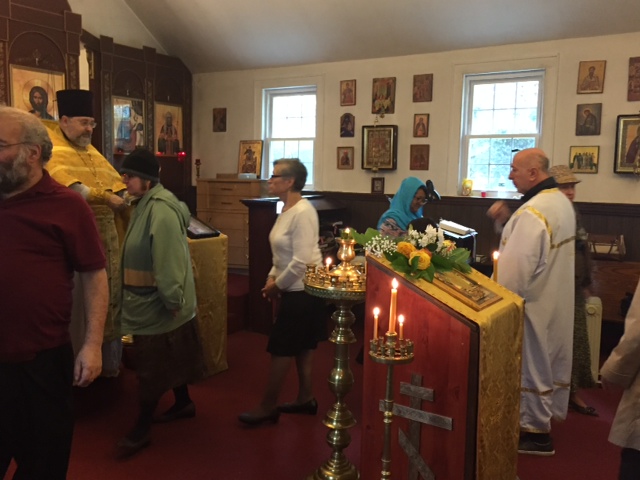
 

Pentecost


On May 31, on the Sunday of Pentecost and feast of the Most Holy Trinity, we had a beautiful and solemn celebration at St. George Church. Our parish Rector, Archpriest Igor Tarasov served the Divine Liturgy.
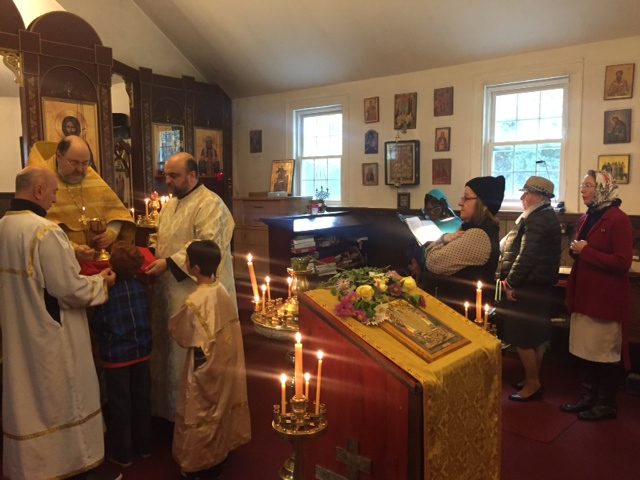
Following the Gospel lesson he preached a homily in Russian. In that sermon the Rector pointed out that we, as a Church community, as well as each individual Christian, have to strive to imitate Holy Apostles in receiving the Holy Spirit. The ways of acquiring the Holy Spirit are different from our earthly usual ways of reaching something. We do not need intellect and knowledge to be partakers of the Spirit of God. Today’s Gospel reading showed that the most knowledgeable and educated people among the Jews, the high priests and Pharisees, could not recognize the Messiah in Jesus. On the other hand,  Holy Apostles were not educated, some of them were simple fishermen. Yet they did receive the Holy Spirit. And, as we sing in today’s festal troparion, God made those fishermen wise. The skills may not also be helpful. The only skills that could be needed are the skills to live a spiritual life. We need faith, trust to the Lord, and prayer to be the receivers of the Holy Spirit.
Right after the Divine Liturgy the Rector served Pentecostal Vespers with kneeling prayers.

Following the beautiful and prayerful services the Rector and parishioners continued their celebration of the Trinity Day at the trapeza table enjoying delicious meals and a nice company.