Celebration of the Patronal Feast at St. Nicholas Cathedral


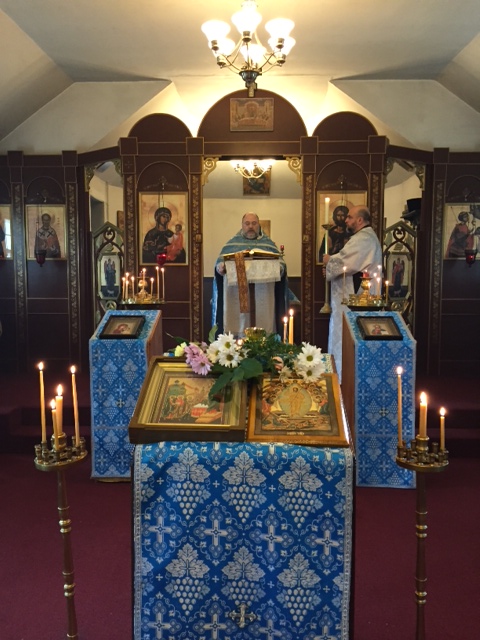
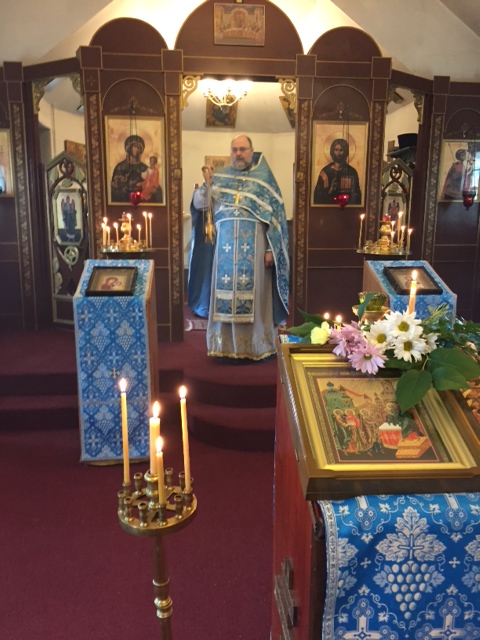
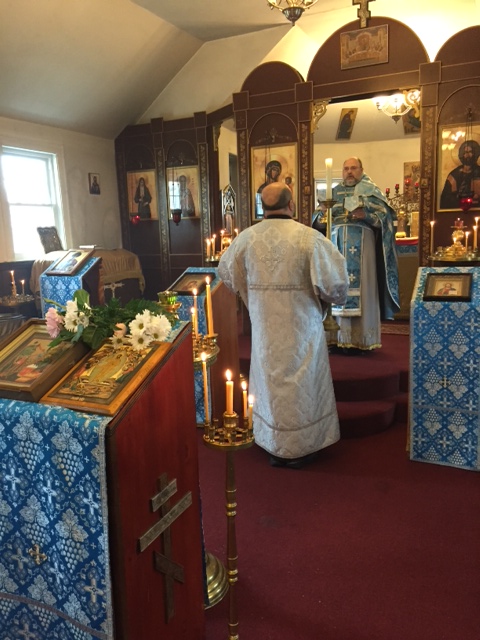
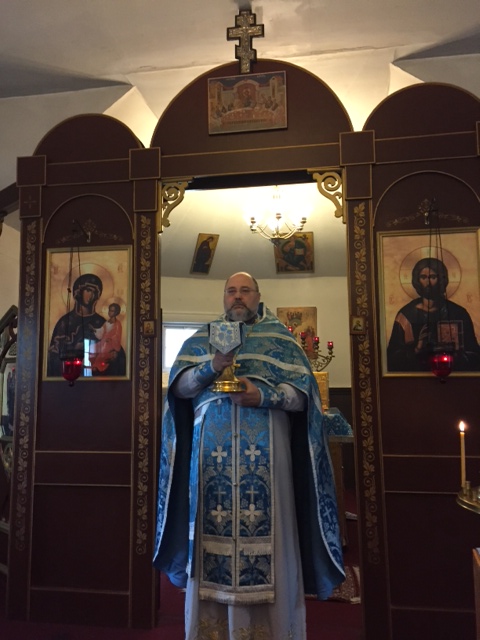
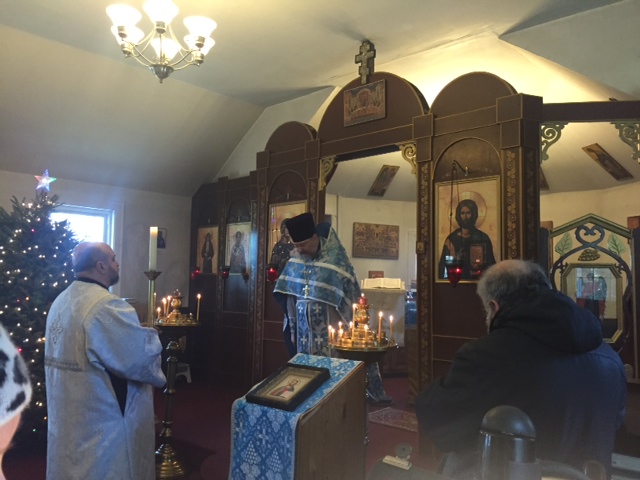
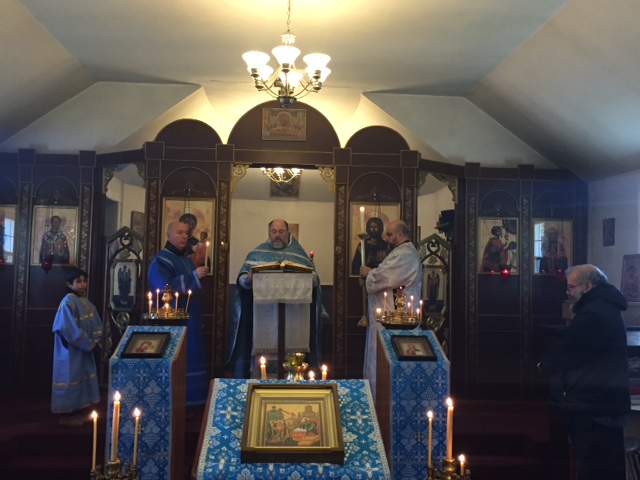
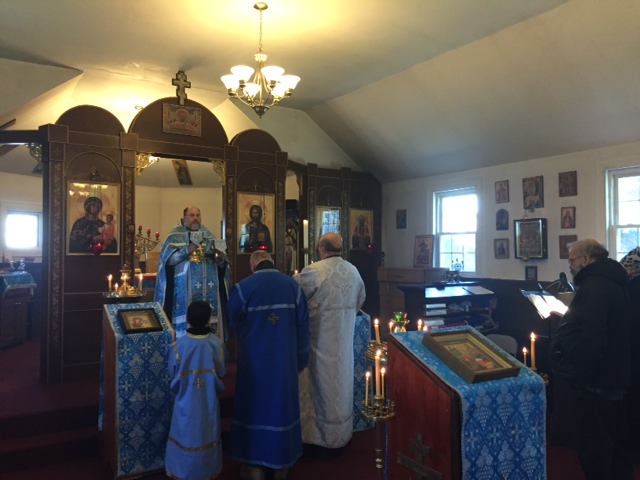
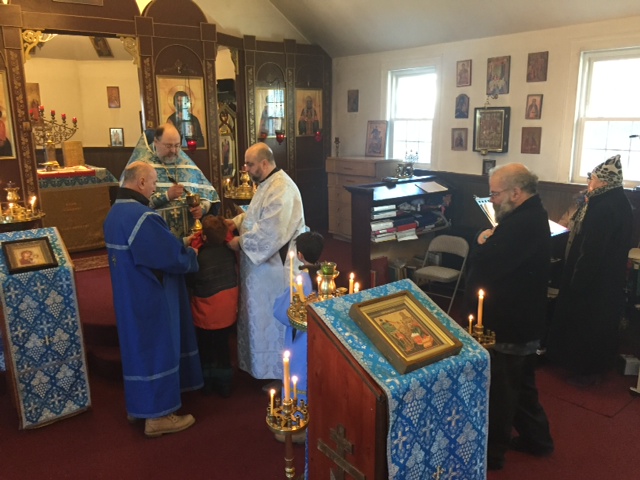
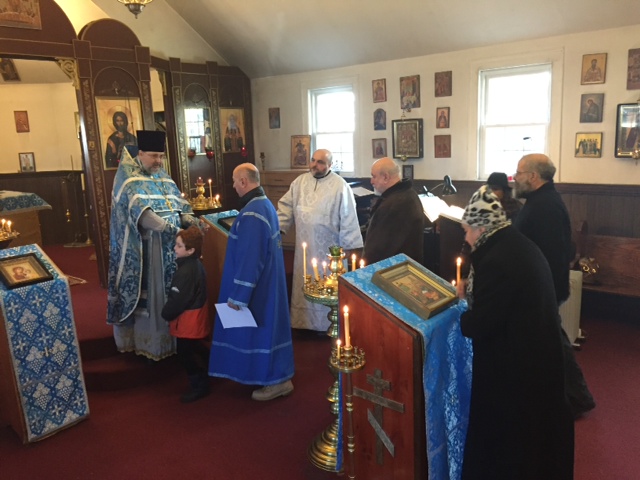
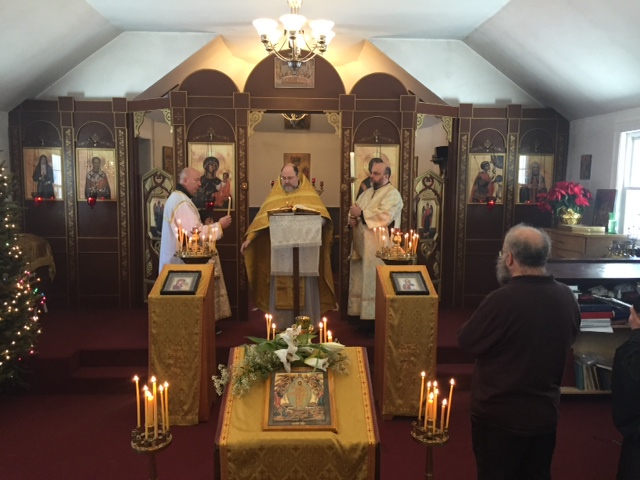
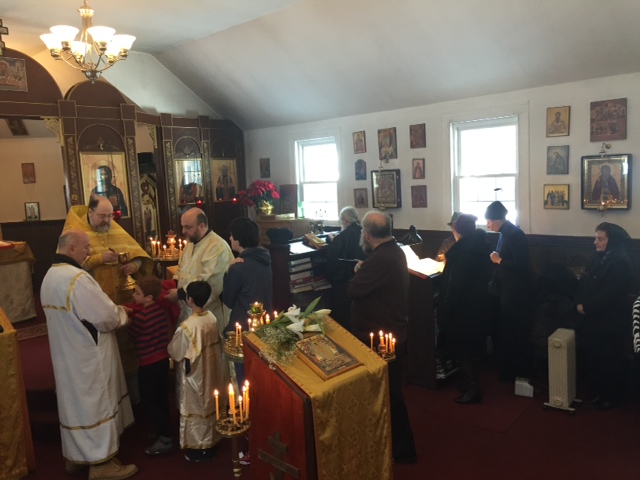
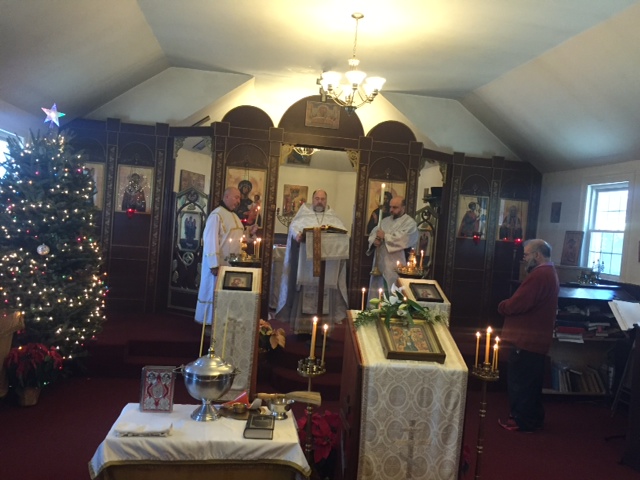
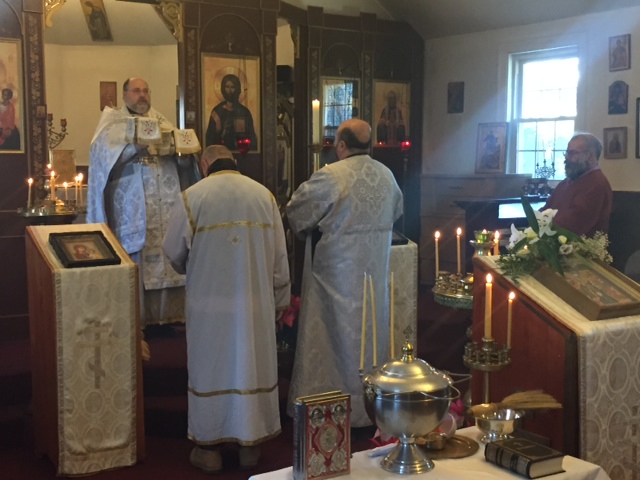
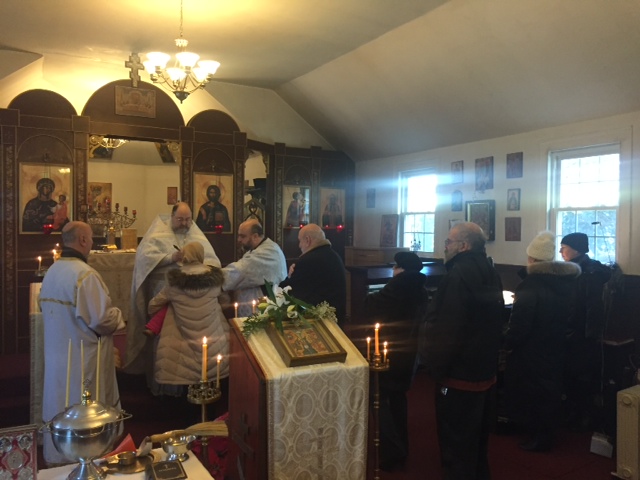
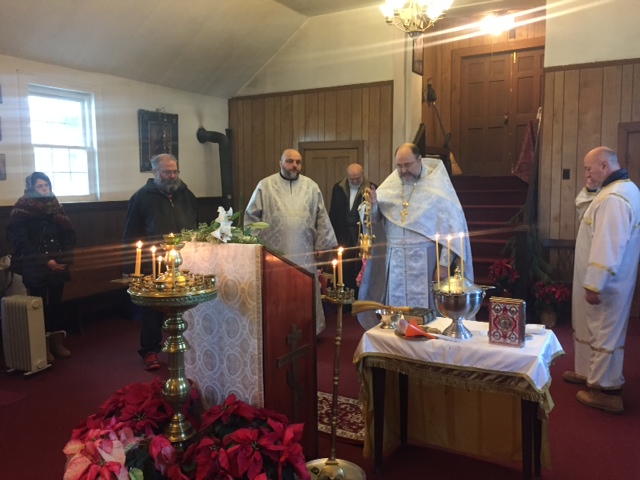
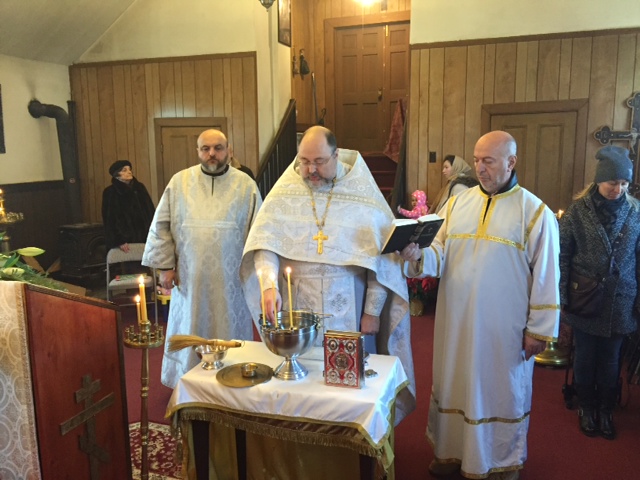
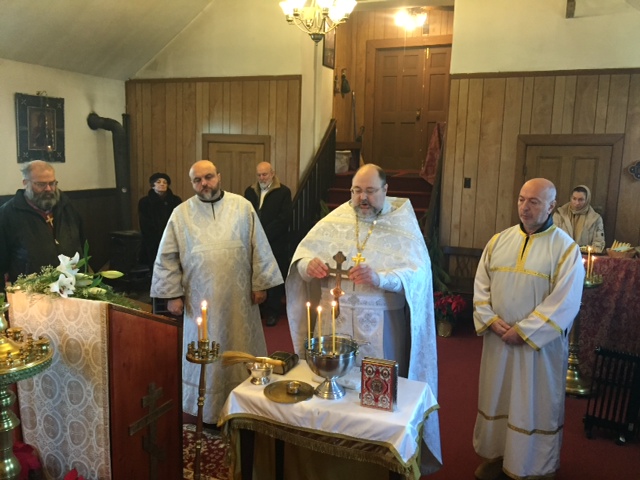
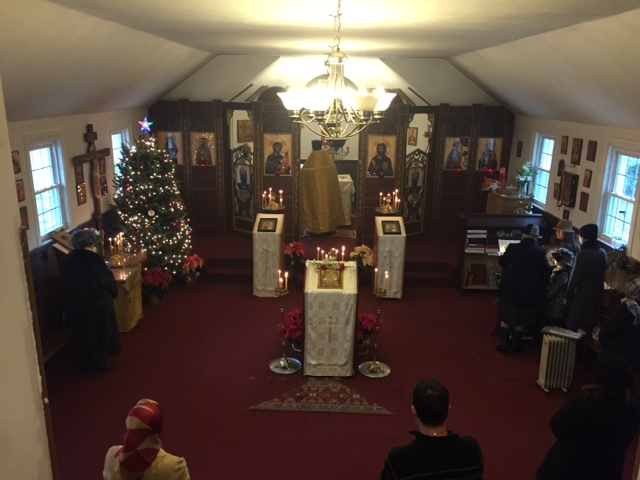
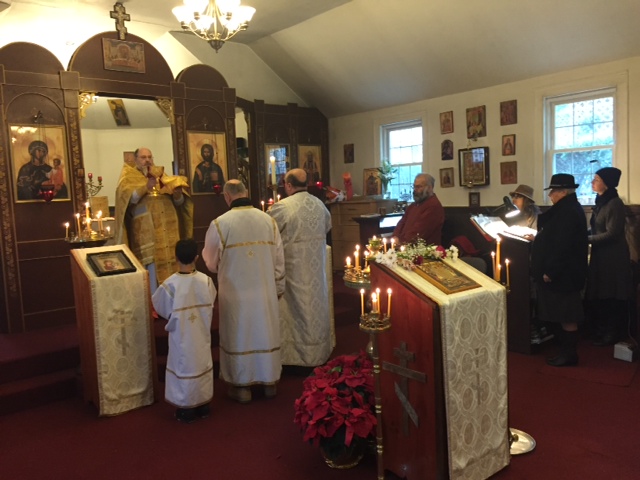
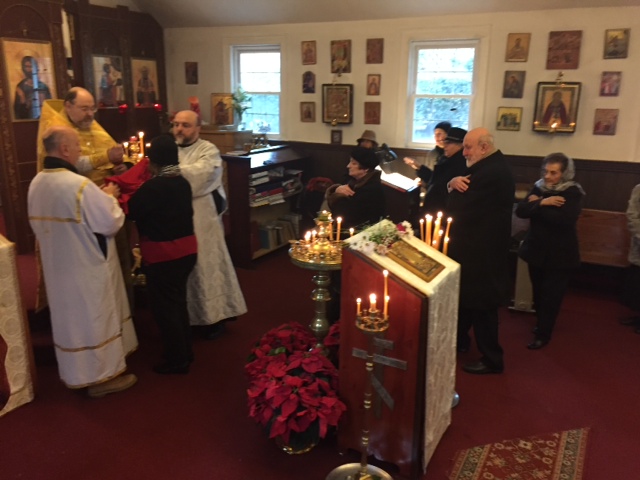
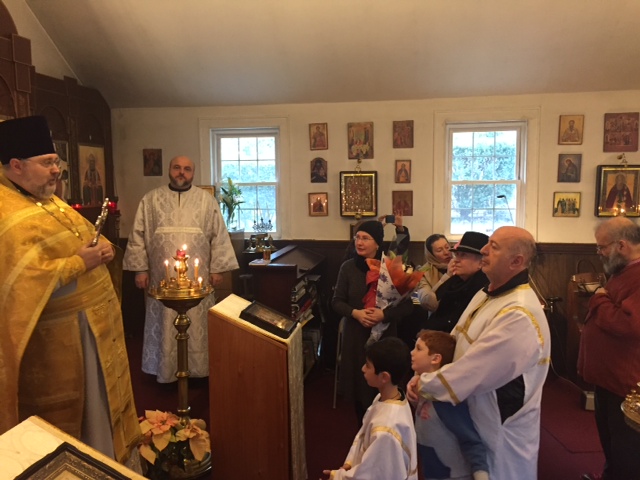
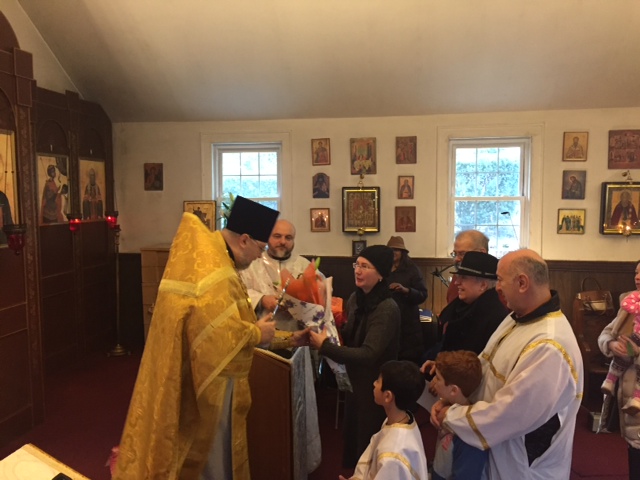
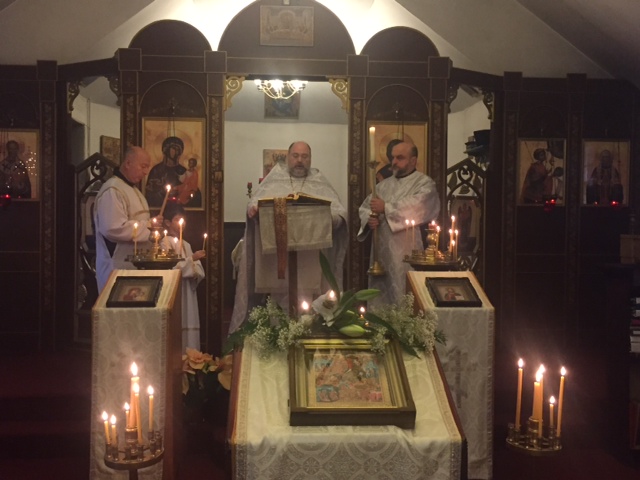
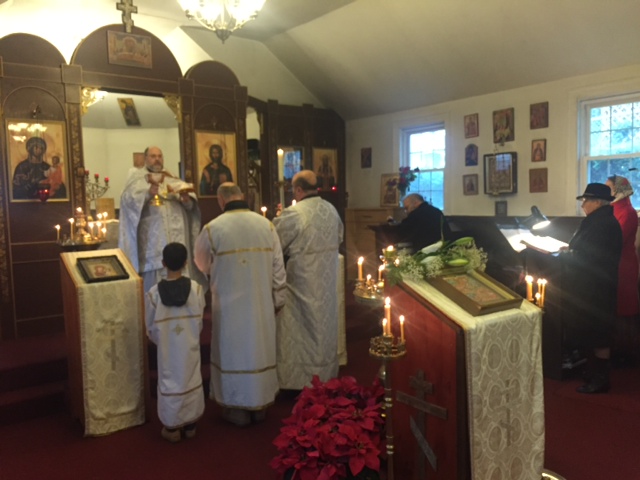
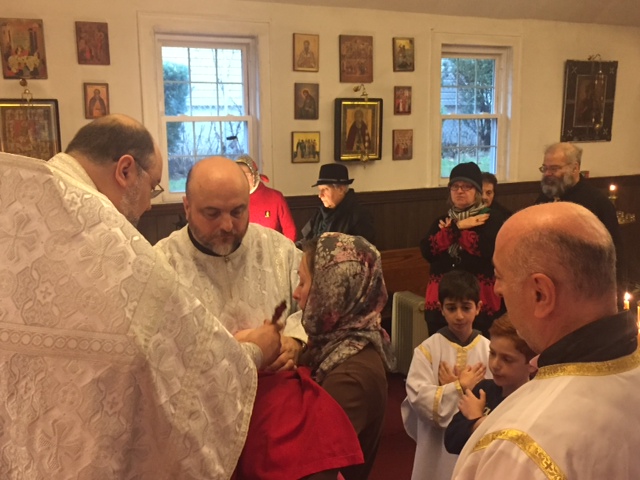
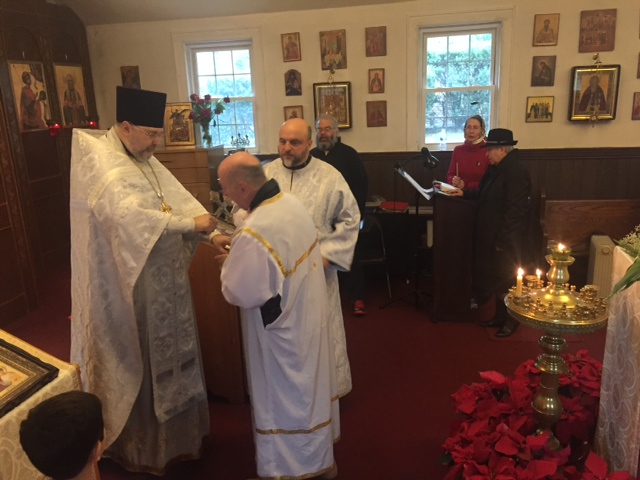
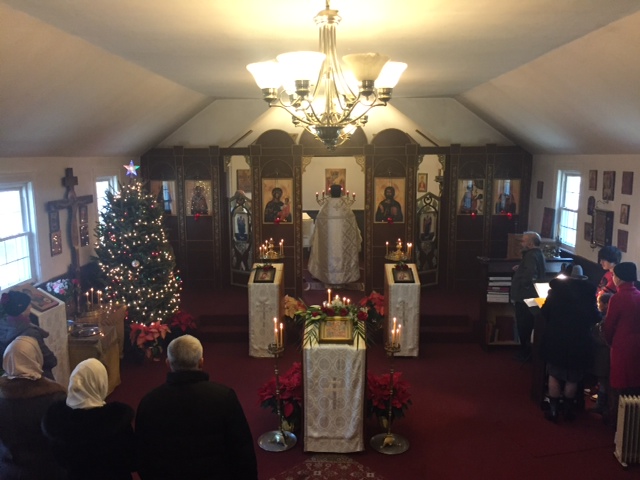
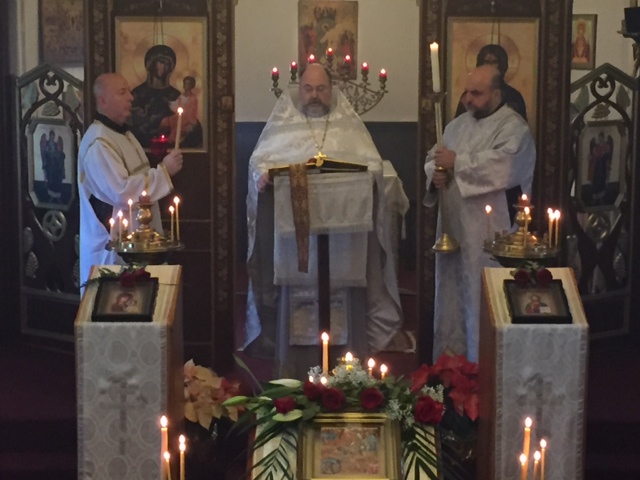
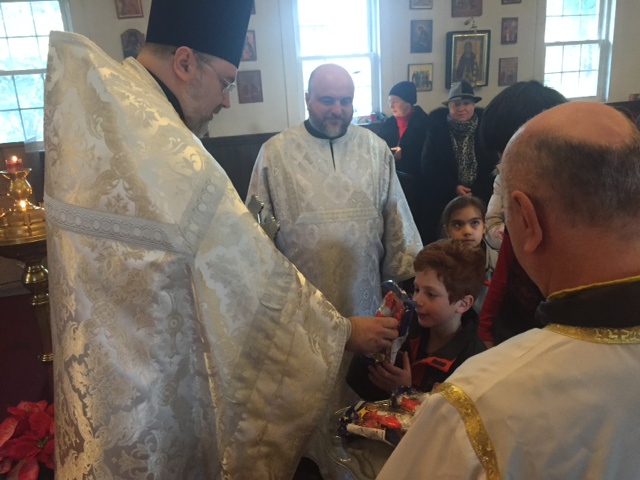
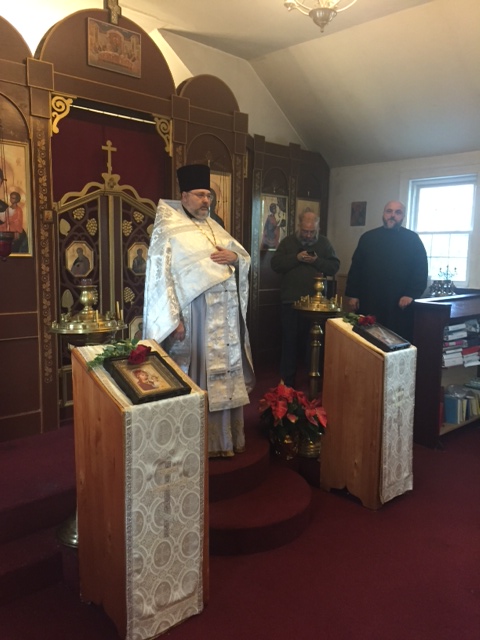
On December 19, on the holy day of St. Nicholas the Wonderworker our cathedral church in Manhattan celebrated its patronal feast. His Grace, Bishop John of Naro-Fominsk led the Divine Liturgy on that occasion. Bishop John was co-served at the Liturgy by a number of clergy including the Rector of St. George Church in Bayside, Archpriest Igor Tarasov. 

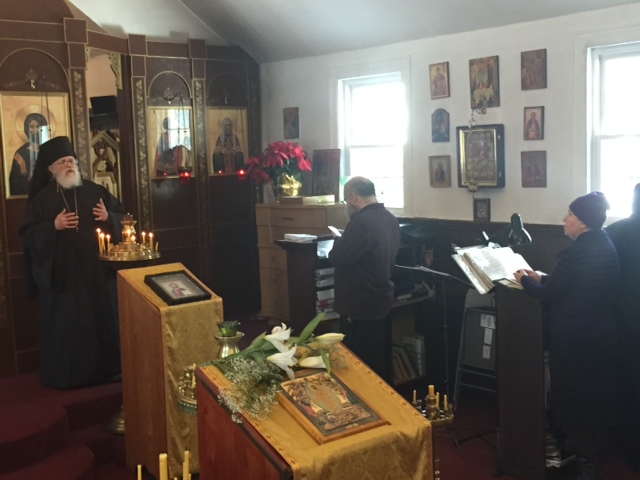
At the conclusion of the Divine Liturgy Bishop John preached a homily and greeted the parishioners on the occasion of the patronal feast. His Grace also congratulated Archpriest Nikolai Babijtchouk, Rector of the Church of All the Saints of Russian lands in Pine Bush, NY on his name day. 

After the Liturgy His Grace, clergy and the faithful continued their celebration of St. Nicholas feast at the luncheon held in the cathedral hall.


28th Sunday after Pentecost


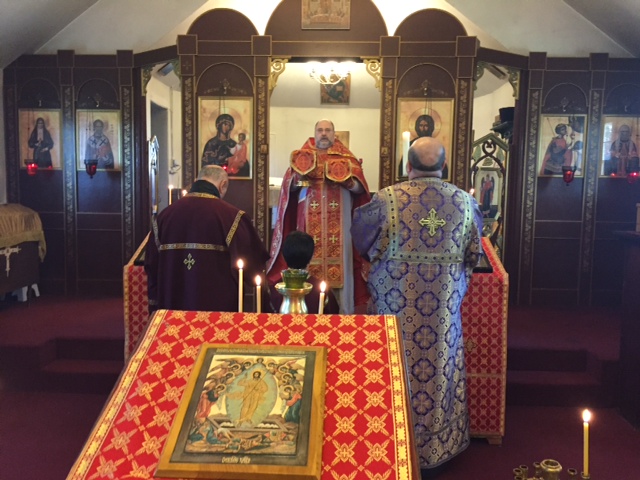
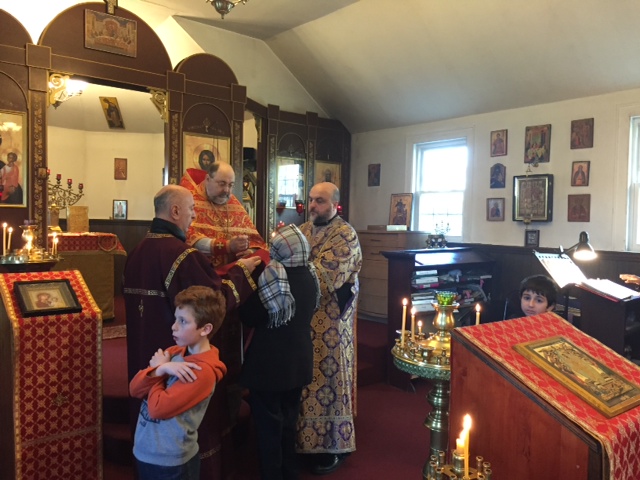
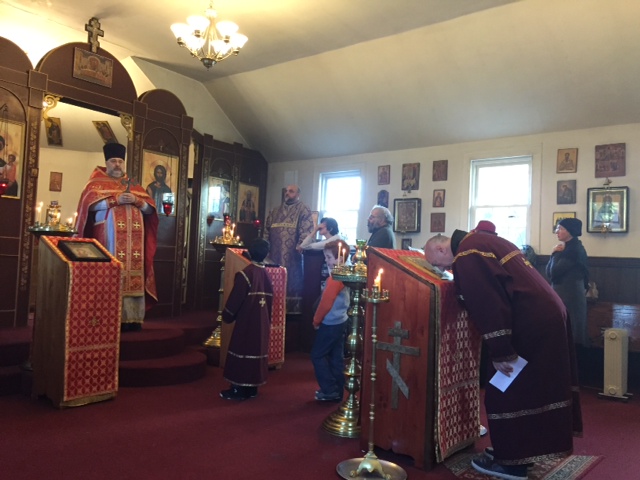
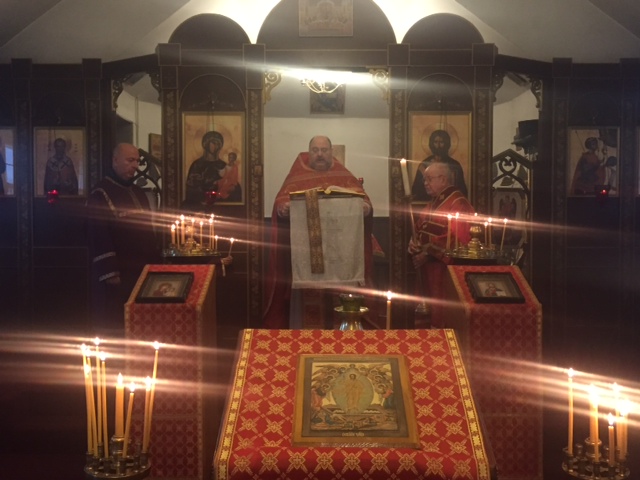
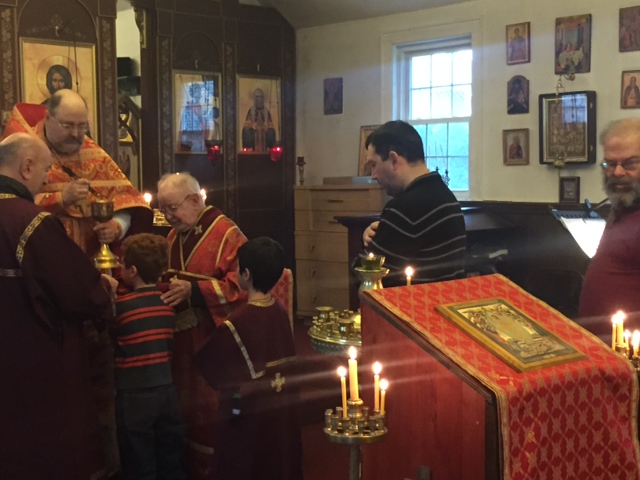
On December 13th, on the 28th Sunday after Pentecost and on the feast of the Holy Apostle Andrew, we had a nice celebration at St. George Church. Our Rector, Archpriest Igor Tarasov served the Divine Liturgy. Following the Gospel lessons he preached the following homily in English:

“Today’s first Gospel tells us about a miracle of healing performed by our Lord Jesus Christ over a sick woman. She had a spirit of infirmity 18 years, and was bent over and could not raise herself up (Lk. 13, 11). As in many other instances when our Lord healed the people, He had compassion, He felt for this woman, thus He called her and said, “Woman, you are loosed from your infirmity” (Lk. 13, 12). He laid His hands on her, and immediately she was made straight, and glorified God (Lk. 13, 13). We should recall that St. Luke whose Gospel we read today, was a physician, therefore he attempted to describe people’s illnesses with precision.”
“If we were present there at that glorious miracle of the Lord, we would probably rejoice for the woman who was healed and for the glory of God revealed. But the reaction of some people present there was different. We read that the ruler of the synagogue was not happy because Jesus had healed on the Sabbath. So, the ruler said to the people that they may come to be healed on the other six days, but not on the Sabbath. In such a reaction we see a very formal and superficial observance of the law of Moses. The ruler of the synagogue, as well as all the Pharisees and scribes, kept the letter of the law, instead of the spirit of the law. Such an observance can still be seen in the orthodox Jewish communities. Many of those orthodox Jews populate this city of New York, and we may see how they strictly adhere to the Old Testament regulations, specifically on the observance of the Sabbath day. Thus, these people, as well as their ancestors mentioned in today’s Gospel, kept the letter of the law, not the spirit. This is why the Lord called them hypocrites. He said, “Does not each one of you on the Sabbath loose his ox or donkey from the stall, and lead it away to water it?” (Lk. 13, 15). Certain things should be done no matter whether today is Sabbath or any other day. Especially, good deeds of mercy should be performed on each day. Furthermore, Jesus wishes us to understand that such works of love and charity should especially be done on the holy days. Good Christians understand that. We are also called to keep Ten Commandments, to honor and sanctify the Sabbath. For us Sunday is our Sabbath, the holy day of the week, the day of rest and the day of worship. However, we cannot think that a miracle could not be performed on such a day. We further cannot imagine that works of mercy could be prohibited on Sunday. In addition, we agree that certain jobs like emergency help or works necessary for your life or health may be done on Sunday.”
“This is why today’s Gospel teaches us to observe the spirit of the God’s law, not just the letter of it. We have to live by our faith, and not just show that we are so religious. Our piety has to show what is in our hearts. Otherwise we risk to become similar to the Jewish scribes or Pharisees who demonstrated their piety and zeal in external observance of the rituals, but inside of their hearts were evil. Our Lord called them “whitewashed tombs which indeed appear beautiful outwardly, but inside are full of dead men’s bones and all uncleanness” (Mt. 23, 27). Jesus warned His disciples from the “leaven of the Pharisees which is hypocrisy” (Lk. 12, 1).”
“Honoring today Holy Apostle Andrew whom we name the “First-called”, we may remember that he was free from that leaven of the Pharisees. Although St. Andrew was a Jew he did not fall under that influence of the hypocritical Pharisees and scribes. If we recall today’s second Gospel reading, Andrew was one of the disciples of St. John the Baptist. Thus before being called to become an Apostle of Christ he was a disciple of the Holy Forerunner. He was well prepared to accept the Messiah. This made him the “First-called” while some other disciples were not so ready. If we recall St. Paul, he was a Pharisee himself. Only after his conversion St. Paul freed from that leaven of the Pharisees. Thus it is important to note that holy Apostle Andrew was so much prepared to accept the Christ, and we should imitate him as one of the best.”
“Dear brother and sisters! The spirit of the law is found in the whole works of divine grace. The healing, life-giving, renewing power of God, His grace has no limits. It cannot be limited to the certain days, to the certain places or certain nations. It acts everywhere. And we have to be joyful to receive it and to see it at work. This was the purpose of the Lord to come into this world, that His grace may be shed upon every person. As a sign of that Jesus Himself cured all the infirmities and diseases among the people whom He encountered in pain. And the whole human race had to be healed, made well and straight the way the Lord healed and made straight the woman in today’s Gospel. Thus, dear brothers and sisters, let us be grateful and adhere to His commands, fulfilling first of all the spirit of His law, to be worthy of His eternal ruling.”

After the dismissal of the Liturgy the Rector preached a short sermon in Russian to convey the main thoughts of his English homily.

Following his sermon the Rector congratulated our parishioner and altar server Andrew Malyshew on the occasion of his name day and expressed to him heartfelt wishes of God’s help, intercession of St. Andrew and many happy years. The traditional Polychronion (“Mnogaia leta”) was sung.

Fr. Igor also expressed his sincere condolences to Olga Vnukova for the loss of her brother Andrei who passed away last week. Fr. Igor noted that today, celebrating St. Andrew the Apostle, we congratulate one Andrew who is here with us and we also commemorate another Andrew who just passed away. It is coincidental but it tells us that in God everyone is living.

After our services the Rector and parishioners enjoyed delicious meals and a nice company at the trapeza table during the coffee hour.


26th Sunday after Pentecost


On November 29, on the 26th Sunday after Pentecost, and on the feast of the Holy Apostle and Evangelist Matthew, our parish had a nice liturgical celebration. Our Rector, Archpriest Igor Tarasov served the Divine Liturgy. After the Gospel lesson he preached a homily in Russian. An English translation of that homily is as follows:

“Today’s first Gospel lesson offers us a great instruction telling the parable about Good Samaritan. It is interesting to note that those two words were not imaginable by the Jews in the time of Christ. Samaritans were enemies and could not be called “good”. However, our Lord tells this parable and wishes His listeners to change their mind. As we celebrate today the feast of the Holy Apostle Matthew, we learn from the second Gospel lesson that this disciple of Christ was called from the tax office. St. Matthew was a publican, a tax collector. Publicans were considered immoral people and public sinners. Pious Jews could not communicate with them. Therefore, it was not imaginable also to call a publican “good”. But Holy Apostle Matthew became a “good” publican when he followed Christ. Therefore, Jesus was breaking stereotypes of the Jews and wished the people to change their mind regarding “bad” people. By His parable about Good Samaritan He teaches us that God’s commandment of love towards the neighbor concerns all men, and not just our relatives or compatriots. That is the direct and moral sense of that parable.”
“But today we should reflect about the spiritual meaning of that parable.”
“A certain man goes down from Jerusalem to Jericho. A certain man means any man, any one of us. Jerusalem signifies heaven and Jericho signifies the earth. This is the destiny of us all, to be on earth, although our home is in heaven. This man falls among thieves who strip him of his raiment, wounding him and leaving him half-dead (Lk. 10, 30). Here the thieves are the demons who attack us through our weaknesses and wound us, leaving us weak and spiritually dying, having lost grace and faith, in sorrow and despair.”
“A priest and then a Levite pass by and do not help (Lk. 10, 31-32). By them we understand those who, having a certain rank and duty, have hard hearts and show no love, for they are hypocrites and “pass by on the other side”. But a Samaritan helps the man, shows compassion. Although the Samaritan does not share the fullness of the official faith, his heart is kind, and he shows mercy. This Good Samaritan represents Christ Himself. Christ was rejected by the Jews, but had the essential compassion which the Jews did not have.”
“The Samaritan went to the man and bound up his wounds and poured in oil and wine and then set the man on his own animal (Lk. 10, 34). This is what Christ did for us: He came to us. In other words He became man, one of us. He then bound up our spiritual wounds with His word and poured on us His grace of salvation, the oil and wine of our souls. Then he set us on his own animal, in other words he gave us faith. Without faith we are not able to walk, so faith is our ride to salvation, our transport.”
“The Samaritan then took the man to an inn, cared for him and gave the innkeeper two coins to look after the man, telling the innkeeper that if it cost more, he would repay him when he returned. (Lk. 10, 34-35). By the inn, we would understand the Church, where men can receive Christ’s healing and care. Faith transports us to the Church. Then the innkeeper is the priest, the dispenser of sacramental grace and healing. But it is true that all members of the Church are also innkeepers, dispensers of spiritual and other help to those in the world around us.”
“The two coins represent the two ways in which we are saved. First of all, we need to take an effort through, fasting and repentance. That is the first coin. The second coin is the grace of the Sacraments that we receive from God in response to our efforts. And there is a connection between those two coins. If we members of the Church of God, ‘innkeepers’, stretch ourselves and give more of ourselves, then Christ will reward us when He returns at the end of the world.”
“Dear brothers and sisters in Christ! This is the spiritual meaning of today’s parable. Christ tells it to the lawyer who knows the commandments but does not apply them. And Christ says to him: “Go and do likewise” (Lk. 10, 37). Let us also, after reflection on that parable, do likewise by showing compassion towards those who are in need, those whom we encounter during the journey of our life. Today’s second Gospel tells us that our Lord desires compassion, not sacrifice (Mt. 9, 13). Let us show that and take care of our neighbors bodily and spiritually, so when our Lord returns to the earth, He may bless our deeds and reward us for them in the eternity!”

Following the dismissal of the Liturgy the Rector preached a short sermon in English conveying the ideas of his Russian homily. He also reminded the parishioners that we began the Nativity Fast, a period of spiritual preparation for the solemnity of the Birth of Christ.


25th Sunday after Pentecost


On November 22, on the 25th Sunday after Pentecost, we had a beautiful celebration in our parish church. Our Rector, Archpriest Igor Tarasov served the Divine Liturgy. After the reading from the Holy Gospel he preached the following homily:

”Today’s Gospel reading from St. Luke (Lk. 8, 40-56) tells us about two miracles, one the healing of an illness and the other the overcoming of death. This double miracle is also reported in the Gospels of Matthew and Mark (Mt. 9, 18-26; Mk. 5, 22-43). Thus, these two miracles should be viewed as related, for both illness and death have the same origin, the same cause, they are both the result of sin, both entered the world as a result of the sin of Adam. As the Apostle Paul says, “The wages of sin are death” (Rom. 6, 23).”
“Let us consider the healing of the woman with the issue of blood. We should note that this issue of blood was not that monthly issue of blood suffered by all women, but something else. It had lasted for twelve years. On this subject, it is worth making clear that the monthly issue of blood endured by all women is not of course the result of personal sin, but a result of the general sin of Eve. It is written in the Book of Genesis that women will suffer this as a result of the fall: “In pain you will give birth”  (Gen. 3, 16). In the same way men are forced into having to work for a living, into “toiling by the sweat of their brow”. Both men and women suffer from the fall, but in different ways.”
”The issue of blood suffered by this woman was then an illness and it was healed by her touching the fringe of the clothes of Our Savior, Who, as it is written, felt ‘the power go out of Him’ (Lk. 8, 46). In these words we have a description of the nature of all illness. If it takes the power of Christ to heal an illness, then it is clear that every illness is in fact some lack, some absence of the power of Christ. Sickness is not something that is added, it is rather the sign of absence of the grace of God. As we are told in the Gospel when the woman was healed, or in other words she was ‘made whole’. Thus, a sick person suffers from a lack, that person is not whole. Such a person lacks the fullness of the power of Christ.”

“How and why was the woman in the Gospel “made whole”? This question is easy to answer, for Christ Himself says to her that: “Your faith has made you well” (Lk. 8, 48). In other words, if any of us is to be made whole, to be made well, we must first have faith. If we do not have faith, we lack something, we are without something, we are faithless or godless. But if we have faith, then healing can be inspired in us by the power of God.”
“This combination of faith and the power of God is so special that it can even overcome death. We see this very clearly in the second miracle, the resurrection of Jairus’ daughter. Here was this young girl, twelve years old, dying. We can easily imagine the frustration of her father Jairus. And yet he had faith, for he was seeking out Christ, the Only One Who could heal his daughter. As a result of Jairus’ faith and the power of Christ, his daughter was not only healed, but restored from death before the eyes of those who mocked Christ.”
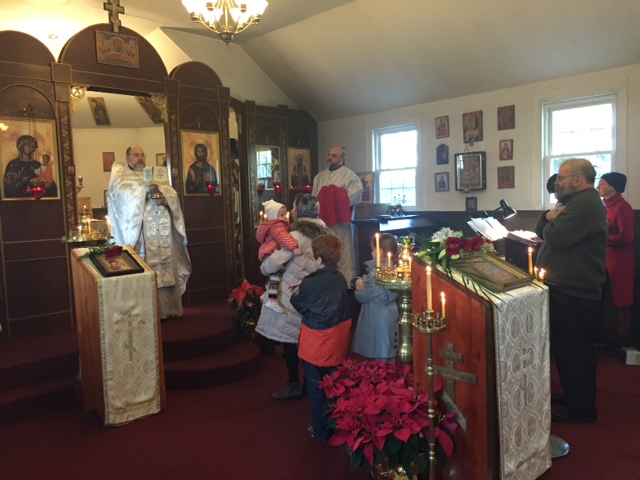
”Reflecting upon those two closely related miracles, we may see that today our Lord Jesus Christ says to us all: “Have faith and I will give you all the power that you need to do My will”. Let us then hear His words to be made well in this life and later to be raised from the dead, especially for the eternal blessedness after His second coming.”

Following the Liturgy dismissal the Rector preached a short sermon in Russian to stress the main ideas of his English homily. He also reminded the parishioners that next week we begin the Nativity, or St. Philip’s Fast which is a special time of spiritual preparation before the celebration of the Birth of Christ. The Rector mentioned that right before we start fast we could celebrate Thanksgiving Day. Although it is not a Church holy day, it has an important spiritual significance – we have an opportunity to give thanks to the Lord for all the blessings we received during the past year. Fr. Igor encouraged the parishioners to spend the Thanksgiving in the spirit of gratitude to the Lord. We can also have a nice traditional turkey dinner but we should remember that next day, on Friday, we begin fasting. Thus our festal food should be all consumed on the Thanksgiving Day.

Following the service the Rector and parishioners already enjoyed Thanksgiving meal together, having a very abundant luncheon with a delicious turkey and other meals prepared by our great cooks.


24th Sunday after Pentecost


On November 15, on the 24th Sunday after Pentecost, Archpriest Igor Tarasov, Rector of St. George Church, served the Divine Liturgy in our temple. Following the Gospel lesson he preached a homily in Russian. An English translation of that homily is as follows:

“Dear brothers and sisters in Christ! Today’s reading from the Holy Gospel takes us to the country of the Gadarenes which is opposite of Galilee. Our Lord Jesus Christ came there along with His disciples after crossing the Lake of Gennesaret, and there He cast out the evil spirits from a possessed man (Lk. 8, 26-39).”
“Reflecting upon this Gospel story we may say that the power of Christ was able to cast out the demons. It was able to command the forces of the invisible world. It is important to remember that evil is not more powerful or even equally powerful to God.”
“Further we read in today’s Gospel that the demons asked Christ to permit them to enter the herd of swine. And He did. This indicates that God allows evil things to happen for a reason. Last Sunday we said that God allows terrible disasters to happen due to our sinfulness. And in today’s Gospel story we are talking about a much less terrible, but still impressive loss – the demons entered the swine and the whole herd ran down the steep place into the lake and drowned (Lk. 8, 33). According to the Old Testament, pigs were unclean animals, but they are still God’s creatures. And the demons, although it sounds weird, are also God’s creatures! God created them as good, but they chose to be evil and fell away from Him. But today’s Gospel story tells us that the Lord heard their request and allowed that the animals would suffer because of them. And what is a request from a creature to the Creator? It is a prayer. Thus, although it sounds weird, the demons did pray Christ and He answered their prayer.”
“But the demons remained those who they were – the evil spirits. They killed the swine. It shows us their malice, their hatred towards all the God’s creatures. St. John Chrysostom says that if they could, the demons would destroy all God’s creation. They would kill all the people if they could and would not be restrained by God. Therefore, dear brothers and sisters, if not for God’s power the evil spirits would long ago destroy all the human kind.”
“The Gospel lesson further tells us that the people from the country of the Gadarenes asked Jesus to depart from them (Lk. 8, 37). This was an evil choice. They did it because they do not wish Jesus to break, to change their usual way of life. He would disturb their sinful way. Those people were pagans, not the Jews. The fact that they had swine tells us that. So, they did not really know the faith in one God and did not probably wish that their pagan lifestyle would be disturbed. They have already suffered a loss, losing several thousand head of cattle, when he was only approaching the town! What might happen if he comes to the city itself? This is an example of selfish fear, a fear before something high and divine, a fear that the Lord may enter into our life and change it. He may make us different while we are so used to be what we are, sinful and unclean, just like those pigs. Something similar happens now, when a person is afraid to let the Lord somehow enter into his soul. Did not we hear sometimes even from the church going people about someone who wants to pray more, fast more and to exercise more piety: “We are no monks! Is it possible to us to demand what is required of the monks and the clergy? We are ordinary laymen.”
“We have to beware of that attitude and avoid it. It makes us renounce God’s grace. In the same way the people from the country of the Gadarenes renounced God’s grace in today’s Gospel lesson when they asked Jesus to depart from their land. But again, we become convinced that God may hear the prayers of those who even wish evil things to happen. When the demons beg Him to permit them to enter the swine the Lord allows them. When the sinful people ask Him to depart from their country, He departs. But today’s Gospel is telling us that before His departure Jesus has left instead a preacher, the healed man (Lk. 8, 38-39). That man who had been freed from the demons and who desired to follow the Lord, he was left by Christ in his own city to preach. He had to instruct his relatives and do not allow at least some of them to perish.”
“Dear brothers and sisters! Today’s Gospel story teaches us a few things. It teaches to pray in faith. God listens to the prayers, He heard the prayer of the demons. It also teaches us to avoid evil. We need to stay away from any forms of the evil forces in this world such as occult teachings, spiritism, fortune telling, sorcery and different superstitions. Otherwise, the evil spirits could have a power over us. And finally, today’s Gospel teaches us not to chase Jesus away, but ask for His grace, and preach Him to others. Asking for His grace and instructing others about the Lord and about His salvation we may be delivered from all evil and to may be not among those who chases the Lord away, but among His faithful disciples who follow Him everywhere, follow Him in their earthly life and will follow Him into the eternal blessedness!”

After the Liturgy dismissal the Rector preached a short sermon in English explaining the main ideas of his previously preached Russian homily.

Following the service our parishioners and the Rector enjoyed delicious food and a nice company at the trapeza table during the coffee hour. At the end of the coffee hour a special Parish Meeting was held and some newly emerged issues had been discussed.


23rd Sunday after Pentecost. Feast of St. Demetrius


On November 8, on the 23rd Sunday after Pentecost, as well as on the feast of the Holy Great Martyr Demetrius, the Rector of St. George Church, Archpriest Igor Tarasov served the Divine Liturgy in our parish temple. Following the readings from the Gospel he preached a homily:

“Our today’s celebration combines the 23rd Sunday after Pentecost and feast of the Holy Great Martyr Demetrius. In addition, our calendar mentions that on this day the imperial city of Constantinople suffered a terrible earthquake in the year 740 AD. As we mention such a disaster we may recall that 3 years ago our contemporary imperial city of New York suffered a terrible hurricane Sandy. Hundreds of people died in accidents, many houses were flooded or destroyed, a lot of damage done to the areas of the ocean shore. Indeed, it seems that not a day goes by without some natural catastrophe happening and lives lost – here floods, there a hurricane, here a volcano, there an earthquake. And people tend to blame somebody for these losses. Some people blame governments for not being prepared, some blame big companies for changing the earth climate, and very often we tend to blame God. Even the insurance companies called the damages resulting from natural disasters the “acts of God”. Thus, we blame others but not ourselves. Like children we argue that “it isn’t our fault”. Such a way of thinking is not the way of the Holy Gospel.”
“In today’s Gospel, Lazarus did not blame anyone for his poverty and misery. He never blamed the kings and the rulers or some other human forces for his state. And he never blamed God. He did not even reproach the rich man for his meanness. No, he accepted his situation in humility. And because of his humility he went to heaven, to the bosom of Abraham.”
“As for the rich man, he never thought of thanking God for his wealth. He did not show his gratitude to God by caring for the poor men at his gate. He had only hard-heartedness, allowing Lazarus to die at his gates, surrounded by stray dogs who licked Lazarus’ sores, while he was feasting. And because of his hard-heartedness he went down to hell.”
“Now we may ask: what is the spirit of the Gospel tells us about different catastrophes in the world? Why does God allow natural disasters to happen? And who is to blame? The answer is: man himself is to blame, simply because man does not ask God for catastrophes not to happen, because man does not accept God’s power. Man does not seek God’s protection through prayer and repentance, through confession and Communion. Man has persuaded himself through modern technology that he is so smart that he can live without God. But modern man has so blinded himself with his intelligence that he forgot that he can do nothing to protect himself from the natural elements, only God can do that. Modern man so blinded himself that like the rich man in today’s Gospel, he cannot see Lazarus starving in agony at his gates.”
“On the other hand, it is also true that there could be many more natural disasters. Why not the whole cities and lands are being destroyed by earthquakes? Why not whole countries are being consumed by tidal waves? Why has the earth survived for so long despite the accumulation of human sin? Why God is so patient that He does not allow all these things to happen? Only because there are those who prayed and continue to pray. The Mother of God keeps interceding for us. The Saints like Holy Great Martyr Demetrius continue to pray the Lord being in front of Him in heaven. And the righteous people living on earth keep praying for the peace of the whole world and for the salvation of all. This is the only reason why we are still here. The world hangs by the thread of prayer.”
“The world is run not by governments, or politicians, or generals, or businessmen. In reality it is run by prayer and lack of prayer. There will be peace in the world until there is prayer. And we too shall perish like the rich man unless we pray, unless we hear to Moses and the Prophets and unless we truly follow the One Who is truly risen from the dead, Christ our True God.”

Since there was no services on the previous day which was the St. Demetrius Memorial Saturday, the Rector proclaimed the Litany of commemoration of the deceased which is not usually taken in our parish on Sundays.

After the Liturgy dismissal the Rector reminded parishioners to pay their parish dues for the current year.


22nd Sunday after Pentecost


On November 1, on the 22nd Sunday after Pentecost, our parish family had a nice celebration. St. George’s Rector, Archpriest Igor Tarasov served the Divine Liturgy. After the Gospel lesson he preached a homily in Russian. An English translation of that homily is as follows:

“Today’s Gospel reading contains very famous parable about the Sower who went to sow his seed (Lk. 8, 5-15). The seed falls to the different ground, and in most of the cases it did not produce any fruit. Our Lord Jesus Christ Himself explained that parable to His disciples saying what it means. We easily learn that the seed is the Word of God which is sown by the Lord Jesus Christ. He is the Sower of the Word. Now, the grounds are different types of people, different types of human souls. And the Lord tells us what kind of souls He is talking about. In one case they hear the word but the devil comes and takes the word away. In another case people have no root for the word and fall away at the time of temptation. In the third instance the people are too busy with their daily cares, riches or pleasures, so they cannot grow the seed of faith. Only in the fourth example Jesus talks about some “good ground”, about those who have a “noble and good heart”. They hear the word , keep it and bear fruit with patience.”
“As we may see, our Lord teaches us in a very simple and easy way. Christianity is a simple and direct teaching. It may be hard, but it is not complicated. And in today’s Gospel we are given four different way of receiving the Word. Three of them are inappropriate, failing. Only one is right and appropriate. It looks like a multiple choice question with one correct answer.  How can we find the right answer? The right answer is given in today’s Gospel in twelve simple words: “But that on the good ground are they, which in a noble and good heart, having heard the word, keep it, and bring forth fruit with patience.” (Lk. 8, 15).”
“First of all, so that the seed of God does not fall by the wayside and may not be trampled down or devoured by the demons, we must have an ‘honest and good heart’. Our hearts must be ready to receive the word.”
“Secondly, so that we do not fall into careless excitement, we must cultivate the seed of God, giving moisture to it, so that it puts out roots and develops, in other words, we must ‘keep the word’. How the word is kept? By obeying the Commandments. If we live according to them, then we keep the Word of God”
“Finally, so that the seed of God is not choked with the thorns and weeds of our passions, we must ‘bring forth fruit with patience’. We cannot expect sudden and astonishing progress, with our many worldly cares. We have to be patient and persevere, making what at first may only be a mere interest into our priority and living it as a way of life. Sometimes people complain that they fight their passions and sins but see little or even no progress. We have to be patient. It could happen that we do not totally overcome certain sins in our life. However, if we repent and fight those sins, the Lord may still bless and receive us into His blessedness, for we were patient in our fight. Such a fight can produce a fruit.”
“Thus today Christ gives us not learned volumes of complicated instructions to live by, but three simple rules for salvation: to have an ‘honest and good heart’, to keep the word, and bring forth fruit with patience. If we follow that simple rules, we may become a good ground for the seed of God to grow and to make us worthy of eternal blessedness.”

Following the dismissal of the Liturgy the Rector preached a short sermon in English to stress the main thoughts of his Russian homily.

After the Liturgy the Rector performed a memorial service (Litia) for the victims of the Russian aircraft crash occurred in Egypt.

Our Sunday celebration continued at the trapeza table where the Rector and parishioners enjoyed delicious meals and a nice company.


21st Sunday after Pentecost. Sunday of the Holy Fathers of the 7th Ecumenical Council


On October 25, on the 21st Sunday after Pentecost, as well as Sunday of the Holy Fathers of the 7th Ecumenical Council, we had a nice celebration in our parish church. Our Rector, Archpriest Igor Tarasov served the Divine Liturgy. Following the readings from the Scripture he preached a homily:

“Today’s first Gospel lesson tells us about the resurrection of the son of the widow of Nain (Lk. 7, 11-16). Reflecting on that event we may conclude that such a miracle happened for two reasons: because our Lord Jesus Christ was the Son of God, and because He was also the Son of Man.”
“First, we have to say that our Lord Jesus Christ is the Son of God, the Divine Word which created the world. As such, Christ had the power to work miracles, restoring the laws of creation as they had been intended before the fall, when there was no sickness or death. Through miracles He showed this power, the unique power of the Son of God.”
“Secondly, this miracle happened because Jesus was also the Son of Man. Christ in His human nature felt compassion on those who were suffering. In this particular case, there was great reason for compassion. In those days a woman who lost her husband, became a widow was likely to have a miserable life unless she was supported by her children. Now the only son of the widow of Nain was the only one who could take care of her. Without him she could become very poor, she could become a beggar and perhaps could die of starvation on the streets.”
“This miracle of the resurrection of the son of a widow was quite unique, unheard of and unseen in human history – only the Son of God could accomplish this. No human healer can raise from the dead. It occurred at His word because Jesus is the Word of God. It also occurred through His physical touch, because only contact with the divine and immortal nature can confer resurrection, the overriding of death. Only immortality can overcome death, only deathlessness is greater than mortality.”
“This miracle shows that the power of the Holy Spirit flows not from, but through Jesus Christ, through His pure and sinless human nature. Both Christ’s Word and Body are life-giving. This was later proved by His own Resurrection. Now since the Church is the Body of Christ, this means that the same power flows through the Church and confers life, healing and resurrection on all who touch Christ in the Church, participating in the spiritual life of the Church.”
“Celebrating today the memory of the Holy Fathers of the 7th Ecumenical Council we need to remember that those were the bishops of the Church who declared certain truths of our faith. And the second Gospel lesson read today which is always assigned for the celebrations of the Fathers of the Councils, tells us about eternal life. In His pontifical prayer our Lord is asking God the Father that His followers may have eternal life. And eternal life is to know the true God and Jesus Christ whom He sent (Jn. 17, 3). Therefore, if we are in the Church then we know the true God and His Son, Jesus Christ. If we adhere to the Orthodox Church and its teaching, we know true God and may partake of eternal life. As the Holy Spirit flows through Jesus Christ, it flows through the Church and bestows His glory to make us able to receive life everlasting.”
“In addition, we may say that today’s Gospel has also certain mystical or symbolic meanings. The widow described in the story is the soul without God. Such a soul is left miserable, poor and begging. It may soon die. The dead son who was carried outside the town to be buried is the human mind which is outside the Church. It is spiritually dead, unable to understand and speak words of reason. It is fit only for the burial of all its mortal ideas and speculations. The coffin in which the body of the widow’s son was placed is the human body, which when touched by God is thus brought to life. Thus it begins to speak divine words, for now it has something to say, it is no longer mute, but is resurrected from the dead. In this way a human body which is touched by God is a mind raised from death, a soul which lives, human nature restored and saved from death.”
“Dear brothers and sisters! Let us ask the Lord to restore us from the spiritual death around us and within us. Many today’s young people being perfectly alive and relatively healthy, are in fact spiritually dead. Their souls sometimes live without God, their minds are very often wander outside the saving gates of the Church and their bodies are often abused by the sins of flesh, by drugs and alcohol. Let us pray so the Lord will wake them up by His life-giving Word and restore them to life by His divine touch as He restored to life the son of the widow of Nain. Let us strive for eternal life which is in our Lord and Savior Jesus Christ!”

After the Liturgy dismissal the Rector preached a short sermon in Russian to stress main thoughts of his English homily.

20th Sunday after Pentecost. Protection of the Most Holy Mother of God


On October 18, on the 20th Sunday after Pentecost, Archpriest Igor Tarasov, Rector of St. George Church served the Divine Liturgy in our temple. On this day we also observed great feast of the Protection of the Most Holy Mother of God which had been transferred to Sunday. After the Gospel readings the Rector preached a homily in Russian. An English translation of that homily is as follows:

“The words of our Lord Jesus Christ that we heard in today’s Gospel lesson may sound to us little strange and too demanding. The Lord says, “If you love those who love you, what credit is that to you?.. And if you do good to those who do good to you, what credit is that to you?” (Lk. 6, 32-33). He goes on and says, “Love your enemies, do good, and lend, hoping for nothing in return” (Lk. 6, 35). We may notice that such rules are not very much followed among the people. Jesus says that sinners do good to those who do good to them. Thus the rules of this world are the rules for the sinners. But we, if we wish to be the followers of our Lord, need to have different rules, a different way of life. Then we could be called Christians and be worthy of such name.”
“If we read the Gospel we may notice that our Lord Jesus Christ very often taught His disciples to be a little better than average people. He said, “If anyone wants to sue you and take away your tunic, let him have your cloak also. Whoever compels you to go one mile, go with him two” (Mt. 5, 39-41). Jesus wished His followers to be more than just “nice people”, more than just good. He wanted them to strive for perfection.”
“In the Gospel lesson dedicated to the Most Holy Mother of God we hear that Jesus was speaking with Mary, the sister of Lazarus. That woman sat at His feet and listened to His words while her sister Martha was preoccupied with much serving to the Guest and could not listen but came to complain that Mary left her to serve alone (Lk. 10, 39-40). The Lord told her, “Martha, Martha, you are worried and troubled about many things. But one thing is needed, and Mary has chosen that good part, which will not be taken away from her” (Lk. 10, 41-42). Like Mary, the sister of Lazarus, we also are called to choose a good part. And that good part will not be taken away from us.”
“The good part which will not be taken away is spiritual life. Martha was doing a very important and nice thing: she was serving the Guest, she showed great hospitality. The Old Testament morals taught to be hospitable. We may recall how Abraham treated the three men who once visited him. We know that it was God who appeared as three men to Abraham. And they were warmly received by that Old Testament hero of faith. To be hospitable is very good. Yet it is not perfect. The New Testament of our Lord Jesus Christ teaches us to do more than that. It teaches us to be not just good. This is why Martha was not commended by Jesus for her work, but Mary who did nothing about receiving the Guest, was praised for choosing spiritual instruction. And what Mary could learn from listening to Jesus, would never be taken away from her. But what Martha did with her cooking and other kinds of serving would be remembered but would be lost next day. The food and drinks she prepared would be consumed, the warmth of her fireplace would be extinguished and the Guest Himself would leave. Being too much busy with serving the Guest, Martha could not be really benefited from His presence. But Mary preserved the words she heard from Him in her heart.”
“What happened to Mary could happen to us, dear brothers and sisters! If we will choose spiritual learning, prayer and participation in the holy services of the Church, if we choose receiving the Holy Mysteries, these things will never be taken away from us. They will remain as a great gift and benefit for our souls. However, if we choose to be busy with our earthly cares and forget about spiritual life, we will labor and won’t get a reward or commendation from the Lord. Those cares will disappear one day and we will be left with nothing.”
“Therefore, dear brothers and sisters, let us live our lives choosing a good part, choosing what is spiritual and not material, choosing what is eternal and not temporary, choosing what is better than just “good”. Let us do more that it is required by the usual rules of this world. Let us love our enemies, do good and then our reward will be great, and we will be sons of the Most High (Lk. 6, 35)!”

The choir conducted by Olga Roussanow sang beautiful festal hymns in honor of the Most Holy Mother of God during the service.

Following the Liturgy dismissal the Rector and the altar servers performed a rite of Glorification in front of the icon of the feast singing the troparion and the kontakion of the Protection. Then Fr. Igor preached a short sermon in English to convey the main ideas of his Russian homily.

After the Liturgy we continued our celebration at the trapeza table where the Rector and parishioners enjoyed delicious meals and a nice company.

19th Sunday after Pentecost


On October 11, on the 19th Sunday after Pentecost, we had a nice celebration in our parish. Rector of St. George Church, Archpriest Igor Tarasov served the Divine Liturgy. After the Scripture readings he preached a homily:

“Today’s Gospel lesson takes us to the shores of the Lake Gennesaret, also called the Sea of Galilee. Jesus preached there to the people and because the multitude pressed upon Him, He used a boat belonging to Simon Peter to preach from it. Then Jesus commands Peter to launch out into the deep and let down the nets for a catch. When Peter, after some doubt and distrust in the words of Jesus, obeyed Him, the Apostles caught a great number of fish. The Lord then called Peter to follow Him and promised to make him a catcher of men (Lk. 5, 1-11).”
“Dear brothers and sisters! This Gospel story gives us a lot of important spiritual ideas. Simon Peter was an experienced fisherman. So, he knew that trying to catch fish after a night of hard labors in attempt to have a catch and being unsuccessful, launching the boat into the deep again makes no sense. As a fisherman and as a man he was right. But our Lord Jesus Christ had a different understanding. He, as God, had a different vision. And we see that Peter was wrong and Jesus was right. However, we also see that Peter obeyed Jesus. He let down the nets and was rewarded for that.”
“In this story we see the difference between the vision of men and the vision of God. The whole human understanding of life, of human relations and human history are relative if we compare it to God’s will and God’s Providence. Being human we often rely on our own experience, our views and ideas, as well as we rely on other people, on the societies and governments, forgetting that our most important trust should be in God. Same happened to Simon Peter. He relied on his experience and on human understanding of fishing business and could not believe Jesus. But we praise Peter for his obedience to the Lord which can be understood also as his trust in the words of his Teacher.”
“The difference between human and divine in today’s Gospel is also seen in the way Peter reacted to the miraculous catch of fish. He fell down at the knees of Jesus and exclaimed, “Depart from me, for I am sinful man, o Lord!” (Lk. 5, 8).  At that moment Peter understood that Jesus is not just a great Teacher but someone much higher than that. He is the Lord, and any man is strange and inferior to Him. In Peter’s words we see the fear of man standing before God. He expresses human incomprehension of God and acknowledgement of man’s unworthiness. But God tells Him in today’s reading, “Do not be afraid” (Lk. 5, 10).”
“Dear brothers and sisters! We, like Simon Peter, should also understand our unworthiness before God. We should acknowledge our sinfulness and be humble. But, on the other hand, we should remember that through Jesus Christ, the great Teacher of men and Divine Son, we are able to approach God and even unite with Him. Yes, we must be humble and express our unworthiness in repentance, but we also can draw near to the throne of grace in confidence, as St. Paul says (Hebr. 4, 16). Such opportunity is given to us in the offering of the Eucharist and in receiving it ion Holy Communion.”
“In today’s Gospel story our Lord was preaching from the boat. Thus, the boat represents the Church. Jesus preaches from it and the Apostles catch a great number of fish placing it to that same boat. It represents the holy ministry of the true Church. The boat before Jesus stepped into it was the Church of the Old Testament, the synagogue. The fishermen toiled all night and could not catch anything. It tells us that the Old Testament Church could fulfill nothing before Christ. But once Christ stepped in, with His divine presence, everything is possible. The net which is the Gospel catches a lot of fish which represent a lot of nations caught by the holy teaching of Christ.”
“Therefore, dear brothers and sisters, let us stay in the boat of Christ. Let us stay in His Holy Church. Let us listen to what Jesus Christ is telling us and obey Him. Let us also acknowledge our unworthiness and sinfulness before God and attempt to cleanse it by true repentance. But let us also remember the encouraging words of Jesus pronounced to St. Peter, “Do not be afraid”. Let us trust in God and in His vision and let us draw near to Him with confidence, so we may follow Him into His eternal Kingdom!”

After the Liturgy dismissal the Rector preached a short sermon in Russian to stress the main ideas of his English homily preached before. He also congratulated Maria Malyshew on the occasion of her name day celebrated on this day in commemoration of St. Maria, the mother of St. Sergius of Radonezh. Traditional Polychronion (“Mnogaia leta”) was sung.