Holy and Great Friday


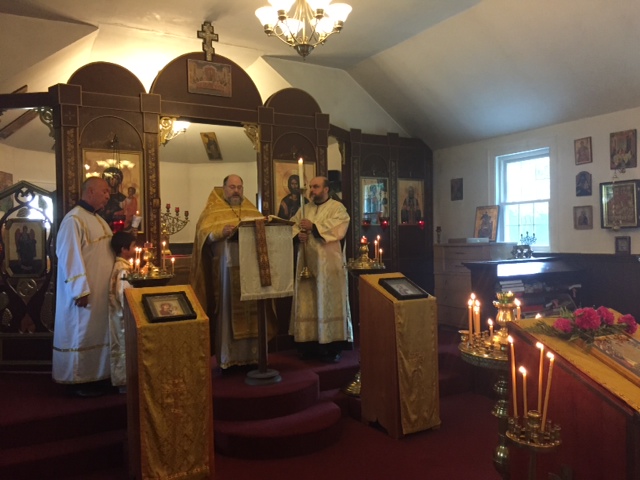
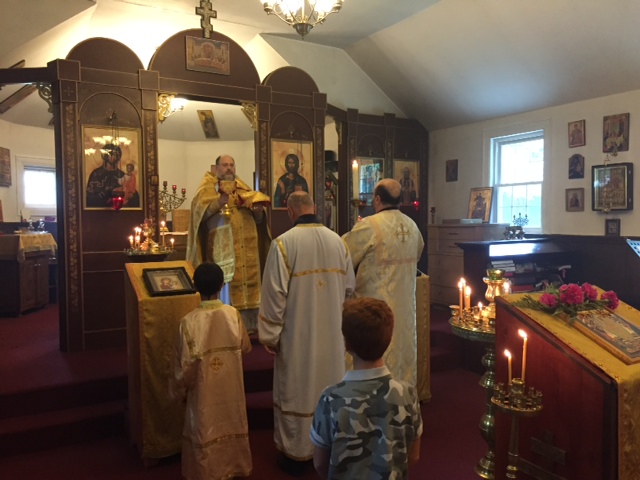
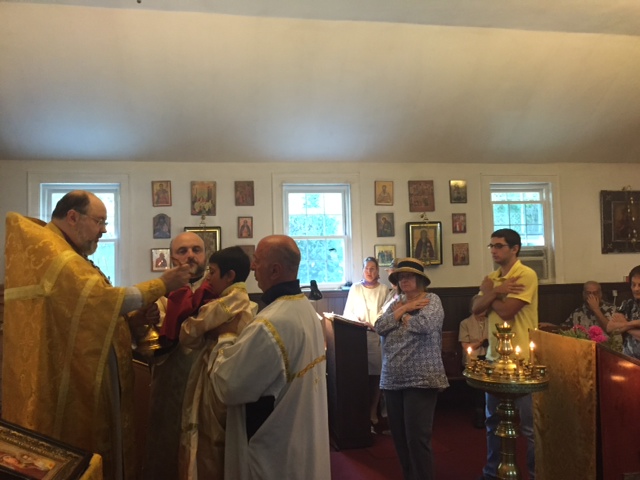
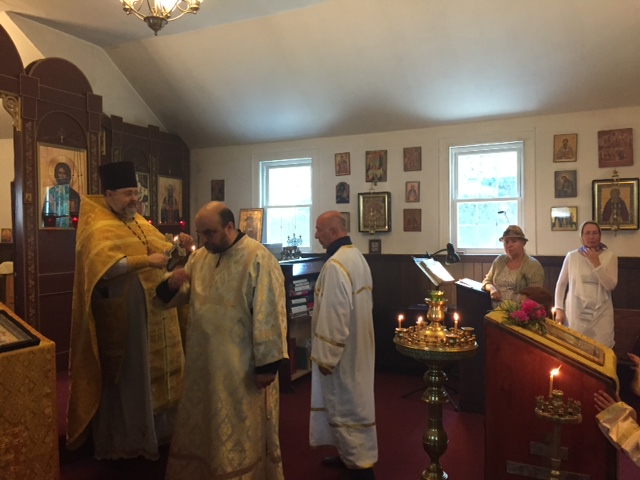
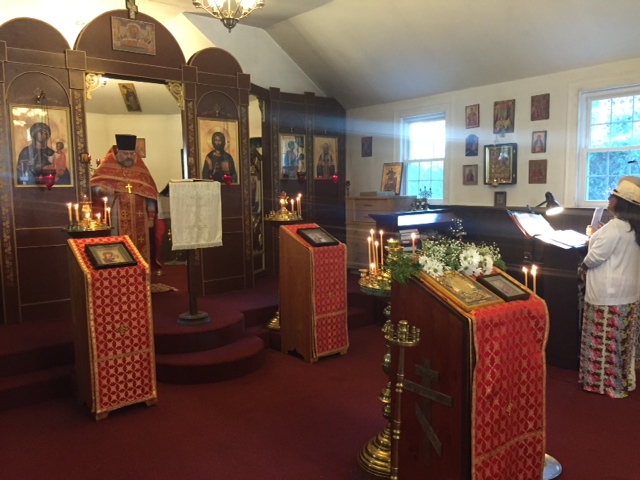
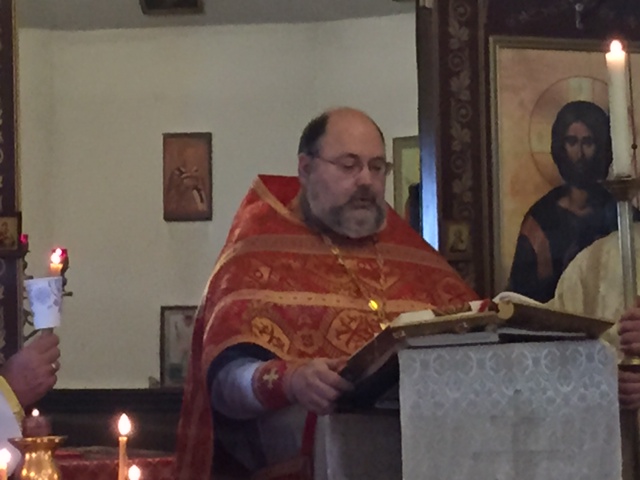
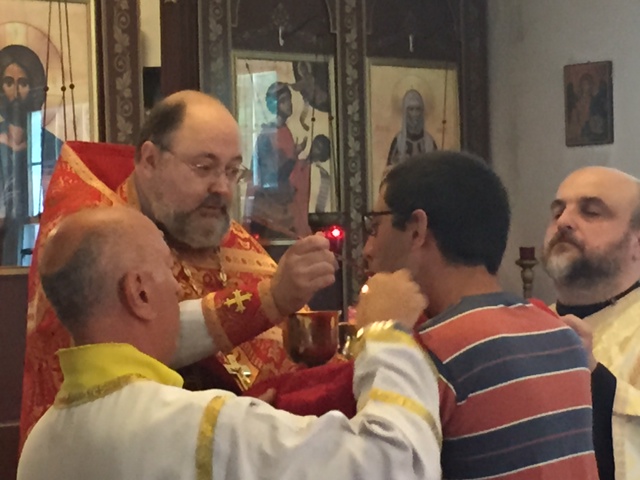
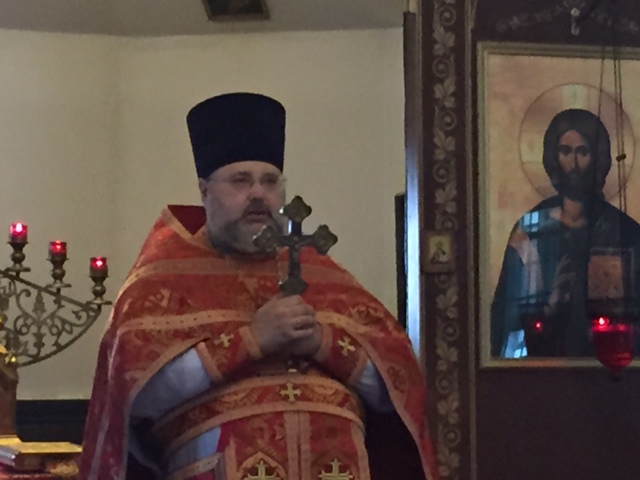
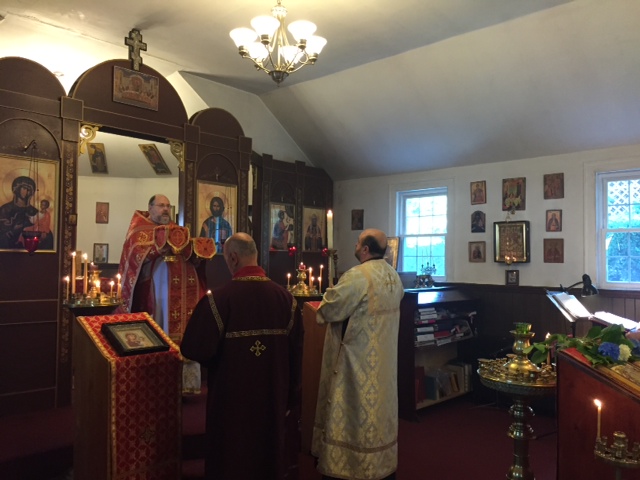
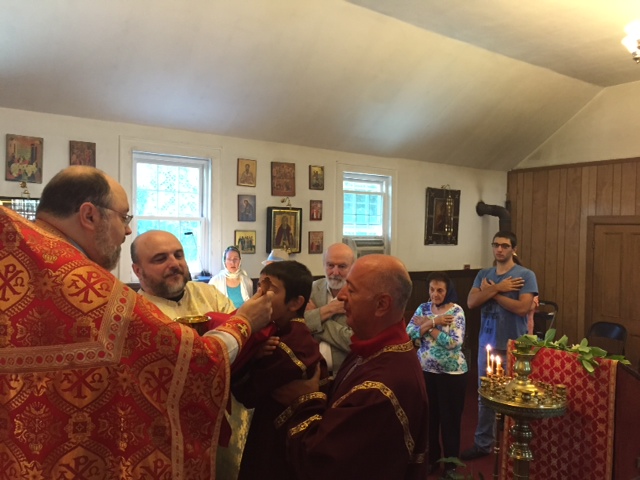
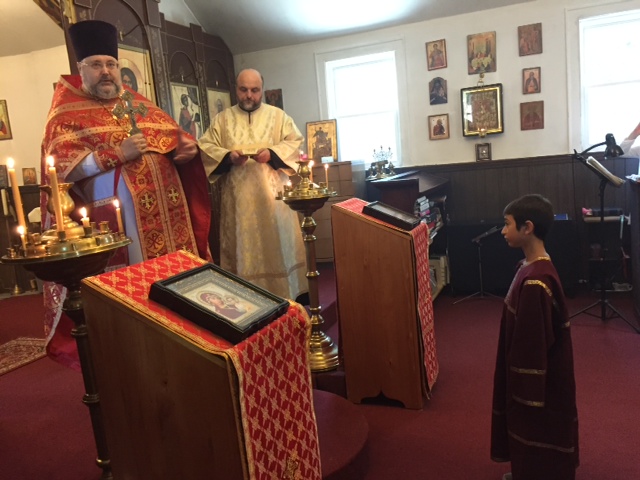
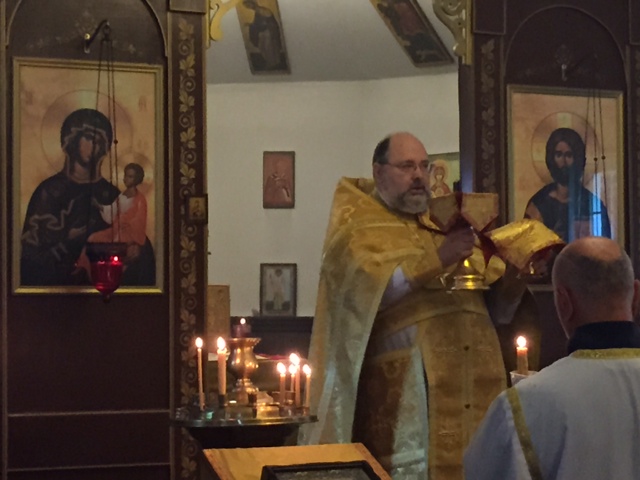
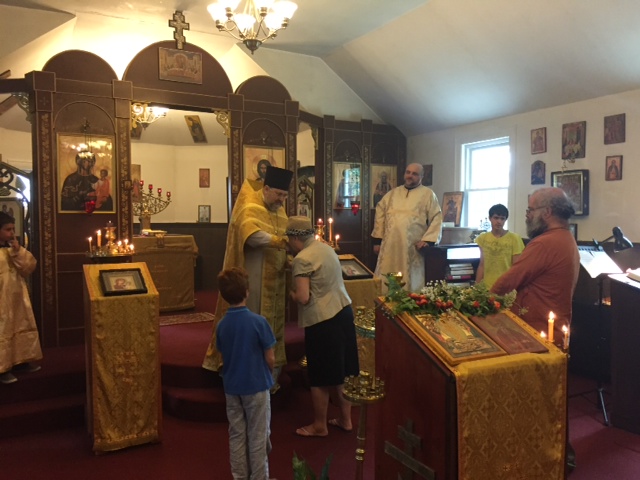
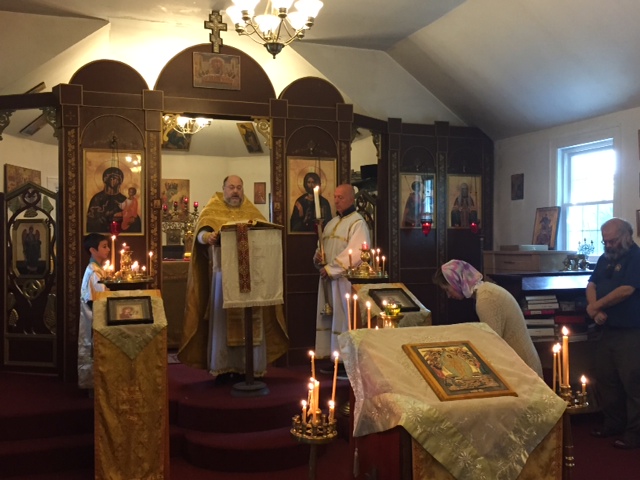
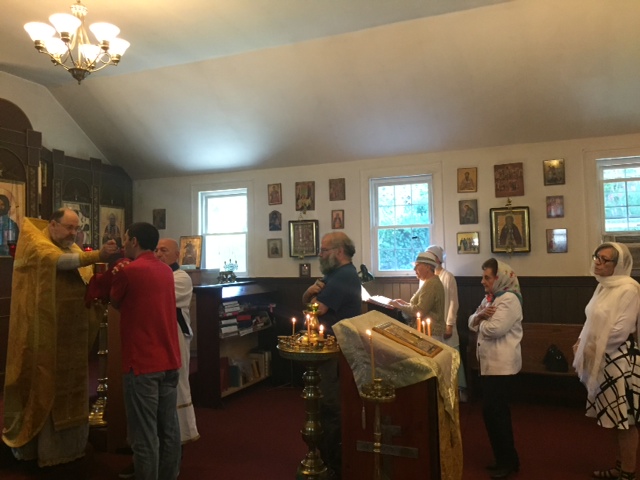
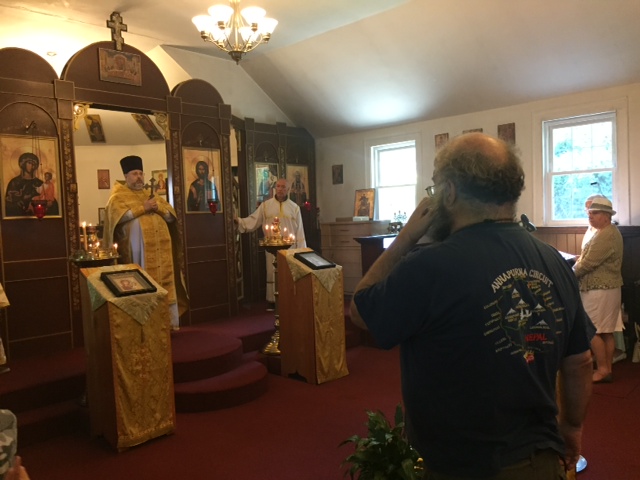
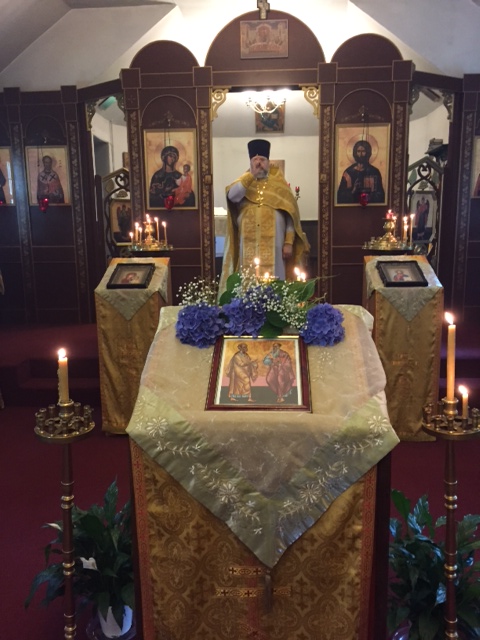
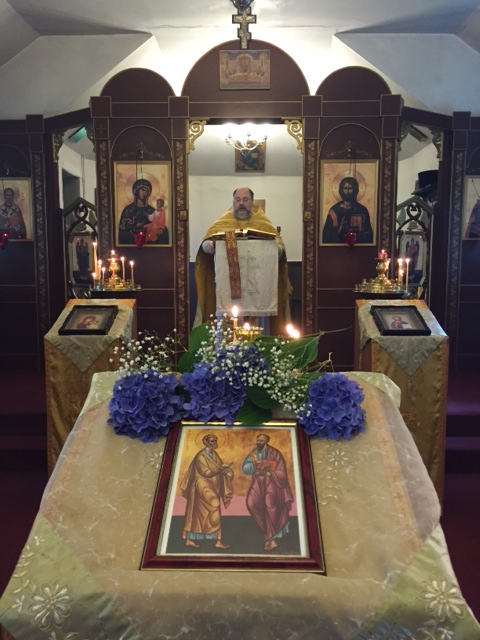
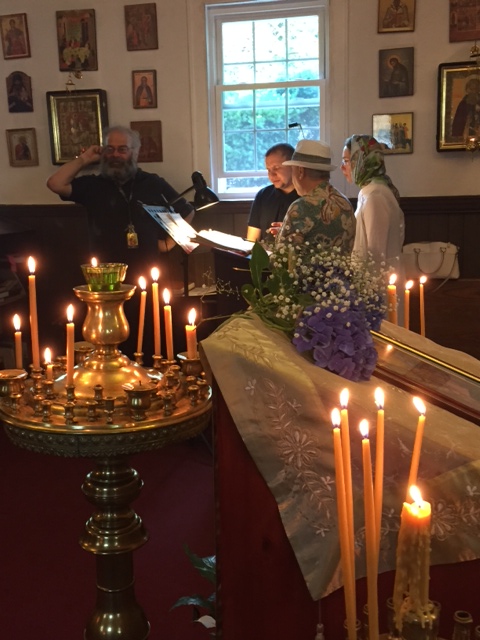
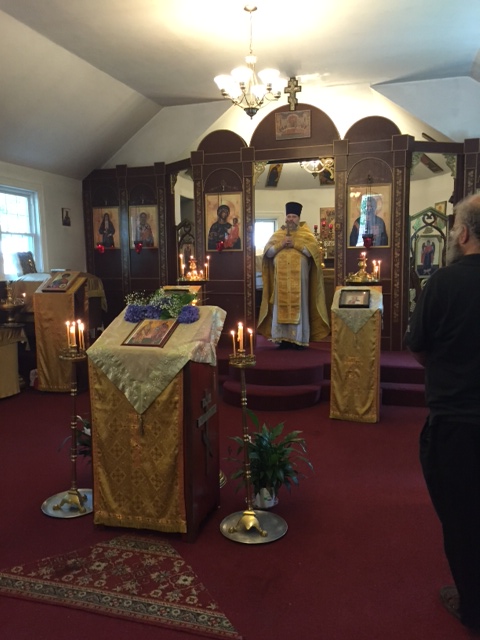
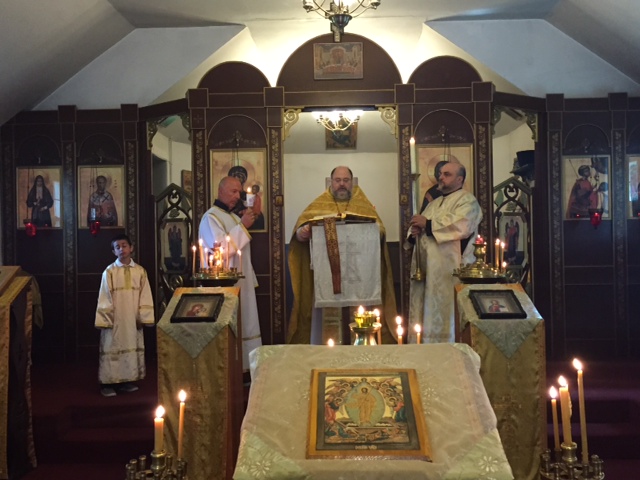
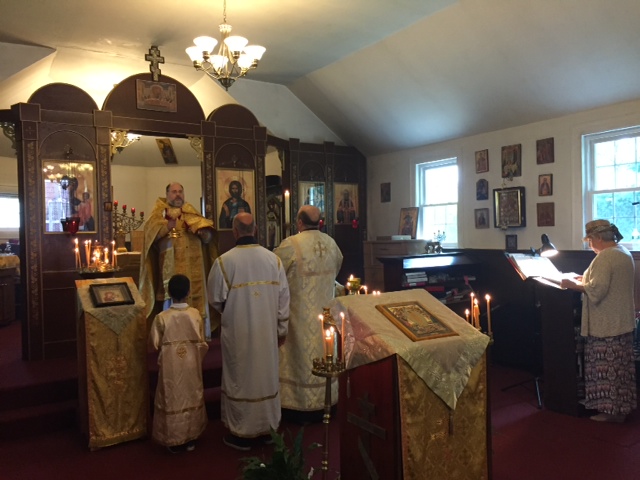
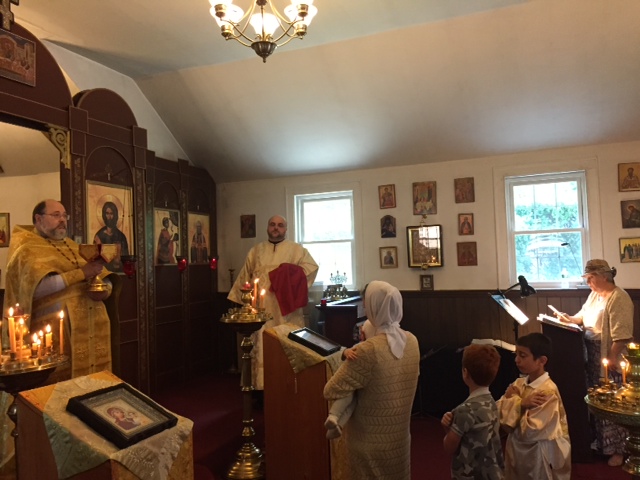
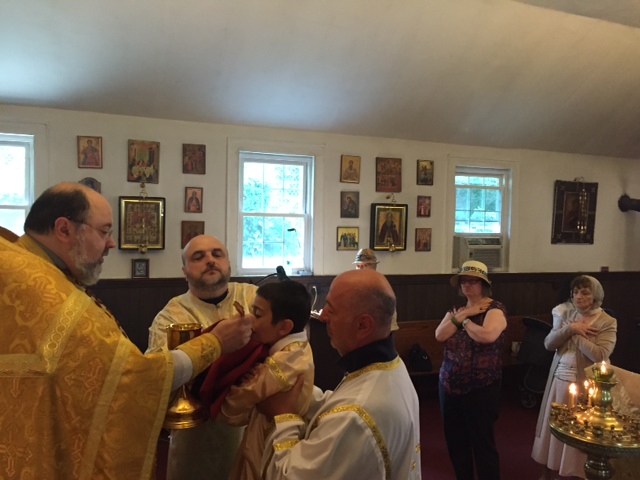
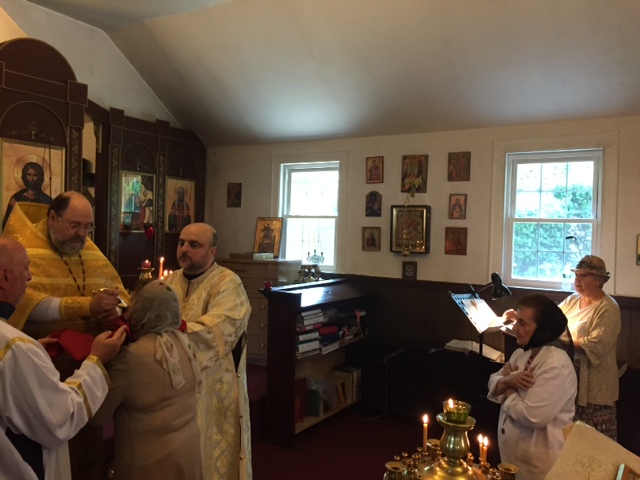
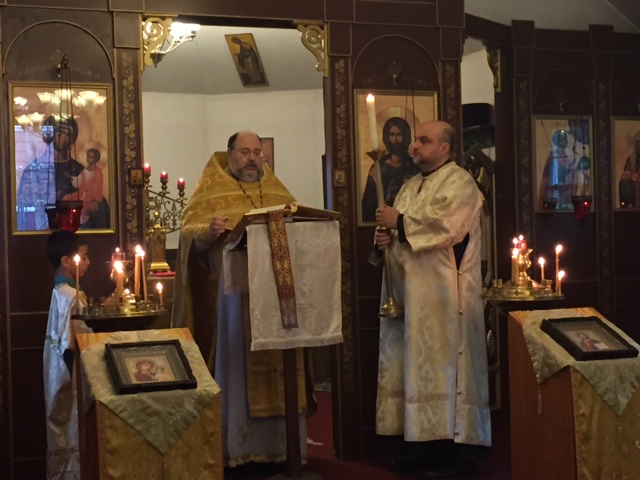
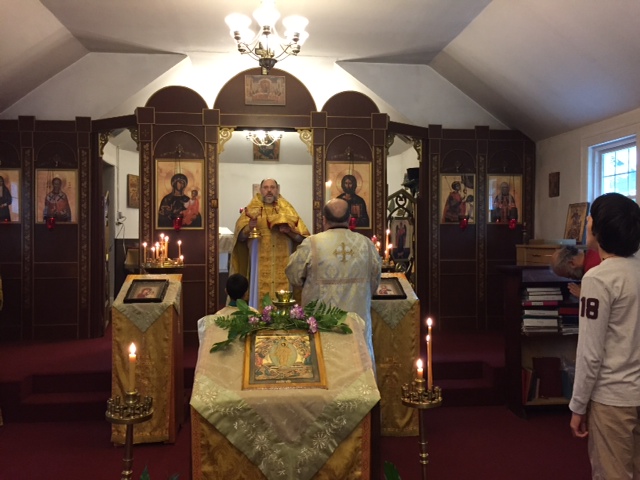
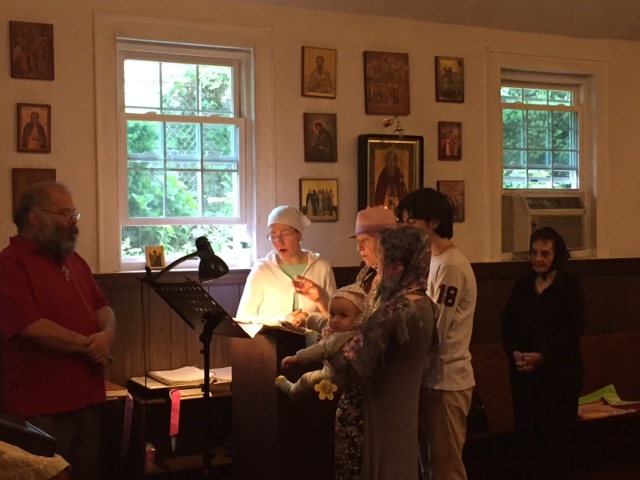
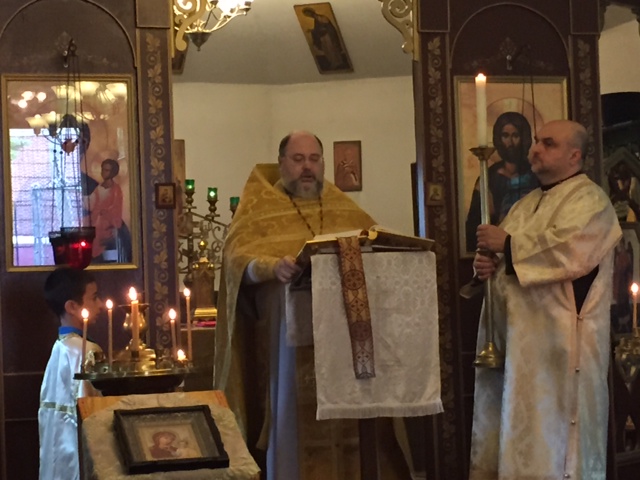
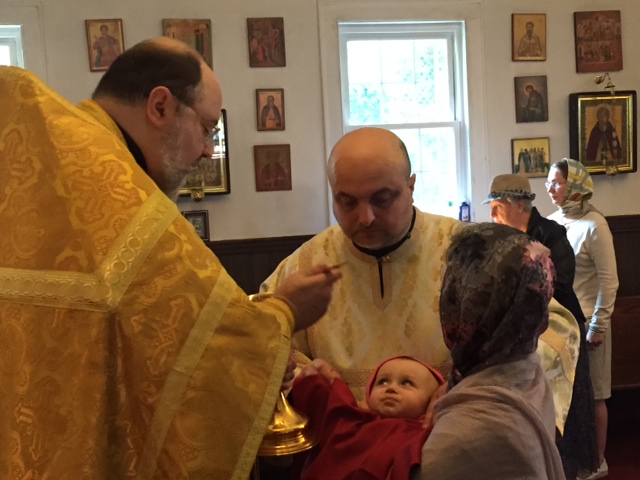
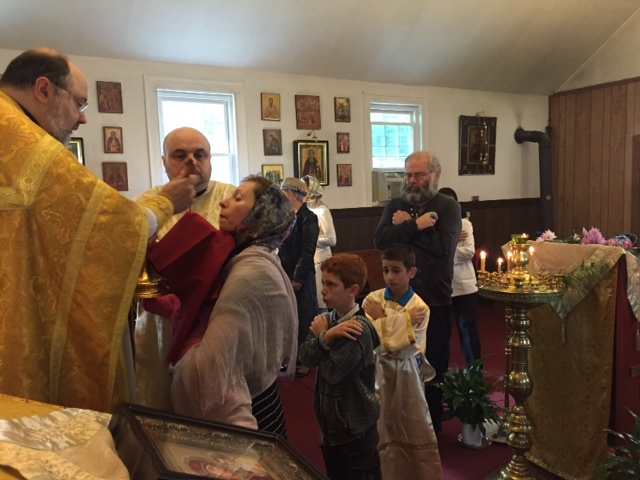
On April 10, on the Holy and Great Friday we had two special services in our parish temple. This day is the most sorrowful day in Christian calendar. On Holy Friday we commemorate crucifixion of our Lord Jesus Christ, His death on the Cross, as well as His burial. St. George Church’s Rector, Archpriest Igor Tarasov served Vespers with the procession of the Shroud at 4:00 PM. At the end of this service holy Shroud had been solemnly carried out from the altar to the middle of the church and placed there for veneration.

At the end of Vespers Fr. Igor reminded parishioners of the great and special significance of the Holy Friday and the services of that day.  Due to the importance of that die of the Savior’s death for human Redemption faithful have to attend services on that day and to unite spiritually with Jesus who died for them. Unfortunately, many Christians may be busy with the affairs of their life, so they miss this important opportunity.

 At 7:00 PM Fr. Igor celebrated Matins on the Lord’s Tomb. Most of this service was performed before the Shroud placed in the middle of the church. After the Great Doxologion the Rector, altar servers and parishioners performed the procession around the church. The priest carried the holy Shroud resembling burial of the Lord.


Holy and Great Thursday


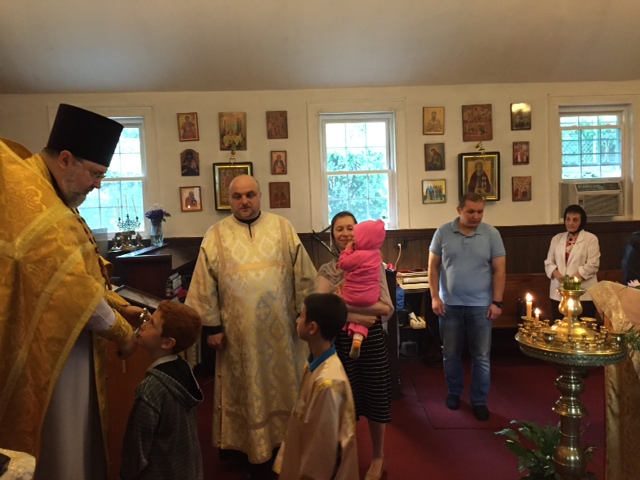
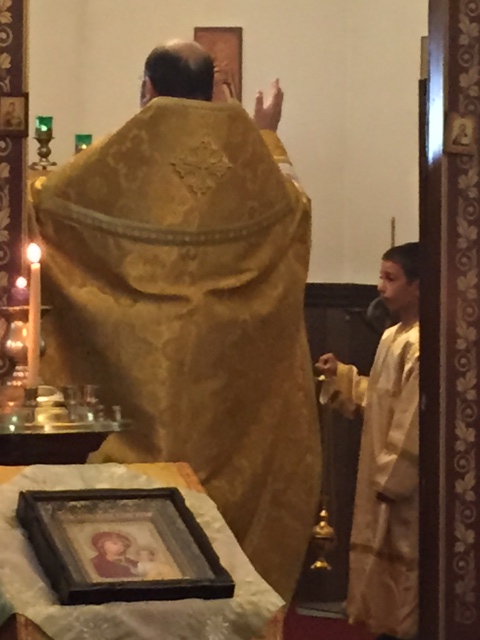
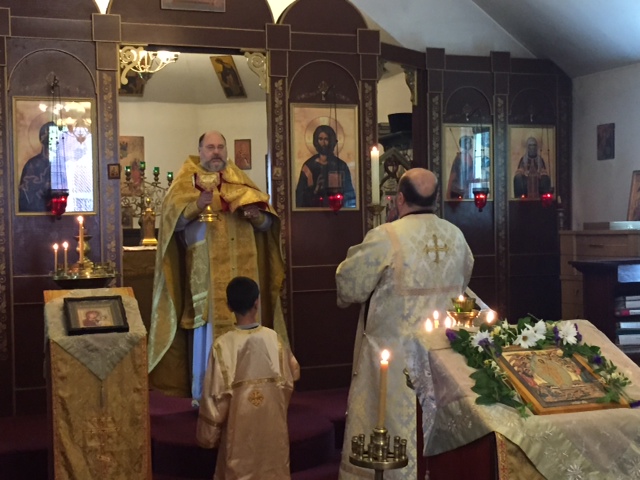
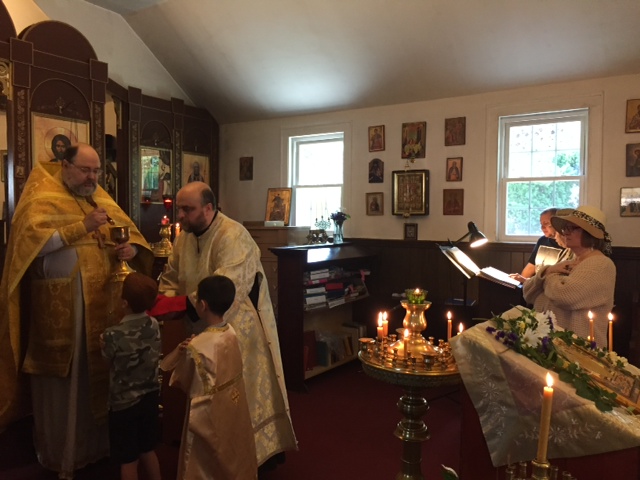
On April 9, on Holy and Great Thursday when the Church commemorates the Last Supper of our Lord Jesus Christ we had a service in St. George Church. Our Rector, Archpriest Igor Tarasov served Vespers with the Divine Liturgy of St. Basil the Great.

At the end of service he greeted the faithful who came to participate in that celebration of the remembrance of the Lord’s institution of the Holy Sacraments of Eucharist and Priesthood. Especially, Fr. Igor congratulated those who received Holy Communion at that special Liturgy.

Patronal feast in Flushing, NY


On April 7, on the Annunciation of the Most Holy Mother of God, our neighboring parish, a Russian Orthodox Church in Flushing, NY celebrated its Patronal feast. The Rector of St. George Church, Archpriest Igor Tarasov visited that temple and participated in its celebration. Vespers with the Divine Liturgy was served by His Grace, Nicholas, Bishop of Manhattan with the ROCOR clergy and Fr. Igor concelebrating.

Some of our parishioners, including our Warden, Olga Roussanow attended that celebration.

Following the beautiful hierarchical service clergy and the faithful continued the Patronal feast celebration in the church hall. They had an opportunity to enjoy lenten but delicious meals and a nice company. Members of the clergy made toasts having interesting and instructive speeches. Our Rector, Fr. Igor had a speech also. He welcomed our Flushing neighbors to visit our temple, inviting them to come for our own Patronal feast of St. George (on May 6). He also expressed a desire that the brotherly ties between our parishes, as well as between Patriarchal Parishes and the ROCOR will become stronger and have a fruitful and successful future.


Palm Sunday


On April 5, on Palm Sunday we had a solemn celebration of the feast of the Entry of our Lord Jesus Christ into Jerusalem. The Rector of St. George Church, Archpriest Igor Tarasov served the Divine Liturgy.

After the reading of the Hours the Rector blessed the pussy-willows and distributed them to the parishioners who were holding them during the service resembling the people of Jerusalem who greeted Jesus Christ with the olive and palm branches during His triumphal entry to the city.
Following the readings from the Scripture Fr. Igor preached a homily:

“There are different holy days in our Church calendar. Today we celebrate Palm Sunday, Entrance of the Lord into Jerusalem. It is a tragic feast. It appears to be joyful and bright, it feels like a joyful occasion. And it was supposed to be. Today our Lord Jesus Christ entered the holy city of Jerusalem. The Messiah came to His capital city. The people greeted Him there, met Him with honor, paid Him homage. Jesus was greeted as a true king of Israel. One of the signs of such welcome was holding the palm and olive branches, the sign we are using to greet the Lord when we bless and pick up the pussy-willows. Despite that, this is a sad feast.”
“The tragedy of Palm Sunday lies in the fact that all this exciting welcome and all this triumphal entry into the city is based on a terrible misunderstanding. The Jews misunderstood Jesus. They expected Him to be a powerful political leader, an earthly ruler, a great liberator who would restore the kingdom of Israel, chase away the Romans and establish a perfect society on earth. Even His miracles were understood not as a manifestation of His divine power and nature, but as a proof of His earthly greatness. Our Lord resurrected Lazarus who had been dead for four days. Today’s Gospel reading mentions that this was the reason why people came to meet Him, “because they heard that He had done this sign” (Jn. 12, 18).””
“Our Lord Jesus Christ was the true Messiah and Savior of the world. This is exactly why He was not an earthly leader. He was the Son of God who became the Son of Man in order to make us the sons of God. Somehow the Jewish leaders did not grasp it. Jesus disappointed them as an earthly king, so they crucified Him. Their excitement and joy of welcoming Him had changed to hatred and desire to put Him to death. The crowd who cried out, “Hosanna!” cried “Crucify Him!” This is why this feast is so tragic. It shows us how shallow, how superficial our human understanding can be. We may easily prefer unimportant things over God Himself. The Jews rejected Jesus, rejected God when He could not satisfy their earthly plans. More than that, they even killed Him.”
“In response to that Jesus said: “Behold, your house is left to you desolate” (Mt. 23, 38). That what happens when God is rejected. Our life becomes desolate; it becomes empty. For there is only one thing which may turn the wilderness of our life into a flowering garden, which would make our life complete, which would make the human society efficient – this one thing is the presence of the Living God who gives an eternal sense to all which is temporary. This is the same Living God who gives His life-giving force to the nature, so every spring we observe with awe and excitement how the branches of the trees become blooming and alive again, how the first flowers emerge after the cold winter. The pussy-willows we are holding today are also the sign of the Living God present in the nature.”
““Your house is left desolate”… The people were looking for earthly freedom, earthly victory, earthly power. They never found it, or if they did, it never lasted long. Only dust and ashes or the tombs were left after those who were looking for these things. Our Lord Jesus, on the contrary, did not use the power to rule, but His kingdom will have no end. He rose from the grave and lives forever. He offers us life everlasting if we allow Him to fill our lives.”
“This is why today’s feast is so tragic. A great number of people is going to reject their true God. A small number is going to follow Him and receive what He had promised them: life, and life to the fullest. A great misunderstanding happened. For one kind of people their house becomes empty, yet others enter into the house of God and themselves become the temple of the Holy Spirit, the house of life.”

After the Liturgy dismissal the Rector and altar servers came before the stand in the middle of the church and performed the rite of glorification before the festal image singing the troparia, kontakion and the magnification of the feast.

The Rector preached a short sermon in Russian explaining the ideas of his English homily. He also congratulated parishioners on the occasion of the holy day. He also reminded them that we are beginning Passion Week, a very important and spiritually intense time, and called to attend the services celebrated during that week.

After the service parishioners and the Rector enjoyed delicious meals and interesting conversation during the coffee hour.


Sacrament of the Annointing of the Sick


On April 4, on Lazarus Saturday the Rector of St. George Church, Archpriest Igor Tarasov celebrated the Mystery of the Anointing of the sick in our parish temple. All persons who desired to receive that Sacrament participated in the service and were anointed with the blessed oil. At the conclusion of the service Fr. Igor preached a brief sermon about the significance and importance of the Mystery of Anointing of the sick which is aimed for the healing of soul and body.


Our Rector attended Bishop’s Council Meeting


On Tuesday, March 31, under the chairmanship of His Grace Bishop John of Naro-Fominsk, Administrator of the Patriarchal Parishes in the USA, a regular session of the Bishop’s Council was held in the refectory of St. Nicholas Church in Bayonne, NJ. The Rector of St. George Church, Archpriest Igor Tarasov, being an alternative member of the Council, attended that meeting.

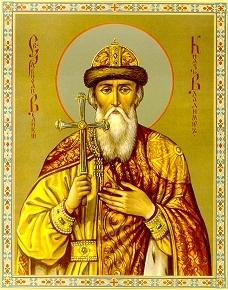
After the singing of “O Heavenly King”, Bishop John greeted the assembled members of the Bishop’s Council. In his introduction, Bishop John acquainted the council members with the important documents recently published by the Hierarchal Retreat of the Russian Orthodox Church in February of 2015. His Grace also discussed the proposed plans to celebrate the 1000th Anniversary of the Repose of St. Vladimir of Kiev and the 70th Anniversary of the Allied victory in World War II. 

Archpriest George Konyev presented the council with the final print of the Statues of the Patriarchal Parishes in the USA as well as the Official Photograph of His Grace Bishop John. 

Treasurer Panagiotis Billis presented the council with a comprehensive financial report and budget for 2015. 

The members heard reports relating to various administrative and pastoral issues facing the Patriarchal Parishes in the USA. 

The council then heard a report from Rdr. George Konyev and approved the final printing of clergy identification cards.  In addition, a report was given on the visitor statistics of the English language website of the Patriarchal Parishes in the USA as the one-year anniversary of the website’s operation is approaching. 

Bishop John thanked all the members for traveling to Bayonne for the meeting and wished all a peaceful remainder of Great Lent and a joyous celebration of the Resurrection of Christ. He also thanked parish rector, Fr. Mikhail Kapchits for his parish’s hospitality in hosting the meeting. Before departing back to their home parishes, the council members had an opportunity for Bishop to personally sign the Official portrait.

The meeting concluded with the singing of “It is Truly Meet.”


Lenten Vespers at Three Saints Church in Garfield, NJ


On the evening of the Fifth Sunday of Lent, St. George’s Rector, Archpriest Igor Tarasov and parish Warden, Olga Roussanow went to Garfield, NJ to pray at Vespers service held at Three Saints Church. On that day Three Saints Church was visited by His Grace, Bishop John of Naro-Fominsk. The Lenten “Mission” vespers have been a longstanding tradition within the Patriarchal Parishes in the USA. It allows parishioners from various parishes to be joined in common prayer before the Great Feast of the Resurrection of Christ. 

The Vespers service was led by the Dean of the Eastern States, Archpriest Mikhail Kapchits. Fr. Michael was co-served by a number of clergy from our Patriarchal Parishes, as well as one priest from the OCA. 

Our Rector, Archpriest Igor Tarasov was asked and blessed by Bishop John to preach at this Vespers. Thus after the singing of the Great Prokimenon he delivered a sermon on the Sunday of St. Mary of Egypt. 

At the conclusion of the Vespers Service, Bishop John greeted the assembled clergy and faithful, and wished them God’s blessings as we complete Great Lent.

Fifth Sunday of Lent


On March 29, on the Fifth Sunday of Lent, Rector of St. George Church, Archpriest Igor Tarasov served the Divine Liturgy in our temple. Following the readings from the Holy Gospel he delivered a homily in Russian. An English version of that homily is as follows:

“We have come to the Fifth Sunday of the Great Fast. It is dedicated to commemoration of the Venerable mother Mary of Egypt, a holy woman who is an example of how a person can change his or her life. St. Mary of Egypt started her adult life as a harlot, a lose woman in the great city of Alexandria in Egypt. But some day when she happened to come to visit Jerusalem, she experienced a strange feeling: some unknown force prevented her from entering the holy church. Mary understood that it happened because of her sinfulness, she converted, she turned her life around. The rest of it she spent in the desert, living in the wilderness, repenting her sins. For many years no one knew about her. Only some time before her death she met a priest-monk whose name was Zosimas. He was astonished seeing such a great ascetic. He first was not able to recognize what kind of being she was – a human or some ghost. Then he was amazed by her life and ascetic endeavors. St. Mary asked him to meet her again in one year and to bring her Holy Communion. They met again and Zosimas gave her Communion. Soon after that Mary fell asleep in the Lord and a year after Zosimas discovered her uncorrupted body.”
“Many times we can hear that people don’t change. In English we say, “Leopard cannot change his spots”, and in Russian we say, “Горбатого могила исправит”. Venerable Mary of Egypt is a perfect example of how the human life may be changed in Christ, with the assistance of God’s grace. Being a harlot, leading a licentious life, Mary changed and spent the rest of her years in repentance, in a very simple way of life, in constant prayer and fasting. She is also a reminder that there is no sin that cannot be cleansed by sincere repentance.”
“Today’s first Gospel reading tells us about our Lord Jesus Christ predicting His holy Passions and death. In this way on this Sunday we should be prepared to spiritually revive the events of the sufferings of our Savior. We also heard that two of His disciples, James and John, asked their Master for a favor. They wanted to be given the honorable places, the important positions in the Kingdom of heaven. Our Lord pointed out to them that their attitude is wrong. He said that in His Kingdom, in order to be great one must be serving others, and whoever desires to be first should be a slave of all (Mk. 10, 43-44). In other words our Lord proclaims some different social order according to which greatness and leadership consists of serving. Again, we hear some interesting, maybe surprising things. Holy Gospel is full of such surprises. When we read it we learn that a publican becomes justified, a prodigal son becomes forgiven, a harlot gets the remission of sins. Whoever humbles himself will be exalted, and the last will be first.”
“Behold, I make all things new” – said the Lord (Rev. 21, 5). This is why His teaching is called the New Testament. And according to the New Testament God becomes united with humanity, redeems it. He becomes the Son of Man who comes “to serve and to give His life a ransom for many” (Mk. 10, 45). In this new reality of salvation the sick are healed, the blind see, the lepers are being cleaned, the dead rise. And the sinners become forgiven. A woman in today’s Gospel who had many sins becomes forgiven “for she loved much.” (Lk. 7, 47).  St. Mary of Egypt after being also very sinful becomes not only forgiven but blessed with holiness for her sincere repentance and reformed life.”
“Today’s Sunday should teach us to be the right followers of the New Testament, the disciples of Christ who expect to enter into His Kingdom and to take the places which God prepared for us. In order to be worthy of those places, let us serve one another. And if we stumble, make mistakes or commit sins, let us remember that it is not desperate. Any person is able to change his or her life. If we sincerely repent and turn away from those sins, as holy Mary of Egypt did, God will forgive all of them and will bless us, bestow upon us His grace and will invite us to His Kingdom giving us the honorable and desirable places in the eternity.”

After the Liturgy dismissal the Rector preached a short sermon in English to stress the main ideas of his Russian homily.


Fourth Sunday of Lent


On March 22, on the Fourth Sunday of Lent, and feast of the Holy 40 Martyrs of Sebaste, we had a nice liturgical celebration. St. George’s Rector, Archpriest Igor Tarasov served the Divine Liturgy. Following the readings from the Scripture he preached a homily:

“Today’s Sunday continues to lead us in our spiritual journey of the Great Fast. Today the Church wishes us to commemorate holy Father John Climacus, or John of the Ladder, a holy monk who lived in the monastery on Mt. Sinai and became an author of the book called “The Ladder of Divine Ascent”. But since today we celebrate feast of the Holy 40 Martyrs of the Sebastian Lake, we omit the commemoration of St. John. We honor those 40 champions of faith who received the crown of martyrdom in the 4th century.”
“Holy 40 Martyrs were the soldiers of the Roman army at the time when Christianity has just become a predominant religion of the Empire. However, a ruler of the Eastern part of the country, Licinius who was against Emperor Constantine, was a pagan, and he continued to persecute Christians in his land. But 40 of his warriors refused to renounce Christ and firmly declared their faith. Therefore, they were tortured. They were forced to get into the waters of the lake near the city of Sebaste. At this time, at the end of March, it was very cold there. Sebaste was located in the region called Great Armenia. Now it is in the middle of Turkey. The climate there is pretty cold in winter. I checked the usual weather in that city and found out that the normal low temperature in March is 29 degrees F.  So, the lake was very cold and filled with ice. But the Martyrs bravely went into the icy waters. They took off their clothes saying, “Let us put off the man of old and let us inherit Heavenly Kingdom!” They endured in the lake the whole night and did not die. The Lord gave them strength to overcome the cold of the icy lake. After that the torturers had to put them to death.”
“The example of the Holy 40 Martyrs of Sebaste teaches us that these people had a great and strong faith. They probably did not know much about Theology. And Theology was not very elaborated in those times. But they believed in Jesus Christ, so they could endure the sufferings and receive the crowns for the Kingdom of God. And today’s first Gospel reading of St. Mark is telling us how important to have faith. Faith helps people to acquire many gifts. Today’s Gospel tells that faith helped a father of a young man possessed by a demon. Due to his father’s faith, he was made whole by our Lord Jesus Christ.”
“Lack of faith becomes the reason for many troubles in the world. People who have a very shaky and small faith are easy to be drown away from the right perception of everything around them. This is why we have so many problems in the society, so much immorality in the conduct of the people. For example, our city of New York is now having so many problems also because our Mayor and his officials have a very little faith in God. Otherwise, they would not support and promote sinful lifestyle. But not only secular people, a number of religious communities now support sinful behavior. Episcopal and recently Presbyterian Church decided to bless same-sex unions. We may not realize how it will affect our life, but if we do have faith, we should remember that these sins are calling heaven for revenge. That means that those who engage in these sins are going to punished not only in eternity, but also in this life. And religious, so-called ‘Christian’ communities should remember that. But their faith is little and shaky, so they forget what is written in the Scripture.”
“The world populated with people having insufficient faith resembles a chaos. People suffer in that world because they lack faith. This why our Lord Jesus is shown losing His temper in today’s Gospel and exclaiming: “O faithless generation, how long shall I be with you? How long shall I bear with you?”(Mk. 9, 19).  And when faith is lacking, the people and the world becomes driven by the evil forces, because they have no difficulty to overcome them. The example of the young man possessed by such evil force in today’s Gospel has to show us what may happen to the people lacking faith and not living a spiritual life. They may become prisoners of evil and have no possibility to free themselves.”
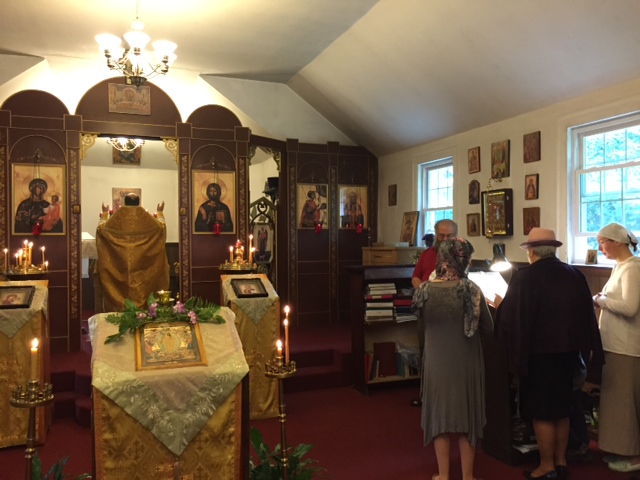
“On the other hand, if people have faith, all things become possible. God’s power is being then released through peoples’ faith. And our Lord seeks to elicit such faith from us, as He was seeking to find it in the father of the possessed young man. We read that the father was not certain about his faith in Jesus. He pled with the Lord: “Lord, I believe, help my unbelief!”(Mk. 9, 24). What was that? It is a faith, but faith seeking God’s help. The presence of a doubt does not mean the absence of faith. Christ honors whatever faith we have, as long as it is sincere. He then will increase our faith when we sincerely desire Him to do so.”
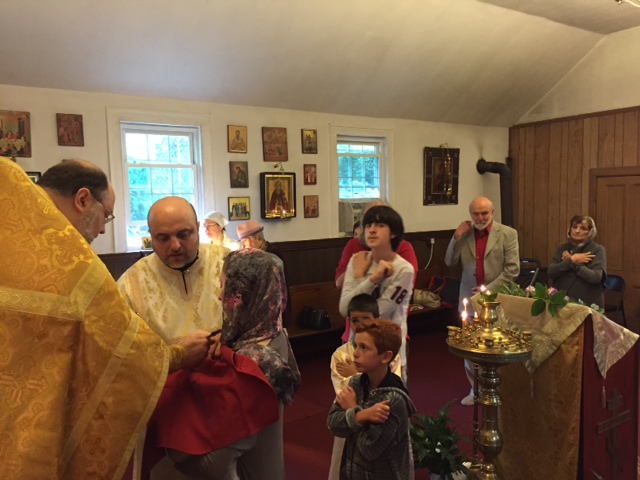
“Therefore, dear brothers and sisters, let us cherish and hold our faith, so we could not be called “faithless generation”. Let us rather understand that our faith may not be great, but let us sincerely ask the Lord to increase it through His divine grace. Let us exclaim with the father of the young man: “Lord, I believe, help my unbelief!” Then He will help and make our faith strong and making wonders. And thus, let us persist in our spiritual journey toward His holy Resurrection.”

Upon the Liturgy dismissal the Rector preached a short sermon in Russian to convey the ideas of his previously preached homily.

Following the service our Rector and parishioners enjoyed delicious meals and a nice company at the coffee hour.


Sunday of the Veneration of the Cross


On March 15, on the Third Sunday of Lent dedicated to the veneration of the Holy Cross, we had a beautiful celebration in our temple. It was headed by our Rector, Archpriest Igor Tarasov. Before the reading of the Hours the Rector solemnly transferred decorated cross from the altar to the middle of the church and placed it on the stand.

During the Divine Liturgy, following the lessons from the Scripture Fr. Igor preached a sermon in the Russian language. An English version of that homily is as follows:

“On the Third Sunday of Lent when we are in the middle of our spiritual journey towards the holy Resurrection, the Church gives us an opportunity to venerate the holy Cross. The tree of the Cross stands on our way now in order to give us some rest, some comfort, some encouragement for our pilgrimage to the Holy Pascha.”
“The tree of the Cross reminds us that our Lord Jesus Christ offered a perfect sacrifice for us when He died on that holy tree. It tells us that He redeemed us, substituted for us in the punishment He underwent instead of us. He accomplished our salvation for us. We do not have to do anything about it. Our Lord did everything for us. St. Paul talks about that in today’s Epistle lesson calling Christ the High Priest “who has passed through the heavens”(Hebr. 4, 14).  As the high priest who offered sacrifice for the people, Jesus offered a highest sacrifice being the Son of God. But if a high priest could do it entering the holy place in the temple, Jesus could offer it passing through heaven, being the Son of God. That makes such sacrifice the highest possible. This is a great comfort and consolation in all the troubles we may encounter in our lives. This is why St. Paul goes on saying: “Let us therefore come boldly to the throne of grace, that we may obtain mercy and find grace to help in the time of need” (Hebr. 14, 6). Thus, the big part is done: we are saved. It is now time for us to do our part which is much smaller.”
“Today’s Gospel lesson tells us about our part. It consists of denying our very self, taking up the cross and following Jesus. We may say that it does not appear to be a “small” thing to do. And it is not. But it is much smaller than what the Lord Himself accomplished for us. He redeemed the whole world. We are called to finish, to confirm it for ourselves only. At this point we may be frightened by the words such as ‘denial’, ‘taking up the cross’ and so on. But let us think about them.”
“‘Denying himself’ does not mean that a man must renounce to be himself. We are not called to refuse to be who we are. But we are expected to reject the things which are transitory, unnecessary and pertaining only to this world. These are the things we will lose anyway when we will pass to the eternal life. Especially we need to reject passions, sins and wrong inclinations. Since those things very often become our nature, the Lord uses the expression “denial of himself”. We must refuse to follow what is wrong in our nature, to renounce it.”
“‘Taking up the cross’ means to do what we are doing anyway. Our earthly life is carrying a cross. Everyone has his own cross to carry. We may carry it in a lousy way or we may carry it with dignity. Jesus wishes us to carry our crosses with dignity. It means to accept the cross, to endure and to be obedient to the will of God. Again, the holy Cross of Jesus should be a great comfort for us while we are carrying our own crosses. We should remember and understand that His Cross was much heavier than ours and much harder to carry. It had a weight of all our sins. We carry only our own.”
“Therefore, dear brothers and sisters, let us take a rest under the holy tree of the Cross, let us come boldly to the throne of grace, let us obtain help from our merciful Lord Jesus Christ and let us continue our journey denying ourselves, taking up the cross and following Jesus. Let us follow Him into the eternity.”

After the Liturgy dismissal the Rector made a brief speech in English repeating main ideas of his homily previously preached in Russian. He also congratulated our parishioner, Sophia Kay on the occasion of her birthday and proclaimed traditional “Mnogaia leta”.

Following that the Rector and altar servers came out of the sanctuary before the stand in the middle of the church and venerated the Precious Cross.