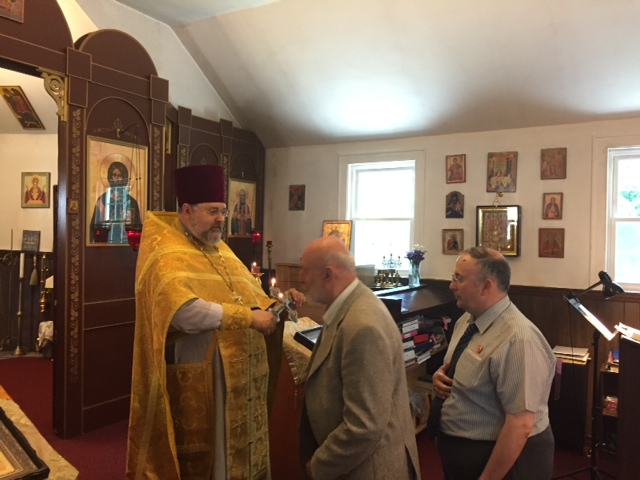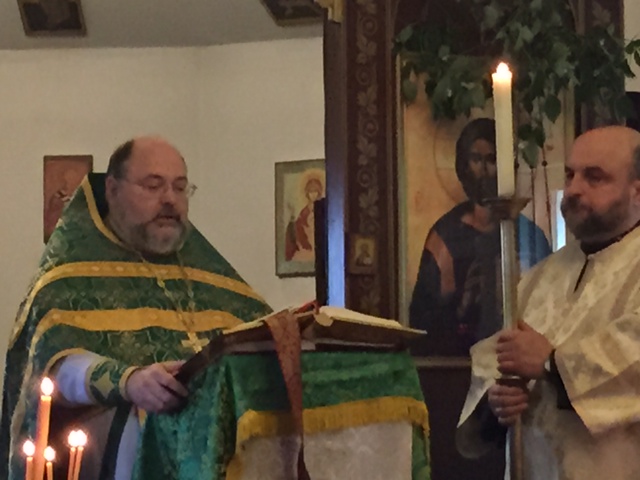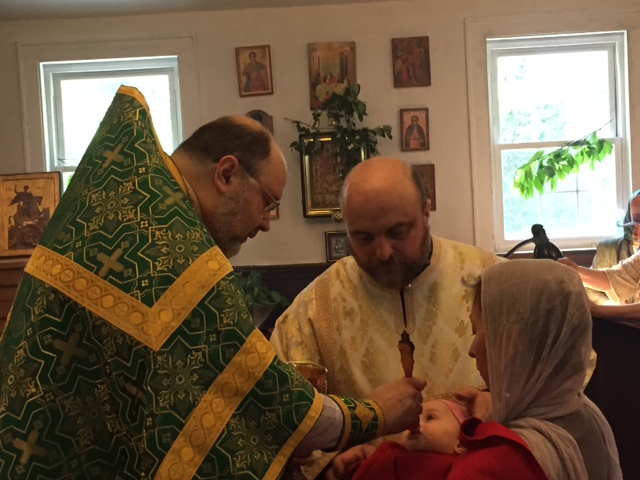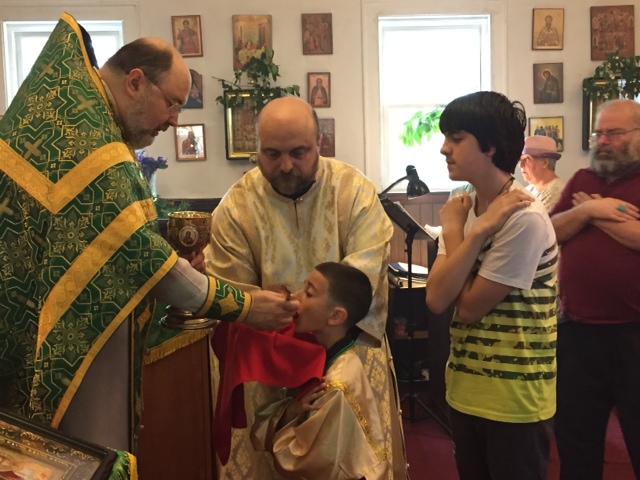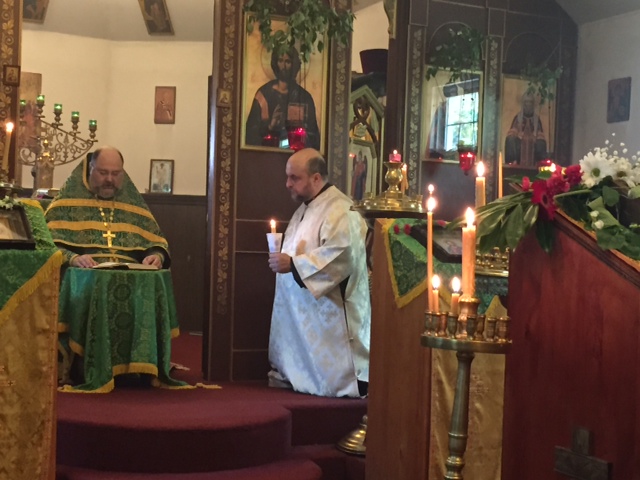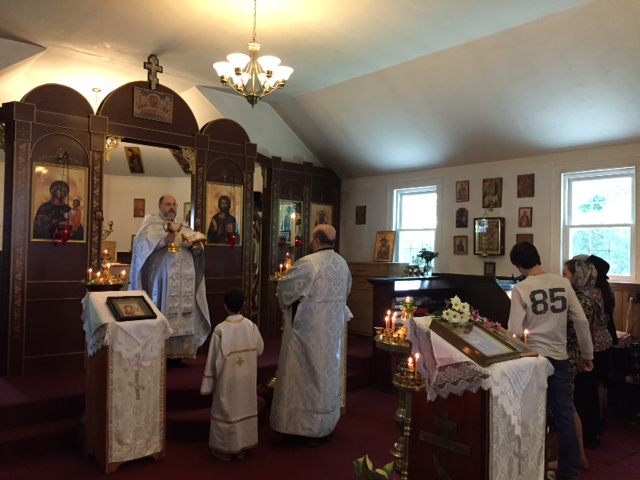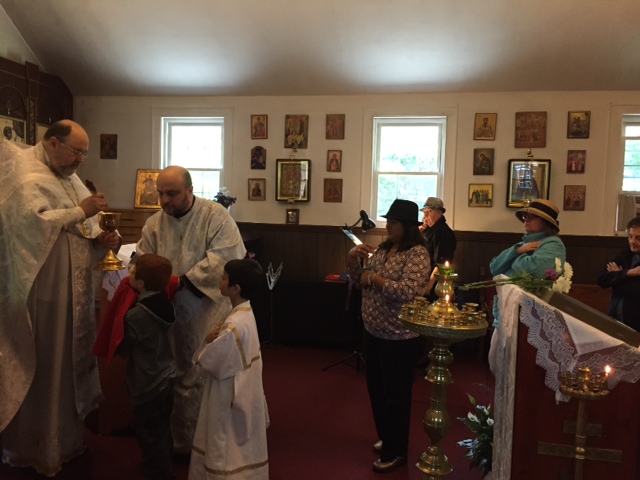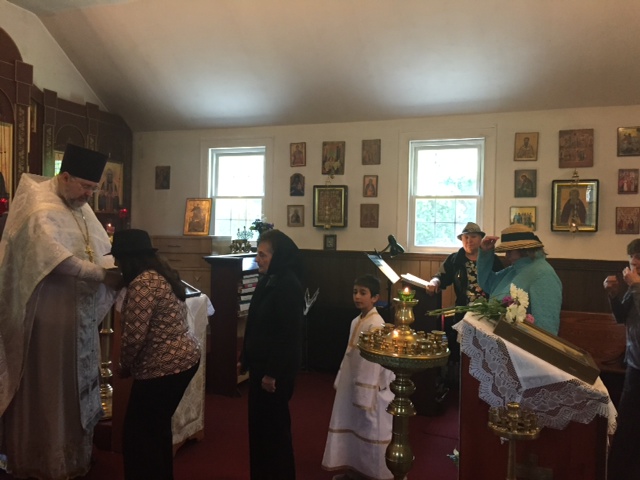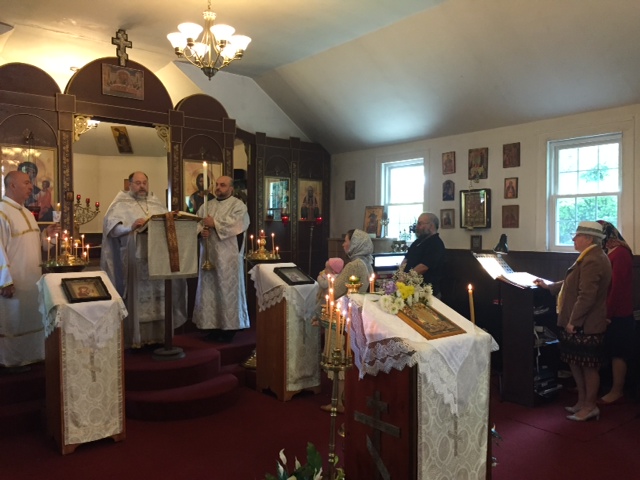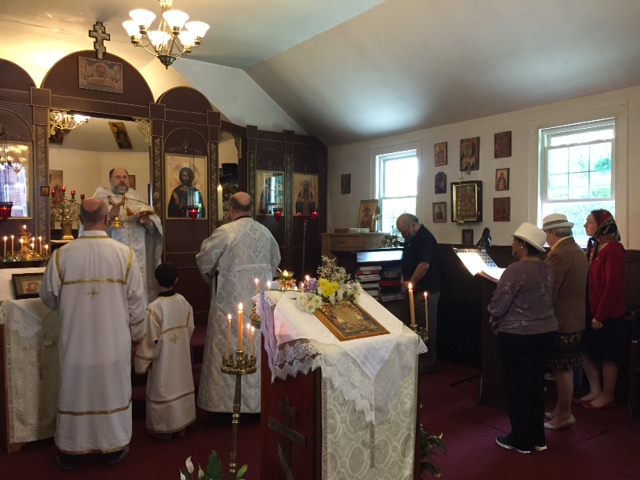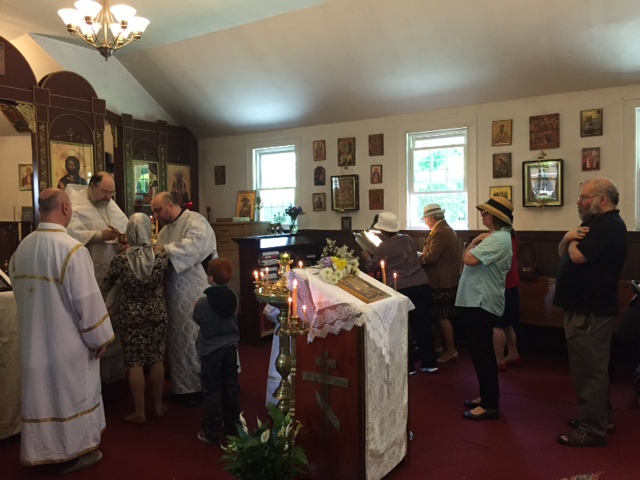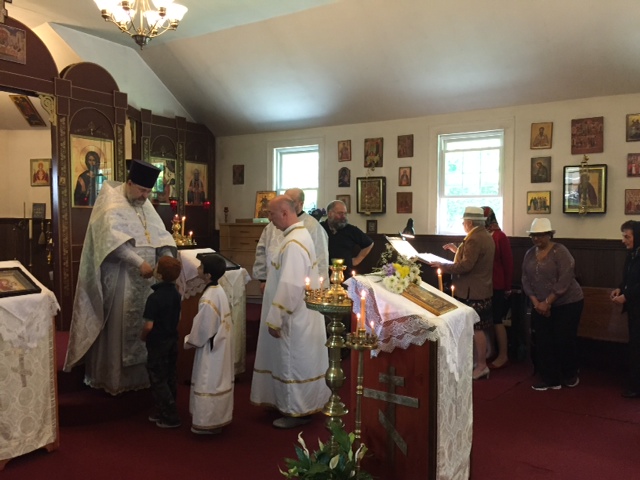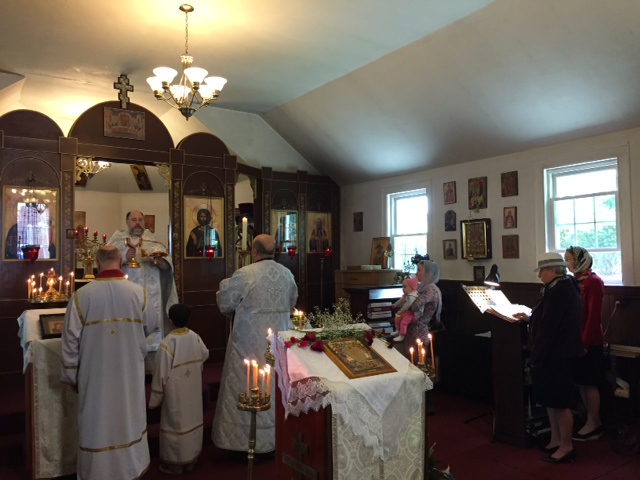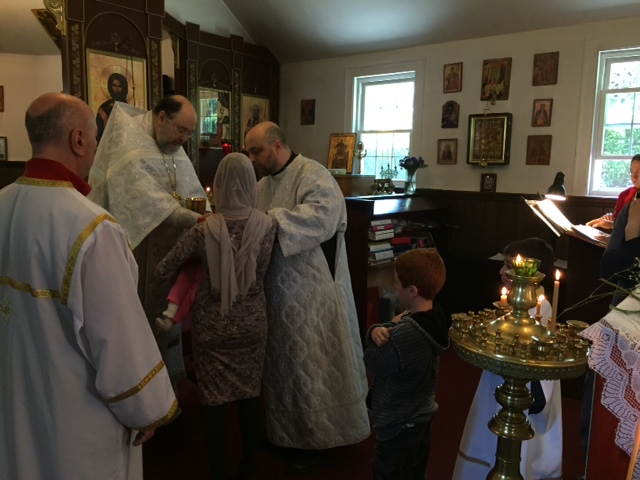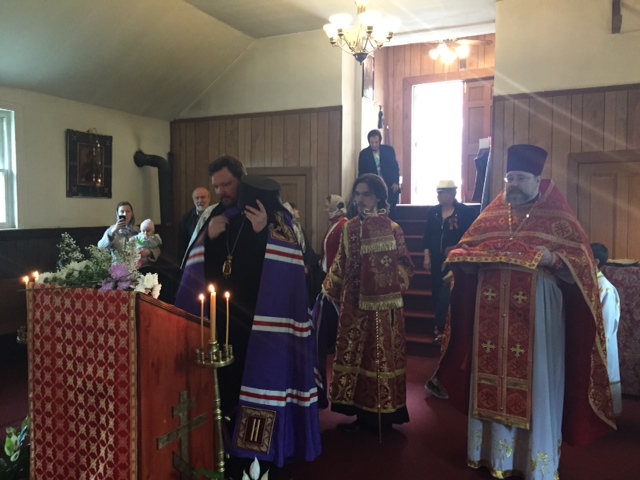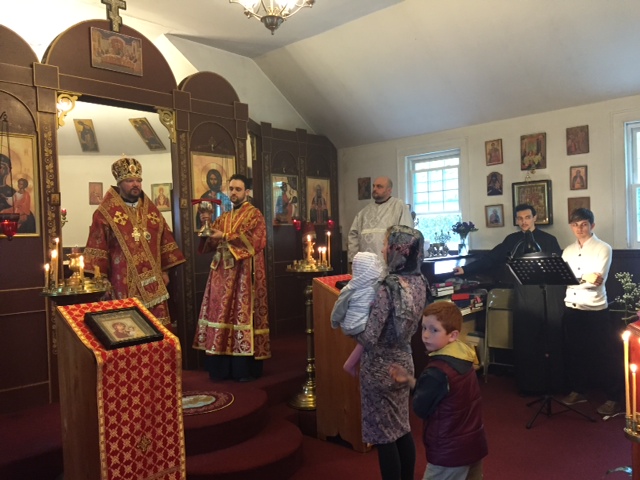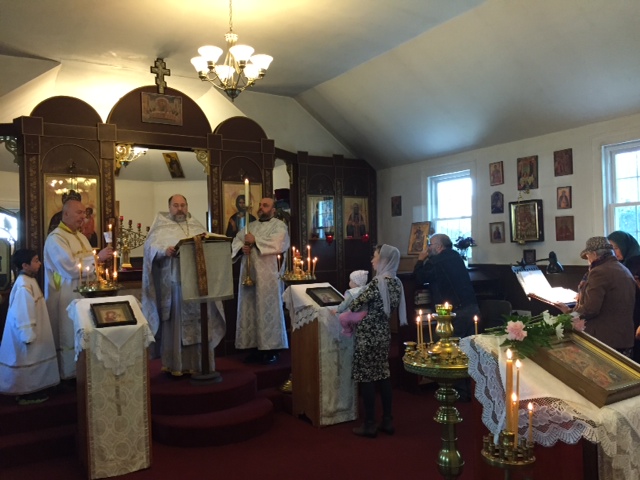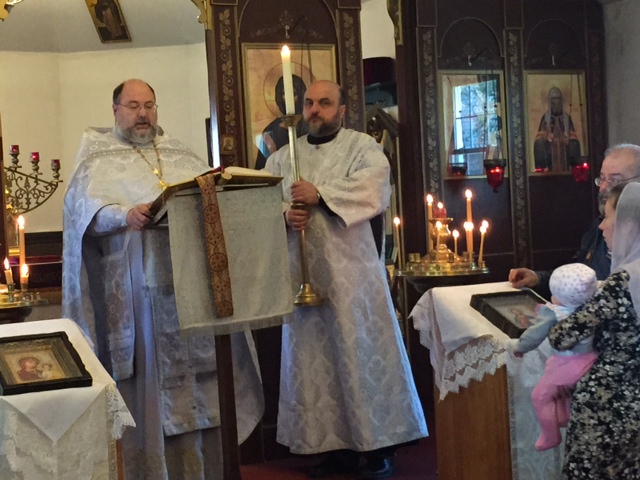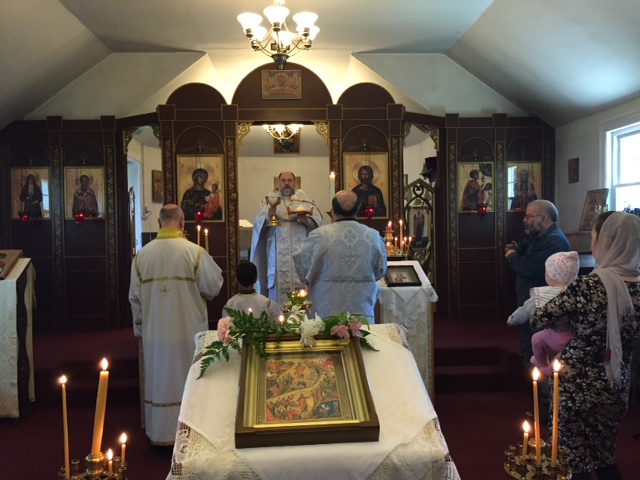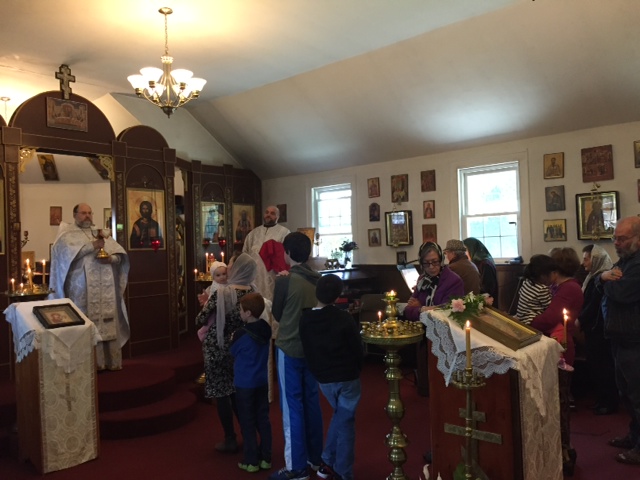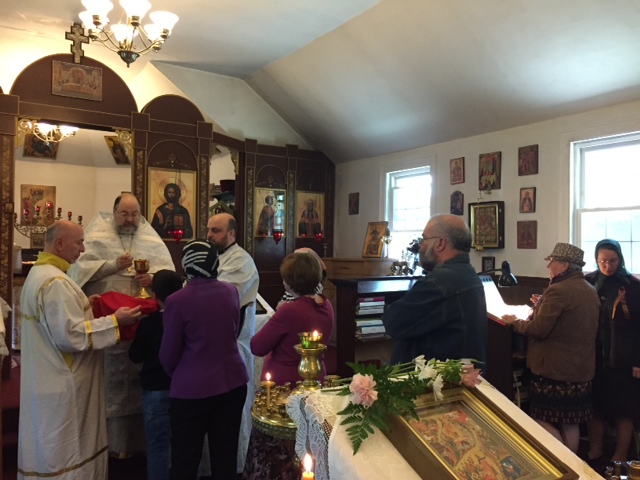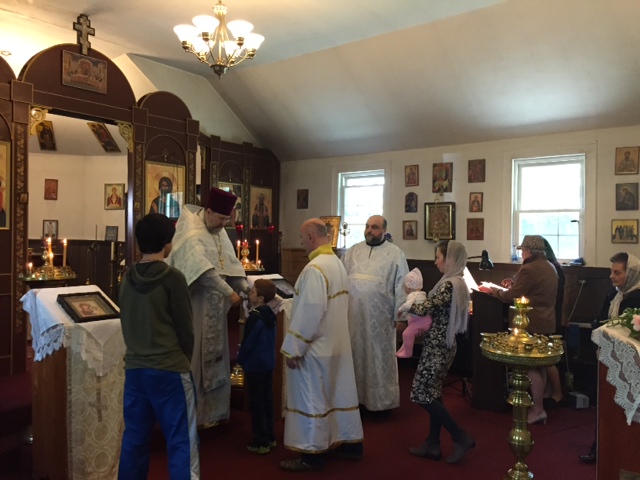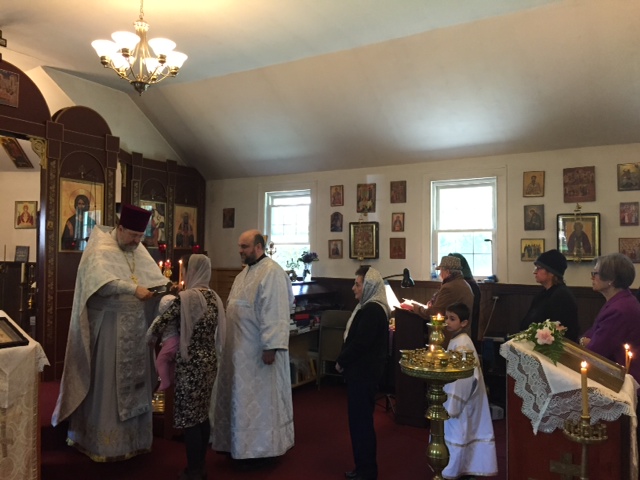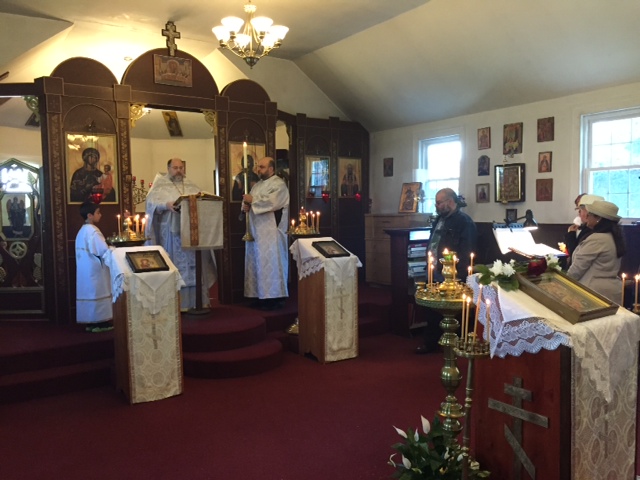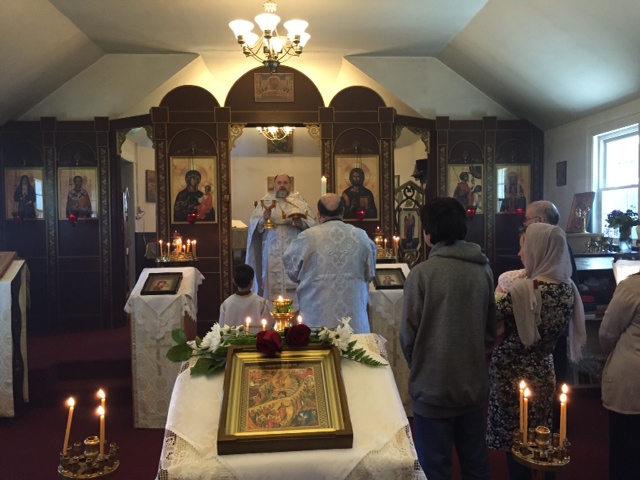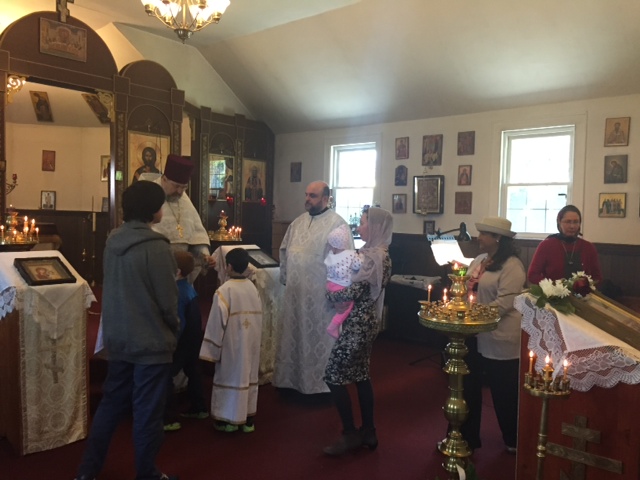
Annual Parish Meeting of St. George’s Church was held on Sunday, March 8, following the Divine Liturgy and coffee hour.
Many of the parish members were present at the meeting and the Rector, Archpriest Igor Tarasov presided. Church Warden, Olga Roussanow read the minutes of the last Annual Meeting held in 2014. The Rector reported on financial situation. He informed that although church attendance became higher, parish income in the year 2013 was considerably lower than in the previous year. It is due to the fact that two our long-time parishioners and donors missed many church services and did not send their donations. Although our expenses were almost the same, we had a deficit. Parishioners and sponsors could not cover our spending. Fr. Igor recommended again that Parish should introduce some principles of stewardship and that parishioners should plan their contributions for the church needs. However, this could be difficult to some parish members due to financial hardships in today’s times of economic crisis. At least, it is expected that those parishioners who miss the church services should send their donations by mail.
Following the discussion of financial situation it was pointed out that Parish Treasurer should seek more efficient ways of performing her duties. It had been proposed that Valentina Dron will remain on the position of the Treasurer and will work more closely with the Rector. Such proposal was supported by all present members of the Parish.
Considering difficult financial situation it had been also decided to raise parish dues to $100 to be paid twice a year in $50 installments.
Olga Roussanow raised a question regarding possible floor replacement in the church. Parishioners found such project favorable. However, due to the lack of funds it was decided that the project could be started only if the funds for that purpose will be raised.
Second Sunday of Lent
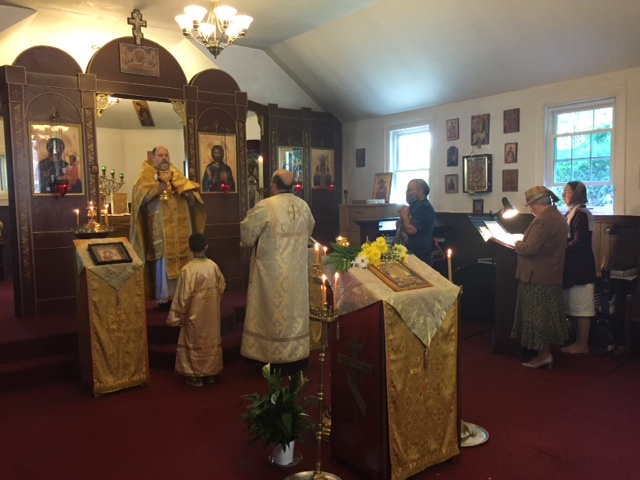
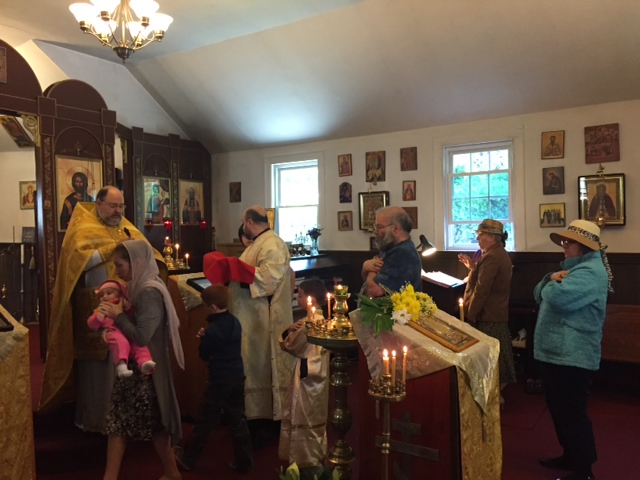
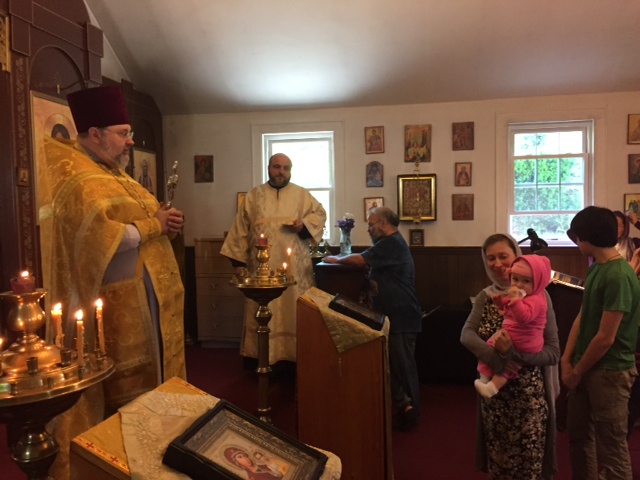
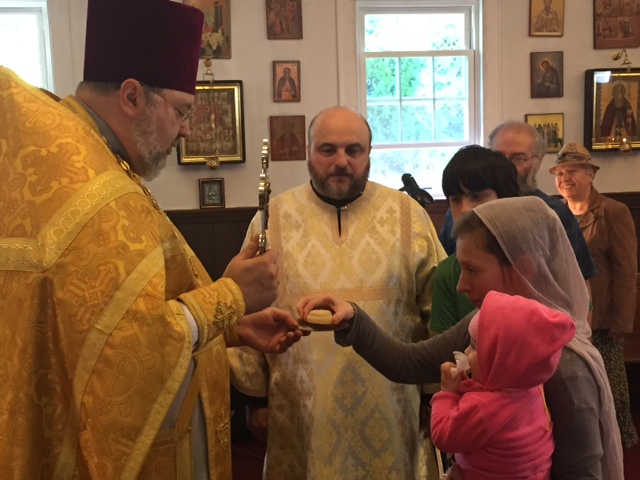
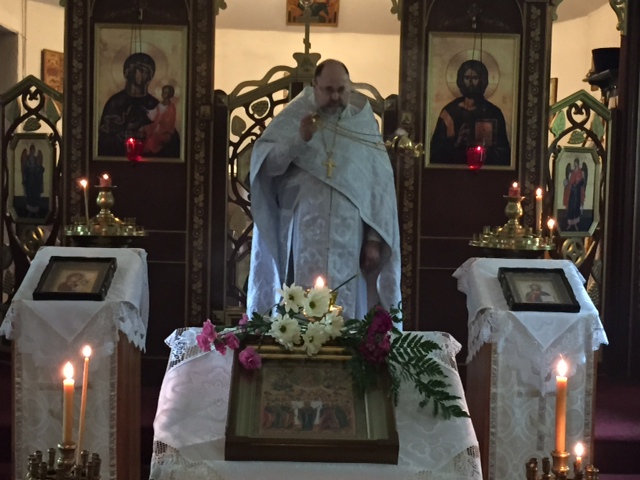
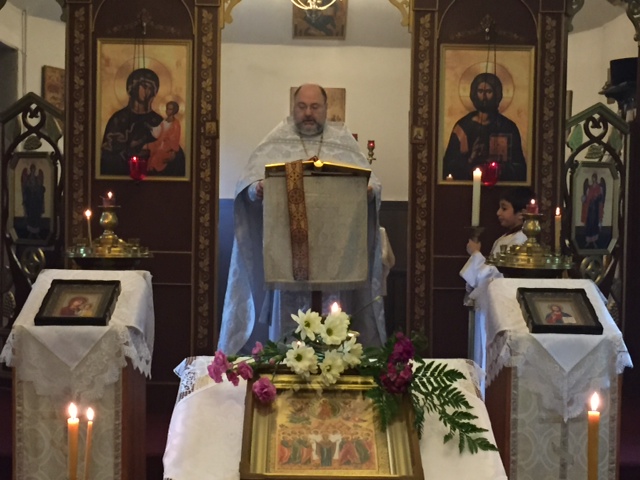
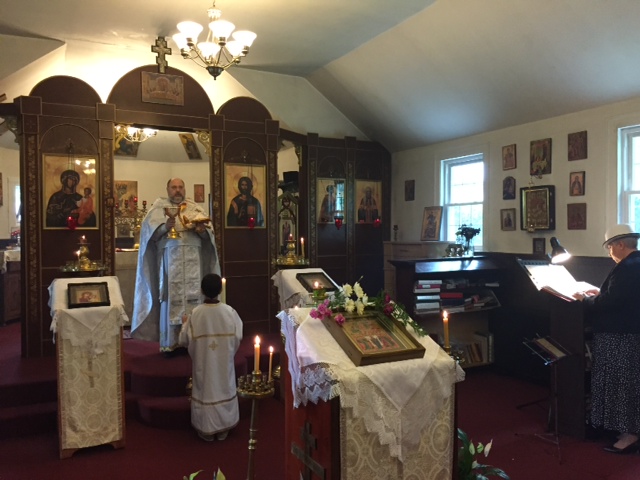
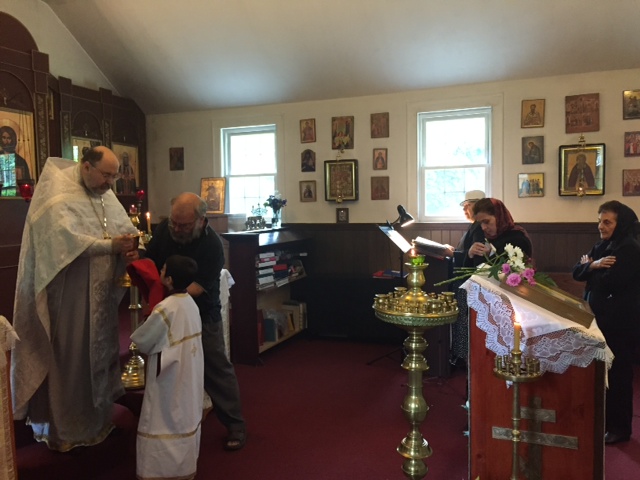
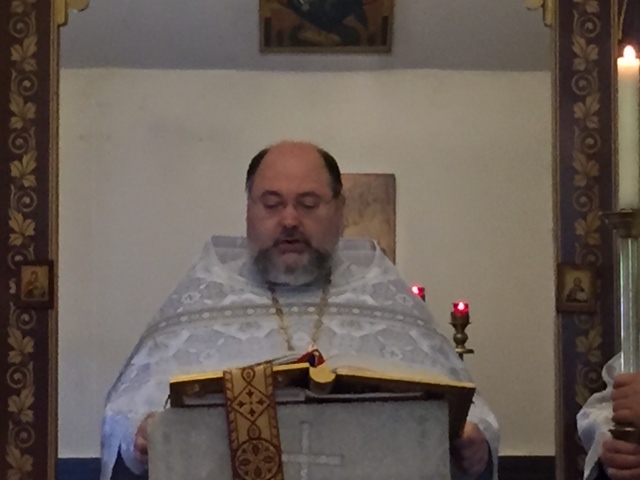
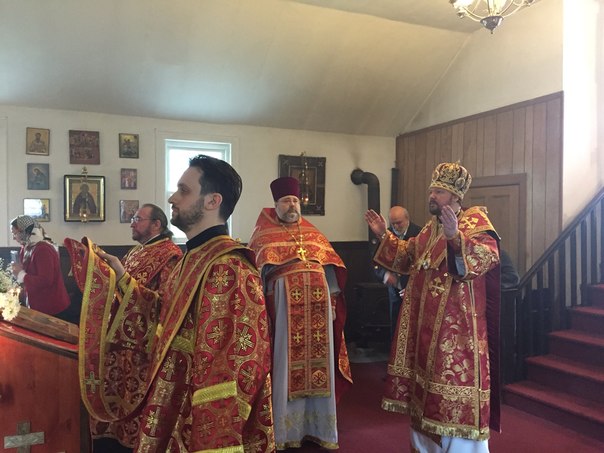
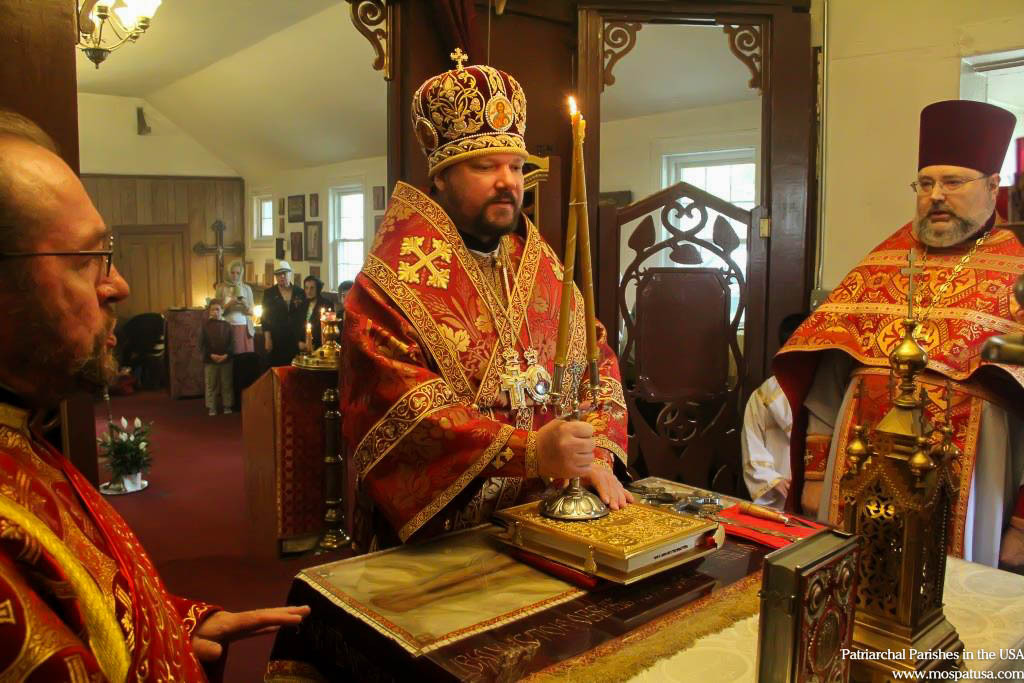
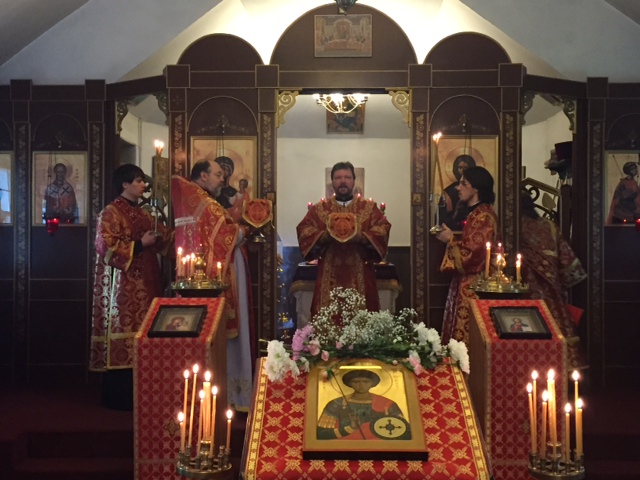
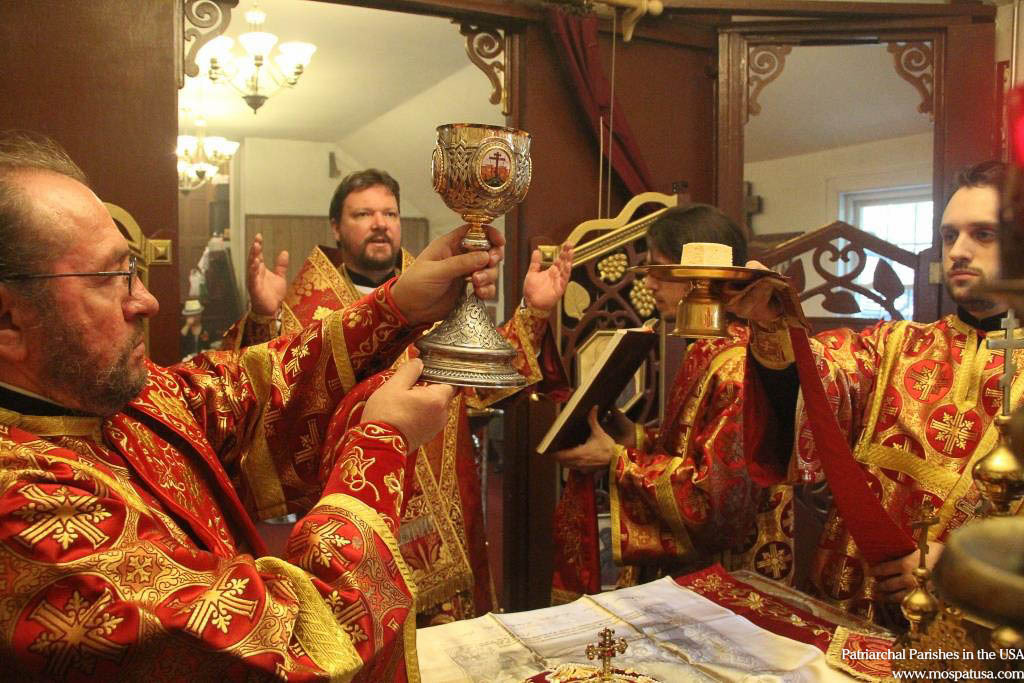
On March 8, on the Second Sunday of Lent, the Rector of St. George Church Archpriest Igor Tarasov served the Divine Liturgy. After the reading from the Gospel he preached a homily:
“On the Second Sunday of Lent we read the Gospel story about healing of the paralyzed man and we honor St. Gregory Palamas, a holy Father who lived in the 14th century. The Scripture reading of today is telling us a number of things. First of all, it is about a spiritual effort, a labor which must be performed in order to receive God’s favor and to acquire salvation.”
“Holy Evangelist Mark tells us today that when our Lord Jesus Christ was in Capernaum and He stayed in a house, so many people gathered there to hear His teaching. Then four men came carrying a paralytic. They could not approach Jesus because of the crowd, so they uncovered the roof where He was. Then they let down the bed on which the paralytic was lying. These men took a great effort to bring their friend to Jesus, they labored to achieve that goal. And, as a result, the Lord saw their faith and healed their friend. This has to teach us that any spiritual achievement and, above all, our final salvation , requires a great work on our part.”
“If last Sunday we mentioned the heresies, we have to say that a great heresy of our times is to believe that salvation can be acquired without labor. Many people live with such a wrong attitude that if you are so-called “good person”, you may end up in heaven without special spiritual works like penance, prayerful life or attending the church services. Positive thinking and nice attitude by themselves will not save you. They may only help you in your work, but that work must be done. Any person who did not start making spiritual efforts is like a paralytic. We are all more or less spiritually disabled, paralyzed. Only a great spiritual labor will make us healthy and successful. That labor consists of prayerful life, fasting, penance and participation in the Church life. Only these things will heal our spiritual paralysis.”
“Therefore, dear brothers and sisters, let us look at them as our four friends who may bring us to Jesus, as those four friends brought to Him the paralytic in today’s Gospel. Again, those our four friends are prayer, fasting, repentance and participation in the life of the Church. It is impossible to be saved, it is impossible even to get closer to the Lord without having those four friends. May all of you look at yourselves and see whether you are friendly with those things. Very often we realize that such friendship is not always and fully maintained. But let us admit that it must be. No other force will bring us to the Lord’s grace, His favor and to our salvation except the power of the spiritual works.”
“The Saint whom the Church wishes to honor on the Second Sunday of Lent, Holy Father Gregory Palamas, archbishop of Thessalonica, is known for his writings and teachings where he instructed that people, being subject to sin and imperfection, have a chance to become holy through the works of spirit: through prayer, fasting and penance. He also teaches that men are able to achieve a highest level of spirituality and become so holy, that he may be worthy to see the uncreated light of God, the same light the Apostles saw on Mt. Tabor when Jesus transfigured before them. Such light is from God, thus it is not created, but comes from Him. This may sound very remote from our daily life, especially if we do not practice much spirituality. But this is how much any person is able to reach if he or she will take an effort, do the work, perform a labor.”
“Dear brothers and sisters! Let today’s Second Sunday of our great spiritual journey towards holy Pascha teach us to take spiritual efforts, to use help of the four friends, prayer, fasting, repentance and Church life, and to strive for achieving holiness and salvation.”
Sunday of Orthodoxy
On March 1 the Church celebrated First Sunday of Lent, also known as Sunday of Orthodoxy. St. George Parish had a beautiful celebration on that day. Our Rector, Archpriest Igor Tarasov served the Divine Liturgy. Following the Gospel lesson he preached a homily in Russian. The English version of his sermon I as follows:
“On the first Sunday of Lent we commemorate the victory of the true faith over the heresy of iconoclasm. It happened in the 9th century when a wrong teaching prohibiting to venerate the holy images was defeated and condemned at the 7th Ecumenical Council. For that reason today’s Sunday is known as Sunday of Orthodoxy. The feast itself was introduced to mark the victory over the iconoclasm. But at that point in the history, after those seven Councils, the Church completed its proclamation of the Christian teaching. The Church formulated and defined all main truths of faith in the decisions of those Councils. This is why we call that victory not the triumph of the veneration of the icons, but the triumph of Orthodoxy.”
“It does not mean that no more heresies emerged after this triumph. On the contrary, much more of them appeared following the 9th century. But today’s feast means that all the heresies are condemned in advance by the teaching of the seven Councils.”
“In today’s world we may see two main heresies. The one is the wrong understanding who Jesus Christ is, and another is the new iconoclasm, refusal to venerate the holy icons.”
“Some modern heretics call Jesus Christ the Great Teacher; they like His teaching, but they do not consider Him the Son of God. Even if they admit that He is God’s Son, they still refuse to believe in His miracles and His resurrection. For instance, they often interpret the resurrection of the Lord in the spiritual sense only and deny the resurrection of His Body. All these errors of thought were condemned b the teaching of the seven Councils.”
“If Jesus Christ is not the Son of God, born from the Holy Spirit and the ever- Virgin Mary, and if He did not rise from the dead, then no salvation of the human race took place. Then we remain in sin and death has the power over the world. Then our life has no sense.”
“But we believe that the life has a great value because our Lord Jesus Christ – the Son of God who became man – saved us from the sin and death. And today the Church celebrates the victory of that saving teaching.”
“Another modern heresy is denial to venerate the holy images. Such a wrong conviction can be seen in all the Protestant denominations. Some of the preachers of that heresy call the icons idols. This is not new in the history. They just repeat the mistakes of the ancient iconoclasts.”
“Modern iconoclasts have pretty primitive philosophy. They say that Ten Commandments prohibit to worship the man-made images. The ancient Greeks had more sophisticated grounds to deny the icons. They believed that the matter is evil, thus God cannot unite with the evil things. They went further saying that the Son of God could not unite Himself with the human nature, to become man. But the Holy Scripture clearly states that all created by God is good. God did not create evil. The matter is good because God made it. Our flesh is good, our environment is good, the whole universe is good. The Son of God united with what is good.”
“Thus God who became man can have an image. His human nature can be shown on the holy icons. The true Christians venerate our Lord Jesus Christ, His Blessed Mother and the Saints who are pictured on the icons, and not the wood and paint. In this way we worship the true God who became man and venerate the image of His Incarnation. Jesus Christ for us is a true God and true Man, not an idol. By proclaiming the veneration of the icons the Church protected the truth of the Incarnation.”
“Thus, dear brothers and sisters, let us listen to the Church saying to us today: “Come, let us venerate the holy images of Christ, His Pure Mother and Saints, and let us reject the evil faith of those who proclaim bad tidings.””
After the Liturgy dismissal the Rector performed prayer service of the Sunday of Orthodoxy.
Compline with penitential Canon of St. Andrew on the first week of Lent
On February 25, on Wednesday of the first week of Lent the Rector of St. George Church, Archpriest Igor Tarasov served the Compline with the reading of penitential Canon of St. Andrew of Crete.
This Canon is composed as a conversation of a person with his own soul. It reveals that often we imitate sinners mentioned in the Scripture but do not wish to follow the steps of the righteous ones. It also calls us to bring the fruits of repentance and not to exalt ourselves.
Following the service the Rector preached a brief sermon about the meaning of penitential Canon. He pointed out that the Canon reassembles a mirror at which we should look and see our own sins. But the Canon gives us a positive message encouraging us to imitate the holy and just persons of the Scripture. Therefore, the Rector wished everyone to be instructed by penitential Canon to overcome the obstacles on the way to salvation.
Cheesefare Sunday
On February 22, on the Cheesefare Sunday, the Rector of St. George Church, Archpriest Igor Tarasov served the Divine Liturgy. After the reading from the Gospel he preached a homily:
“Tomorrow we will start Lent, a time of fasting. Today, on the Cheesefare Sunday, as we prepare for that, we commemorate the expulsion of Adam and Eve from paradise. It is a proper time to make such commemoration. If we reflect upon that most sadly event in the history of mankind, we observe that the only commandment given by God the Creator to man was related to fasting. God told Adam and Eve that they may eat the fruits from any trees, but may not eat the fruit from one tree. This was the only commandment and it was about fast. However, Adam and Eve refused to fast. As a result they were expelled from paradise. Therefore, the day of expulsion may be compared to today’s day. After being excluded from blessedness, the mankind had to start a very long period of living in the fallen state, a long time of being cursed, sick, unhappy and needy. That period ended with the salvation accomplished by our Lord Jesus Christ becoming Man and dying for us on the cross. It completely ended by His glorious Resurrection. In the same manner, Lent is a pretty long time of our labors, struggles and efforts, both spiritual and corporal. It will also end with our reviving of the holy Passions of the Lord, His saving death on the cross and His holy Resurrection. Lent will end when the Holy Week will come, and we will stop fasting with the celebration of Pascha.”
“Although these aspects of the Cheesefare Sunday are very important, the Gospel of today does not mention that. It speaks about three other things. Our Lord Jesus Christ Himself gives us instructions for this saving time of Fast. He provides us, as some modern priest said, with the “three recipes for Lent”. These are the recipes of forgiveness, fasting and laying up treasures in heaven. While some of us may think what kind of meals we will cook during Lent when many of our regular types of food are not allowed, we may consider those three spiritual recipes not for our table, but for our way of living.”
“The first recipe is to forgive others their faults against us. Every day we should remember about our duty to forgive because we remind ourselves reciting the Lord ’s Prayer. We declare: “And forgive us our debts as we forgive our debtors”. We should then know that if we forgive, then the Lord will forgive us. He confirms this in today’s Gospel: “For if you forgive men their trespasses, your heavenly Father will also forgive you. But if you do not forgive men their trespasses, neither will your Father forgive your trespasses” (Mt. 6, 14-15). Why should we forgive? Because after Adam whom we commemorate, no man is perfect, everybody makes mistakes, commits sins. If we do not forgive, we are not honest with ourselves. We are proud and extol ourselves. Then God will despise us for that, as we heard in the parable of the Publican and Pharisee. Forgiveness is the expression of humility, an acknowledgement of our sinful state. It is also an expression of love. If we forgive, God will forgive us.”
“The second recipe is fasting. It is important. The Lord did not say that fasting is not needed. But He teaches us that it must be spiritual, not just for the body; it must be profound, not superficial. Recently we spoke of the fasting done by the Pharisees. The Lord criticized this type of fasting. He calls us for the spiritual, profound and fruitful fasting. Fast by itself is not the goal, but the means to attain the goal which is spiritual life.”
“The third recipe is to lay up treasures in heaven. It is a good financial advice. Many people care very much about collecting earthly treasures, making good investments, preserving their material wealth. Our Lord Jesus Christ declares all this to be unreliable. He reminds us that all material wealth and earthly treasures may be destroyed or taken away. Finally, no one will be able to carry them into eternity. Thus, it is unwise to invest in those things. We should rather invest into things we may carry into eternal life. And these treasures laid up in heaven would be our good deeds, our works of love, our endeavors of faith. They will lay up and wait for us in heaven where we will be blessed according to them.”
“Therefore, dear brothers and sisters, let us take and use those three recipes for Lent in order to achieve a right to worthily celebrate Holy Pascha after it, and also to have a right some day to enter again into the paradise which is God’s eternal and heavenly Kingdom.”
Following the Divine Liturgy the Rector performed Vespers with the Rite of Forgiveness. After the singing of the Great prokimenon he changed his priestly vestments to the Lenten color of black. Following the Vespers dismissal Fr. Igor preached a brief sermon about Lent in the Russian language. He emphasized the need of forgiveness as a sign of love and honest attitude towards human sinful state.
The Rector asked for forgiveness bending his knees. The parishioners also knelt down and asked their pastor for forgiveness. Then each one of the faithful could come to the Rector to kiss the cross and to express forgiveness.
After the services of this special day the Rector and parishioners joined at the Blini Lunch. We enjoyed delicious meals, especially the blini.
Meatfare Sunday. Meeting (Presentation) of the Lord
On February 15, Meatfare Sunday and feast of the Meeting (Presentation) of the Lord, St. George parish family gathered together after a one Sunday break which was taken due to the Rector absence. This time Archpriest Igor Tarasov returned and served the Divine Liturgy. Following the Scripture lessons he preached a homily in the Russian language. In his sermon the Rector spoke about the meetings men may have with God. One such encounter will happen after our earthly life. Another will take place at the Last Judgment which is commemorated on this Sunday. And today’s feast is called the Meeting of the Lord and remembers the encounter of a man named Simeon with the Son of God, the Child Jesus in the Temple of Jerusalem. In all those three instances man encounters His Lord and Creator. Fr. Igor called the parishioners to lead spiritual life in order to meet the Lord more often. Such short meetings may occur when we participate in the life of the Church, when we receive the Sacraments, especially Holy Communion.
A Litany for the deceased was offered during the Divine Liturgy because our parish did not have any service for the departed on the Memorial Meatfare Saturday.
Upon the Liturgy dismissal the Rector and altar servers performed the rite of glorification in front of the festal icon in the middle of the church. They sang the troparion, kontakion and magnification of the Meeting of the Lord.
Theophany, or Baptism of the Lord
On January 19th Orthodox Church celebrates great feast of the Theophany, or Baptism of the Lord. Our parish had a beautiful celebration of that holy day conducted by our Rector, Archpriest Igor Tarasov. He served the Divine Liturgy in our temple. Following the Gospel lesson the Rector preached a homily:
“Dear brothers and sisters in Christ! Today we celebrate Holy Theophany, or Baptism of the Lord. This holy day is not so simple in its meaning, it has more aspects than Nativity. On the Nativity we have one great idea expressed by the Angel announcing that holy event to the shepherds: “There is born to you this day in the city of David a Savior…” (Lk. 2, 11). In today’s feast we may find more ideas, aspects and meanings. Although we celebrate a certain event, namely the Baptism of the Lord performed by St. John, that event is not so simple. When we hear today’s reading from the Gospel we may see that Its aspects are several.”
“Today we will talk about one of those aspects. We will discuss how our Lord Jesus Christ in His Theophany descended upon the nature and upon this world. He had no need to be baptized for St. John baptized people who repent. Jesus had no reason to repent, He was without sin. But He comes to the Jordan River and requests Baptism. Recently, celebrating His Circumcision we were also wandering why the Infant Jesus needed to be circumcised. Now we may ask why He wishes to receive Baptism. St. John was also wandering about it. But the Lord said to him: “Permit it to be now, for thus it is fitting for us to fulfill all righteousness” (Mt. 3, 15). Baptism was necessary for Jesus to “fulfill all the righteousness”, to make the purification of humanity His own, to wash away the sin of men, to grant regeneration. To give us a new life Jesus descended upon this world, entered the waters of Jordan. St. Gregory of Nyssa says, “Jesus enters the filthy waters of the world and when He comes out, brings up the entire world with Him”.”
“This coming of the Lord into our world is very beautifully described in the troparion we sing at Vespers on the Theophany Eve: “Thou Who didst create the world art made manifest in the world, to give light to those who sit in darkness…” Our Creator appeared in the world He created, manifested Himself as a part of that world to make the world better. He Who was in heaven came to the earth. He Who is the Most High descended into the lowest spheres. He Who is All-Holy came to the filthy and sinful environment. It happened “to fulfill all the righteousness”.”
“In a similar way when we bless the water these days, that holy water is being sprinkled all over. It falls on the altar, on the icons in the temple, but it also falls on the floor. Furthermore, we bring it outside the temple, we bless houses and different objects. When a priest comes to your house he becomes a resemblance of Christ coming into the world. Although a priest is a simple man he represents Jesus. He brings a sacred thing to your abode. Our homes are no temples. But the holy water falls there, even on our floors. The grace of God descends upon us as Jesus descended into the filthy waters of this world. Creation had been blessed. In the same way we and our homes receive His blessing.”
“But there is one thing we should realize and remember. If creation cannot fully respond at the blessing of the Lord, if waters, earth, animals and plants are not able to make a choice about the grace they receive, we can and we are able to choose. The creation glorifies God in its way. Today, during the Blessing of water we will pray to the Lord: “The sun hymns Thee, the moon glorifies Thee, the stars assist Thee, the light obeys Thee, the deeps shudder before Thee, the springs serve Thee”. But our response to the Christ appearance could be much stronger. For we are created in His image and likeness and we have a free will. The dirt on which the holy water today falls accidently will remain the dirt. But a sinful man may change after receiving the grace of God, no matter how filthy and dark might be his soul. He may repent, turn away from that filth and darkness.”
“Therefore, my dear brothers and sisters, let us be grateful for this great appearance of the Most High to the universe and let us act upon that reception of His grace saving to all men.”
After the Prayer behind the Ambo the Rector performed the Great Blessing of water.
Following the Liturgy dismissal the Rector and the altar servers came before the icon stand and performed the rite of glorification singing the troparion, kontakion and magnification of the Theophany. Then Fr. Igor congratulated parishioners on the occasion of the great holy day.
Circumcision of the Lord. Feast of St. Basil the Great
On January 14, on the feast of the Circumcision of the Lord, and memory of St. Basil the Great, St. George Church had a nice celebration. Our Rector, Archpriest Igor Tarasov served the Divine Liturgy. Following the readings from the Gospel he preached a sermon in Russian. An English version of that sermon is as follows:
“Today we celebrate a double Church feast, the Circumcision of our Lord Jesus Christ, and memory of St. Basil the Great. In addition, if we lived according to the Old Calendar in our secular life, today we would have the New Year’s Day.”
“Circumcision of Child Jesus was performed according to the Law of Moses. That law followed by the Jews, by the Church of the Old Testament, provided that each baby boy had to be circumcised on the eighth day after his birth. This was the sign of the covenant between God and His chosen people. Thus, Jesus was no exception. He had to undergo that procedure. He had to receive that sign of the covenant. But many today’s Christians tend to wonder why we celebrate that event as a feast. Certainly, there are reasons for that. One of the main reasons is that our Savior had to follow all the laws given by God to His people in order to be a true Man and then to be able to redeem us. But there are a number of other thoughts about that.”
“Let us, for instance, refer to the interpretation given by holy Father Andrew of Crete. He wrote that the eighth day is the completion of the week, and the beginning of the new. He noted that a child completes the week of his life, and is perfected on the eighth day, being granted a name. Jesus was given His name meaning “God who saves” and also being numbered with the perfect. The eighth day is the beginning of infancy, while through the period of the week Jesus was a baby, now the child begins to learn. The eighth day leads on to the things of infancy: to crawl and to stand, and to speak, and to think. The week comes to completion, and the eighth day signifies perfection. Circumcision again signifies the name-giving, which the child undergoes on the eighth day.”
“St. Andrew of Crete further reasons that Circumcision is not without reason. For Abraham of old, whom God commanded to have the first circumcision, dwelt among the idols of his father, being part of his creation, until the true Creator gave him a sign of a people set aside until His coming. So this was a sign of a future renewal that may be granted to men. Circumcision removes a covering of flesh, and grants an eighth-day sign to the members. Circumcision declared that the presence of Christ was coming, and that He would grant rebirth through the Spirit. By the seal of circumcision, the people were granted divine correction from idolatry, and the ceasing of destruction through the worship to the idols. The former things were a symbol of the new. The rules of the Old Testament were images of the New Testament precepts.”
“St. Andrew also notes that Jesus Christ was the eighth Law-giver from Adam. Because Adam first received a law, and secondly Noah, and Abraham third, and Moses fourth, and David, regarding the Kingdom and the Tent of Glory, was the fifth law-giver. And Ezra, following the captivity of Babylon, for a second time gave the law to the nations that had transgressed it, and was the sixth. John the Baptist, who preached a baptism of repentance to the people, and purification through the water, was the seventh law-giver. Jesus Christ was the eighth.”
“Therefore, dear brothers and sisters, let us adhere to the precepts of the New Testament Church which cherished the reverence towards this feast of the Lord’s Circumcision. There are reasons for the Church to do so. Today we touched only some of them.”
“And another occasion to celebrate today is the memory of the holy Father among the Saints, Basil the Great. This was a holy man who lived three centuries after Christ but who wished to follow Jesus the way as His contemporaries, His Apostles did. He led a holy life of an ascetic. He was a hard working Church leader and a good pastor of the souls. He also was very specific about different Church rules and customs. He systemized them, he spelled them out in his writings. So, his role in our tradition in some way resembles our Lord who followed the law in His Circumcision, so all righteousness may be fulfilled (Mt. 3, 14).”
“Dear brothers and sisters! Let us also follow the laws of our Church, the Church of the New Testament of Jesus Christ. Let us adhere to her holy traditions and not miss them in our lives. Let us imitate our Holy Father Basil in his zeal and righteousness, so we may be blessed by the Child Jesus who was born for us and who had to undergo Circumcision on the eighth day to fulfill the law for us, to redeem and save us!”
After the Liturgy dismissal the Rector and altar servers came before the icon of St. Basil and performed a rite of glorification singing the troparia, kontakia of both feasts, as well as the magnification of St. Basil.
The Rector congratulated faithful on the occasion of that great feast.
Sunday after the Nativity
On January 11, on Sunday after the Nativity, we had a nice liturgical celebration in St. George Church. Our parish Rector, Archpriest Igor Tarasov served the Divine Liturgy. After the Gospel lesson he preached a homily in English:
“Sunday after the Nativity is dedicated to St. Joseph, the Sponsor of the Holy Family, and to king David and holy Apostle James the Brother of the Lord. We know from the Gospel of today that when the joy of the Birth of Christ was over, when the wise men departed, the angels returned to heaven and shepherds left the cave, righteous Joseph had to begin his work of protecting the Holy Family. For him, as well as for the Blessed Mother of God, the miracle of Christmas ended and a hard and dangerous life began.”
“For many of us it is a similar feeling when Christmas is over. The holy days ended, and we have to think about our daily life. Some people rush to take off the decorations. Although our tradition leads us to the other two winter holy days (St. Basil’s and Theophany), we feel like something big is already finished. The radiant days of celebration have passed and the gray and boring time of our daily cares approaches again. Now it is very important not to lose the spirit of Christmas. Again, our beautiful and holy tradition helps us with that. It prolongs our celebration with two more holy days. It tells us to keep the decorations and the tree until February. But more important is to keep Christmas within our hearts, to be aware of the fact that “the Child was born to us, the Son is given to us” (Is. 9, 6) and God is with us. We have to remember that “for our sake the Young Child is born, God before ages”. The Word of God became flesh and dwelt within us (Jn. 1). If God is with us, no one will overcome us.”
“God will give us the power to conquer all evil in our daily life. Our every day existence seems to be a constant fight for survival. But it was the same for the little Infant Jesus. He had to flee to Egypt, flee for His life. He had to stay there for some time, to be a refugee, a foreigner. Even when He could come back to His homeland, He had to avoid coming to Judea where the son of Herod was ruling, but went to Nazareth in Galilee. We say He did, the Child Jesus, but we know that all this was done by His Sponsor and protector, holy and righteous Joseph who was the head of that household. St. Joseph did a great job protecting Christ; he literally saved the Savior of the world. Despite all the difficulties and dangers of the evil world around him, Joseph, being helped by the grace of the Lord and assisted by the angels, could accomplish his task of preserving Jesus for the human kind.”
“Dear brothers and sisters! Following actual Christmas celebration we are having a similar task. We have to preserve faith in Jesus, the real spirit of His Birth for ourselves and for the other people, even for the generations to come. St. Paul says in today’s Epistle: “When it pleased God, who separated me from my mother’s womb and called me through His grace to reveal His Son to me, that I might preach Him among the Gentiles” (Gal. 1, 15-16). God’s grace calls us to preach Jesus among other people by our life and actions. This will make us the protectors of faith, similar to St. Joseph. Let us imitate holy Joseph in his humble readiness to obey the will of God, in his bravery before the misfortunes of life and in his caring and loving protection of the precious gift he was entrusted – the Holy Infant Jesus and the Blessed Mother of God. Let us practice this kind of attitude in our daily life, so this life will become a joyful continuation of the miracle of Christmas.”
After the Liturgy dismissal the Rector congratulated our parishioner and altar server Joseph Kay on the occasion of his name day, the memory of Righteous Joseph the Spouse of the Mother of God. Traditional Polychronion (“Mnogaia leta”) was proclaimed.
Following the service Rector and parishioners continued their celebration enjoying delicious meals and a nice company at coffee hour.
Archpriest Igor Tarasov celebrated 25th Anniversary of Priesthood
This Christmas the Rector of St. George Church, Archpriest Igor Tarasov celebrates 25th Anniversary of his ordination to the Holy Priesthood.
A quarter of a century ago, on January 7, 1990 Fr. Igor was ordained a priest by His Grace, Bishop Vladimir (now Metropolitan of Chisinau and All Moldova). Our Rector performed his priestly ministry in Moldova and Ukraine. In 1994 he came to the United States. Since 2007 he serves in the Patriarchal Parishes in the USA being our parish priest.
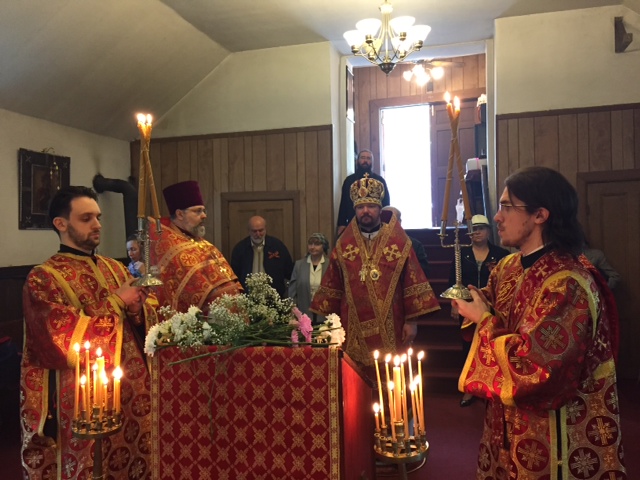
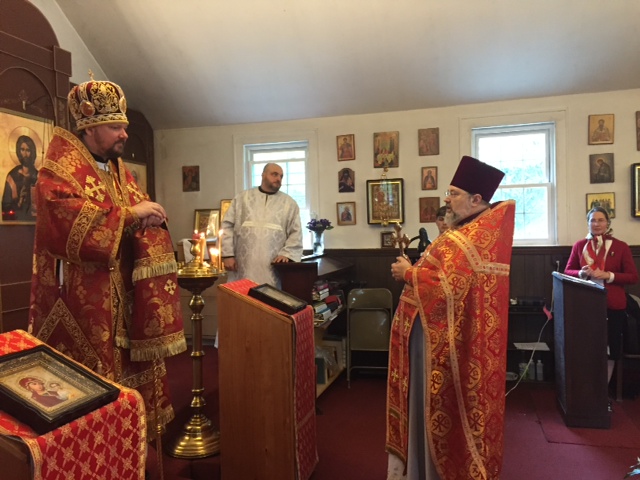
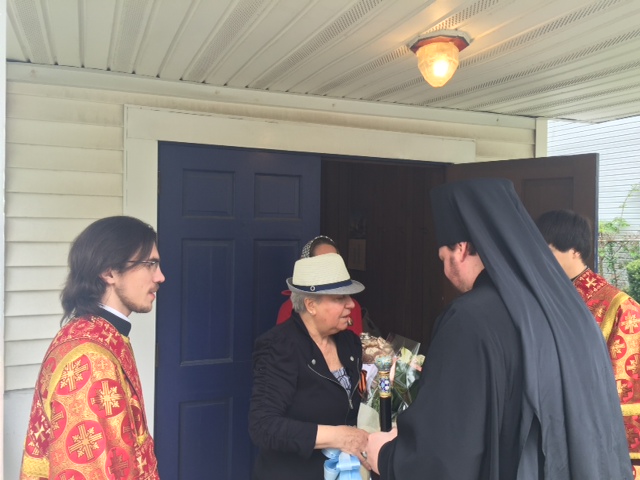
On this Christmas of 2015 Archpriest Igor was congratulated on the occasion of his Silver priestly jubilee. On Christmas Eve Fr. Igor received a phone call from the Chancellor of the Patriarchal Parishes, Archpriest George Konyev who took that opportunity to greet the jubilarian. On Christmas Day, following the beautiful Divine Liturgy in our temple, the Rector was congratulated by parishioners. Church Warden and Choir Director Olga Roussanow proclaimed the greetings from all the members of the Parish and presented Fr. Igor with a bouquet of flowers and a nice gift. In their greetings St. George’s parishioners wished Fr. Igor good health and further successful ministry for the glory of God. Traditional Polychronion (“Mnogaia leta”) was also proclaimed in honor of the Rector.
Let us wish Fr. Igor God’s help, all the blessings and many more years of serving the Holy Orthodox Church!
Fr. Igor Tarasov after his ordination in 1990