37th Sunday after Pentecost. Feast of the Meeting of the Lord


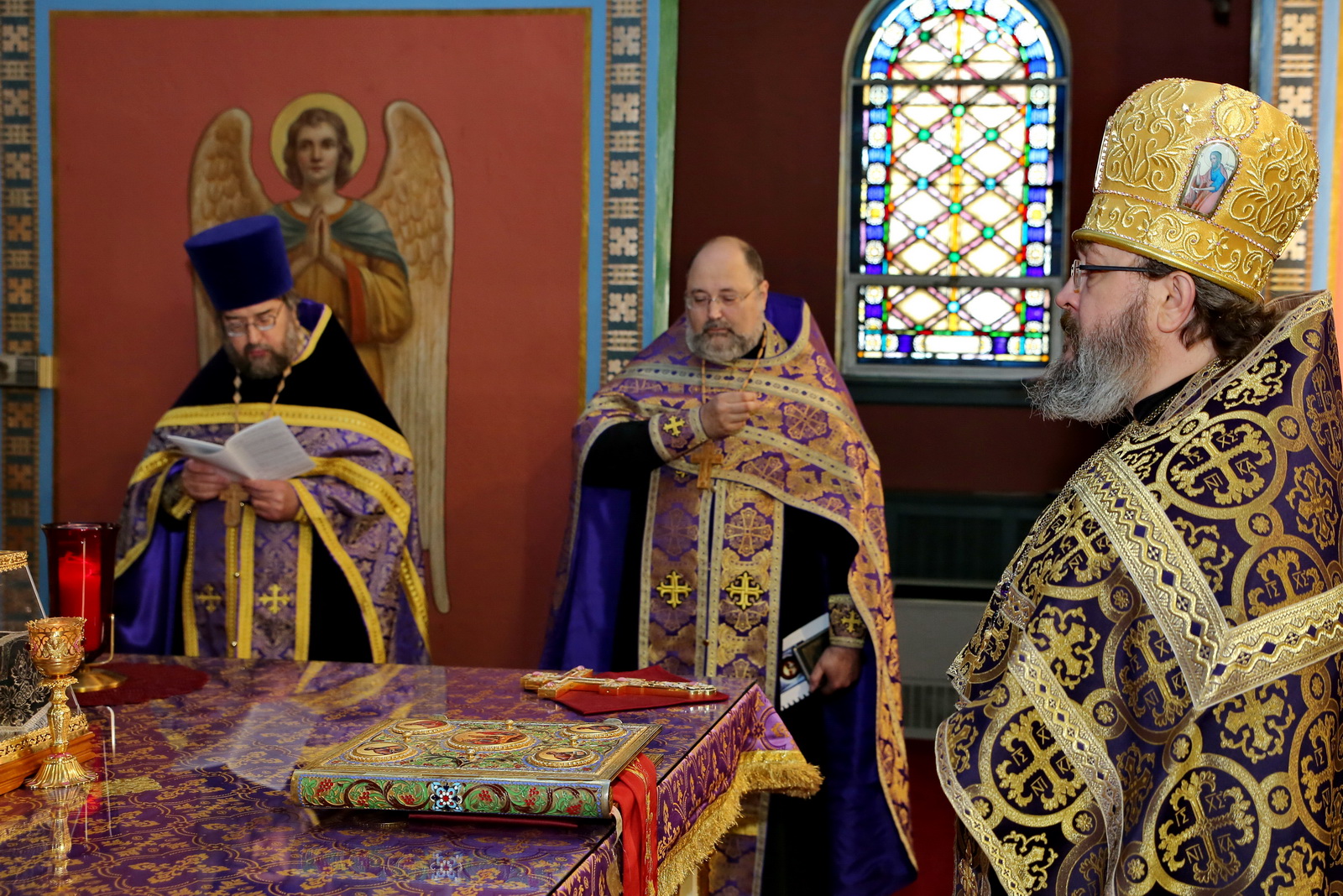
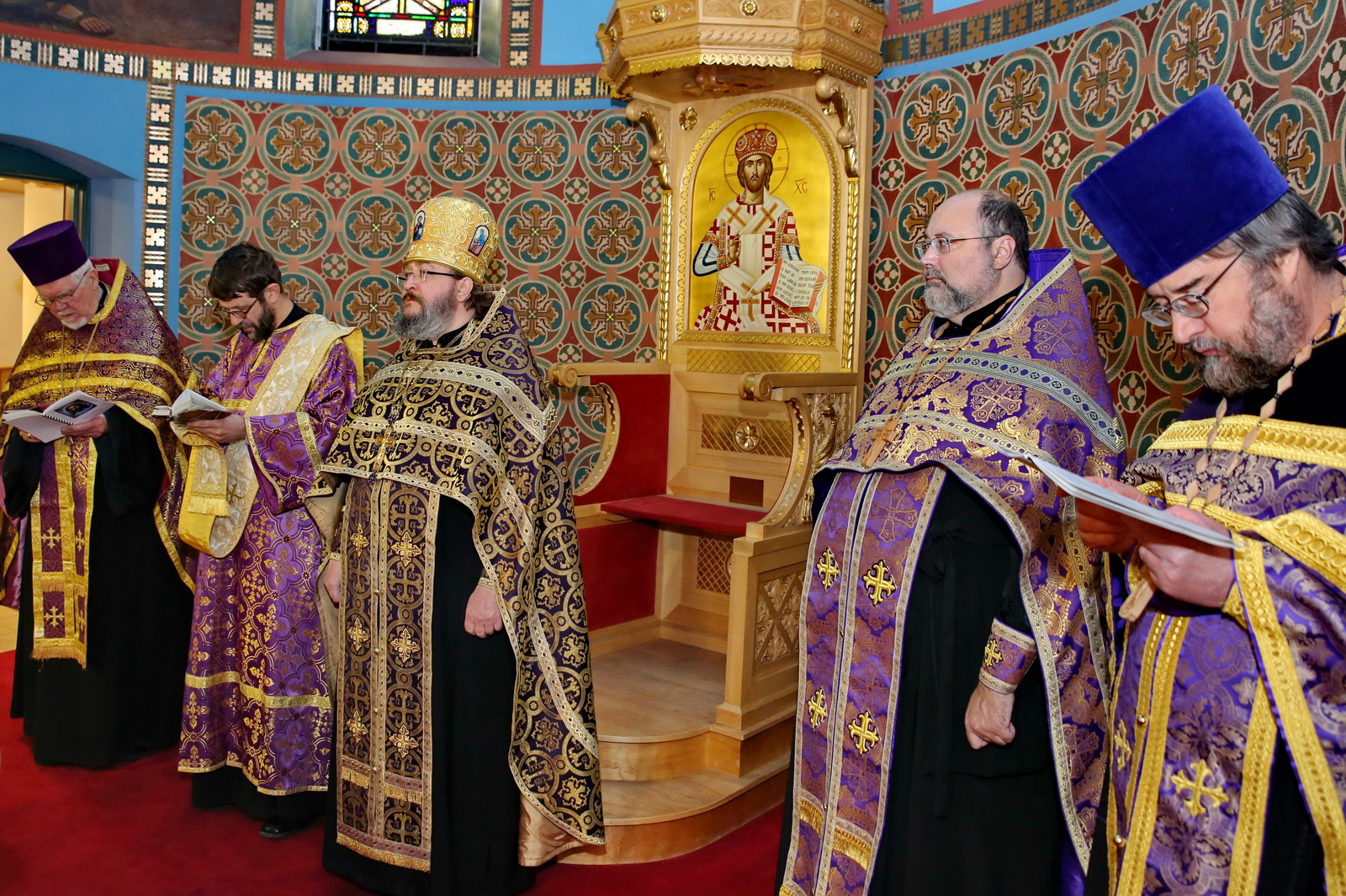
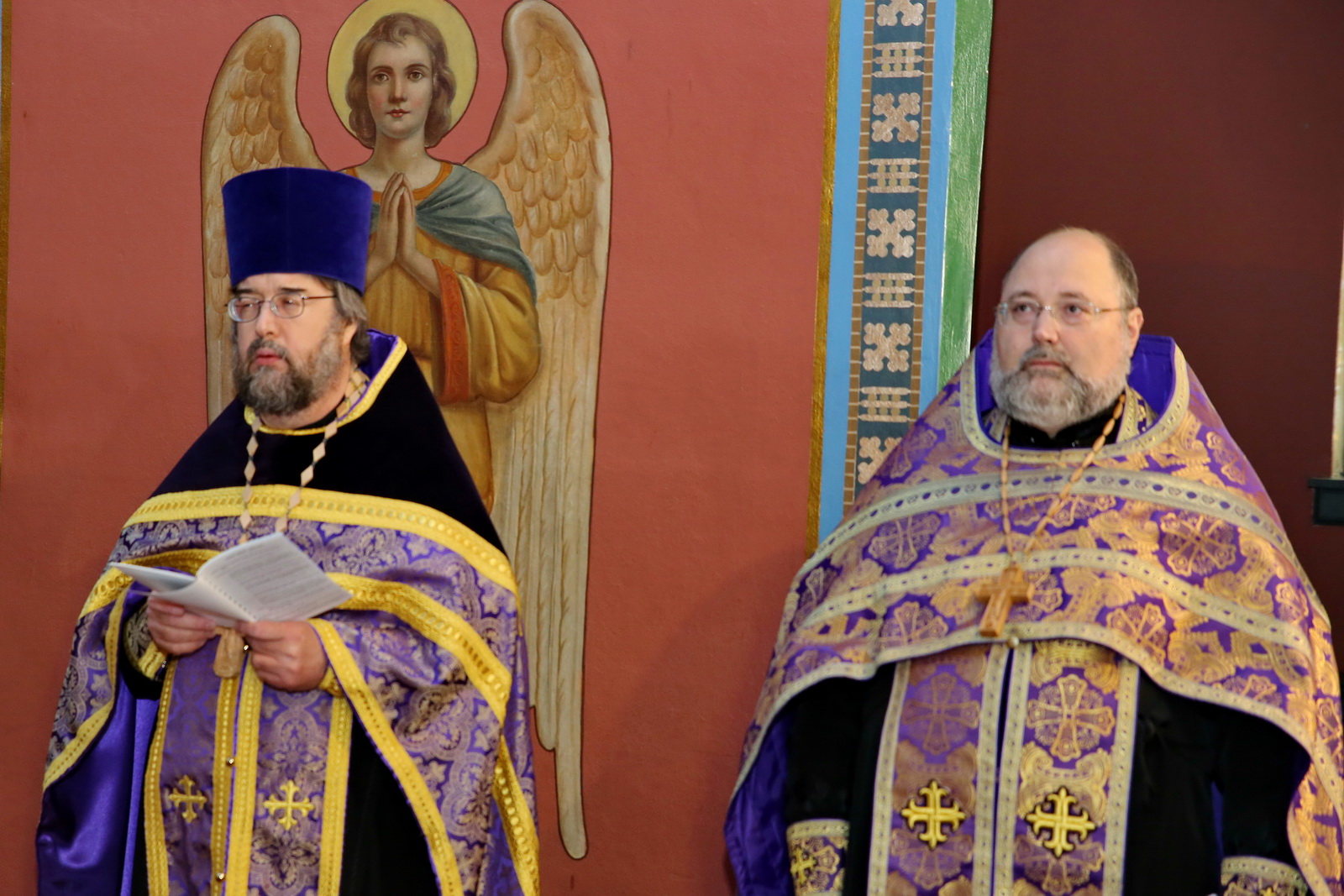
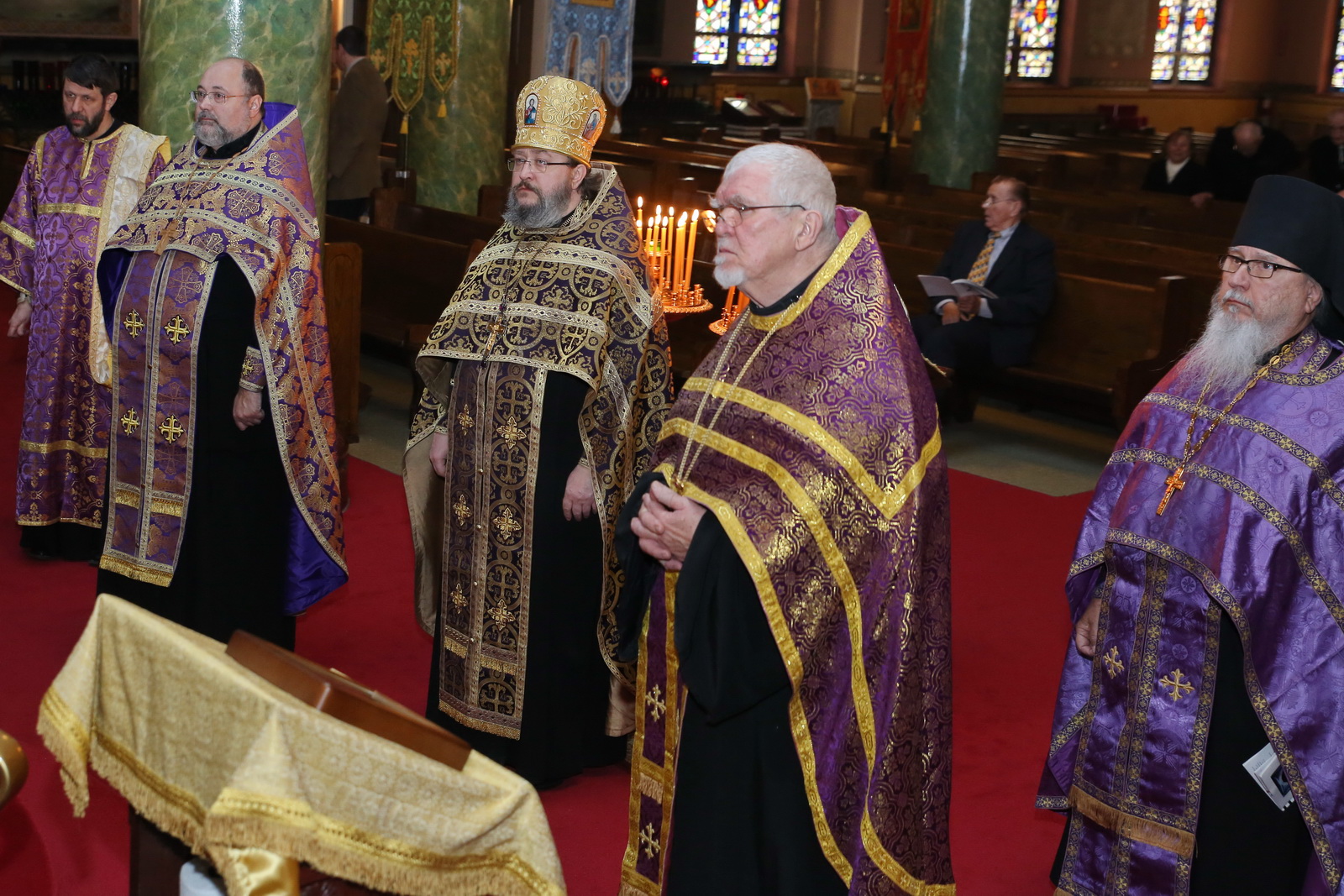
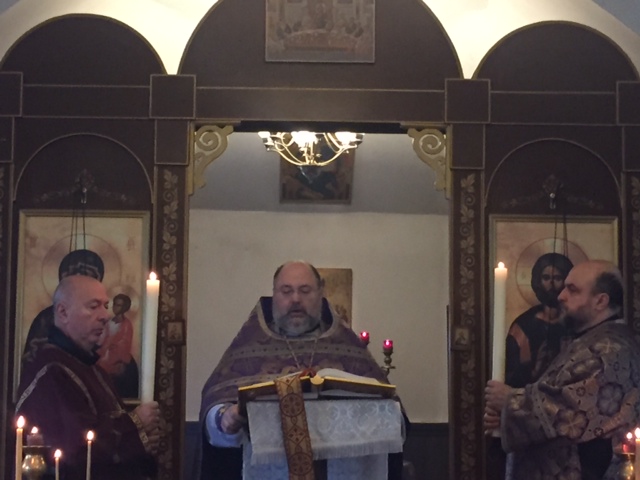
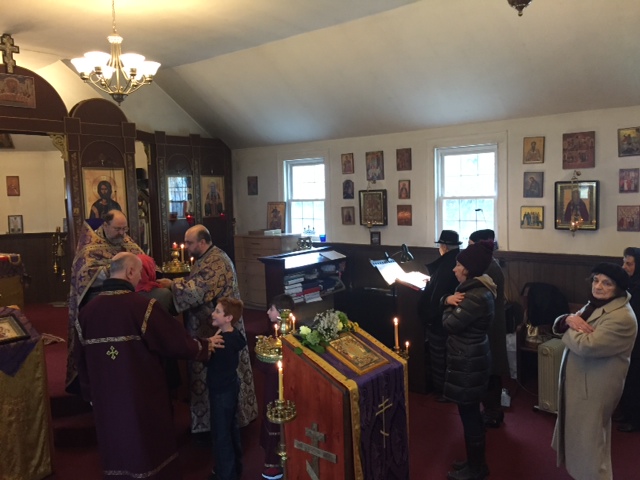
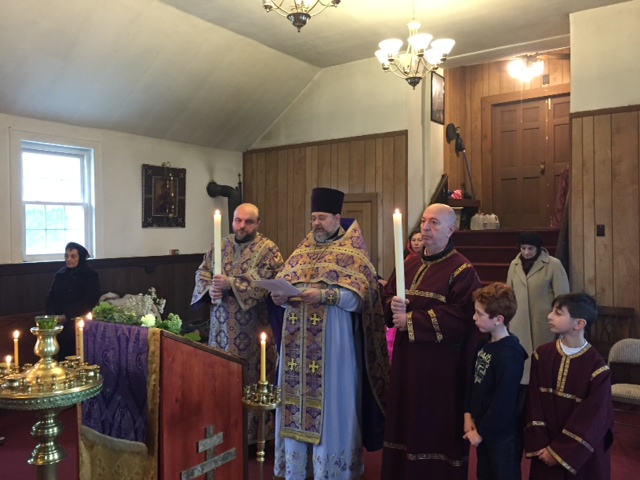
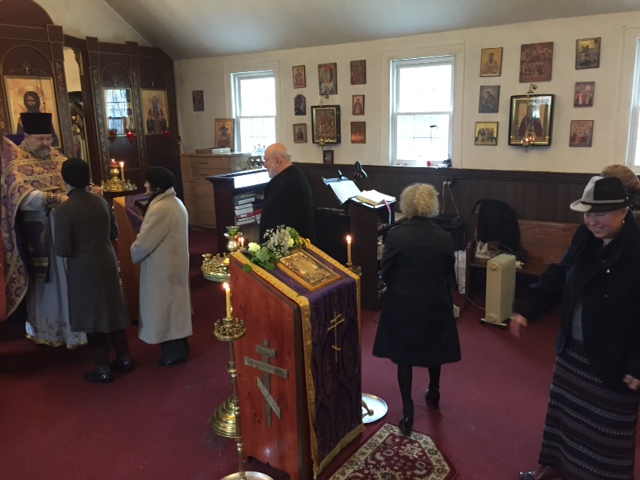
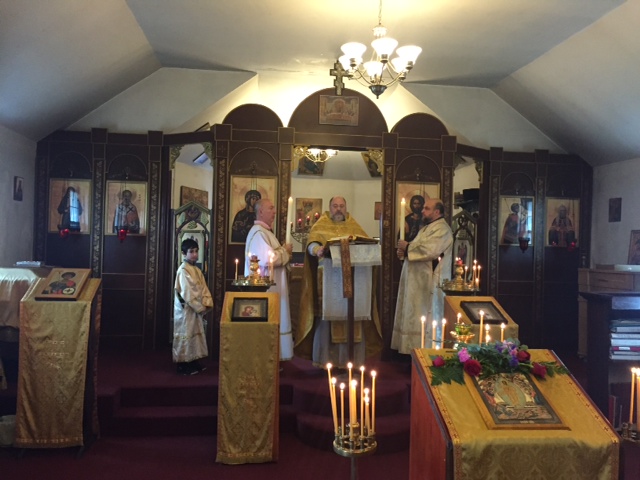
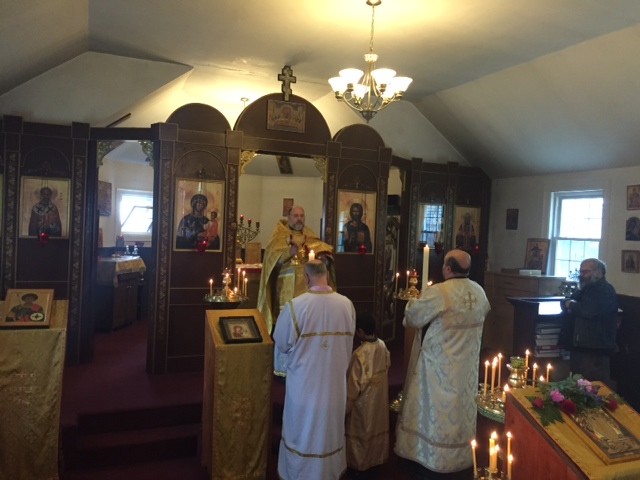
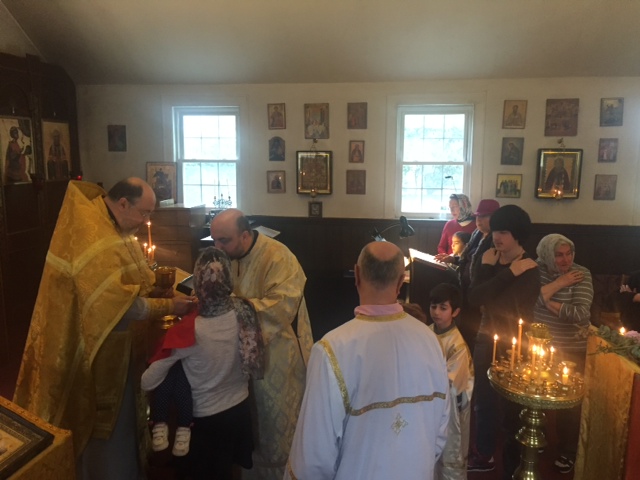
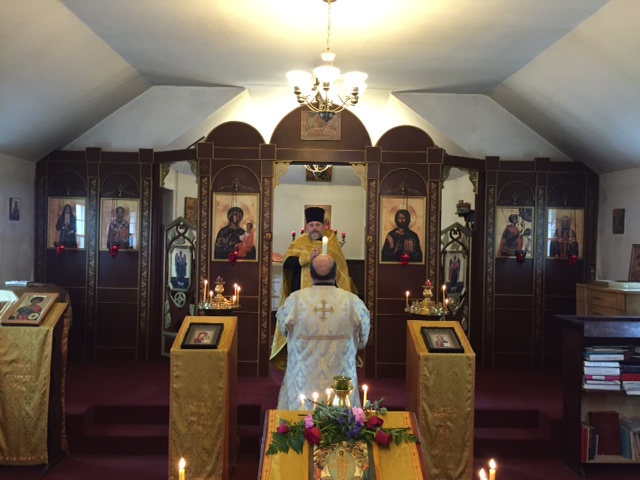
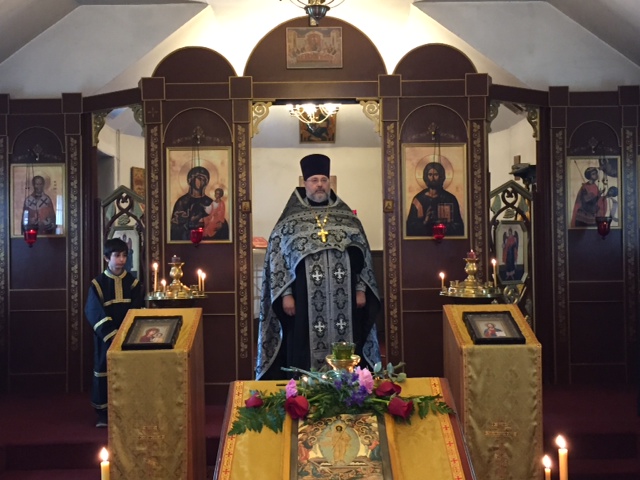
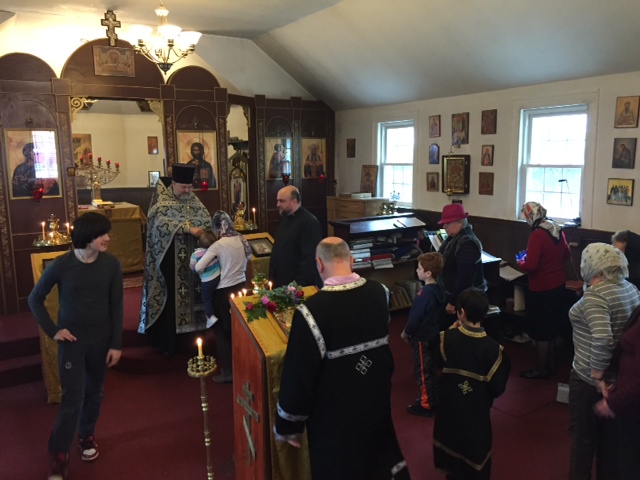
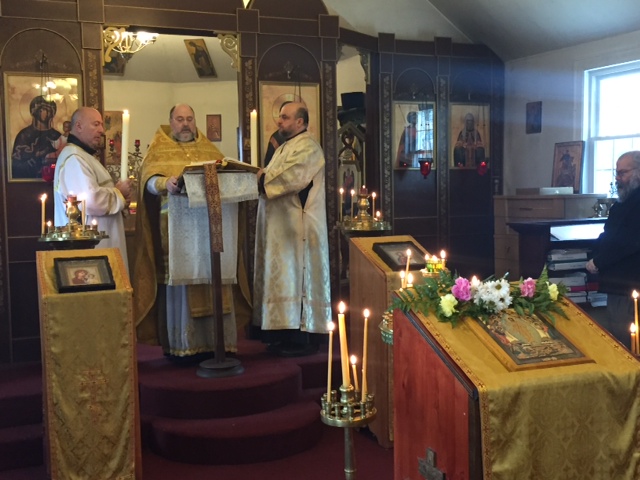
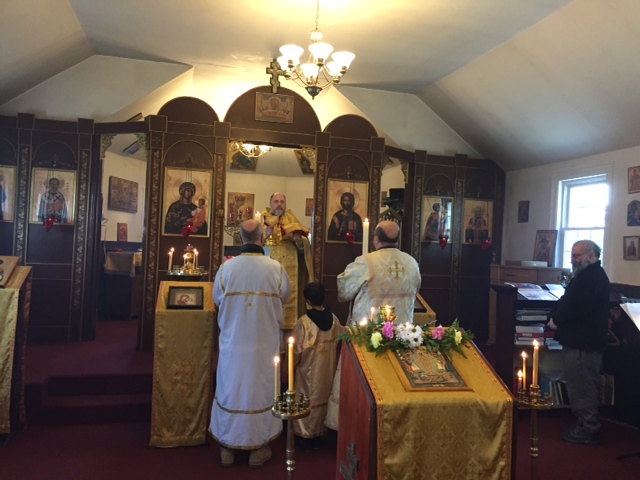
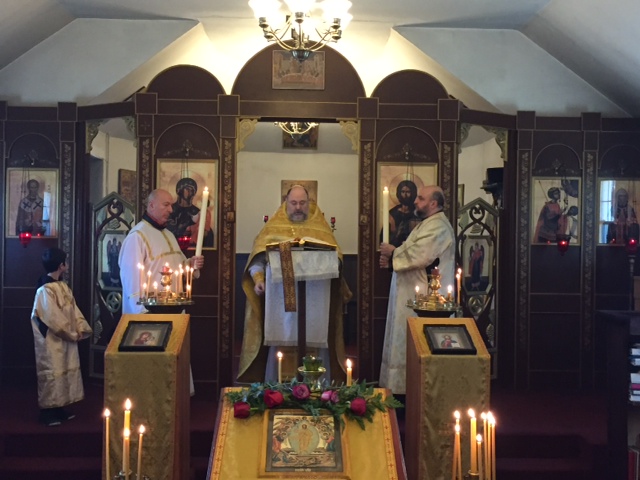
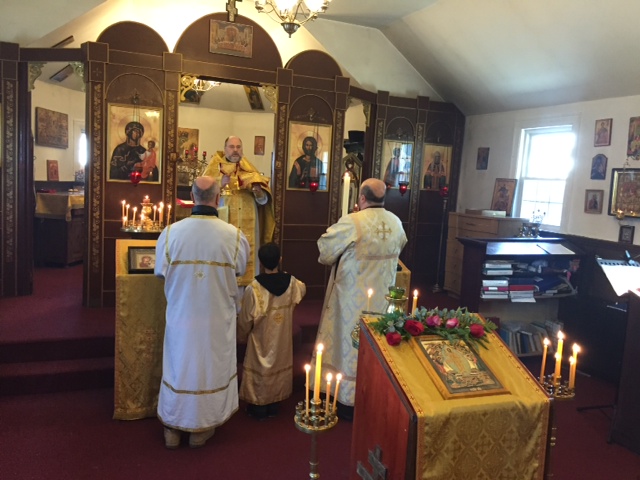
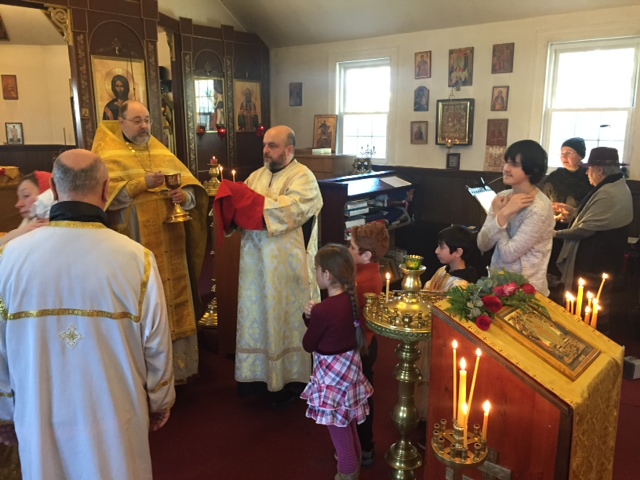
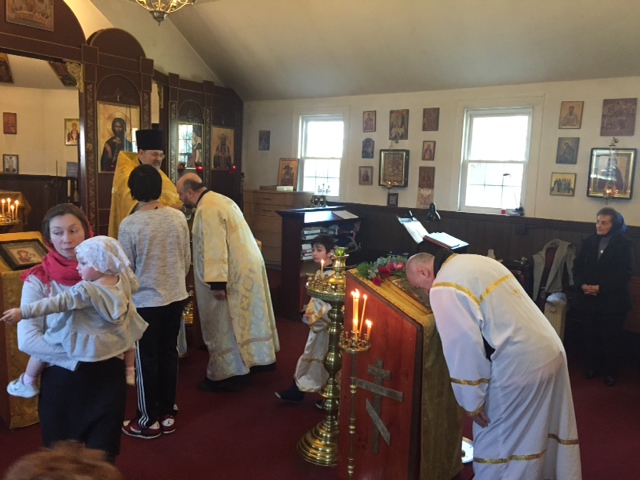
On February 14, on the 37th Sunday after Pentecost, Rector of St. George Church, Archpriest Igor Tarasov served the Divine Liturgy in our temple. On this day we also celebrated holy day of the Meeting of the Lord which had been transferred to Sunday. Despite a very cold weather, a sufficient number our parishioners attended the church.

Following the Gospel readings the Rector preached a homily in Russian. In that homily he combined the main themes of the Gospel lessons assigned for this Sunday (Lk. 19, 1-10) and for the feast of the Meeting of the Lord (Lk. 2, 22-40). Fr. Igor said that both Gospel readings tell us about a meeting between a sinful man and sinless God. The whole purpose of the Lord Jesus Christ coming into our world was to make such a meeting possible. If Adam turned away from God and was expelled from God’s glory and from constant communication with God, Christ did reconcile sinful man with sinless God. Zacchaeus, a publican and a public sinner, wished to see the Lord, made an effort climbing on a tree, and Jesus blessed him and proclaimed salvation for him. Righteous elder Simeon also expected to encounter the Lord, the Messiah, and Jesus being a small Child, made that encounter come true. We need to serve the Lord and to remember that our own meeting with Him may happen every moment. This is so because, according to the teaching of the Holy Fathers, every moment, every day in our life is the best for our salvation. God’s Providence arranges thus. And our encounter with the Lord is possible any time because we any time we may leave this earthly life, like Simeon did after seeing the Chris of God. Therefore, we need to be ready for such a meeting all the time, to make efforts like Zacchaeus and to expect like righteous Simeon.

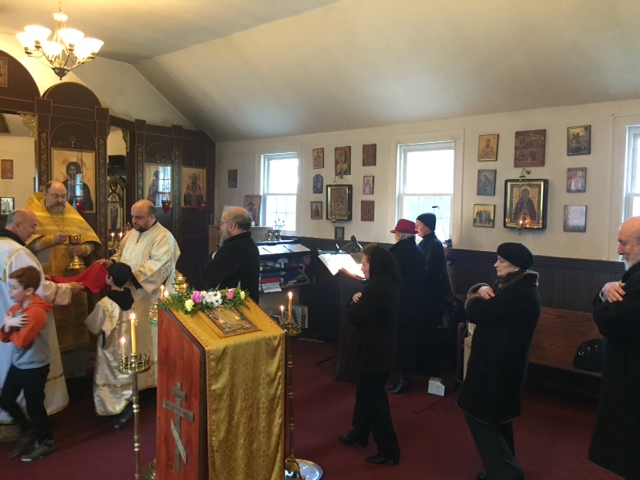
Following the dismissal of the Liturgy the Rector and the altar servers came before the icon of the feast and performed the rite of Glorification singing the troparion, kontakion and magnification of the Meeting.

After that the Rector had a short sermon in English explaining his homily previously preached in Russian.

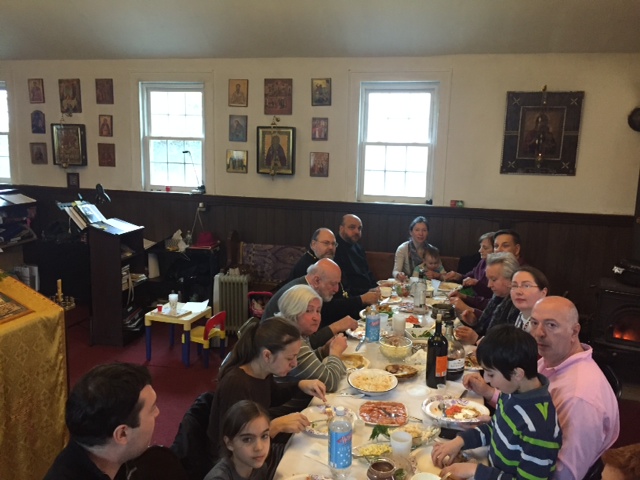
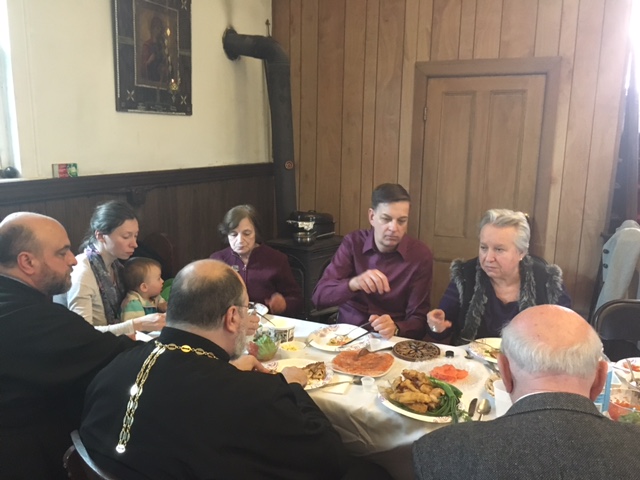
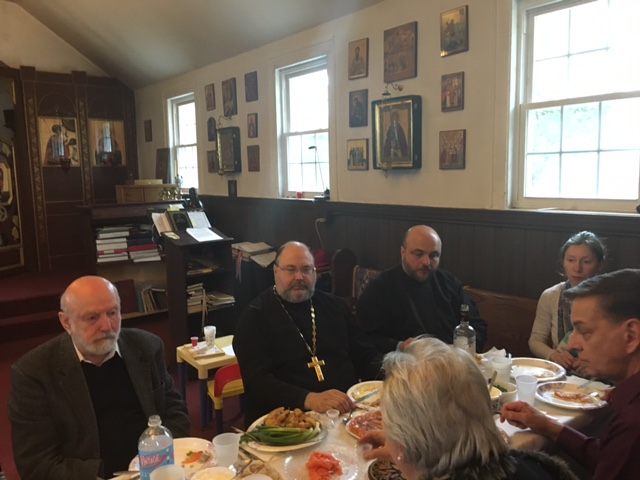
Following the service Rector and parishioners had an opportunity to continue their celebration at the trapeza table where they enjoyed delicious meals and interesting conversations.


36th Sunday after Pentecost. Synaxis of the New Martyrs and Confessors of the Russian Church


On February 7, on the 36th Sunday after Pentecost, as well as feast of the Synaxis of the New Martyrs and Confessors of the Russian Church, our Parish had a nice liturgical service. In the Rector’s absence the Divine Liturgy was served by Priest Aleksiy Paranyuk from St. Nicholas Cathedral. Following the Scripture readings he preached a homily interpreting the Gospel lesson.

At the end of the Liturgy Fr. Aleksiy performed the Memorial service (Litia) to commemorate all the departed who perished or were put to death at the time of godless persecutions of the 20th century.

35th Sunday after Pentecost


On January 31st, on the 35th Sunday after Pentecost, we had a nice liturgical celebration at St. George Church. Our Rector, Archpriest Igor Tarasov served the Divine Liturgy. Following the Gospel lesson he preached a homily in English.

In his homily the Rector spoke about eternal life and reflected upon different ideas a Christian mind can have about it. Since the Gospel lesson was telling a story of a young ruler who asked Jesus how to enter into eternal life (Lk. 18, 18-27), such an important subject was appropriate for the sermon.

After the dismissal of the Liturgy the Rector congratulated our young parishioner Anton Malyshew, as well as his stepmother Maria Malyshew on the occasion of their name days (January 30 and 31). Traditional Polychronion was sung.

Following the Liturgy we had an opportunity to listen to a brief speech of a missionary priest, Archimandrite Juvenal (Repass) who was present in our temple and prayed at the Divine Liturgy. After the service ha told about his missionary work in Guatemala and invited parishioners to make charitable donations for that noble cause.

Theophany, or Baptism of the Lord


On January 19th, on the feast of the Holy Theophany, or Baptism of our Lord Jesus Christ, our Rector, priest Igor Tarasov celebrated the Divine Liturgy in our temple.


Following the reading of the Holy Gospel Fr. Igor preached a homily. He reminded parishioners of the readings the Church pronounces during the Vespers service on the Eve of Theophany. The first reading from the book of Genesis tells that when God created the universe the world was formless and covered in water. Water is the first or primal element. When Jesus in today’s feast steps into the water, He not only sanctifies the waters of the Jordan but He sanctifies all the creation. In that same reading we hear the story of creation and how the Spirit hovered over the water. Now we see the Spirit come in the form of a dove to reveal the Messiah. And the whole Holy Trinity is made manifest to the world.

The other Vespers reading is from Exodus, the story of the release of the Israelites from the captivity in Egypt. We read how they fled into the wilderness and were chased by the army of Pharaoh. They came to the Red Sea and crossed it in a miraculous way. The waters of the sea parted and the Israelites walked through the sea, but after they passed the sea, the waters came back and flooded the Egyptians. The waters of the Red Sea saved those whom God had chosen, and Jesus had freed them from their sins. In the same way as we rise from the waters of Baptism, we rise as new creations.
This purification is foretold in the Prophet Isaiah, “Come now, let us set things right, says the Lord: Though your sins be like scarlet, they may become white as snow; though they become crimson red, they may become white as wool!” (Is. 1, 18).
Fr. Igor continued his sermon saying, “Today the Creator of all things comes to the earth and comes to be baptized in the Jordan. Jesus Who is free from all sin wishes to be baptized in order to cleanse all of humanity from the enemy of old. The Creator of all is baptized by the hand of a servant, so that He may grant all of humanity purification through water and the Spirit. Today, the one who created all things, begins His ministry that will ultimately end in His death and Resurrection that will complete what is begun today. But this holy mission of Christ will also continue in eternal life prepared for those who will believe and will be baptized. Therefore, let us live up to that great calling for eternal life given to us through the holy Baptism in the name of the Most Holy Trinity, Father, Son and Holy Spirit. Amen.”

At the end of the Liturgy Fr. Igor conducted the Great Blessing of water and blessed the faithful with the newly sanctified water of Theophany. Parishioners had an opportunity to get the holy water for themselves, as well as to invite the priest to visit their homes.

Sunday before the Theophany


On January 17, on the Sunday before the Theophany, the Rector of St. George Church, Archpriest Igor Tarasov served the Divine Liturgy in our parish temple. Following the Gospel lesson of Mark (Mk. 1, 1-8) he preached a homily in Russian.

In his homily the Rector pointed out that preparing for the holy day of the Theophany the Church commemorates the preaching of St. John the Baptist who called for repentance. Any true spiritual life begins with repentance, therefore it was the main theme of St. John’s preaching. And the baptism he performed in the Jordan River was a symbol of cleansing from the sins. Holy Forerunner fulfilled his mission to prepare the people for the appearance of Christ. We also should advance in faith living justly and prepare ourselves for the encounter with Christ for we call ourselves, as the Apostle said, “those who loved His appearance” (2 Tim. 4, 8). The Rector called the faithful to prepare worthily for the celebration of that appearance, for the celebration of the Baptism of the Lord.

Following the dismissal of the Liturgy the Rector preached a short sermon in English to stress the main ideas of his Russian homily.

After the Liturgy our Warden and Choir Director, Olga Roussanow congratulated Archpriest Igor Tarasov on the occasion of his 50th Jubilee. She presented him with a gift from parishioners and a flower bouquet. Traditional Polychronion (“Mnogaia leta!”) was sung.


Sunday after the Nativity


On January 10, on the Sunday after the Nativity, we had a nice celebration at St. George Church. Our Rector, Archpriest Igor Tarasov served the Divine Liturgy in our temple. After the reading from the Gospel he preached the following homily in English:

“On this Sunday after Christmas we have to learn what happened very soon after the Birth of Christ on the earth. Today’s Gospel lesson is telling us that after the departure of the Wise Men the Holy Family had to flee to Egypt because king Herod was looking for the Child Jesus to destroy Him (Mt. 2, 13). So, right after the joy of having Her first-born Child, Blessed Virgin had to run and hide. This gives us a very common picture of the life in this sinful world where fallen human nature, human envy and hatred, human lust for power and wealth do not allow to live peacefully, but, on the contrary, spoil the lives of others and tend to destroy it.”
“King Herod represents all human corrupt rulers who desire to preserve their power at any cost. Herod knew that the Messiah was to come into the world. However, his own power was more important for him than salvation of his own people. And when Jesus was born and the Wise Men came to search for him, Herod became very disturbed (Mt. 2, 3). Instead of being excited about the Birth of the Messiah, he was worried that this little Child could take over his throne. Today we hear from the Gospel that Herod became angry after being deceived by the Wise Men who did not tell him about the place where the Child Jesus was. So he sent to kill all the infants in Bethlehem from two years old and under (Mt. 2, 16). The history of mankind is full of the examples of many Herods who sacrifice their own people, who shed innocent blood in order to strengthen their power. They do not care for spiritual matters but only use them to support their dominion.”
“But we may say that the Christmas story represents the whole human society, gives us a picture of the human world. We said that we see Herod, a ruler who is obsessed with his power. But we also see other kinds of people. We see the shepherds. They become worthy of the appearance of the Angels who proclaim the joyful news to them – that the Savior is born. And the shepherds rush to the cave to worship Him. This is an example of simple, sincere and pious people who are blessed by God. We should now recall that from the beginning of humanity God loved the shepherd. Righteous Abel was a shepherd and God blessed his sacrifice. Thus shepherds are the devout people who sincerely love God.”
“In the story of the Nativity we see the Wise Men. These were the astrologers, the scientists of their age. Many of them were serving false gods, practicing magic and sorcery, but those three wise men described in the Gospel were looking for the truth. And being led by the star of Bethlehem they found the true Savior of the human race, the Child Jesus. Thus those wise men represent the scholars who look for the truth, who search for God.”
“Finally, we see the Holy Family. Especially, the head of the household, righteous Joseph the Spouse. He humbly fulfills his duty to care and protect the Holy Family. Being advised by the Angel of the Lord he accepted Mary when She was pregnant. Now, again, advised by the Angel he takes the Child Jesus and His Mother and flees to Egypt. We may only imagine how hard it was for him and for the Holy Family to leave their native country and to go to the different land. But they did so in order to preserve the future Savior of the world. Therefore, St. Joseph represents a worthy and decent man who is fulfilling his obligation of taking care of the family, who protects his spouse and his children.”
“Therefore, dear brothers and sisters, the Nativity story shows us the human race in different types of people. And we need to imitate some of them and avoid the attitude of others. We need to imitate the shepherds in their sincere trust to God, in their simple but fervent faith. We need to imitate the wise men in their love for knowledge but combined with the search for spiritual truth, the longing for God. And when they found God, found the Child Jesus they presented Him with the gifts. We also should give the Lord our own gifts – gifts of material nature like gold, gifts of spiritual nature like incense and gifts of moral nature like myrrh. But we have to avoid the attitude of Herod, the attitude of sin, evil desire and lack of love. Like those Wise Men who did not return to Herod, we should avoid being in contact with such people or such powers in the world, but to worship the true God, our Lord Jesus Christ born for us in a manger but who will rule the universe and redeem it.”

After the Liturgy dismissal the Rector preached a short sermon in Russian to convey the main ideas of his English homily.

Following the sermon the Rector congratulated our parishioner and altar server Joseph Kay on the occasion of his name day and wished him God’s blessings and protection of his heavenly patron, righteous Joseph. Traditional Polychronion (“Mnogaia leta!”) was sung.

After the liturgical celebration the Rector and parishioners enjoyed delicious meals and a nice company at the trapeza table during the coffee hour.

Nativity of our Lord Jesus Christ


On January 7 our Parish family celebrated great holy day of the Nativity of our Lord Jesus Christ, also known as Christmas Day. We held a beautiful celebration in our temple. The Divine Liturgy was served by our Rector, Archpriest Igor Tarasov. Following the Gospel lesson he proclaimed the Catechetical Sermon of St. John Chrysostom on the Nativity.

Upon the dismissal of the Liturgy the Rector and the altar servers came out of the sanctuary and performed the rite of glorification before the icon of the Nativity singing the troparion, kontakion and magnification of the feast.

Following the Liturgy Fr. Igor preached a short homily in Russian and congratulated parishioners on the occasion of the great holy day of the Birth of our Savior. He also handed out little presents with the sweets and candies to the parish children.

Parish Warden and Choir Director Olga Roussanow congratulated Fr. Igor on the occasion of his anniversary of priestly ordination. A short speech was also made by the altar server Andrew Malyshew who expressed his appreciation for the spiritual care provided by Fr. Igor to the faithful. An elaborated version of the Nativity kontakion, as well as traditional Polychronion (“Mnogaia leta”) was sung in honor of Fr. Igor. The Rector expressed his gratitude to the parishioners for their heartfelt wishes and rendered thanks to the Lord who made him worthy and able to serve the faithful as a priest for 26 years.

After the service in the temple the Rector and parishioners continued celebration of Christmas at the nearby Veranda Caffe.


Sunday before the Nativity


On January 3, on Sunday before the Nativity, Rector of St. George Church, Archpriest Igor Tarasov served the Divine Liturgy in our temple. Following the reading from the Gospel he preached a homily in Russian. The English translation of that homily is as follows:

“Dear brothers and sisters! Last Sunday the Church commemorated all the righteous of the Old Testament who awaited the coming of Christ. Today, the Sunday before the Birth of Christ on earth, the Church remembers all those in the Old Testament who were related to Christ by blood and those who spoke of His Birth as a man. That is why today we have read Christ’s family tree from the Gospel of St Matthew.”
“In this way the Church shows us that Christ was a historical figure, not a mythical or a legendary person. He really lived on Earth and was part of the human history. And in a more profound and spiritual way today’s celebration and today’s reading from the Gospel teaches us that Jesus Christ really became a man. Тhe Son of God really took on human nature. He was not a ghost, an apparition, a myth, a distant imagined god, the abstract god of philosophers. Such a god does not have a family tree. Our God is the God of Abraham, Isaac and Jacob. He has flesh and blood, human ancestors, many of whom sinned greatly, but like David, also repented greatly. By taking on human nature, the Son of God became like us in all ways, in flesh and blood, in tears and sweat, in mind and soul, in heart and will, He differed from us in only one way, He did not sin. Since we know that Christ’s human nature remained sinless, He shows us the way that we too can go in order to strive to avoid sin and so improve and transform our failing human nature.”
“However, the fact that Christ took on human nature and has a family tree, has another meaning too. Christ is descended from Adam through Abraham and David, through His ancestors Joachim and Anna – in His human nature He is therefore related to us and we are related to Him. He is a cousin of our ancestors. He is one of our own forebears. He is our relative and we are His relatives, we belong to the same family. It is now that we understand that with Christ we belong to a family, a family of Saints and sinners, but a family of which He is the Head and we are His children, the children whose Mother is the Church and the Father is God. And believing in the Fatherhood of God, we believe in the Brotherhood of Man.”
“And our Lord Jesus Christ came to save this human brotherhood who became Man, so through Him we may become true children of God, not only by the fact of our creation by God, but by divine grace and our faith which make us saved in God.”
“These thoughts may be seen proved in the life of the Holy hierarch Peter, Metropolitan of Rus’ whose memory we celebrate today. St. Peter was born in the region of Volyn which is presently on the territory of Ukraine. But he finished his life in the city of Moscow which is, of course, on the territory of Russia. In his time Rus’ was already divided. St. Peter lived in the principlality of Halych and Volyn. But it was the will of God that he was appointed to be the Metropolitan in Vladimir, on the territory subjected to a different prince. And later St. Peter moved his residence to Moscow, which was also God’s will. His life shows us that the Church should not have boundaries. Many servants of God may be born in one country, belong to a certain nation but live and serve in a different country. In fact, many of us here present are a proof of that. We are from different countries but now live in America and belong to this parish. The Church is in fact universal, and we all belong to the great family which is human race. And if we are Orthodox Christians, we belong to a great family which is one, Holy, Catholic and Apostolic Church. We still have to love our countries and be good citizens and patriots, but we should be aware that our human brotherhood in Christ, under the Fatherhood of God and Motherhood of the Church are very important and must define our spiritual life.”
“And therefore, dear brothers and sisters, preparing for the solemnity of the Birth of our Lord in flesh, let us become aware of our human brotherhood, as well as of our sonship to God, and let us implore our holy Ancestors: “Holy Fathers of Christ, pray to God for us!”

After the dismissal of the Liturgy the Rector preached a short sermon in English and stressed the main thoughts of his Russian homily. He also called the parishioners to properly prepare for the feast of the Nativity and expressed his gratitude to Natalia Soho who already arranged for a Christmas tree and set it up in the church.


Sunday of the Holy Forefathers


On December 27, on the Sunday of the Holy Forefathers, we had a nice celebration at St. George Church. Our Rector, Archpriest Igor Tarasov served the Divine Liturgy. Following the reading from the Holy Gospel he preached the following homily in English:

“Many are called but few are chosen” (Lk. 14, 24). This is the main idea of today’s Gospel lesson. Taking the whole history of mankind, we may say that not many people were chosen by God to be blessed. We may examine that by recalling how different people knew the true God and kept that precious knowledge.”
“Some nations conserved a dim memory of events of the human past. In Australia the Aborigines kept a vague memory of how God created the world perfect, which they call the “Dreamtime”. All over the world, from Asia to South America, some 120 different nationalities and cultures have kept the memory of a great, universal flood, which is known to us in detail through the Bible. In India the Hindus long ago kept an intuition of God as a Trinity, but that knowledge of God became so twisted that their trinity is a trinity of destructive gods. Other peoples fell even further and began worshipping stones and trees, rivers and mountains, mistaking creation for the Creator. Our ancestors, Eastern Slavs, were among those nations. They worshiped forces of nature, but even doing so they made the idols of those gods who represented those forces. This was the pagan world, especially before the coming of the Savior.”
“Many were called but few were chosen, for among all these nations and cultures, there were representatives of one nation who conserved the true history of mankind. This nation were the Jews, the chosen people, and today we commemorate all the righteous among them, our forefathers in the Faith. From Adam and Eve on, there were among that people righteous and holy men and women. In their lives they showed the image of the life of Christ or foresaw Christ by their lives. Speaking in theological language, we say that they are a “prefiguration” of Christ.”
“Abel, who was killed by his brother Cain, is a prefiguration, an image of Christ, who was also murdered by men. Melchizedek the priest is the prefiguration of Christ the High Priest. Enoch and Elijah, who were taken up to heaven, prefigure Christ who was also taken up to heaven. Noah, whose family alone survived the Flood, is a prefiguration of Baptism given to us by Christ. Job the Long-suffering prefigures the long-suffering of Christ. Abraham, who was asked to sacrifice his son Isaac, prefigures the sacrifice that God the Father made with His Son. Jacob prefigures Christ, for he saw the ladder that connects earth to heaven, enabling heaven to come down to earth and earth to rise up to heaven. Joseph, who was betrayed by his twelve brothers, prefigures Christ who was betrayed by His disciples. Moses saw the burning bush unconsumed, which is the Virgin’s womb, which was unconsumed by the fire of Christ. Joshua, whose name is the same as Christ’s, that is Jesus, the Savior, prefigures Jesus the Deliverer of His people. David, related by blood to Christ, saw Christ in the Psalms. Prophet Daniel saw the Holy Trinity through the Three Holy Youths in the furnace of Babylon. Prophet Isaiah saw Christ the suffering Servant. Prophet Jonah prefigures the three-day burial of Christ through his three-day stay in the belly of the whale.”
“All these holy Forefathers together with our holy Foremothers, Sarah, Rebecca, Ruth, Deborah and many, many more – all these we commemorate today. All these are our spiritual family, for long before we were born they saw the One Whom we confess, Christ our true God Who is risen from the dead.”
“Let us in these last few days before the celebration of the Birth of the Savior, read one, or at least one part, of the writings about them, the books of the Old Testament, like Genesis, Exodus, or simply the Psalms, and let us renew our links with our ancestors in the Orthodox Faith.”
“Let us exclaim today in prayer, “Holy Forefathers and Foremothers of Christ, pray to God for us!””

After the dismissal of the Liturgy the Rector preached a short sermon in Russian to name the main thoughts of his English homily.

Following the liturgical service the Rector and parishioners enjoyed delicious meals and an interesting conversation during the coffee hour.


29th Sunday after Pentecost


On December 20, on the 29th Sunday after Pentecost Rector of St. George Church, Archpriest Igor Tarasov served the Divine Liturgy in our parish temple. Following the Gospel reading he preached a homily in Russian interpreting the Gospel story about the healing of ten lepers by our Lord Jesus Christ (Lk. 17, 12-19). The Rector pointed out that the Gospel lesson teaches us to be aware of our sinfulness, to follow the commandments of the Lord, to make spiritual efforts and to be grateful for the grace and benevolence of the Lord.

Despite the absence of our altar servers on that day the Rector was not left without assistance at the Liturgy. We were happy to welcome subdeacon Vladimir Fedorov, a long-time cleric of the Russian Church in New York. He served at our church altar on that day.

Following the Liturgy dismissal the Rector preached a short homily in English explaining the main ideas of his Russian homily.