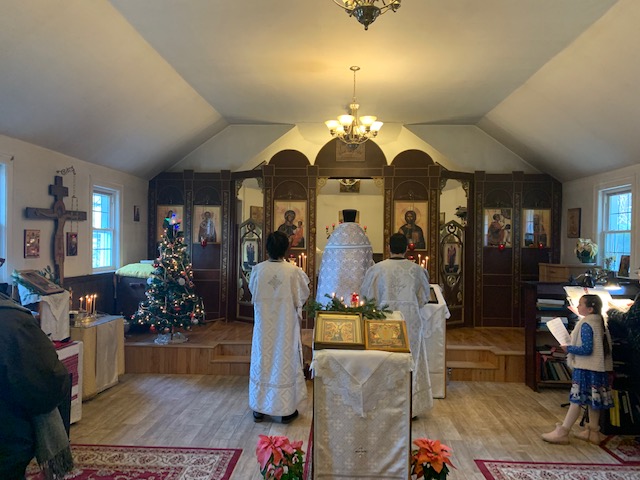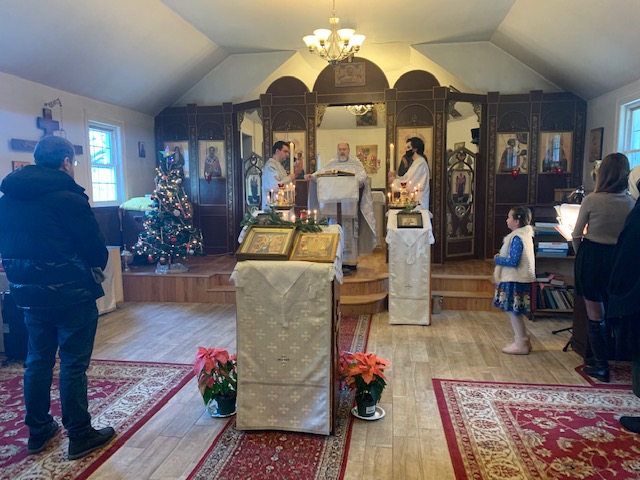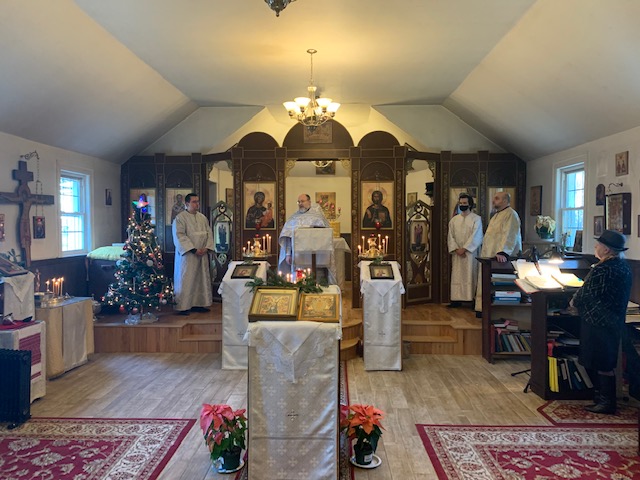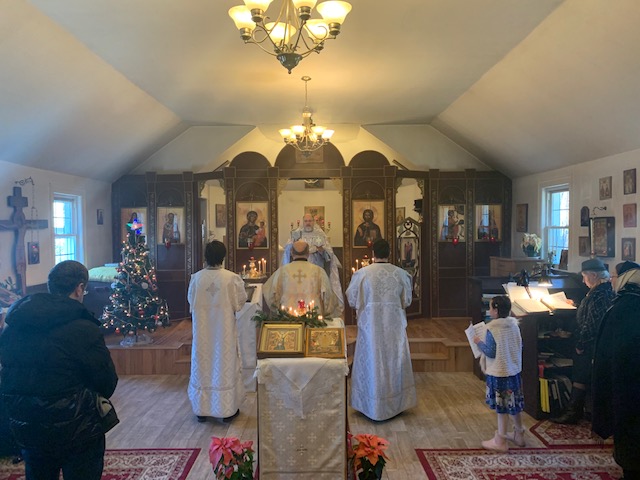
2021 Annual Parish Meeting


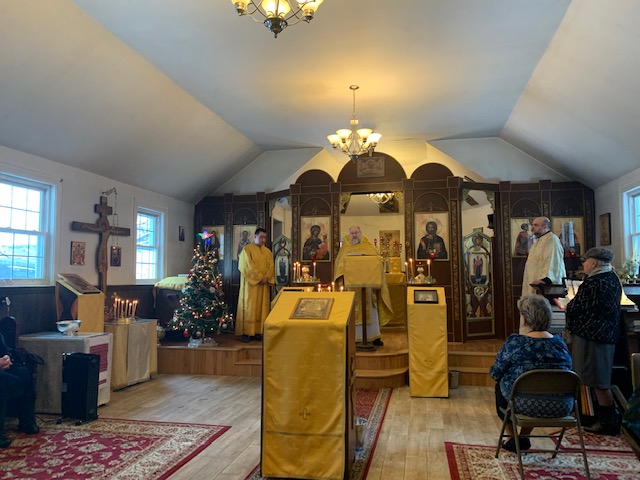
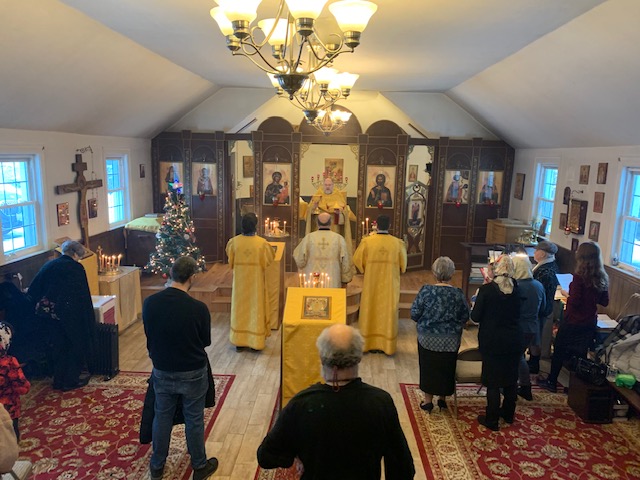
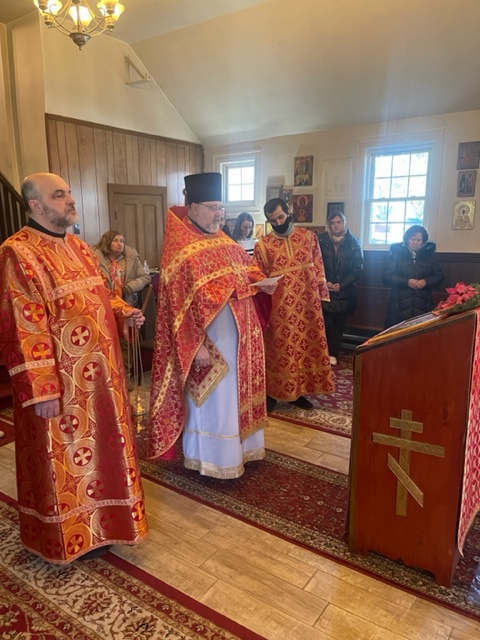
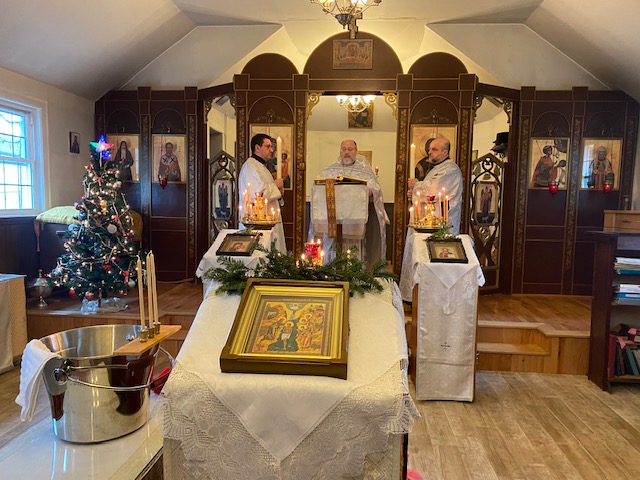
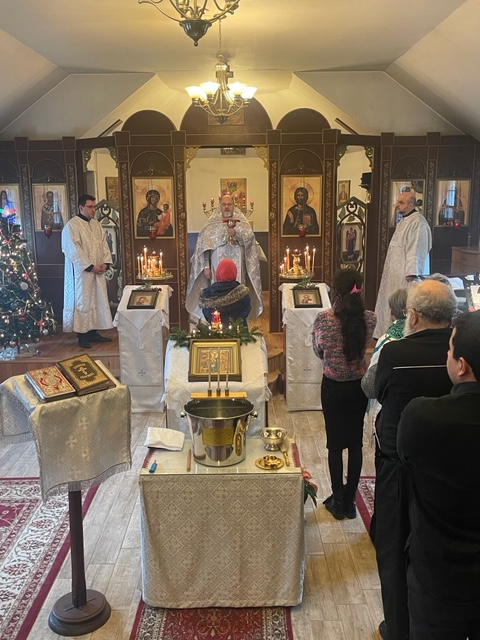
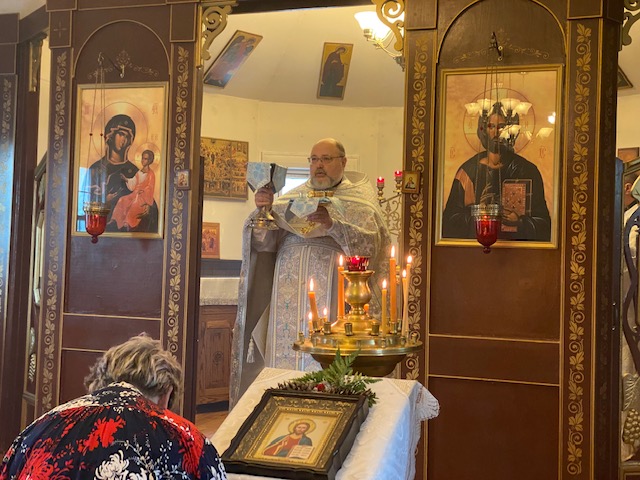
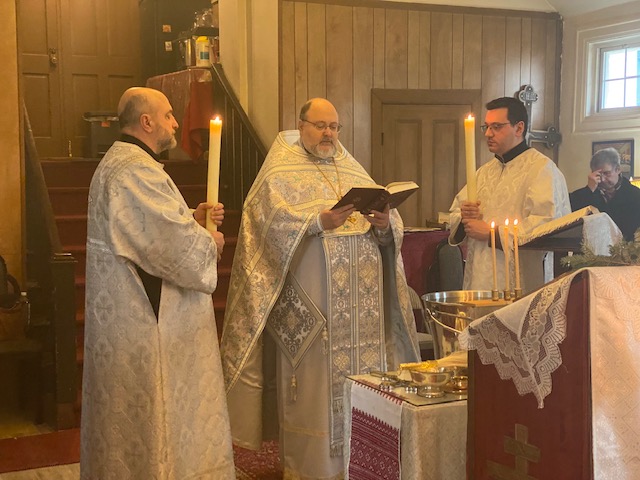
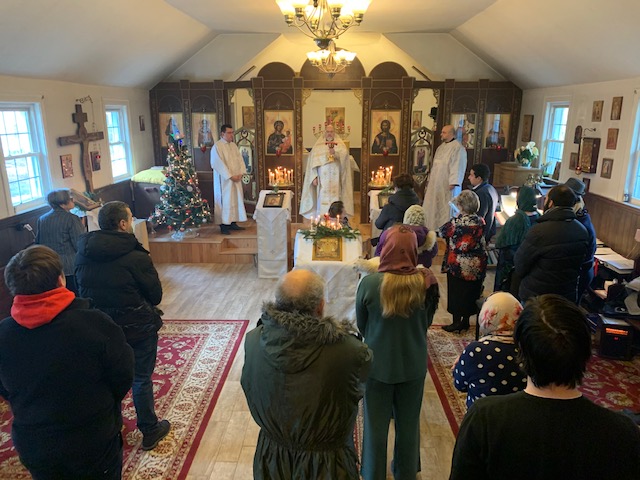
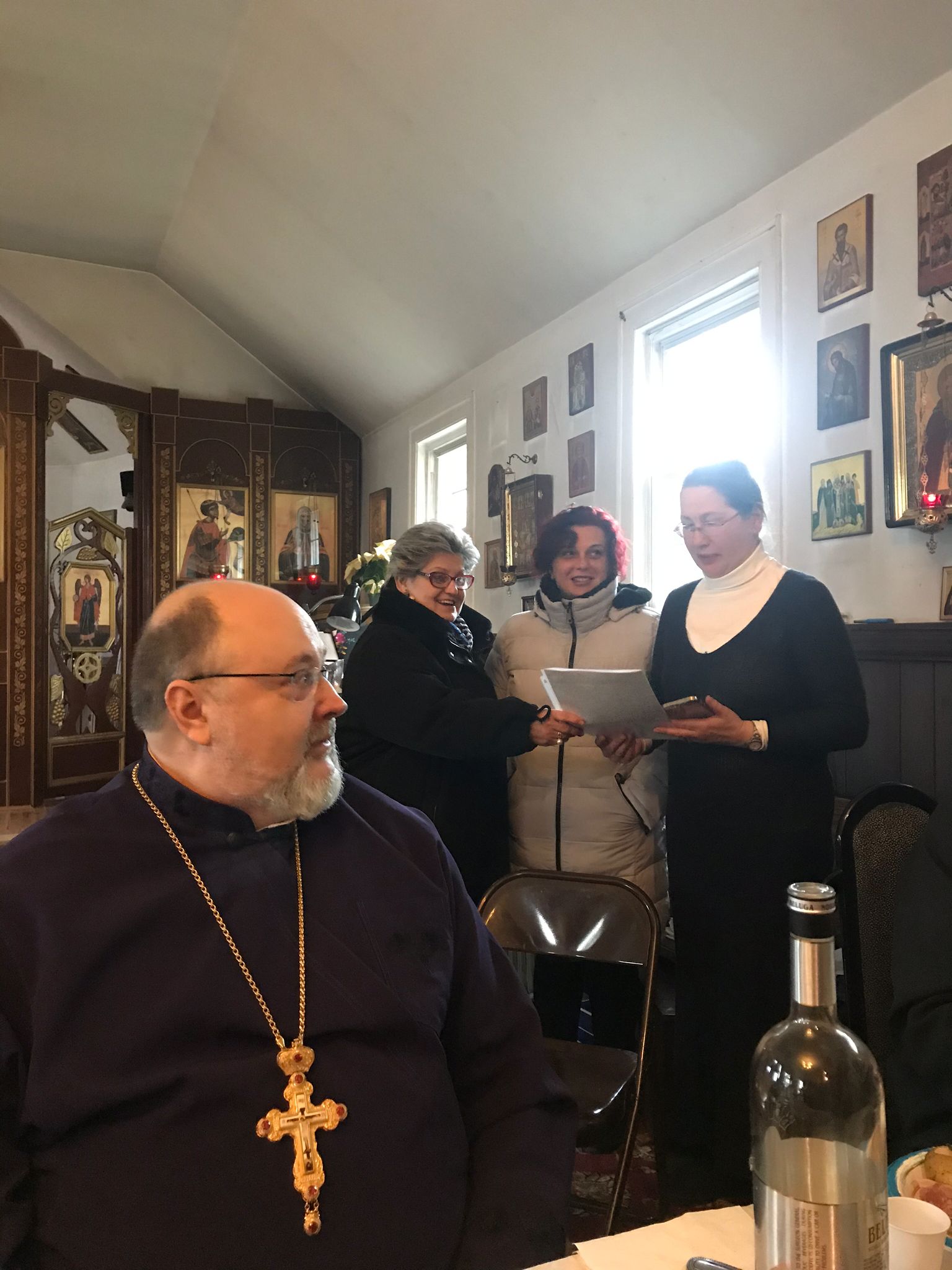
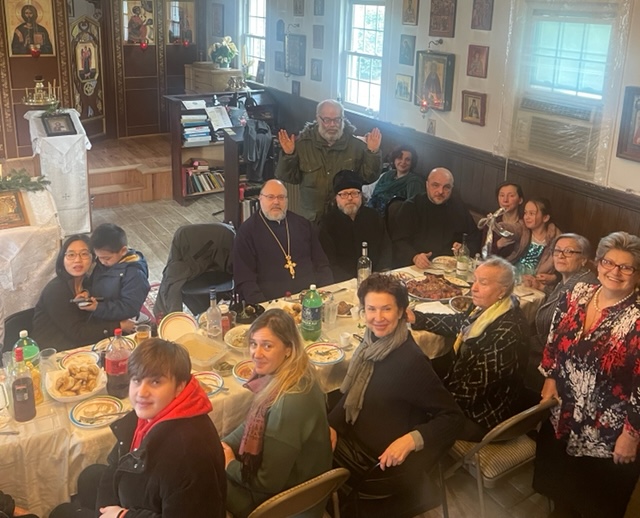
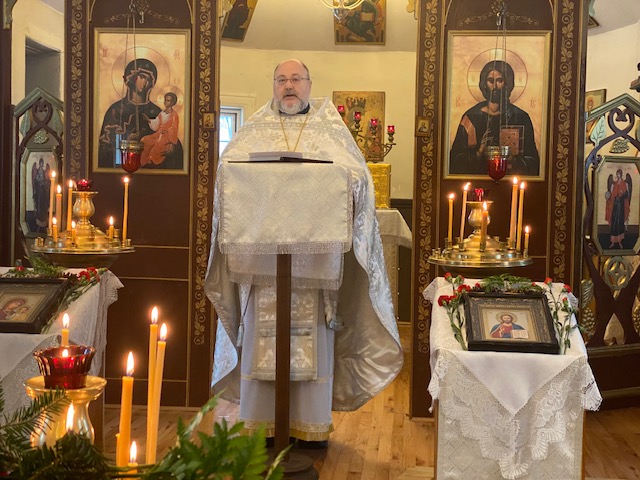
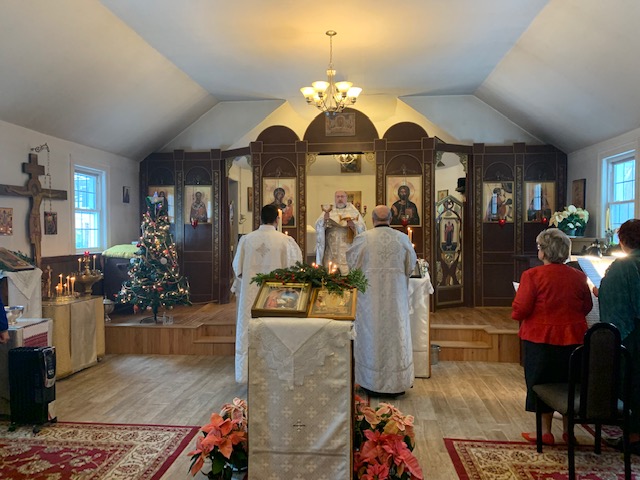
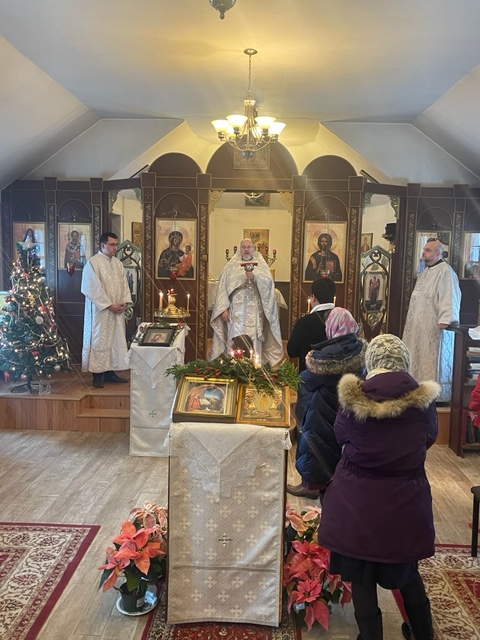
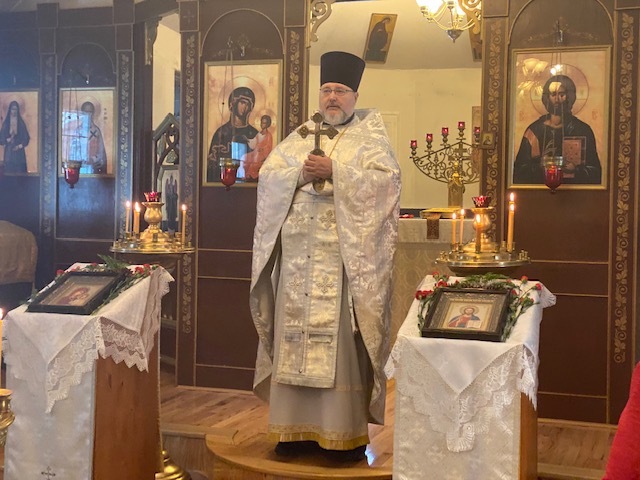
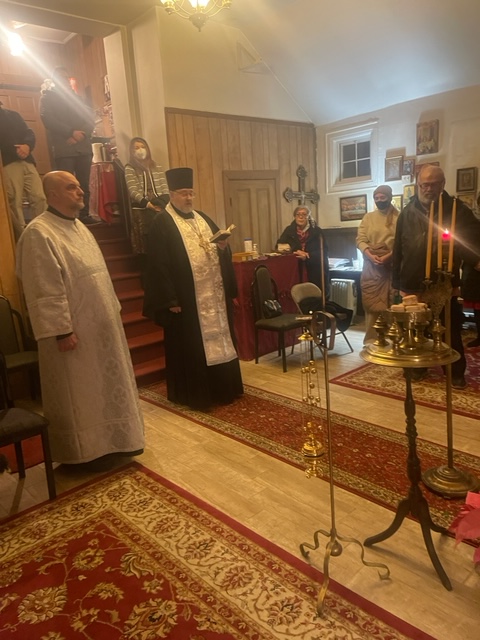
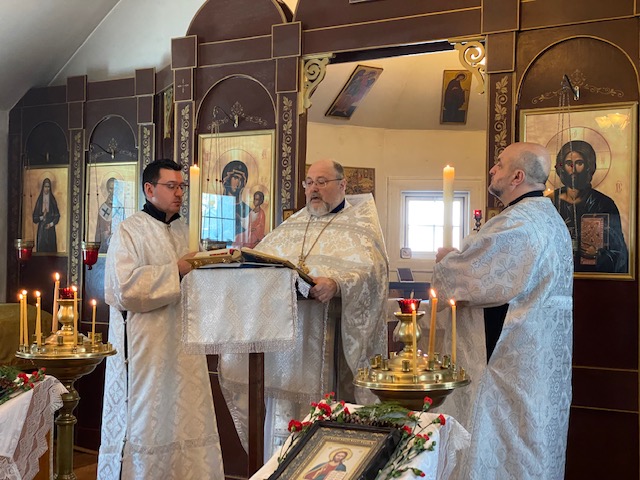
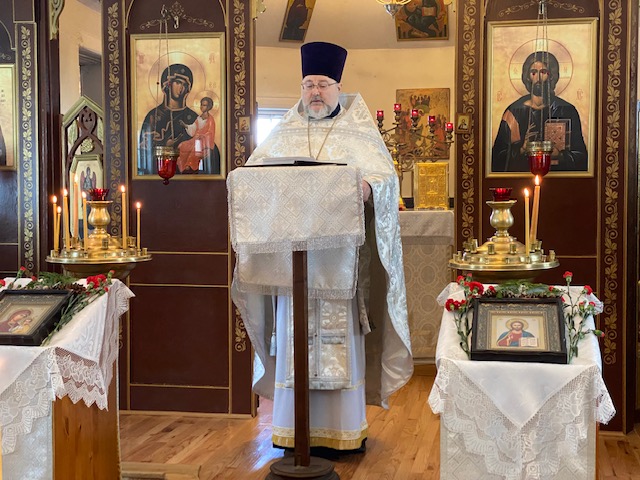
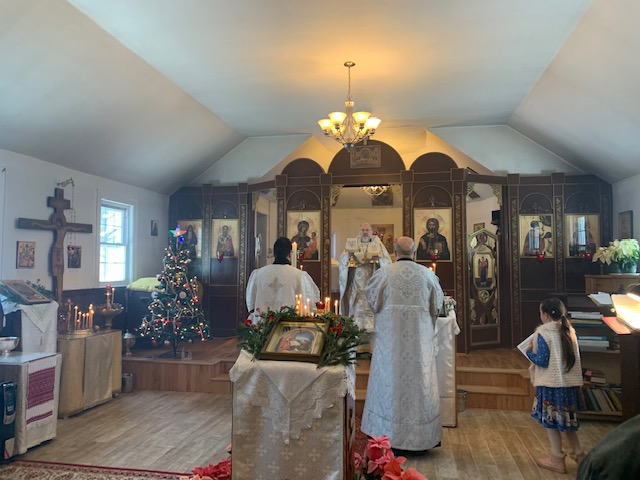
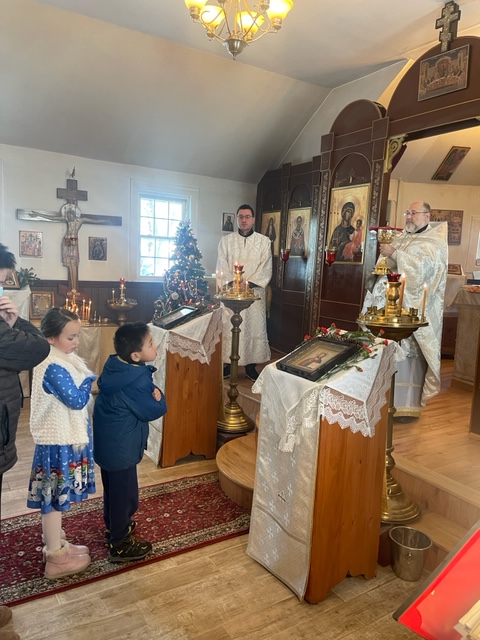
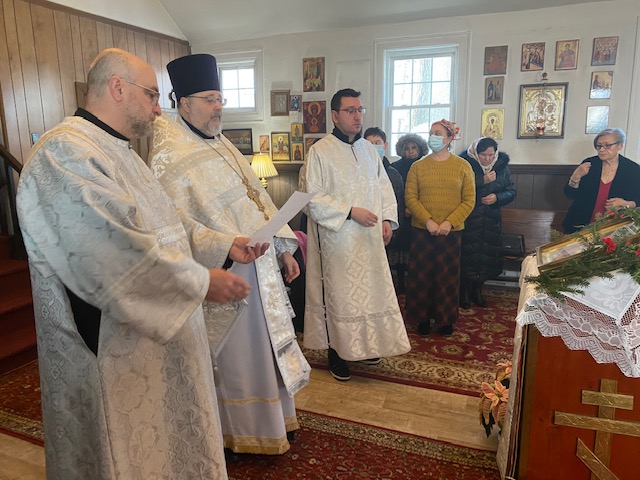
The Annual Parish Meeting of St. George Church was held on Sunday, March 7, 2021, following the Divine Liturgy. Parish Rector, Archpriest Igor Tarasov presided.

Church Warden, Olga Roussanow read the minutes of the last Annual Meeting held in 2020.

The Rector, Archpriest Igor Tarasov had a speech. He made some introduction stating that the last year was difficult because of the pandemic. Our church was closed for a month in April. However, later we began to function and we have got 3 new parishioners. And all of them are very active.

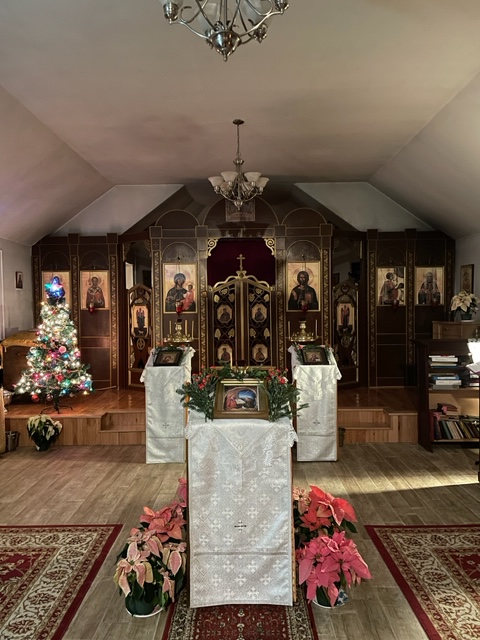
Then the Rector reported on financial situation. He stressed that in the last year our parish received a number of generous donations that made its revenue higher than in the past year. Most of them were made by some of our new generous parishioners. In addition, we collected special donations for the renovations in our temple. Those renovations were made and the new floor installed in the altar and ambo area. But the cost was totally covered by some benefactor, so the parish did not spend anything on the renovations. For that reason the said renovations were not even indicated in the financial report. That assistance does not mean that our parishioners should not generously support the church. We know that some of them did offer their time, labor and assistance in performing different parish activities, for which we all should be grateful. But financially members of the church should still be active in supporting it.

After accepting the financial report, the parishioners discussed the election of the parish Treasurer. For several years the duties of the Treasurer were temporarily performed by the Rector. At this point the Rector proposed to elect our new but very active parishioner, Emilian Suric, to become the Treasurer. That proposal was unanimously supported and Mr. Suric was elected.

The Rector and the Warden then reminded the parishioners of their duty to pay the parish dues of 2021. Several members made their membership contributions right away.

It has been brought to the members’ attention that our church would need a person supervising the sale of candles. After some discussion, Phoebe Ching-Huei Li volunteered for that obedience.

Having discussed some other matters the meeting was adjourned.

Meatfare Sunday


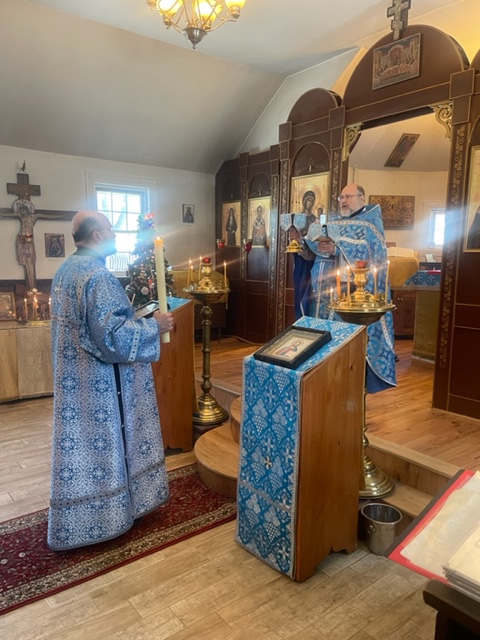
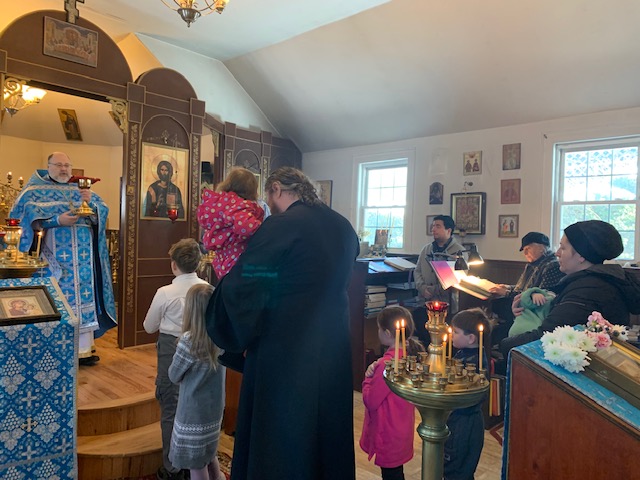
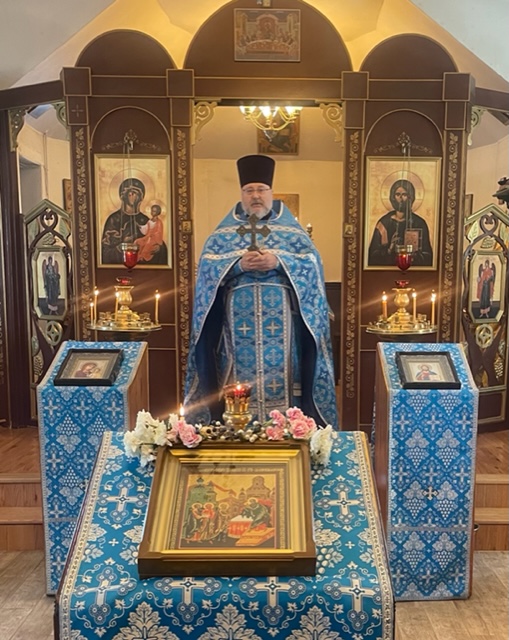
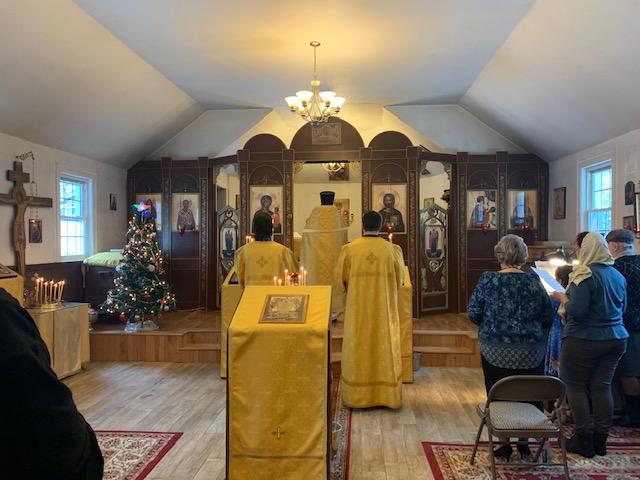
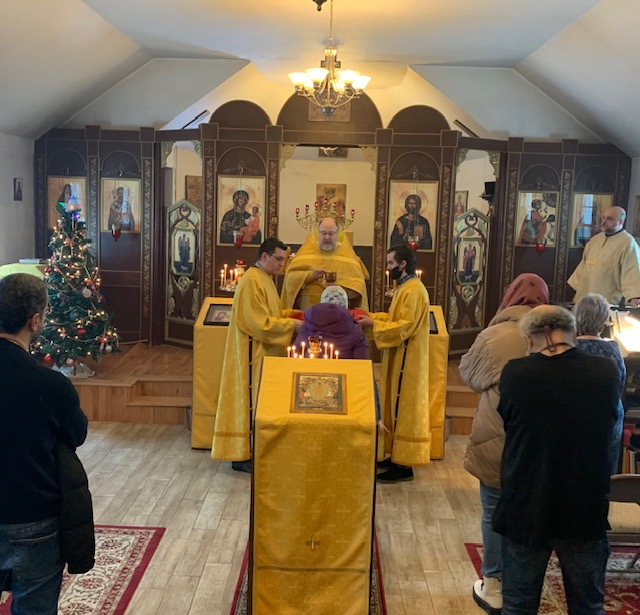
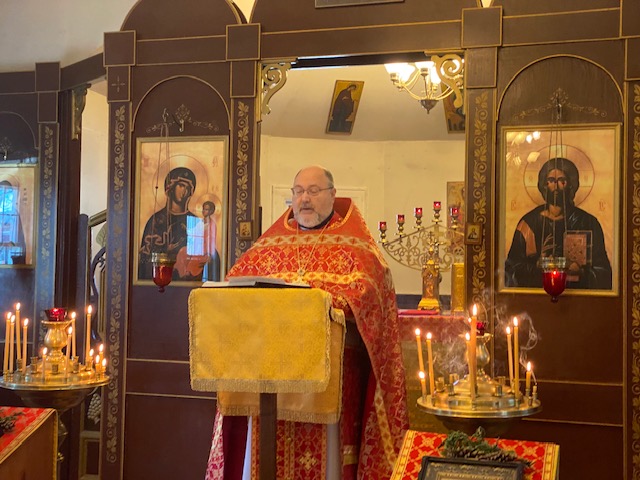
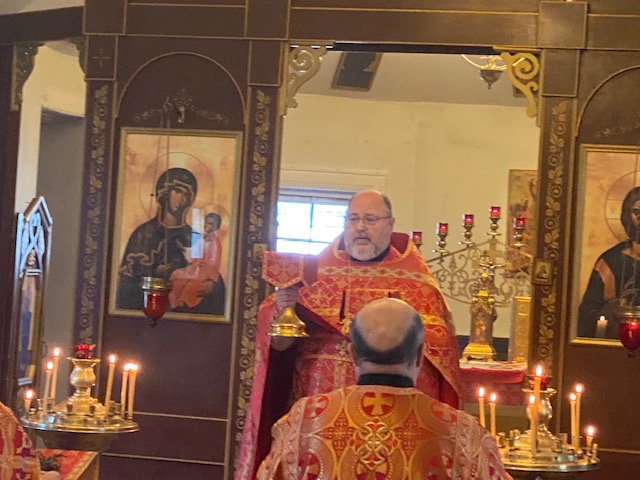
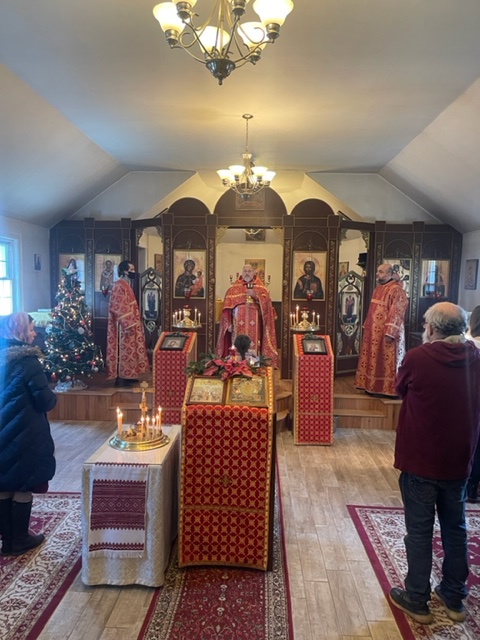
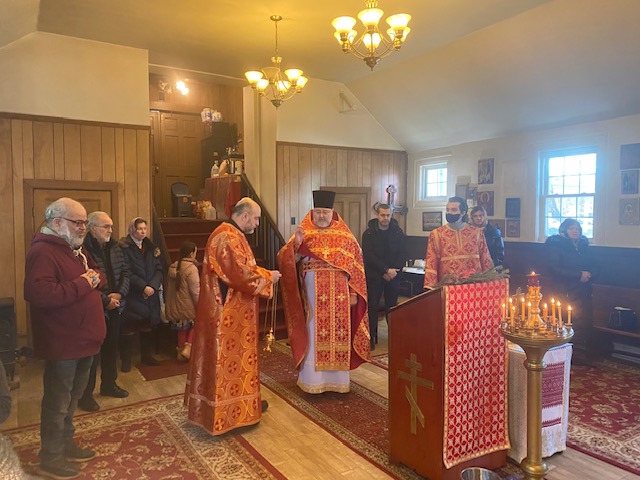
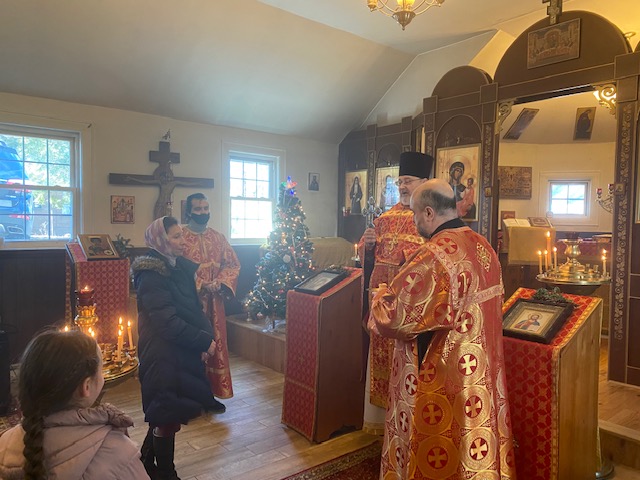
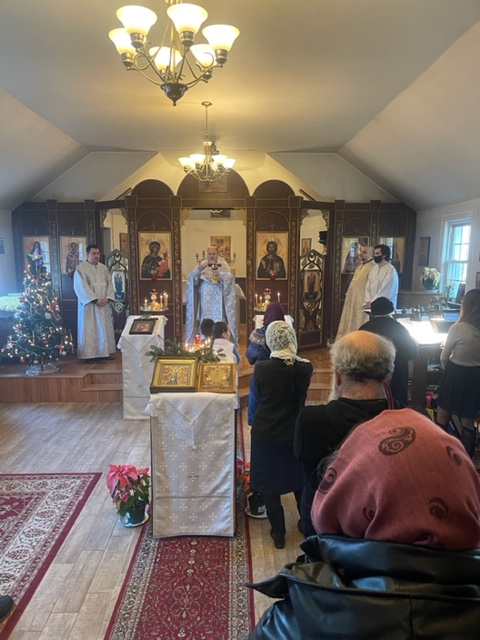
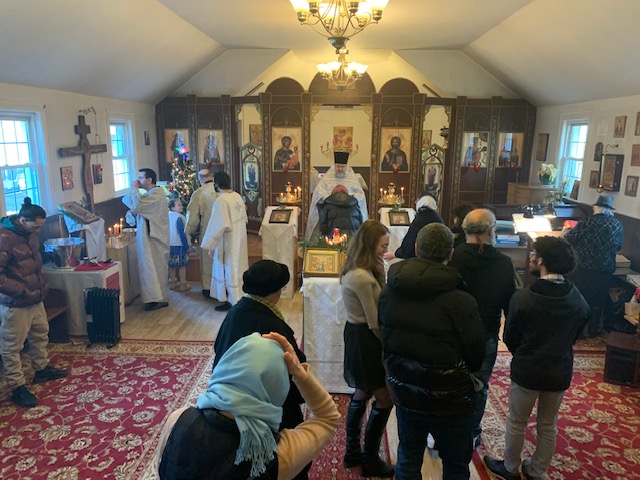
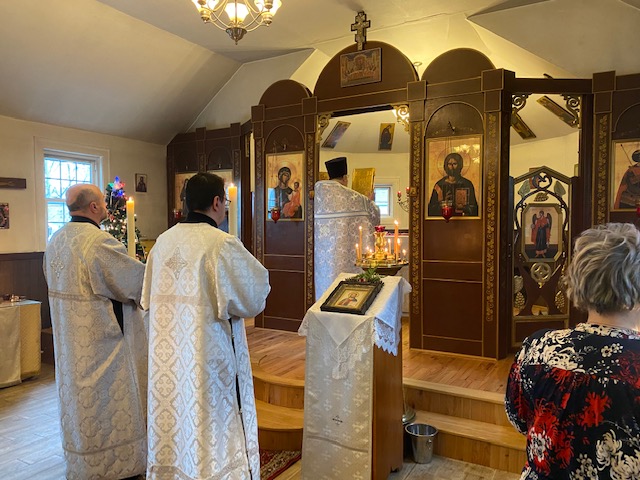
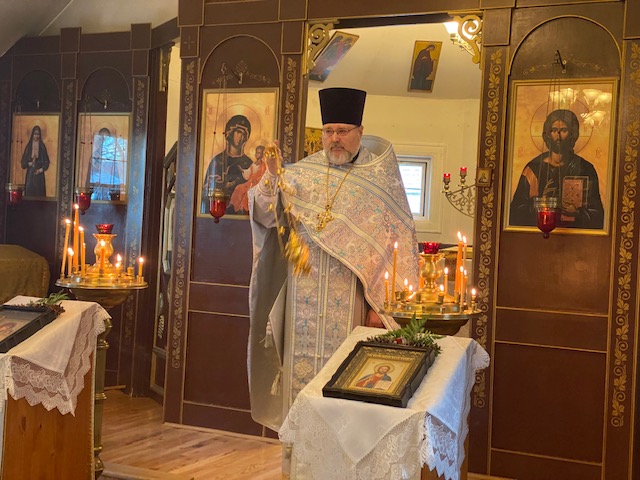
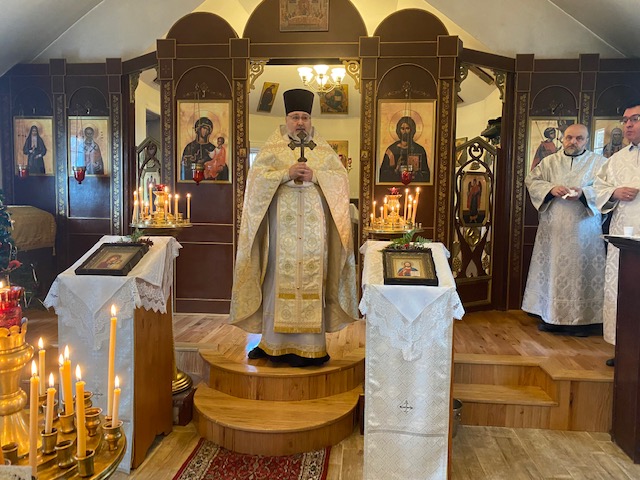
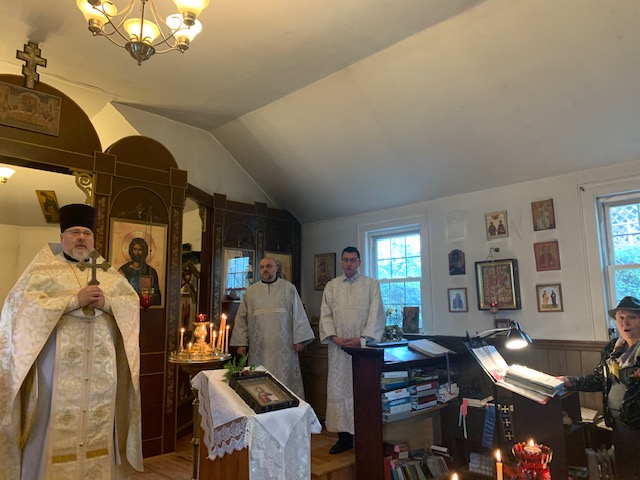
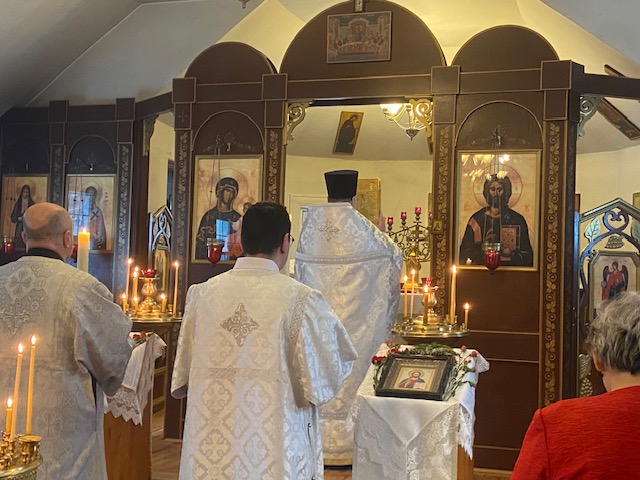
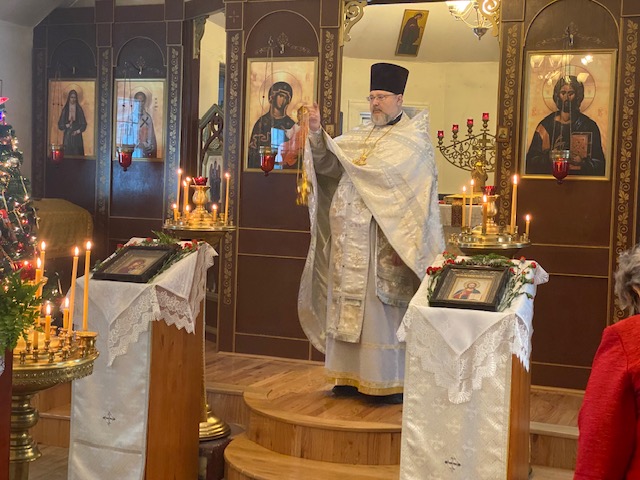
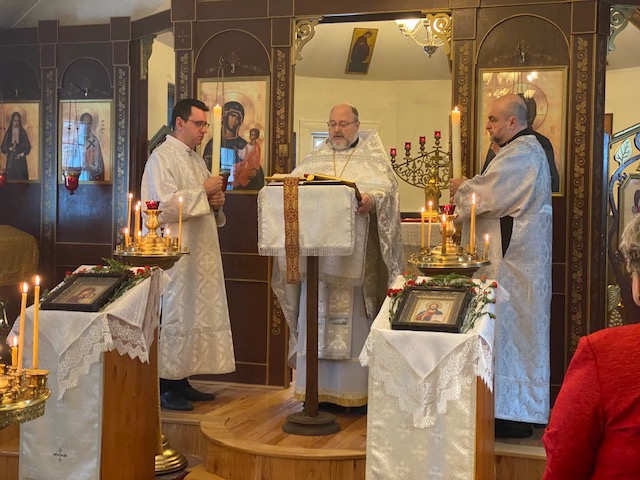
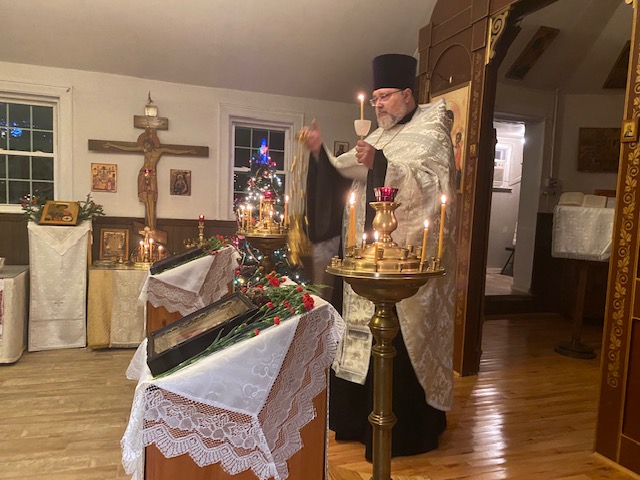
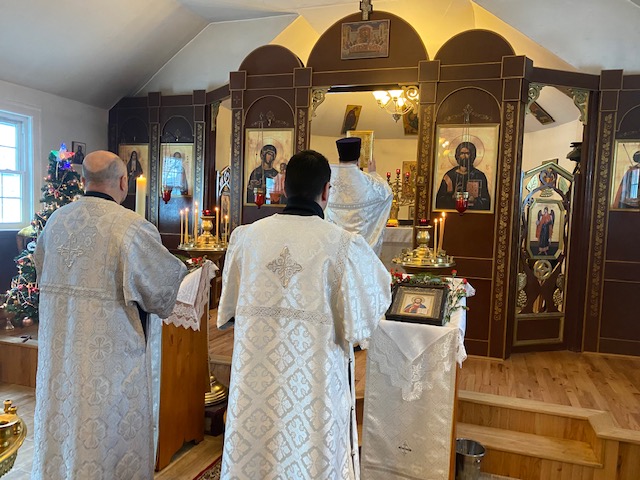
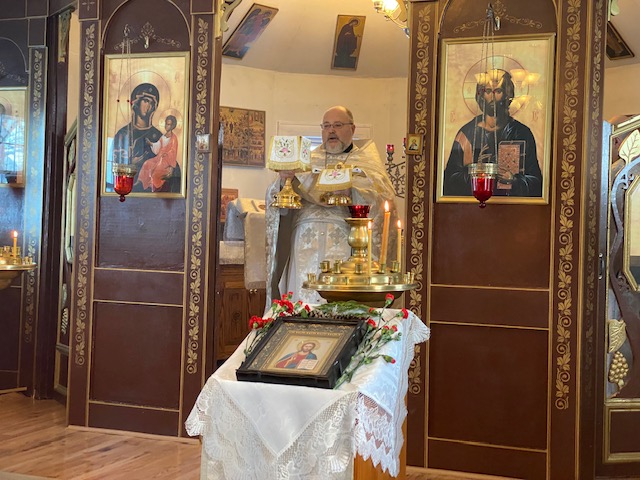
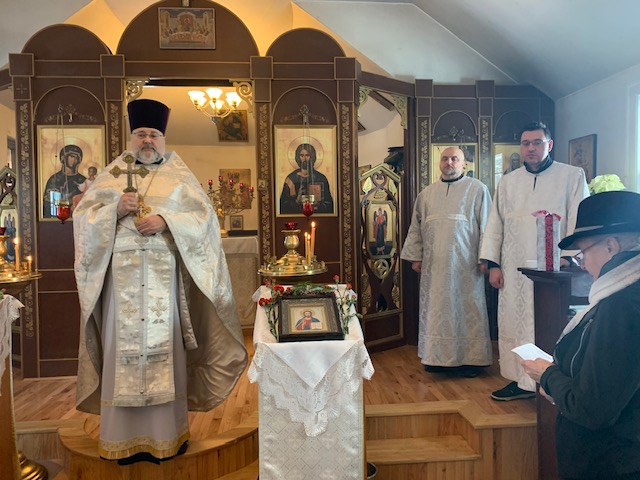
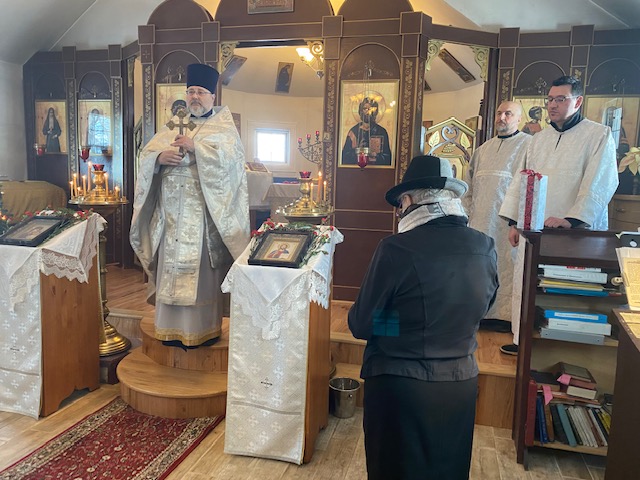
On March 7, on the Meatfare Sunday, our parish family gathered for a beautiful celebration at St. George Church. Our Rector, Archpriest Igor Tarasov served the Divine Liturgy. After the Gospel lesson he preached the following homily:

“Dear brothers and sisters in Christ! Today’s Sunday is dedicated to the commemoration of the Last Judgment. This event is going to occur in the future of the world, at the end of it. Usually we commemorate something which already took place. But today we ought to reflect upon something which is going to happen some day. Our Lord Jesus Christ Himself told us that at the end of this world He will come again to judge the living and the dead. In today’s Gospel lesson we heard the words of the Lord describing how that final and dreadful judgment is going to happen”.
“First of all, we have to notice that the Last Judgment will be for everyone. The Gospel says that “all the nations will be gathered before Him” (Mt. 24, 32). It should be understood that not only nations, but all the people personally will be summoned to that judgment. No one will escape this adjudication. Therefore, we should not believe some false teachings attempting to say that some people will not appear at the Last Judgment. Everybody will be there”.
“Further, we should consider that all human kind will be divided in the two large groups. One group will be blessed and invited to the Kingdom of God prepared for them from the foundation of the world. Another group will be cursed and condemned to the everlasting punishment. Therefore, the eternal life which will start after that is going to be completely different for those two parts of the human race. The one part is going to enjoy the blessedness of heaven and paradise, yet the other will be tormented in hell”.
“Because the Last Judgment will be for each one of us and because it will end by either total blessing or total condemnation, it was called the “dreadful” judgment. And the Church wishes to remind us about that inevitable event, so we may prepare for it during the course of our earthly lives. But in today’s Gospel our Lord Jesus Christ desired not just to declare that the judgment will take place. He also told us in advance what kind of evidence will be considered there. After listening to the Gospel we realize that the main criteria according to which we are going to be saved or condemned will be whether we practiced the works of love and mercy towards the others. Our Lord lists those main works: feeding of the hungry, giving a drink to the thirsty, taking in the stranger, clothing the naked, visiting the sick or a prisoner. He also says that doing those things to one of the least of these His brethren equals doing these things to Him. By these words our Lord teaches us to love our neighbor and to consider such love equal to our love of God, to our faith. And it is not accidental that the Lord is not talking about faith or prayer or other spiritual works to be considered at the Last Judgment. First of all, He requires our love and compassion towards “one of the least of these His brethren””.
“Whom should we consider those “least of His brethren”? We should see them in everybody who is in need. Again, the Lord gives us a list. These are the hungry, the thirsty, the strangers, the naked, the sick or the imprisoned, all the people in need, in trouble, in pain. Generally speaking, this is the whole human race, all our fellow men and women. The final sentence at the Last Judgment and our eternal destiny will depend on whether we fulfilled the works of love to these least brethren. Therefore, let us not delude ourselves thinking that when we fail to do something good, it was not done against God Himself. Let us stop thinking that when we refuse to love, to help or to be nice to someone, we just fail to please a man, not God. The Son of God became Man in order to care for everyone, so He wishes us to imitate Him in such a lovely care”.
“There is an ancient story of some king who dressed as a poor and simple person and used to walk on the streets of his capital city. That king was observing how his subjects live, what they do and what they say. He also looked at how they behaved, how they treated each other. So, the people did not recognize their king because he was disguised as a plan person, a poor man. And some of them treated him badly, but some were nice to him. In the same way our Lord Jesus Christ is our King in disguise. He is in a symbolic, spiritual sense because He says that if we do something good or bad to our brethren, we do it to Him. Thus when we see someone in need, let us remember the story of the king in disguise”.
“Dear brothers and sisters! Let us, therefore, prepare for the Last Judgment of the Lord by fulfilling the works of love, doing them for our neighbors and thus doing them for the Lord. Let us earn for ourselves a place at the right side of the Son of Man who will judge us on the last day. Let us work now to become worthy of the eternal Kingdom prepared for us at the foundation of the world”.

During the Litany of Fervent Supplication, the Rector had a petition beseeching the Lord to spare the faithful from the outbreak of the disease.

Since there were no services for the departed performed on Meatfare Memorial Saturday, the Rector added the Litany for the deceased to the Liturgy with commemoration of those who had fallen asleep.

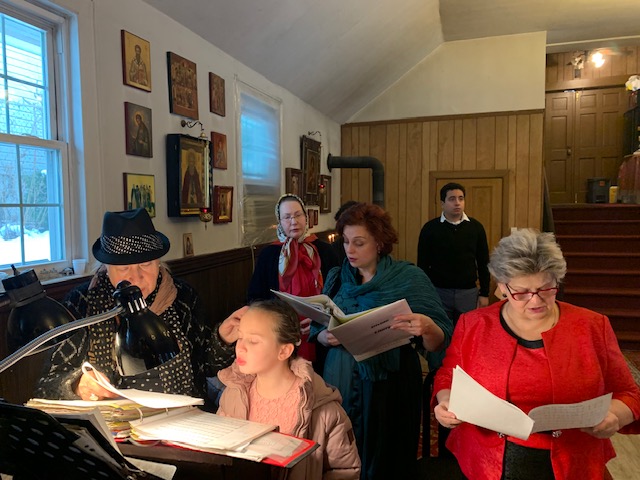
The choir prayerfully performed penitential hymns from the Lenten Triodion during preparation for Holy Communion.

Following the dismissal of the Liturgy the Rector preached a brief sermon in Russian concerning the commemoration of the departed and made some announcements.

After the liturgical service the Annual Parish Meeting was held.

Sunday of the Prodigal Son


On February 28, on the Sunday of the Prodigal Son, after a three-week break our parish family gathered again for the divine services at our church. Our Rector, Archpriest Igor Tarasov, had recovered from the coronavirus and was able to serve the Divine Liturgy. After the reading from the Holy Gospel he preached the following homily:

“Dear brothers and sisters in Christ! Today is another Sunday preparing us for Lent. It tells us about the Prodigal Son, giving us a perfect example of repentance. “Open me the doors of repentance,” – the Church is praying these days of the preparation for the saving time of fast. It is for us now to understand how much important is to practice repentance”.
“If last Sunday we could say that most of us could not relate to the Pharisee and to the publican, because those two men are the examples of some extreme way of life, today we should acknowledge that all of us resemble the Prodigal Son. We are all like him. This is due to the whole condition the human kind has – the condition called sin. As the Prodigal Son from today’s Gospel parable, the human race journeyed to the far country, away from God. And it is able and it should come back to the Father’s house”.
“The Almighty and all-merciful God is the Creator of man. Man is God’s most final creation. We were made according to the God’s image and likeness. Thus, we are the children of God, and God is our Father. We were created good and perfect, and we could eternally stay at our Father’s house, in paradise. But like the younger son in today’s parable, we left our home. Enjoying the free will, an ability to choose, having our portion of the Father’s inheritance, we decided to leave Him. Adam and Eve disobeyed God and were driven away from paradise to a far land of sin. The whole human race became remote from God and wasted its precious possession, the divine gifts of grace, through the sinful life. It had to endure all kinds of misfortunes, just as the Prodigal Son had to be starving in the far country. But the Son of God, our Lord Jesus Christ came to that land of misery and redeemed the man who was enslaved by sin. He came to restore the fallen image of God the Creator in us. He showed us the way of coming back to the Father’s house. And He ensured us that the doors of that house are now open to us. More than that, the loving Father is expecting us and is willing to run to meet us and to embrace us! Now, through Him, we acquired back the right to call God “the Father” and use the Lord’s prayer beginning with the words “Our Father””.
“To complete such a safe return home, we need to follow our Lord’s instruction of repentance. Only the doors of repentance will lead us to the Father’s house. There is no other way. And the image of such repentance is shown in the conduct of the Prodigal Son. We first need to come to our senses, as the Prodigal Son “came to himself”, and realize our sinful state. Then we have to come to a decision to repent, to return to the Father. Then we must arise, we must act upon our resolution. And we must return, come back, repent, confess our sins and ask forgiveness. We have to humble ourselves and declare: “Father, I have sinned against heaven and before you, and I am no longer worthy to be called your son!” (Lk. 15, 21). Then, the all-merciful Lord will accept our repentance, will embrace us with His love, enrich us with His grace and order to begin a celebration in our honor”.
“Therefore, dear brothers and sisters, let us begin loving and practicing the saving deal of repentance. Let us seek the doors of returning to the Father’s house, our home and hope to meet our loving Father at the steps and to enjoy His eternal blessing”.

During the time of the preparation for the Holy Communion the choir prayerfully performed the hymns from the Lenten Triodion which begin to be sung on this Sunday, starting with the words “The door of repentance open to me, o Giver of life…”.

After the dismissal of the Liturgy the Rector spoke about his past illness. He expressed his gratitude to the parishioners for their prayers for his recovery, for their concern, as well as for their patience. He also made some announcements regarding our schedule in March.

Our Services will resume


Dear parishioners and friends of St. George!

We are pleased to announce that our Rector, Archpriest Igor Tarasov is recovering from the coronavirus infection. Recently he had been tested negative for the Covid-19.
Therefore, we will resume our services on Sunday, February 28.
Please, check our Service Schedule for details.
Thank you very much for your prayers for Fr. Igor’s health, as well as for your patience!

Sunday of the Publican and Pharisee


The Gospel of Luke, 18, 10-14:

The Lord said this parable: Two men went up to the temple to pray, one a Pharisee and the other a publican. The Pharisee stood and prayed thus with himself, ‘God, I thank You that I am not like other men – extortioners, unjust, adulterers, or even as this tax collector. I fast twice a week; I give tithes of all that I possess.’ And the publican, standing afar off, would not so much as raise his eyes to heaven, but beat his breast, saying, ‘God, be merciful to me a sinner!’ I tell you, this man went down to his house justified rather than the other; for everyone who exalts himself will be humbled, and he who humbles himself will be exalted.

Евангелие от Луки, 18, 10-14:

Сказал Господь такую притчу: два человека вошли в храм помолиться: один фарисей, а другой мытарь. Фарисей, став, молился сам в себе так: Боже! благодарю Тебя, что я не таков, как прочие люди, грабители, обидчики, прелюбодеи, или как этот мытарь: пощусь два раза в неделю, даю десятую часть из всего, что́ приобретаю. Мытарь же, стоя вдали, не смел даже поднять глаз на небо; но, ударяя себя в грудь, говорил: Боже! будь милостив ко мне грешнику! Сказываю вам, что сей пошел оправданным в дом свой более, нежели тот: ибо всякий, возвышающий сам себя, унижен будет, а унижающий себя возвысится.

Homily of the Rector, Archpriest Igor Tarasov:

Dear brothers and sisters in Christ! Today’s Sunday is supposed to prepare us for the blessed and saving time of Lent. We heard the parable of the Publican and Pharisee, about the two men who came to the Temple to pray. All about them was different. Their social status and their moral reputation were different. Their prayers were different also. And the outcome of their prayers was totally different. One of them went down to his house justified, yet another did not. We would think using our human logic that God blessed the one who was considered morally upstanding. And not justified would be the one who is despised as a public sinner. But our Lord Jesus Christ reverses the expected conclusion. God’s reasoning is different from the man’s logic. In the eyes of God the publican is justified because of his humility. The Pharisee is condemned because of his pride.
If we try to evaluate those two men, let us listen to their prayers. The Pharisee states with satisfaction that he is not like other men – extortioners, unjust, adulterers. He is not lying. He behaves better than those bad people. He further states that he fasts twice a week. Very well, we are supposed to do the same, but who knows whether we actually fast on Wednesdays and Fridays. The Pharisee also tells that he gives tithes of all he possesses. This is much more than most of us do. No parishioner of this church gives tithes meaning 10 percent to his parish. It is a very painful subject. The Scripture tells us to give those 10 percent of your income for the Temple but virtually no one does it. If faithful gave at least 5 percent, our churches could do much better financially but even that does not happen often. Therefore, we must say that the Pharisee appears to be a much better person that most of us are.
As to the Publican, he appears to be worse than most of us. As we mentioned last Sunday, the publicans, or tax collectors were public sinners, crooks, extortioners, corrupted criminals, cheaters of the people and collaborators with the Romans. They committed many crimes and offended many people. Most of us are not so evil. Yet that kind of man, a despised evildoer, went down to his house justified.
Despite that the Pharisee was a public just man and the tax collector was a public sinner, God judged them in the opposite way. The reason of such an outcome is the attitude those two men had. The Pharisee was proud. He prayed, but his prayer was so preoccupied with his own goodness that he forgot about God. He actually talked to himself, not to God, in his prayer. He praised himself. And he judged others, particularly the publican. All that attitude of self-righteousness, self-exaltation and judging the others condemned him. The publican’s attitude was the opposite. He is aware of his indignity. His posture, his words of prayer express deep humility and contrition. God loves this kind of attitude. He does because it is the most fair and honest understanding of our human nature, our abilities and our position. Our nature is imperfect and corrupt. Our abilities are limited, and we are often inclined to sin. Our position is much lower than God’s position. Therefore, we need not to be proud and self-exalting. We need to be honest with ourselves and acknowledge our weakness, imperfection and evil propensities, as well as our evil deeds committed in the past. Then we will be exalted by God. The publican did and became justified. God opposes the proud, but exalts the humble.
Therefore, dear brothers and sisters, let us avoid pride and self-exaltation of the Pharisee and let us imitate humility of the Publican, so we will be blessed and justified in the fairest eyes of God.

36th Sunday after Pentecost

The Gospel of Luke, 9, 1-10:

At that time Jesus entered and passed through Jericho. Now behold, there was a man named Zacchaeus who was a chief tax collector, and he was rich. And he sought to see who Jesus was, but could not because of the crowd, for he was of short stature. So he ran ahead and climbed up into a sycamore tree to see Him, for He was going to pass that way. And when Jesus came to the place, He looked up and saw him, and said to him, “Zacchaeus, make haste and come down, for today I must stay at your house.” So he made haste and came down, and received Him joyfully. But when they saw it, they all complained, saying, “He has gone to be a guest with a man who is a sinner.” Then Zacchaeus stood and said to the Lord, “Look, Lord, I give half of my goods to the poor; and if I have taken anything from anyone by false accusation, I restore fourfold.” And Jesus said to him, “Today salvation has come to this house, because he also is a son of Abraham; for the Son of Man has come to seek and to save that which was lost.”

Евангелие от Луки, 19, 1-10:

Во время оно Иисус вошел в Иерихон и проходил через него. И вот, некто, именем Закхей, начальник мытарей и человек богатый, искал видеть Иисуса, кто Он, но не мог за народом, потому что мал был ростом, и, забежав вперед, взлез на смоковницу, чтобы увидеть Его, потому что Ему надлежало проходить мимо нее. Иисус, когда пришел на это место, взглянув, увидел его и сказал ему: Закхей! сойди скорее, ибо сегодня надобно Мне быть у тебя в доме. И он поспешно сошел и принял Его с радостью. И все, видя то, начали роптать, и говорили, что Он зашел к грешному человеку; Закхей же, став, сказал Господу: Господи! половину имения моего я отдам нищим, и, если кого чем обидел, воздам вчетверо. Иисус сказал ему: ныне пришло спасение дому сему, потому что и он сын Авраама, ибо Сын Человеческий пришел взыскать и спасти погибшее.


Homily of the Rector, Archpriest Igor Tarasov:

Dear brothers and sisters in Christ! Today’s Sunday is the first of the five Sundays preparing us for Lent. And today’s lesson from the Gospel of St. Luke is about Zacchaeus the publican. Why this reading is selected for today? Because it is about conversion, about how a soul can change. Change of the soul is the purpose of the Christian life. So, we may observe how the soul of the publican named Zacchaeus changed because of the encounter with our Lord Jesus Christ.
Zacchaeus was a publican, a tax collector. It means that he was a very sinful and evil man. Publicans were known to be corrupt, crooks and evildoers. And Zacchaeus was a chief tax collector, thus he was the worst of the lot. Interestingly, that the name “Zacchaeus” means “the just one” or “the fair one” in Aramaic, the language spoken by the people in the Middle East at the time of Jesus. So, he did not live up to his name. And yet when our Lord Jesus Christ passed through the city of Jericho, Zacchaeus changed.
First of all, he probably decided to seek the Lord. All his actions demonstrated that wish. Then he started looking for Jesus who passed by. Zacchaeus climbed the tree to see Jesus. The trees are mentioned several times in the history of salvation. Adam and Eve were expelled from paradise because of the tree. Now their heir, a sinful man Zacchaeus uses a tree to acquire salvation. This was a sycamore, a fig tree. The fig leaves were used by Adam and Eve to cover their bodies after they sinned and became aware of their nakedness. Now another sinner being aware of his transgressions uses a fig tree to receive back the grace of the Creator. The Gospel tells us that he climbed it up because of his short stature. There is no doubt that it’s true. But any sin makes us smaller in the spiritual sense, so it is hard for us to see God. But Zacchaeus made an effort to see the Lord. Many people never make any effort to get closer to God. If it is easy for them to receive the grace, they get it. But if it becomes harder and requires an effort on our part, we do not bother to act. Zacchaeus acted and was successful. Jesus noticed him and spoke to him.
When Jesus expressed His willingness to visit the house of Zacchaeus, the latter made haste, came down the tree, and received the Lord joyfully. This is the sign that a sinful man rejoices becoming closer to the Lord, having Him under his roof. Conversion means being open to God to come and dwell within us, to work by His grace in us.
Further, Zacchaeus makes a statement saying: “Look, Lord, I give half of my goods to the poor, and if I have taken anything from anyone by false accusation, I restore fourfold.” (Lk. 19, 8). Now this is a real conversion. Zacchaeus not just declares that he becomes a changed man, he promises to give away a half of his wealth. He also wishes to restore justice by compensating the people he defrauded. And not just by giving back what he acquired by false accusations, but by returning fourfold! It was really a great conversion and true change that occurred in that man whose name was Zacchaeus, “the just one”. Now he began to live up to his name.
Observing the actions of Zacchaeus we should notice that he decided to change, struggled to do so, accepted God’s grace and made a proper resolution to convert truly. These are the four steps of conversion everybody should take if we truly wish to become changed or better. We must decide to convert, then struggle, make an effort to do it. Then we have to accept joyfully the Lord’s help, His divine grace. And, finally, we have to make a resolution to restore justice and to live up to our name, to our spiritual purpose. Our name, the name of a man, a human being, is great and our purpose is to be saved.

All Services are cancelled due to the Rector’s Illness

It is sad to announce that our Rector, Archpriest Igor Tarasov has been infected with the coronavirus and tested positive.
Due to that fact all our Church services and parish events are cancelled until further notice.
The Rector will make an attempt to publish his Sunday homilies on this parish website.
We are asking you to be patient and to offer your prayers for Fr. Igor’s recovery.

35th Sunday after Pentecost. Synaxis of the New Martyrs and Confessors of the Russian Church

The Gospel of Luke, 18, 35-43:

At that time as Jesus was coming near Jericho, that a certain blind man sat by the road begging. And hearing a multitude passing by, he asked what it meant. So they told him that Jesus of Nazareth was passing by. And he cried out, saying, “Jesus, Son of David, have mercy on me!” Then those who went before warned him that he should be quiet; but he cried out all the more, “Son of David, have mercy on me!” So Jesus stood still and commanded him to be brought to Him. And when he had come near, He asked him, saying, “What do you want Me to do for you?” He said, “Lord, that I may receive my sight.” Then Jesus said to him, “Receive your sight; your faith has made you well.” And immediately he received his sight, and followed Him, glorifying God. And all the people, when they saw it, gave praise to God.

Евангелие от Луки, 18, 35-43:

В это время, когда же подходил Он к Иерихону, один слепой сидел у дороги, прося милостыни,  и, услышав, что мимо него проходит народ, спросил: что это такое? Ему сказали, что Иисус Назорей идет. Тогда он закричал: Иисус, Сын Давидов! помилуй меня. Шедшие впереди заставляли его молчать; но он еще громче кричал: Сын Давидов! помилуй меня. Иисус, остановившись, велел привести его к Себе: и, когда тот подошел к Нему, спросил его: чего ты хочешь от Меня? Он сказал: Господи! чтобы мне прозреть. Иисус сказал ему: прозри! вера твоя спасла тебя. И он тотчас прозрел и пошел за Ним, славя Бога; и весь народ, видя это, воздал хвалу Богу.

 
Homily of the Rector, Archpriest Igor Tarasov

Dear brothers and sisters in Christ! Today’s Gospel lesson tells us about the last miracle our Lord Jesus Christ performed before His triumphal entrance into Jerusalem where He underwent His holy Passions. This last miracle was returning the sight to a blind man in Jericho. This event is described by three holy Gospels. Holy evangelist Matthew mentions two blind men, other evangelists – only one. St. Mark tells that the blind man’s name was Bartimaeus. Thus, what is important about him?
The Holy Fathers interpret this last miracle before our Lord’s entry into Jerusalem as revealing of the coming of the time of salvation. For this reason the blind man greets Jesus as the “Lord”, the common name for God. He also calls Him “the son of David”, a title deeply rooted in the people’s expectation of the Messiah. The Jews believed that the Messiah was to be born from the heirs of King David. Another important thing is that Jesus knows beforehand what the blind man wants. But He calls him to ask freely that He might answer to that. In the same way our Lord knows beforehand what we want and what we need. But He wants us to express ourselves in prayer, so He might answer us in His mercy. It is not accidental that the Church very often uses and repeats the prayerful words of the blind man: “Have mercy!” “Lord, have mercy!” is the favorite exclamation in the prayers of the Church. The holy tradition says that this prayer was the first prayer of Adam and Eve expelled from the paradise. It is the most ancient prayer. When the Temple of Jerusalem was built the first prayer under its roof was “Lord God, hear us and have mercy!” Sometimes in our services “Lord, have mercy” is repeated 40 times, sometimes even 50 times. Our prayer has to be persistent. Somebody compared such a persistent and repetitive prayer “Lord, have mercy!” to a situation when you fell into a well and try to get out. You cry for help and you don’t stop doing so. You desperately cry for it. In this way we should pray “Lord, have mercy!” many times – asking the Lord for help and mercy.
No one should stop or prevent us from asking the Lord for His mercy. The Gospel mentions that the crowd tried to silence the blind man when he asked Jesus for mercy. The multitude warned him that he should be quiet. But he cried out all the more. In our lives many times people or circumstances attempt to silence or to prevent our prayer. Even in the Church we notice how many prayers and services are being abbreviated and simplified. Despite that influence of the world we have to continue praying, keep asking the Lord in our needs. And He will answer our prayers according to the zeal of our faith.
Today we also honor our New Martyrs and Confessors, we celebrate feast of the newly-glorified Saints of the Russian Church. All of them had to be persistent and patient in their faith. The society, the authorities attempted to silence them, to destroy Christian faith in Russia. Faithful Christians, especially the clergy, were persecuted, arrested and many of them were executed. However, the voice of the Russian Church, the voice of persistent prayer, was not completely silenced; it survived and now the Russian Church is flourishing again and honors its holy heroes of faith.
Another thing we should also keep in mind is that our prayers, as well as our hope must be specific. Again, the Lord knew what the blind man wanted from Him the most, yet He asked him, “What do you want Me to do for you?” The man could have asked, “Lord, give me the grace to live with blindness”. Some very spiritually advanced people being blind had a great grace and felt very happy without bodily vision. But the blind man in today’s Gospel asked for the sight. Faith needs to be specific, and Jesus requested to exercise a specific faith and to ask for a certain thing.
To conclude we have to understand that our merciful Lord and Savior wishes us to have a firm and persistent faith. Such a faith was found in Bartimaeus, a blind man in Jericho. His faith made him well. If we will have this kind of faith, will be enduring and persistent in our prayers, will be specific in our humble requests, the Lord may grant us what we ask for and make us joyfully follow Him.

Проповедь настоятеля, прот. Игоря Тарасова

Дорогие во Христе братия и сестры! Сегоднешнее евангельское чтение рассказывает нам о последнем чуде совершенном Господом нашим Иисусом Христом до Его торжественного входа во Иерусалим, где Он претерпел Свои святые Страсти. Этим последним чудом было возвращение зрения слепому в Иерихоне. Это событие описано в трех Евангелиях. Св. евангелист Матфей упоминает о двух слепцах, другие евангелисты – об одном. Св. Марк говорит нам, что слепого звали Вартимеем. Что же можно сказать о нем важного для нас?
Святые Отцы толкуют это чудо перед входом Господним во Иерусалим как Божие откровение о том, что время спасения наступило. Поэтому слепой приветствует Иисуса, называя Его «Господом», то есть именем свойственным Богу. Он также называет Его «Сыном Давидовым», званием, которое было глубоко укоренено в ожидании людьми Мессии. Евреи верили, что Мессия должен родиться среди потомков царя Давида. Таким образом, слепой величает Иисуса как Господа и Сына Давидового, то есть провозглашает, что Он является Мессией, Спасителем міра.
Другой важной вещью является то, что Господь наш Иисус Христос, конечно, знает чего хочет слепой. Однако Он спрашивает слепого, чтобы тот сам назвал Ему свое желание. Именно таким образом Господь всегда знает наперед чего мы хотим и в чем мы нуждаемся. Но Он желает, чтобы мы выражали свои чаяния в молитве, чтобы Он мог ответить нам Своей милостью. Это неслучайно, что Церковь часто употребляет и повторяет молитвенное слово слепого: «Помилуй!». «Господи, помилуй!» явлется самым любимым возгласом в молитвах Церкви. В некоторых местах службы оно повторяется 40 раз. Наша молитва должна быть настойчивой. Никто не должен останавливать нас или препятствовать нам в наших просьбах Господа о милости. Евангелие упоминает о том, что толпа старалась принудить слепого замолчать, когда он просил Иисуса помиловать его. Люди говорили, чтобы он молчал. Но он кричал еще громче (Лк. 18, 39). В нашей жизни также очень часто люди или обстоятельства стремятся заглушить нашу молитву или чинить ей препятствия. Даже в Церкви мы иногда видим как кто-то хочет сократить или упростить некоторые службы. Слава Богу, что это не очень удается сделать в нашей Русской Православной Церкви. Но если мы вглянем на других, инославных христиан, то увидим как много своих богослужений они сократили и упростили. Да и в некоторых иных православных юрисдикциях службы совершаются сокращенно, не так как раньше. Не взирая на это влияние міра, мы должны продолжать молиться, просить Господа в наших нуждах. И Он ответит на наши молитвы по мере нашей ревности в вере.
Сегодня мы также почитаем наших Новомучеников и Исповедников Русской Церкви, празднуем Собор этих новопрославленных наших святых. Все они были настойчивы и тверды в своей вере. Общество и власти желали их заглушить, заставить замолчать, уничтожить Церковь Русскую. Верующие люди, особенно духовенство, были гонимы: их арестовывали, многих из них казнили. Но голос Русской Церкви, голос непрестанной молитвы не был полностью заглушен и Церковь пережила все эти лихолетия. И сейчас Церковь в России возродилась и мы почитаем этих наших подвижников веры.
Кроме того нам нужно помнить, что наши молитвы, так же как и наши чаяния, наша надежда – должны быть четкими и определенными. Опять-таки вспомним, что Господь знал наперед, о чем слепой будет у Него просить, однако спросил его: «Чего ты хочешь от Меня?» (Лк. 18, 41). Слепой мог ответить: «Господи, дай мне силу, благодать жить с моей слепотой». Некоторые люди, достигшие великой духовной зрелости, могли бы так ответить. Есть примеры, когда святые подвижники или очень духовные люди, будучи слепыми, не желали прозреть, ибо чувствовали себя блаженными в этом состоянии. Рассказывают про одного слепого монаха, который был счастлив и говорил, что не хотел бы прозревать, чтобы не видеть міра с его грехами и пороками. Однако у слепого в сегоднешнем евангельском чтении было простое желание: он хотел прозреть. И он его выразил четко и определенно. Вере нужно быть четкой и определенной, и Господь желает от нас четкой веры и молитвы, прошения об определенной вещи.
Чтобы сделать заключение в нашей беседе, мы должны понять, что наш милостивый Господь желает, чтобы у нас была твердая и настойчивая вера. Такой оказалась вера Вартимея, слепого из Иерихона. Его вера спасла его (Лк. 18, 42). Она его исцелила. Если у нас будет такая же вера, если мы будем стойкими и настойчивыми в нашей молитве, если будем четко выражать то, о чем мы смиренно просим Бога, Господь подаст нам то, чего мы просим. Тогда мы, подобно слепому, который прозрел, сможем с радостью пойти вслед за Господом нашим Иисусом Христом.


34th Sunday after Pentecost


On January 31, on the 34th Sunday after Pentecost, Rector of St. George Church, Archpriest Igor Tarasov served the Divine Liturgy in our parish temple. After the reading from the Holy Gospel he preached the following homily:

“Dear brothers and sisters in Christ! Today’s reading from the holy Gospel of Luke repeats the story we had on the 12th Sunday in the Gospel of Matthew. It is about a conversation between our Lord Jesus Christ and a ruler. It deals with a very important question, about everlasting life. The young ruler presented such a question to our Lord Jesus Christ saying: “Good Teacher, what good thing shall I do that I may have eternal life?” (Lk. 18, 18; Mt. 19, 16). The young man did not doubt that eternal life exists, but he wanted to know how to enter into it”.
“That conversation between our Lord Jesus Christ and that man whom the Gospels call either the rich young man or a ruler or a lawyer, reveals that some people are willing to follow the Lord’s advice to renounce their material wealth and some don’t. Yesterday the Church commemorated Venerable Father Anthony the Great. Being a young man, Anthony heard that Gospel reading where Jesus calls the ruler to distribute his wealth and follow the Lord, and decided to do that. He withdrew from the world to the wilderness and became one of the first monks. We can also notice that we don’t know the name of that young man who spoke with Jesus. The Gospel is silent about that. This is because that man went away sorrowful and failed to become the Disciple of Christ. If he did follow the Lord, we would know his name. In the same way we know the names of many Saints, like St. Anthony the Great”.
“Returning to our reflections about the Gospel reading, we may say that answering the ruler’s question, our Lord reminded him of the Commandments. He said that in order to enter into eternal life, one must keep them. He enumerated certain Commandments pertaining to the love of the neighbor. Jesus did it to stress that loving or pleasing God is impossible without loving our neighbors. Holy Apostle John the Theologian said: “He who does not love his brother whom he has seen, how can he love God whom he has not seen?”(1 Jn. 4, 20)”.
“We should also be confronted with that very important question: “What shall we do to have eternal life?” It is known that our life here on earth will end. We will have to leave this world. But our holy faith tells us that after our earthly existence we will enter into everlasting life. Faith also tells us that everlasting life will become eternal blessing and happiness for one and eternal punishment and torment for the others. Therefore, when the young man was asking about “having eternal life”, he wished to know how to acquire everlasting happiness. We should also reflect upon that question”.
“This earthly life is a brief moment in comparison with the eternity that is waiting for us. Therefore, this life has to become our preparation for the life everlasting. Again, Jesus reminds us of the Commandments of God given to the people through Moses. Keeping them we may rightly prepare for the eternity. Let us just concentrate today on one of those Commandments our Lord recalls today: “You shall not murder””.
“People often tend to understand this Commandment in a very narrow sense. “Of course, – they would say, – murdering is a very terrible thing and I would never do it!” But it covers many more things. It also condemns anger, because many people kill or assault others out of anger or quarrel. Warning of that St. Paul teaches: “Do not let the sun go down on your wrath” (Eph. 4, 26). Recently I heard that in Brooklyn a husband killed his wife after an argument. The argument started because the husband wanted to sleep on the certain side of the bed and the wife did not let him because she wanted herself to sleep on that side”.
“Another sin is hatred. It can also cause murder. St. John the Theologian says: “Whoever hates his brother is a murderer, and you know that no murderer has eternal life abiding in him” (1 Jn. 3, 15)”.
“This Commandment also condemns different kinds of self-destruction. People may destroy themselves by drugs, alcohol, tobacco, or by other passions. They may mutilate themselves by tattoos or piercing. All these things are against this Commandment. And finally, working too much, not for living, but for the sake of earning, because of greed, is against our health, thus would be covered by this Commandment. See how broad this Commandment is”.
“Dear brothers and sisters! Keeping the Commandments leads to eternal life. Violating them leads to eternal punishment. The young man said to Jesus that he kept all of them. But, in fact, he was not perfect in doing so. He was attached to his wealth and he left Jesus in sorrow when he heard that he should sell everything and give it to the poor. His riches became his passion that precluded him from acquiring eternal life. But Jesus assured us that with God everything is possible, so a rich man may enter into eternal life if he trusts God and serves Him. Therefore, let us keep the Commandments, let us rightly understand what these Commandments are, and do so with God’s help, acquiring His grace, so we would enter the eternal life”.

During the Litany of Fervent Supplication, the Rector had a petition beseeching the Lord to spare the faithful from the outbreak of the disease.

The choir beautifully performed Psalm 33 and a hymn “O my Gracious Queen” in honor of the Theotokos during preparation for Holy Communion.

Following the dismissal of the Liturgy the Rector greeted Maria Malyshev on her name day celebrated on that Sunday, as well as Tatiana Migal who celebrated her name day last week. Fr. Igor expressed his heartfelt wishes to them, proclaimed the traditional Polychronion and distributed the Theotokian prosphora to those parishioners.

After the Liturgy we enjoyed a delicious luncheon held in honor of our parishioners’ name days. Toasts to Maria and Tatiana were raised at the trapeza table.


Sunday after the Theophany


On January 24, on the Sunday after the Theophany, our parish community had a nice celebration at St. George Church. Our Rector, Archpriest Igor Tarasov headed the Divine Liturgy. After the readings from the Sacred Scripture he preached the following homily:

“Dear brothers and sisters in Christ! Today we celebrate Sunday after the Theophany and we hear in the Gospel lesson that our Lord Jesus Christ began His preaching with the same words that were used by St. John the Baptist: “Repent, for the Kingdom of Heaven is at hand” (Mt. 4, 17)”.
“As we said a week ago, repentance is the first condition to begin spiritual life, to convert to God. This is why it was preached by St. John and that is why it became the first theme of the preaching of our Lord Himself. There is no salvation without repentance. And for every Christian person the path to salvation starts with true repentance”.
“Both St. John and the Lord stressed that repentance is needed because “the Kingdom of Heaven is at hand”. What those words “at hand” mean? They mean that the Lord Jesus Christ Himself came to the world; He appeared to the universe at the Jordan River being baptized. And the Three divine Persons of the Trinity appeared there. This is the sign that God is in this world of ours; He is here to help, to forgive our sins, to cleanse us from our impurity, to lead us to His Heavenly Kingdom. He is ready to do anything for us. The only thing we need to do is to repent”.
“But here we begin to see difficulties. It is hard for us to repent, to acknowledge our sins, to confess our errors. It is hard to overstep our pride, selfishness and vain-glory. Our enemy will always try to prevent us from repentance. He may offer us a false mirror where we could not see ourselves truly. In such a false mirror we would not see our sins and shortcomings, we may then think that we have nothing to repent. I met such people many times. Some of them are not really churched, and it is understandable that they don’t know how to approach the Sacrament of Penance. But some of them, unfortunately, are going to the church. Thus when they come to confession, they say, “I have nothing to confess; I don’t recall any sins”. In such a case a priest hearing confession may say, “Well, you are a Saint! You need no confession!” But that would be a joke. But if we talk seriously, a priest would then instruct such a person. He may ask him questions whether he committed certain sins or not. In many parishes priests hand out the lists of sins for the faithful to prepare for confession, especially during Lent. It is helpful. Sometimes people are surprised reading those lists. They say, “Oh, I did not know that this is a sin”. Thus people need to be taught how to repent, how to approach confession. If they are, they become more aware of their possible sins”.
“Therefore, dear brothers and sisters, we need to throw away that false mirror of our pride and begin to see ourselves truly and without distortion. Also, we have to avoid making false excuses for our sinfulness and lack of repentance. Some people say that they were not raised in a religious environment, so they don’t know how to confess and they commit sins. Some people say that the others who surround them are not just and holy, so it is difficult for them to be righteous. Some even say that the whole society is no longer religious. The government is bad, the politicians are bad, so we should not be expected to be perfect. There may many more excuses. All of them are not valid. Each of us is capable of converting, of repenting, of changing”.
“The devil may also whisper to us that we may surely repent, but later. And many of us are ready to agree: “Yes, I need to repent, I need to go to confession, but not now. I may take my time to enjoy something, to sin a little longer”.  But how do we know how much time is left? Every day, even every hour and minute of our life may become the last one! And if we are not prepared, if we did not repent, we may lose eternal salvation! Here the words that “the Kingdom of Heaven is at hand” can also be applied. Since our earthly life is uncertain and every moment may be the last one, the Kingdom of God is always at hand, is always near”.
“Therefore, dear brothers and sisters, let us not listen to those thoughts, to those advises of the evil one. Let us not postpone our repentance, our confession of sins. Let us be prepared for the Kingdom of Heaven to become a reality of our existence”.
“Let us not resemble those described in today’s Gospel lesson as “the people who sat in darkness… those who sat in the region and shadow of death” (Mt. 4, 16).  Many people in the world are like that – sitting in the spiritual darkness of sin, false religions, idolatry and iniquities. However, we are called to enjoy Christ, our true Light who illumines and enlightens us. Let us then ask Him to shed His divine light upon our souls, so we could see our sins, our true self and then be able to abandon them, to improve, to repent and to acquire eternal salvation, to enter that glorious Kingdom of Heaven!”

During the Litany of Fervent Supplication, the Rector had a petition beseeching the Lord to spare the faithful from the outbreak of the disease.

The choir prayerfully performed the magnification of the Theophany as well as the odes from the festal canon during preparation for Holy Communion.

After the dismissal of the Liturgy the Rector said a few words regarding the Saint honored on this day, Venerable Theodosius the Great, founder of the cenobite monastic life.