Dormition of the Most Holy Mother of God


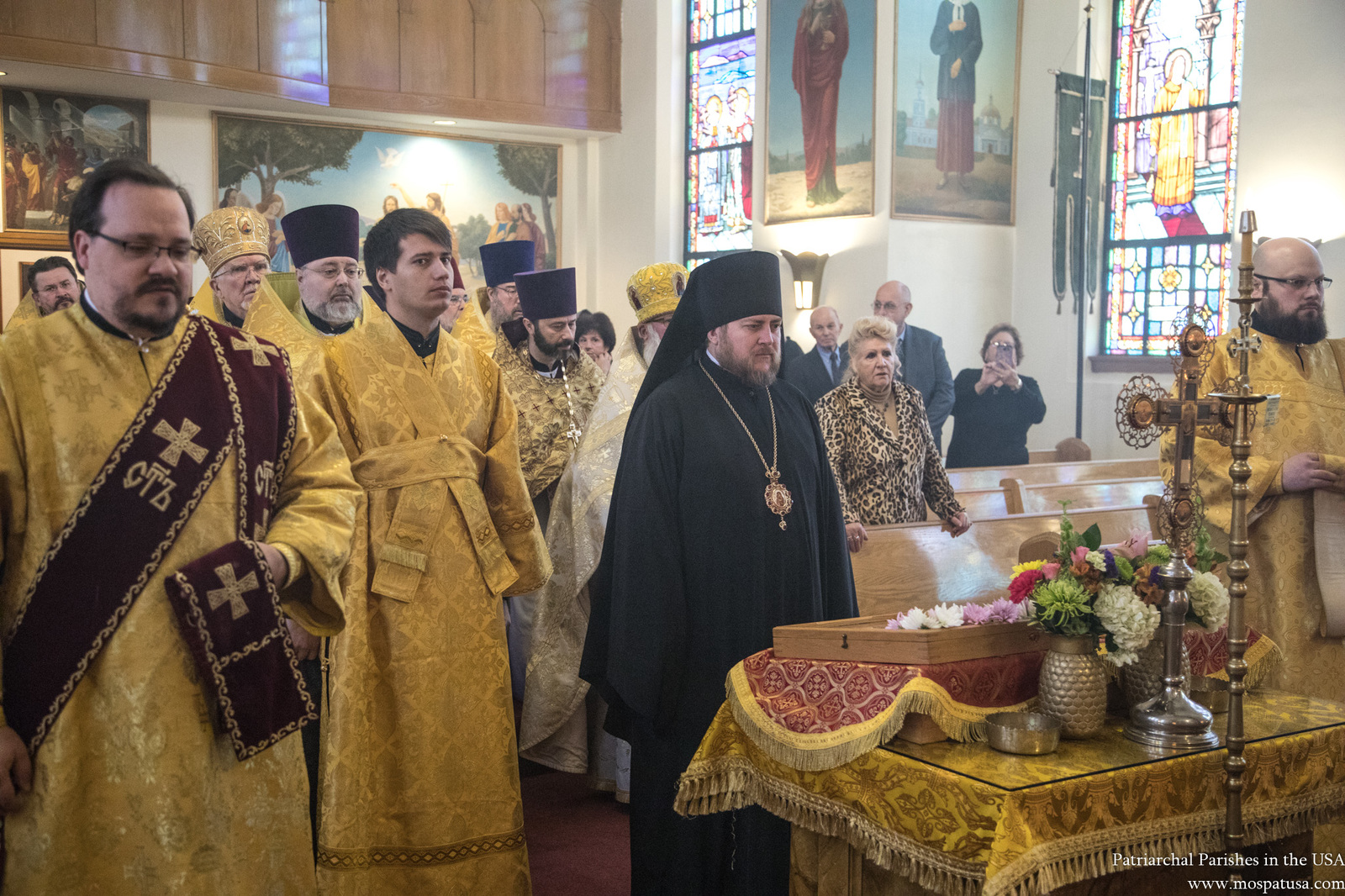
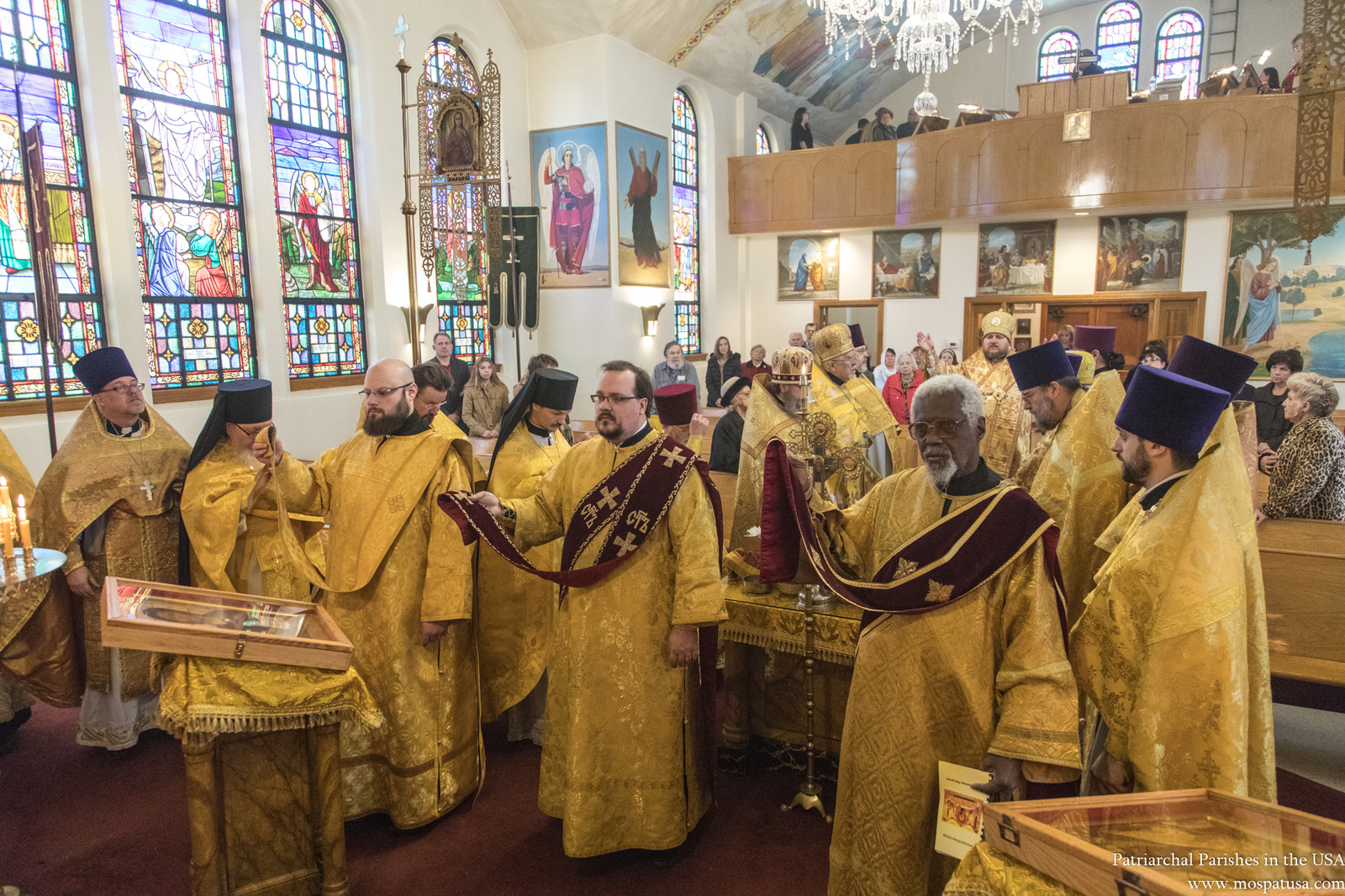
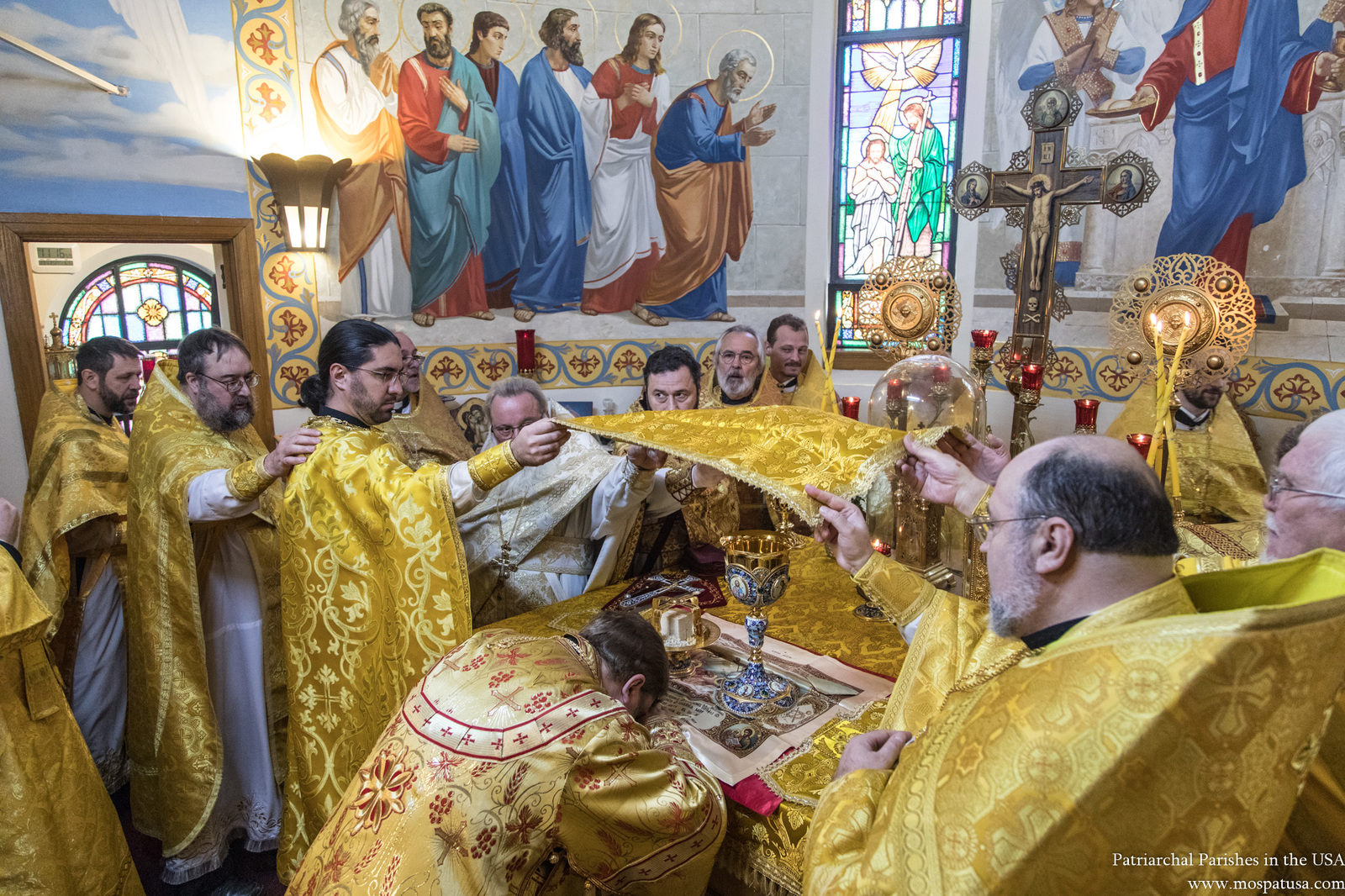
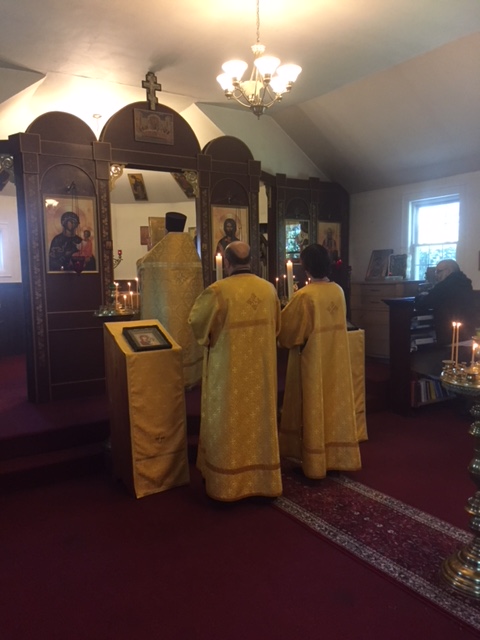
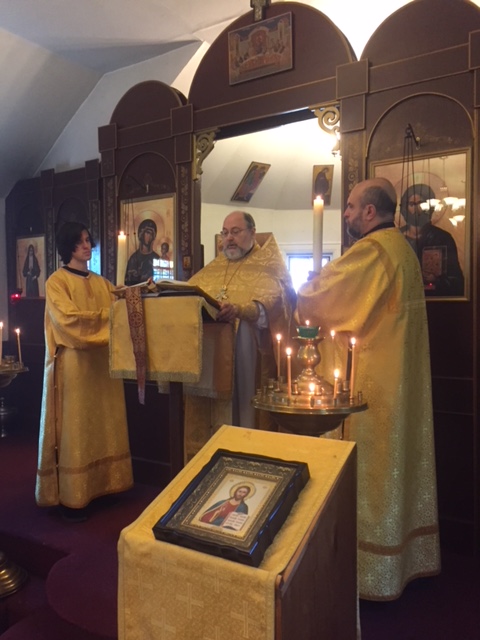
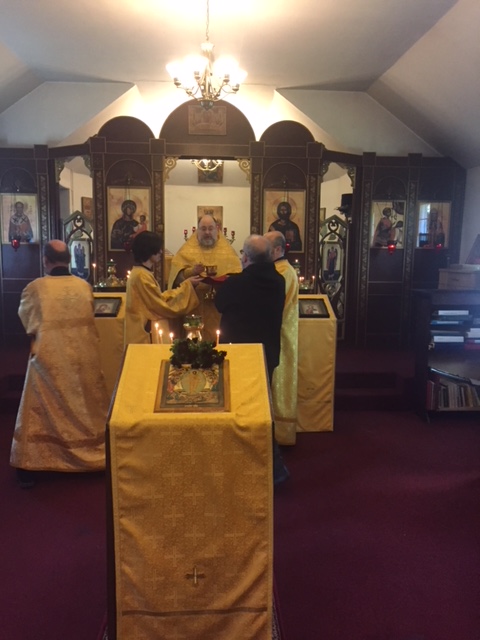
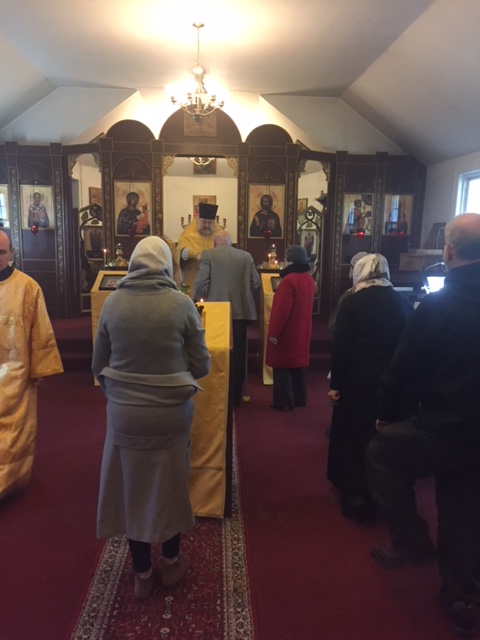
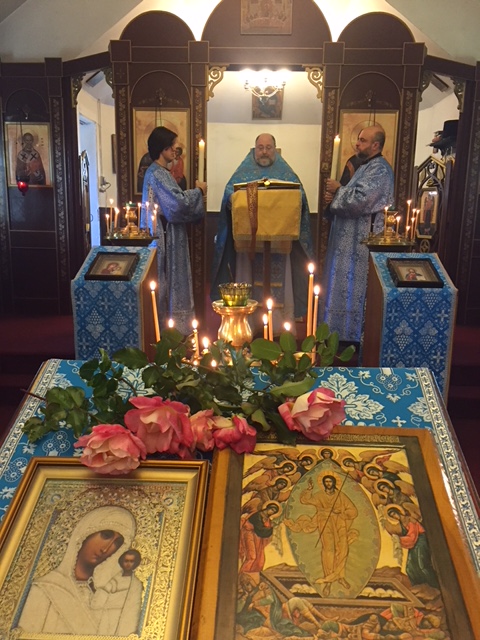
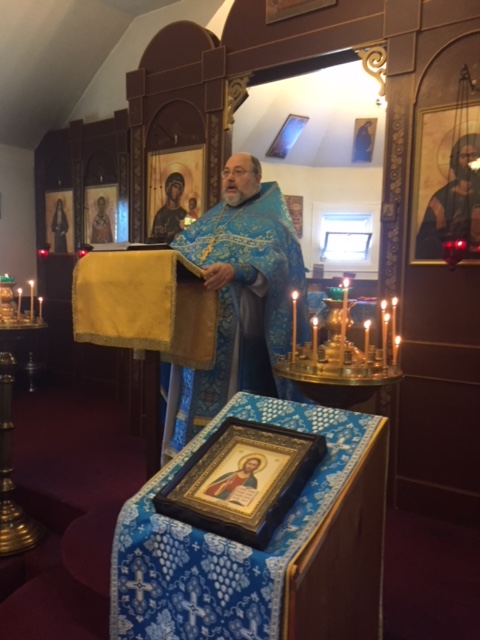
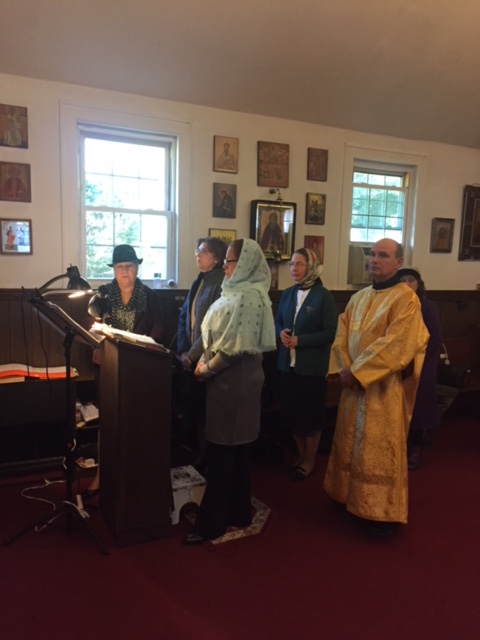
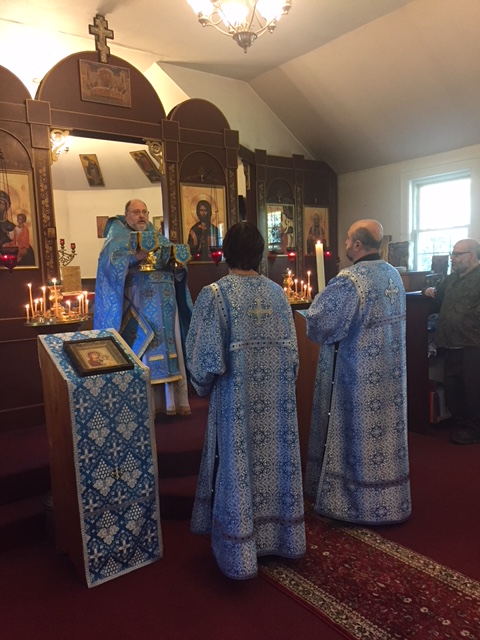
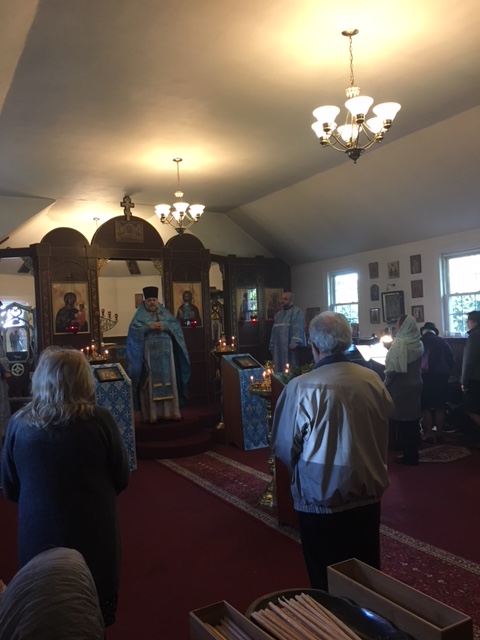
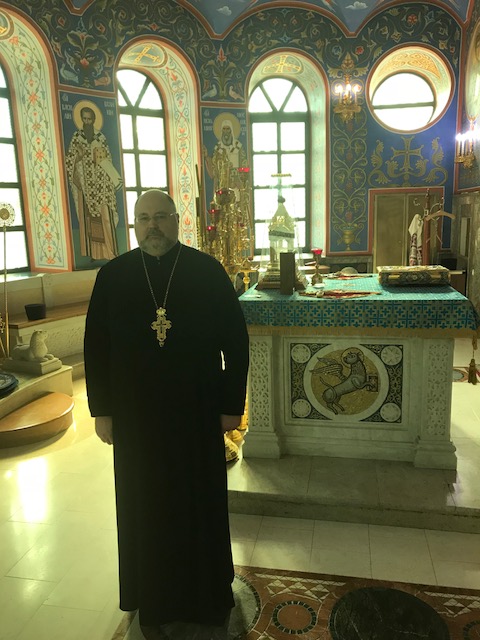
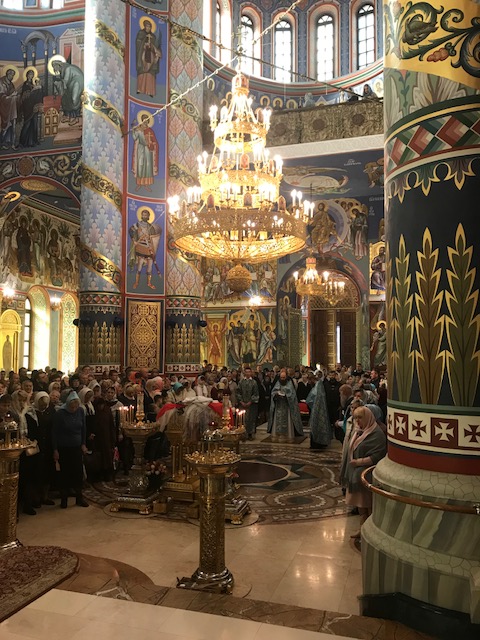
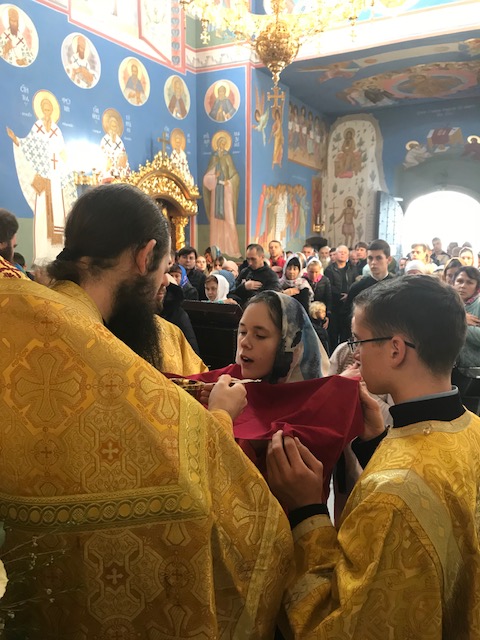
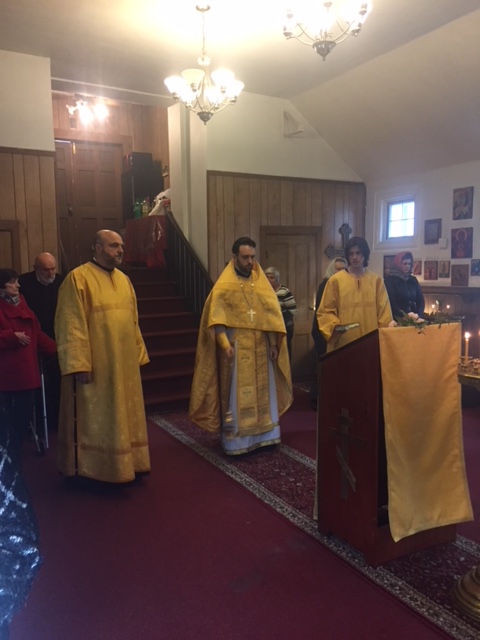
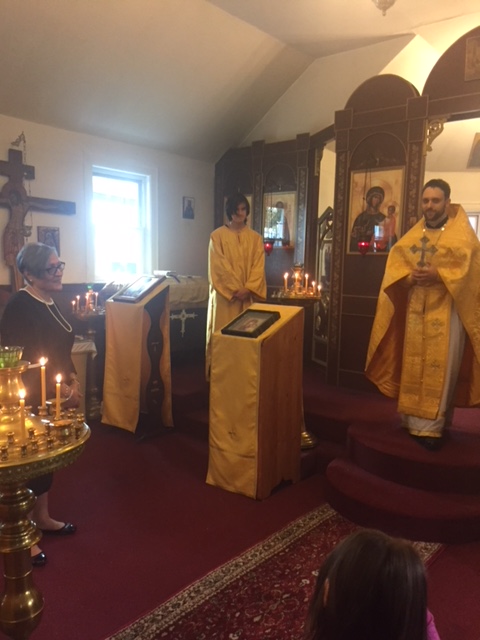
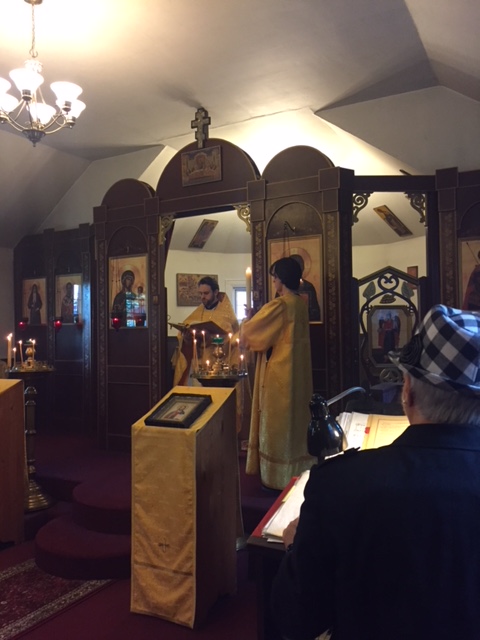
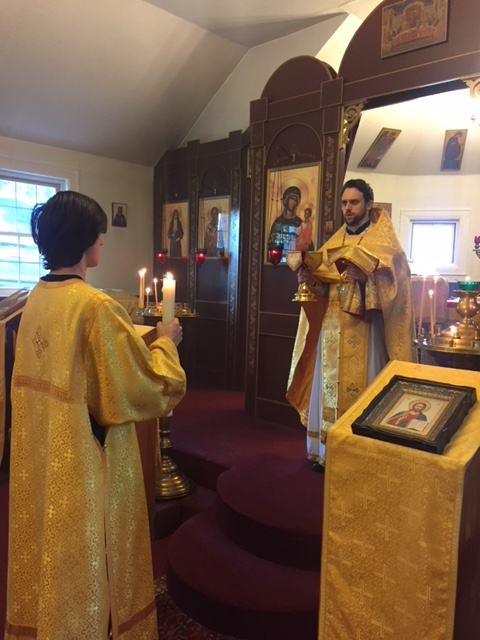
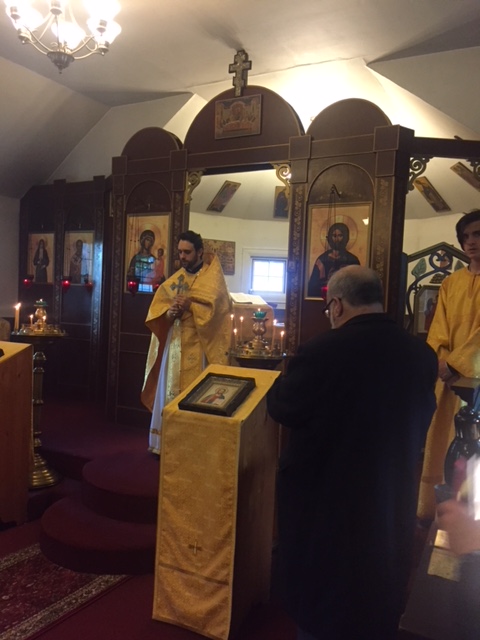
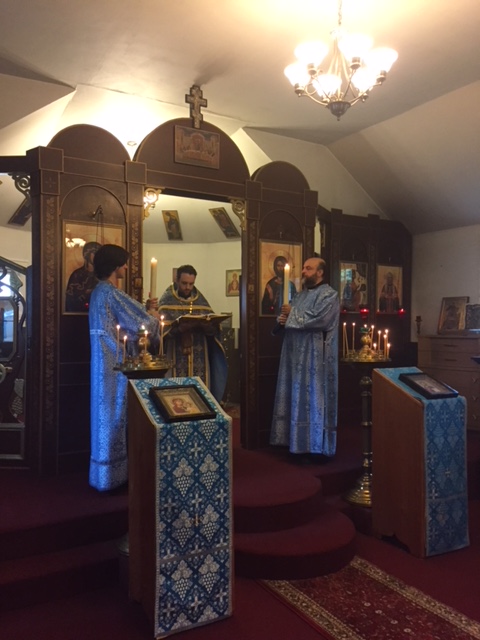
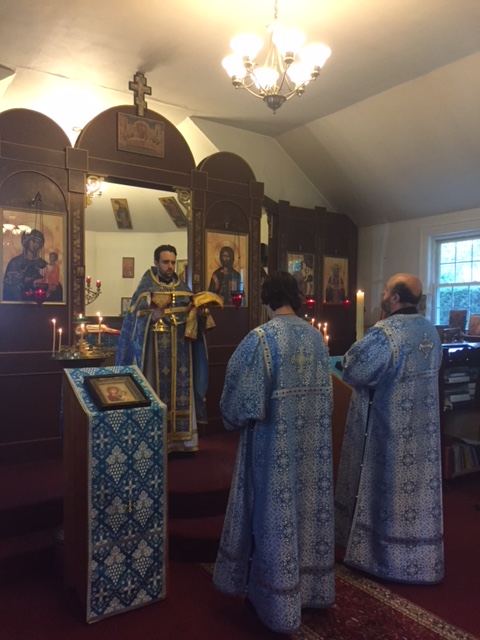
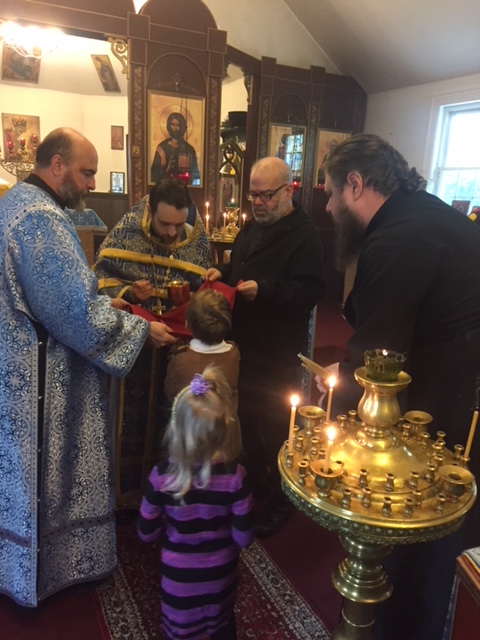
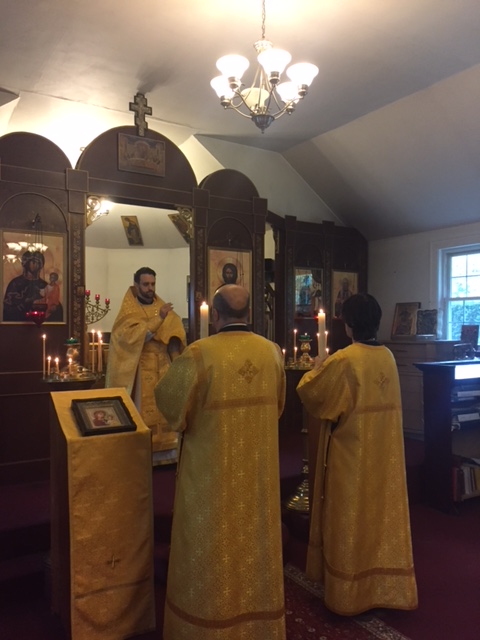
On August 28, on the feast of the Dormition of the Most Holy Mother of God we held a nice celebration at St. George Church. Our Rector, Archpriest Igor Tarasov served the Divine Liturgy. Although it was a working day, many people attended the church. Among them was Deacon Matthew Keil, cleric of the Annunciation Church in Flushing, NY who came along with all his family. Fr. Matthew did not serve but performed the reading of the Epistle.

Following the reading from the Holy Gospel the Rector preached a homily in Russian.

The Rector pointed out that Dormition, being the greatest holy day dedicated to the Most Holy Mother of God, is a special event of ending the earthly life of the Theotokos. We do not call it “death” but “falling asleep” because the Blessed Mother had no sin and was not subject to a death of a sinful person. It was rather Her passing from the earth to heaven. It was Her Resurrection which fallowed Her falling asleep because as we believe and as the tradition says, Her body was not found in the grave. It could also be called the Pascha of the Theotokos because Pascha means passing over, and the Mother of God passed over the earthly death and went to the heavenly abode.
The death is something fearsome and sorrowful for a human being. But if we look at the death in the light of Christian faith, we see that it is not dominating over the faithful. Death had a limitless power over men before the coming of Christ. But after the Resurrection of the Lord death became limited in its influence. We still die but if die in Christ, we have a hope of eternal life and our own resurrection. As the Lord said, “I am the resurrection and the life. He who believes in Me, though he may die, he shall live” (Jn. 11, 25). Thus death for a Christian is rather falling asleep, a passing from one kind of being to another.
The Most Holy Mother of God had to finish Her earthly life but for Her it became a passing from the earth to heaven. On the feast of Christ Resurrection we sing: “From death to life, and from the earth to heaven Christ will lead us…” In the same way at Her Dormition the Most Holy Mother of God was led by Christ from death to life, from the earth to heaven.
The more we in our spiritual life become similar to Christ and to His Blessed Mother, the more we are conquering the power of death for ourselves. The more we become sanctified, the less death has an influence on us.
At the conclusion of his homily the Rector called the parishioners to pray to the Most Holy Mother of God that She may bless our pious efforts and lead us from this earthly life to eternal life in heaven.

The choir prayerfully performed hymns dedicated to the Most Holy Mother of God and Her Dormition during preparation for Holy Communion.

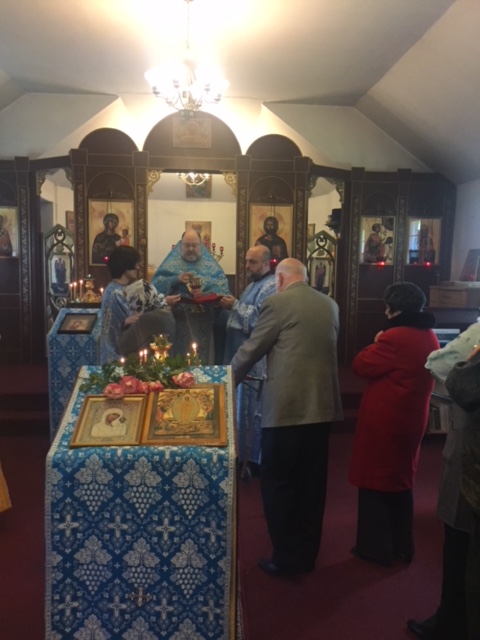
Following the dismissal of the Liturgy the Rector and the altar server performed the rite of glorification singing the troparion, kontakion and magnification of the feast before the icon of the Dormition in the middle of the church. Then the Rector congratulated all the faithful on the feast and preached a brief sermon in English.

13th Sunday after Pentecost


On August 26, on the 13th Sunday after Pentecost, Rector of St. George Church, Archpriest Igor Tarasov served the Divine Liturgy at our Parish temple. After the Gospel lesson he preached the following homily in English:

“Dear brothers and sisters in Christ! In today’s Gospel lesson we heard a parable on the evil tenants of the vineyard. This parable pictures the relationship between God and His chosen people of Israel. And usually when we reflect upon it, we talk about the history of salvation and how that parable shows its main events. Today we will though try to discuss another aspect of that Gospel reading. We will try to interpret the words of our Lord Jesus Christ at the end of the parable, the words by which Jesus concluded His parable: “The stone which the builders rejected has become the chief cornerstone” (Mt. 21, 42).”
“What is the most important thing in our life? Some people would say that it is the money and wealth. Without the money you cannot live a good life. Some other people would say that it is health. Even if you are wealthy, you cannot enjoy your life if you are sick. Some smart people want to have both of them and wish to be healthy and wealthy as well. Yet others would say that these things are rather material and too inferior but what is really important is love and good relationship with other people, what is important is your family and friends. All these answers are true, but only to some extent. As it was mentioned, your money won’t make you happy if you are going to suffer from some illness. Your wealth may be lost very quickly. Health also is not a certain thing because you may get sick any time. Even a very healthy person can have a little blood vessel break and lose not just health, but the whole life. And good relationship and even love, family life may end: your friends may change their attitude and dislike you; your spouse may become unfaithful or leave you; your children may leave you and don’t want to see you when they will grow up. Thus, all these important things in our life are not certain and secure.”
“Therefore, those answers may be correct but not totally true and not perfect. In addition, they don’t tell much about our spiritual attitude. Those who consider the money or health the most important things, those people are oriented towards material things. There is nothing spiritual or high in their answers. Those who prefer love, friends and family are emotionally oriented but still not spiritually. If all these people will tell you that they are spiritual (or as it is in style to say nowadays, “I am not religious but spiritual”) – don’t believe them!”
“But what is the most correct and perfect answer to that question? What is the most important thing in our life for a spiritual person? The answer is in the words of Christ at the end of today’s Gospel lesson: “The stone which the builders rejected has become the chief cornerstone”. These words mean that many people, being builders of their lives, reject the stone which is the most important for the building: they reject the very sense of their lives and their existence. And that sense of life is God. He created us and granted us this life; He will expect us to come at the end of it. Everything in this life changes, everything can cease to exist but God remains unchangeable, His eternal Love and His Providence remains intact. Despite our fall and sin He came into the world to save us. He became Man, so we would not perish but have eternal life. God does everything for us. And if we wish to build our life securely, we have to build it on that chief cornerstone, on God and His Son Jesus Christ.”
“That cornerstone is also our faith in God. Do we accept Him or reject? That is another important question we may ask ourselves today. And the answer to that question must be our whole life. First of all, by our words, verbally we have to accept the Lord. Sometimes it becomes important. In the history of Christianity we find many instances when people were asked whether they believe in one God, in Jesus Christ and in the Orthodox Church. If they answered “I do”, they could be martyred, they could be killed. And it is still happening in the Middle East. But in many other instances, our words are not enough to prove our faith. All our deeds, our thoughts and our choices in life will be judged and will bear a witness to either our acceptance of Jesus Christ, the Chief Cornerstone, or our rejection of Him.”
“Dear brothers and sisters! The vineyard mentioned in today’s Gospel story can be understood as our own soul. And we are those vinedressers who are entrusted such a great responsibility – to cultivate our souls and to bring them to salvation as those fruits that had to be given to the owner of the vineyard on time. We are entrusted a lot, so God will ask a lot. Therefore, let us remember what is the foundation of our living. Let us ask the Lord Jesus Christ and His Blessed Mother that we always may see Him, our Savior, the Chief Cornerstone of our life and be worthy to unite with Him in life eternal!”

The choir prayerfully performed hymns dedicated to the celebrated feast of the Transfiguration before Holy Communion.

After the Liturgy dismissal the Rector and altar servers performed the rite of glorification before the icon of Transfiguration to mark the end of that holy day liturgical celebration. Then the Rector preached a short sermon in Russian addressing the ideas of his English homily.


12th Sunday after Pentecost. Transfiguration of the Lord


On August 19, on the 12th Sunday after Pentecost, feast of the Transfiguration of the Lord our Parish held a beautiful celebration. Since this is a Lord’s holy day, the whole service was dedicated to the feast. Our Rector, Archpriest Igor Tarasov served the Divine Liturgy. Following the Gospel lesson he preached a homily in Russian. An English translation of that homily is as follows:

“Dear brothers and sisters in Christ! We are here in the temple of God to celebrate great feast of the Transfiguration. Today’s Gospel reading told us about that special event. Our Lord Jesus Christ took His three Disciples, Peter, James and John and led them to the mountain. There the Lord transfigured before them showing the glory of His divinity. Transfiguration is a very important Christian holy day. It is another Theophany, the appearance of God because Jesus showed the Disciples that he is truly divine. And the Lord showed His Disciples His uncreated light, the light of His divine grace.”
“Another important aspect of this event is that the Apostles were comforted and assured that their Teacher is the true God. Later one of them, Holy Apostle Peter wrote that at the Transfiguration “they were witnesses of His majesty” (2 Pet. 1, 16). This assurance was especially needed when they became witnesses of the death of Christ, so they had to remember that His death was God’s plan of salvation and that it had to be followed by Christ Resurrection. Our today’s festal kontakion says, “So that when they would behold Thou crucified, they would understand that Thine suffering was voluntary, and would proclaim to the world that Thou art truly the radiance of the Father!””
“All these aspects are very important to understand why we celebrate today’s feast. But we may also inquire what this holy event is bringing to us? What is our benefit from that holy, miraculous and glorious occurrence?”
“The light of Christ, that very light shown on Mt. Tabor has to shine for us also and to lead us to spiritual transfiguration of our own. In today’s festal troparion we sing, “Let Thine everlasting Light shine upon us sinners”. And if we, as the believers in Christ our God, strive for the unity with Him, we need that light to shine. Without God’s grace we cannot transfigure our sinful beings. Thus we need to acquire that grace, to attain that divine light, to strive to live in that holy radiance. Practically speaking, we need to advance spiritually, to evolve in our perfection.”
”Sometimes the believers complain that nowadays we don’t have holy people leading us. They wish that our Church was led by the bishops like St. Nicholas, our states headed by the rulers like St. Vladimir, that in our parishes were priests like St. John of Kronstadt. Of course, it is nice to dream in that way: that when you come to the church, the service is headed by John of Kronstadt, the choir is directed by King David, and your wife besides you is like St. Natalia… But the reality is quite different. Why? Because we ourselves are not worthy of those holy people. We ourselves are not holy and equal to them in holiness, piety and zeal. Imagine if we really had St. Nicholas as our bishop. We would be very happy to come to him and benefit from his miracles. But he would also be demanding towards us. He would require us to attend the church every service; he would serve the long services, like all-night vigils (not just by name, but in reality, during the whole night!); he would give us harsh penances and so on. How would we feel with such a holy bishop?”
“We really need to advance, to evolve in our piety, zeal and holiness to become changed, transfigured. The Greek word of the New Testament for Transfiguration is Metamorfwsis. This word is used by the scientists to describe a change which occurs with a butterfly. In order to become a beautiful butterfly, a worm, or a caterpillar must become a dormant creature and when its time comes, it changes into a butterfly. You cannot make a butterfly by adding the wings to a caterpillar or to a dormant form. You cannot interfere into that process. It is a natural process of a change. Same with our spiritual state: you need to mature, to evolve to the certain point of spiritual growth, in order to acquire the light of Christ. But with us it is a supernatural process of a change, of our personal transfiguration.”
“Dear brothers and sisters! Being now in the middle of the Dormition fast, let us pray to the Most Holy Mother of God to intercede for us. Our today’s troparion mentions that everlasting Light of Christ may shine through the prayers of the Theotokos. Let us pray to Her that our sinful being may transfigure to the eternal life and holiness, to the unity with our Savior, our Lord Jesus Christ!”

Before the rite of the Holy Communion the choir prayerfully sang festal hymns of the Transfiguration.

Following the Ambo prayer the Rector performed traditional Blessing of fruits.

After the dismissal of the Liturgy the Rector and the altar servers performed the rite of glorification singing the troparion, kontakion and magnification of the feast before the festal icon. Fr. Igor then preached a short sermon in Russian and congratulated the parishioners on the occasion of the holy day.

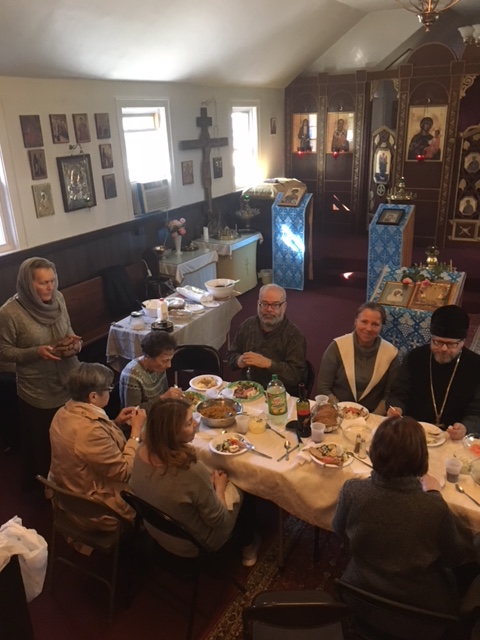
Our celebration continued at the trapeza table when the Rector and parishioners enjoyed some food and a nice conversation. At this time we all were glad to see our former parishioners, Elisey and Anastasia (Mirna) Flora who came to visit us from the Dominican Republic.

11th Sunday after Pentecost


On August 12, on the 11th Sunday after Pentecost, Rector of St. George Church, Archpriest Igor Tarasov  headed the Divine Liturgy at our parish temple. After the Gospel lesson he preached the following homily in English:

“Our Gospel lesson assigned for today tells us a parable about a merciful king and an unmerciful lender (Mt. 18, 23-35). This story is very instructive: it shows how the people can be unkind, wicked, unforgiving and forgetful. On the other hand, it shows that God (who is pictured in the story as a king) is very kind and forgiving.”
“When we come to the church, which prayer do we hear the most? It is an exclamation “Lord, have mercy!” During our services the singers in the choir constantly ask God to have mercy upon us. We ourselves should join the choir in that petition and ask the Lord to be merciful. We should realize that we do need divine mercy because we do not do what we are supposed to do. We do not keep the Commandments, we do not have a strong faith, we do not feel proper love in our hearts, so we feel that we are not worthy of God’s blessings. This is why we need the Lord’s mercy.”
“What is mercy? It is something we do not deserve. It is not rewarding you according to your deeds, but it is a forgiveness of your errors or misdeeds. It is when you are supposed to pay for your mistakes, but you are given a chance not to. It is when you should be punished for your crime, you are pardoned. That happened in today’s Gospel story: a servant owed the king a lot of money and was not able to pay the debt. The king had a right and the power to punish that man: to sell him and his family members to slavery. But since that man was begging the king to have patience with him, the king forgave his debt – the king showed mercy, he showed compassion.”
“In the same way, when we ask God to have mercy upon us, we do not ask for something we deserve, but for something we don’t. If we are honest with ourselves, we should realize that our sins do not make us worthy of God’s kindness and His grace. Of course, we may also think that we are generally “good people” and deserve God’s blessing, but that kind of thinking is wrong. Even if we are good people (and I believe that most of us are), we are also sinful people. Thus we really deserve to be punished for our sins. Again, if we are honest, we see that we are not worthy of God’s grace. Thus, being aware of our unworthiness, we really understand the need to ask God’s forgiveness and His mercy. And even if we forget doing this all the time, the Church does it for us. This short but very fervent prayer – “Lord, have mercy!” is repeated in the holy temples many and many times. And according to that prayer we, as God’s servants, do receive a lot of mercy and clemency from the Lord, our Heavenly King.”
“But today’s Gospel lesson is also telling us that there is a condition under which the Lord will show His mercy. This one condition is that we will also forgive other people their debts and faults. The parable is telling that the king found out that the servant, whom he forgave that huge debt, was himself unmerciful to his fellow servant and put that poor man to prison to pay his debt in full. Upon learning that the king got angry, and delivered him to the torturers until he should pay all that was due to him (Mt. 18, 28-34). Our Lord Jesus Christ concludes the parable by saying, “So My heavenly Father also will do to you if each of you, from his heart, does not forgive his brother his trespasses” (Mt. 18, 35). Thus, dear brothers and sisters, the rule of receiving the Lord’s mercy is that we are also going to be merciful towards others. And, if we recall, this rule is stated in another very important Christian prayer, in the Lord’s Prayer. We say, “And forgive us our debts, as we forgive our debtors”, or in another English version of that prayer we say “and forgive us our trespasses, as we forgive those who trespass against us”. Thus we ourselves ask the Lord our Father to adhere to that rule with us; we ask Him to forgive us only if we forgive those who trespass against us.”
“Dear brothers and sisters! Let us remember that rule of our spiritual life: we will be forgiven the same way as we forgive others. Let us remember about that and let us recall today’s Gospel parable when we are blinded by anger and when our heart is full of evil against somebody. Let us not say or think, “I will never forgive you for what you have done!” Because if we say it and mean it, what the Lord will say to us at the Last Judgment? He will not forgive our faults and He will throw us to the tortures of hell, so we pay for our sins! Of course, we don’t wish this to happen! Then let us ask the Lord to enlighten us by His parable and His saving teaching, so we may become forgiving and not keeping grudges, so we may be merciful to each other, so our Heavenly Father will be merciful towards us.”

After the dismissal of the Liturgy the Rector preached a short sermon in Russian to stress main thoughts of his English homily. He also announced that next week the Orthodox Christians begin the Dormition Fast.

Following the sermon and announcements the Rector performed a customary blessing of the new honey. At the end of the services he also congratulated the Malyshew family on the occasion of their little daughter Elena’s 4th birthday celebrated last week. Traditional Polychronion (“Mnogaia leta!”) was sung.

Our celebration continued at the coffee hour where the Rector and parishioners enjoyed coffee, tea and sweets, as well as a nice conversation. A birthday cake was presented to little Elena.


10th Sunday after Pentecost


On August 5, on the 10th Sunday after Pentecost, as well as feast of the Icon of Our Lady of Pochaev, we gathered at our temple for a nice celebration. Our Rector, Archpriest Igor Tarasov served the Divine Liturgy. After the reading of the Holy Gospel he delivered a homily in Russian.

In his homily the Rector interpreted the Gospel lesson assigned for this Sunday (Mt. 17, 14-23). He said that the young man possessed by a demon and suffering from epilepsy is a symbolic image of all humanity possessed by the power of sin and evil. Especially it was so before the appearance of our Lord Jesus Christ. No one could help that young man, even the Apostles. Only Christ was able to heal him.
Now the throwing of that young man to the fire and to the water symbolizes the extremes we are thrown into by our sins. The fire and the water are two opposite things. So we may be thrown into the opposite extremes. The fire may mean any passion, for instance anger, hatred or envy. The water, on the other hand, signifies the cold of despair, dejection or indifference. In order to be freed from those extremes, we need faith. But our faith is too small. The Lord tells us how to grow our faith and to cast out the evil – to practice prayer and fasting.
Only the power of Christ can help us but prayer and fasting invokes that power and makes us strong in faith. Thus we need to ask for God’s help and for the help of the Most Holy Mother of God (whose feast of the Icon of Pochaev we celebrate), as well as to ask for help of all the Saints. Thus we may avoid the extremes of the fire of passion and of the cold of despair. Prayer and fasting may lead us to the victory over the evil in this life, so we may inherit life everlasting.

The choir prayerfully performed hymns dedicated to the Most Holy Mother of God during preparation for Holy Communion.

Following the dismissal of the Liturgy the Rector preached a short sermon in English conveying the main ideas of his Russian homily.

Our celebration continued at the trapeza table where the Rector and parishioners enjoyed delicious meals and a nice company.

Celebration of Bishop John’s Anniversary of Ordination to the Episcopacy


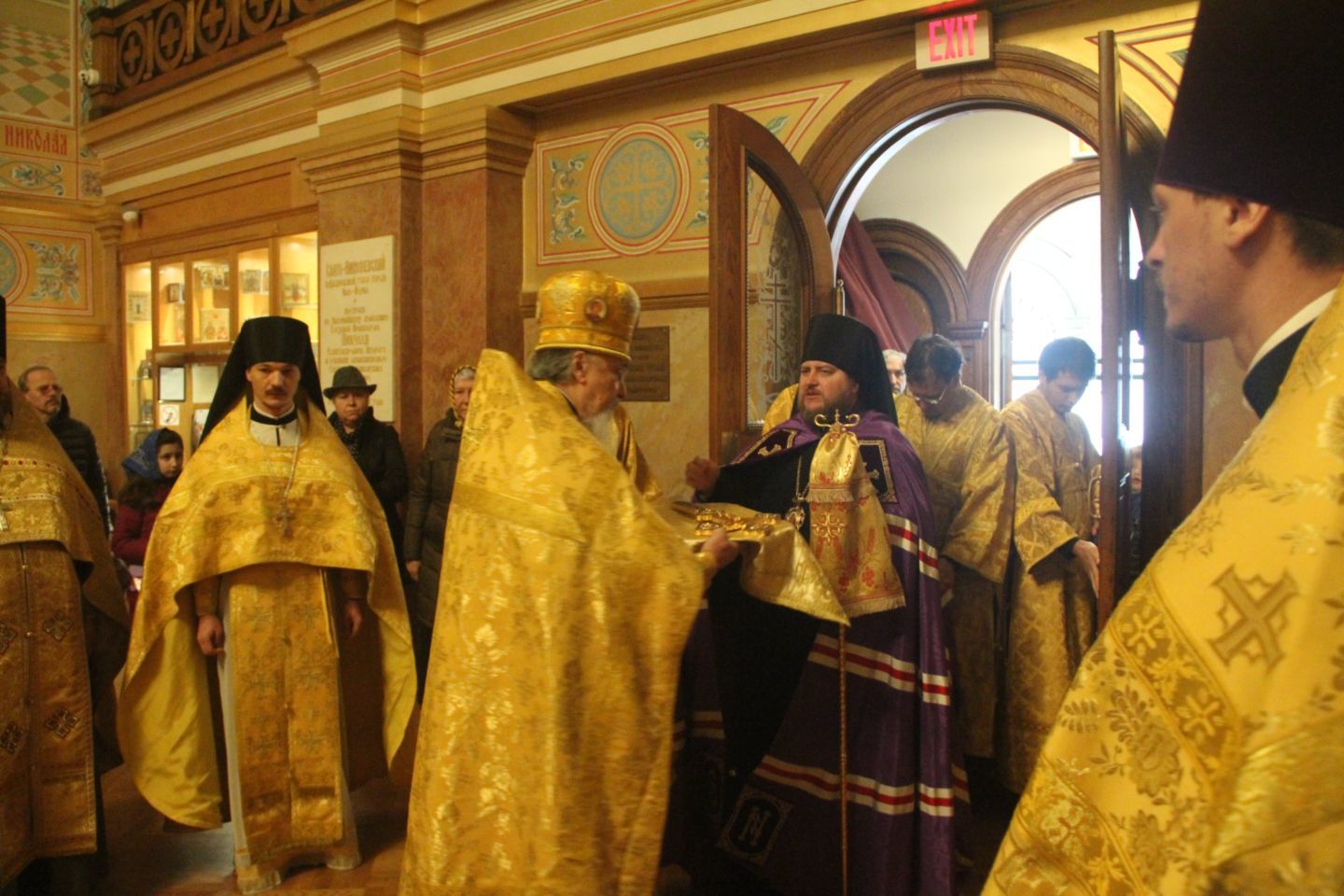
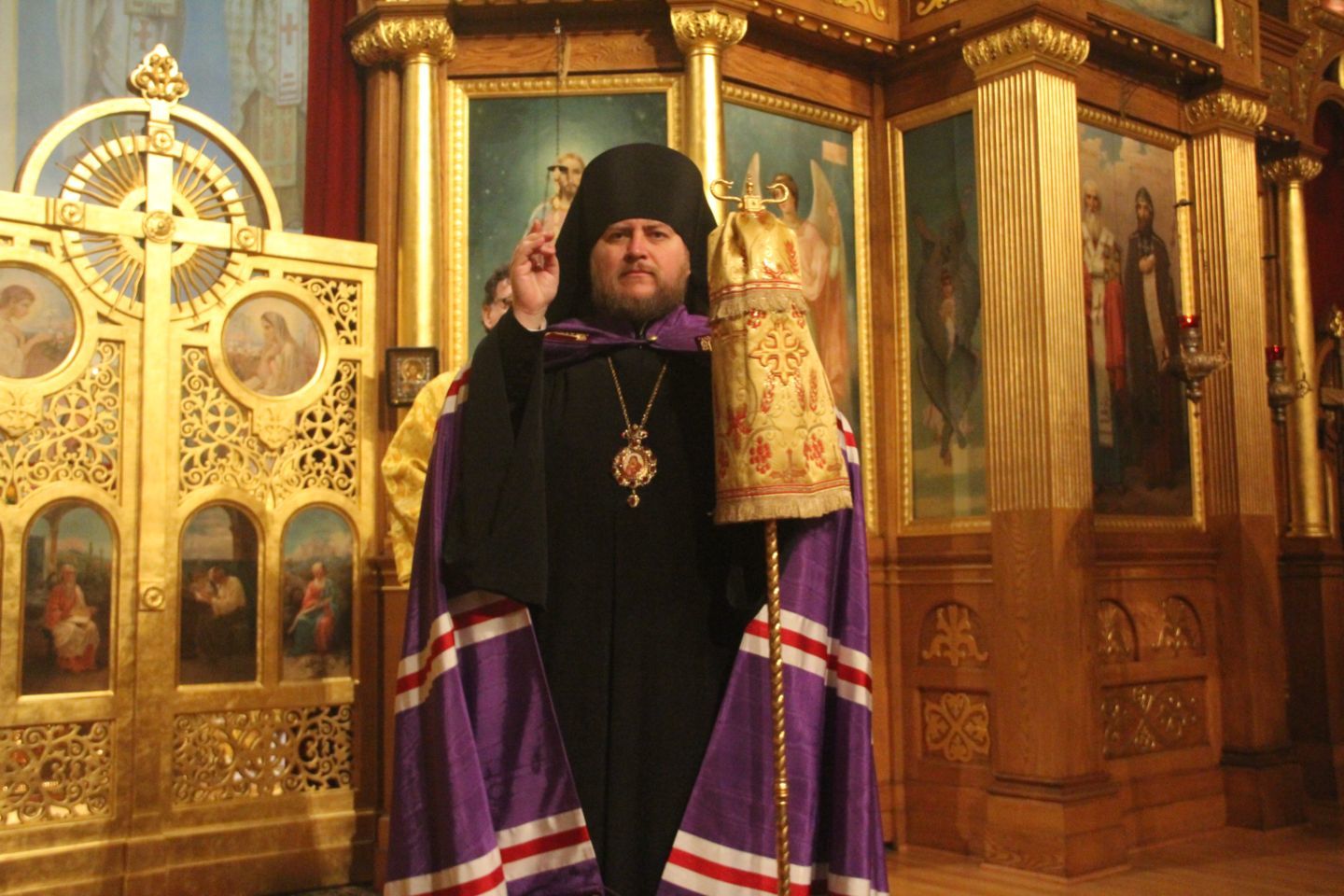
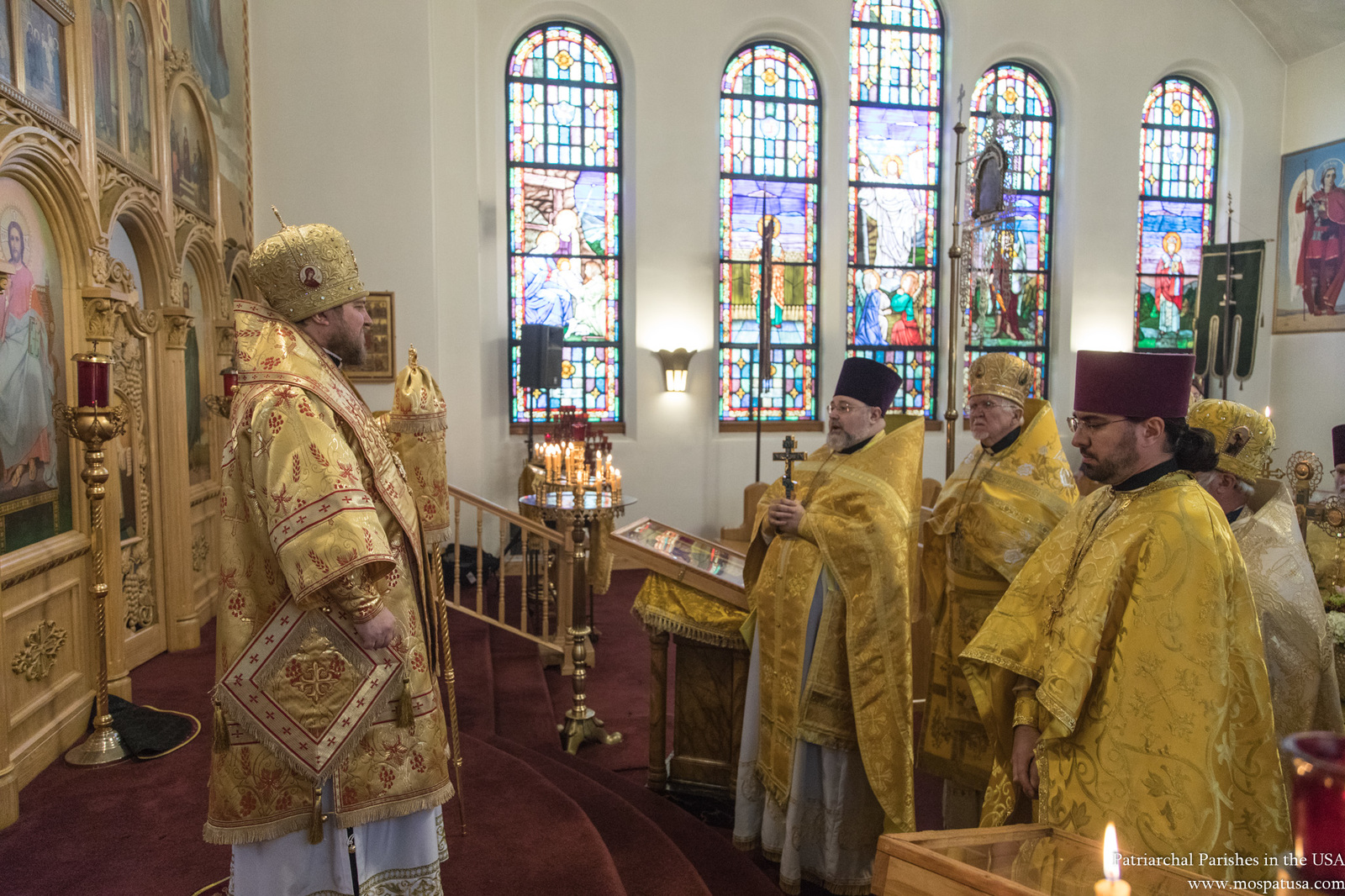
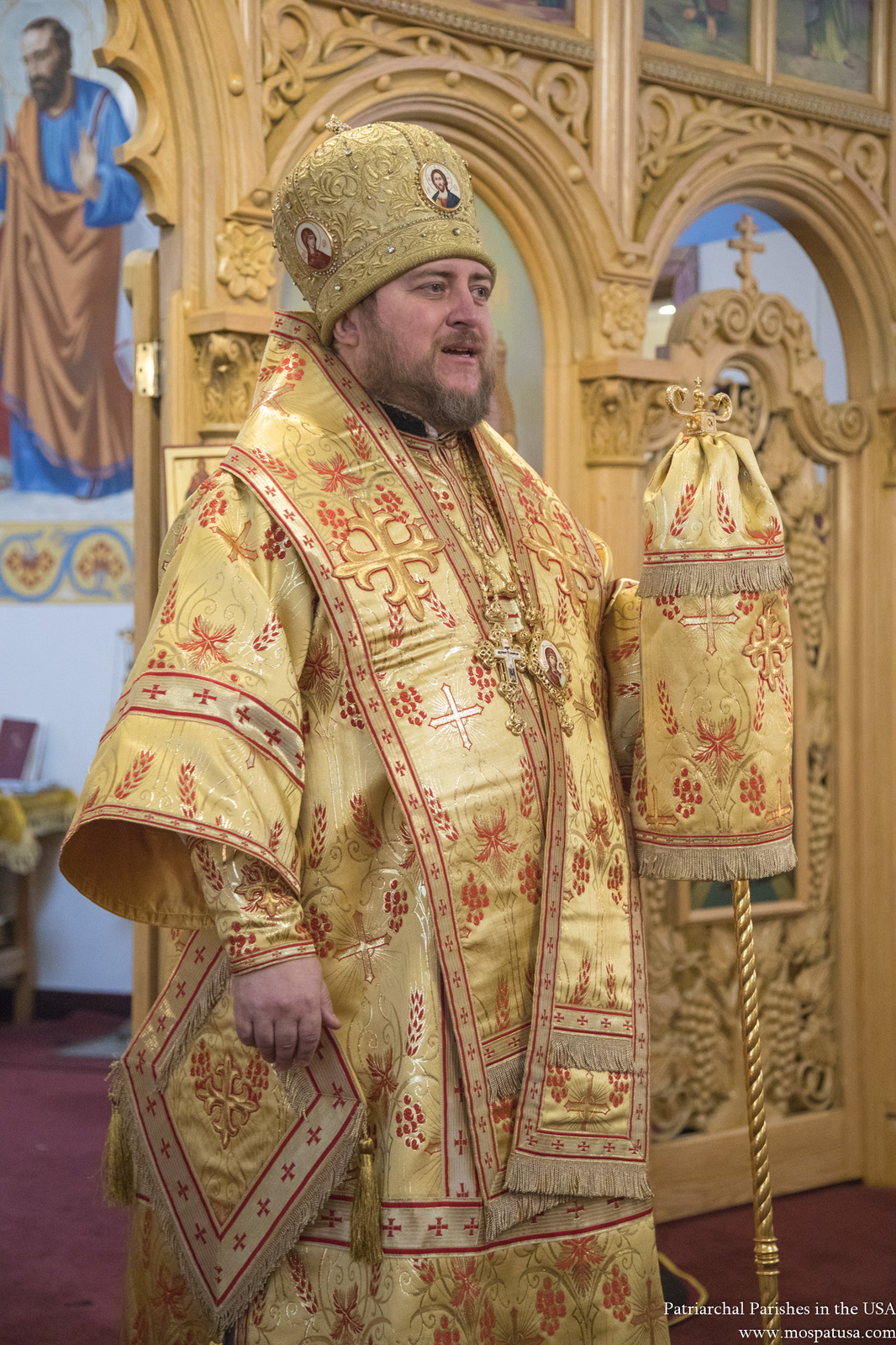
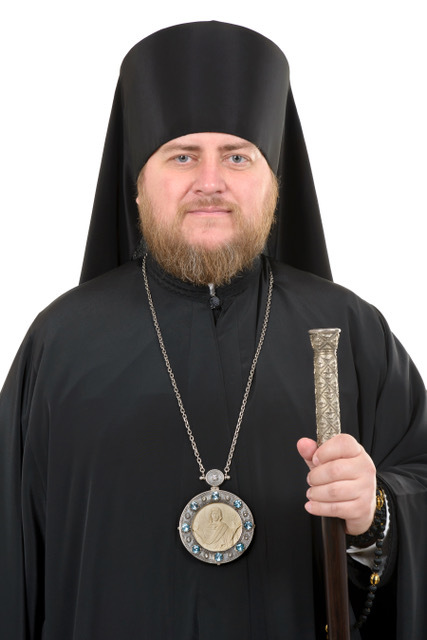
On Wednesday, August 1, the feast of Venerable Seraphim of Sarov and the fourth anniversary of his consecration to the episcopacy, the Administrator of the Patriarchal Parishes in the USA,  Bishop John of Naro-Fominsk celebrated the Divine Liturgy at St. Nicholas Cathedral in New York City. 

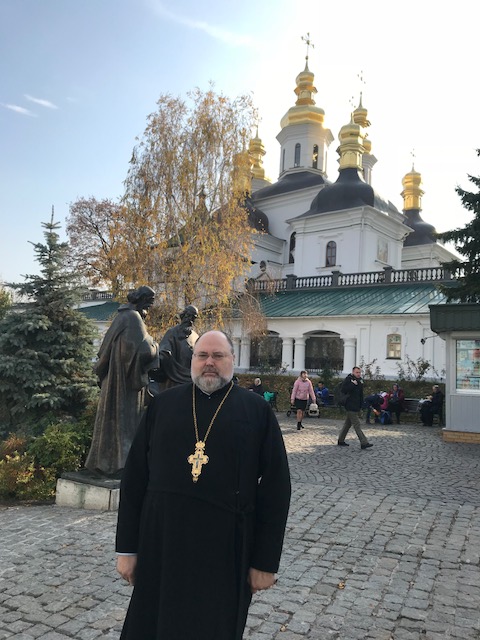
His Grace was co-served by Rector of St. George Church, Archpriest Igor Tarasov (Chancellor of the Patriarchal Parishes in the USA), Archpriest George Konyev (Rector of the Three Saints Church in Garfield, NJ), Priest Andrew Massey (cleric of the Elevation of the Holy Cross Church in Hackettstown, NJ) and the cathedral clergy. Praying in the altar was Dean of the Eastern States, Priest Aleksey Paranyuk. During the Divine Liturgy, Bishop John awarded Fr. Andrew Massey the right to wear the nabedrennik and kamilavka. 
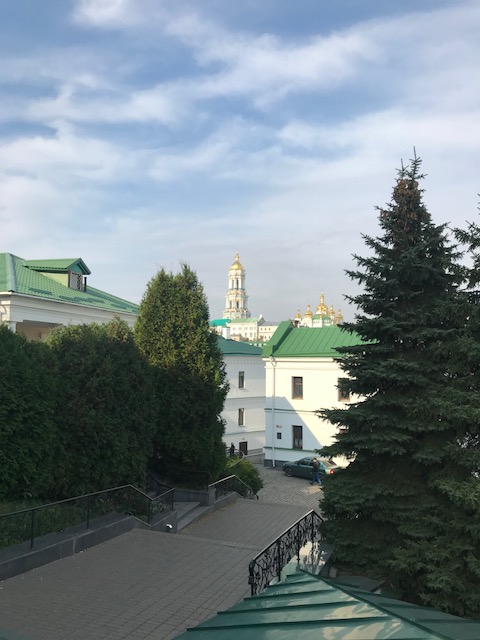
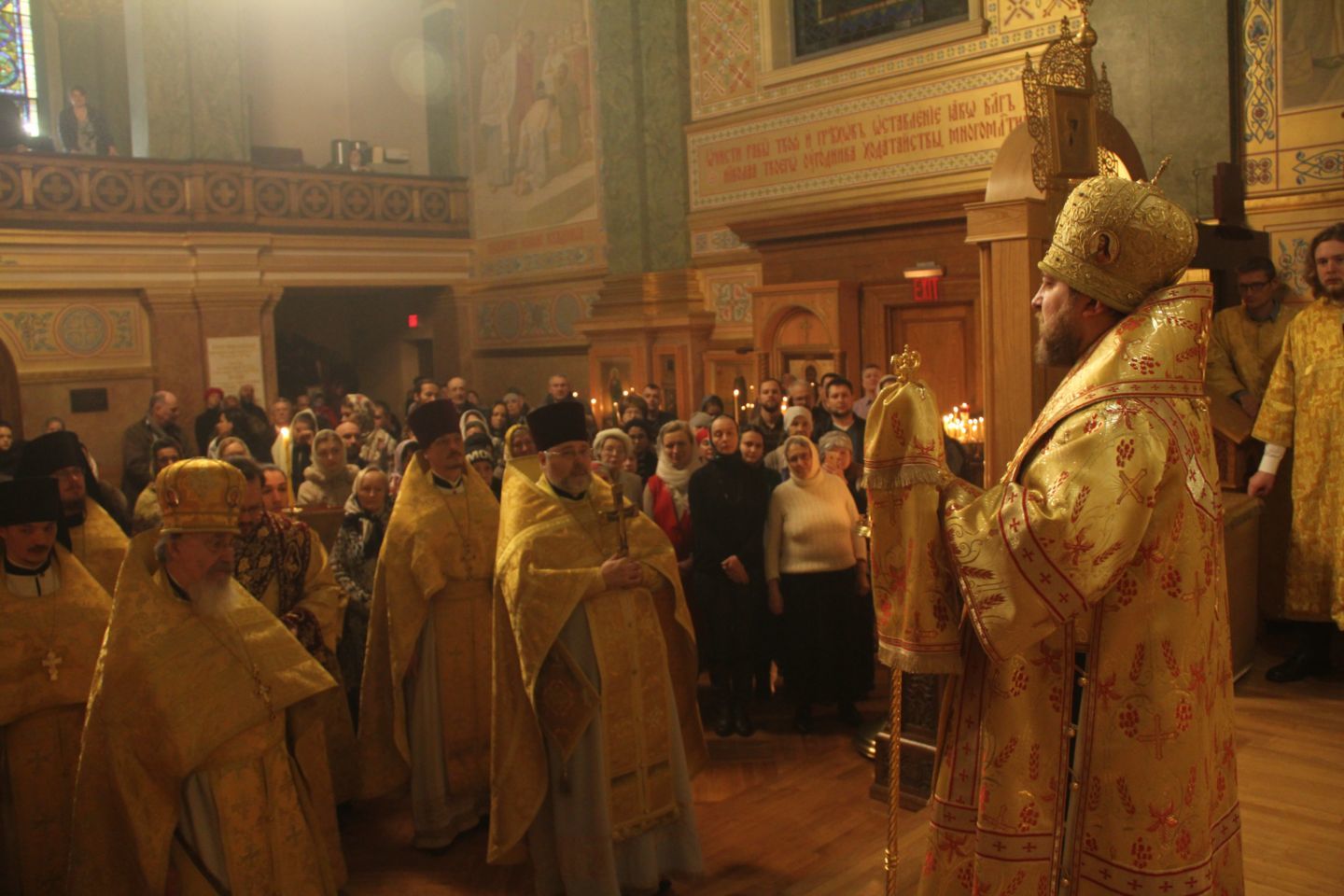
After Holy Communion, Bishop John served a short moleben before the icon of Venerable Seraphim of Sarov. He then delivered a sermon on the life of St. Seraphim.

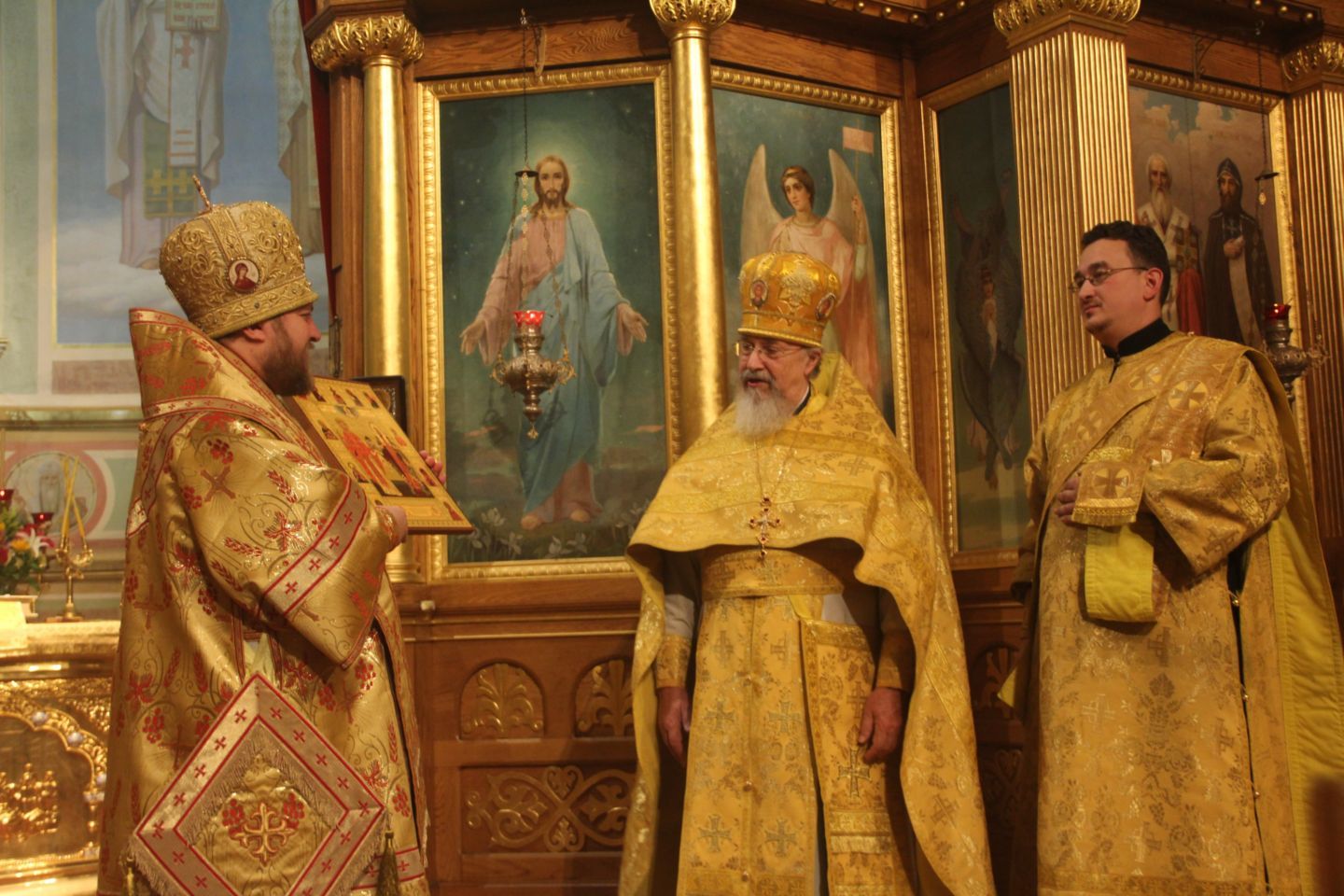
Following the Bishop’s sermon Fr. Igor Tarasov congratulated His Grace on the occasion of his ordination anniversary on behalf of the clergy and parishioners of the Patriarchal Parishes in the USA. 

We sincerely congratulate our dear Archpastor on the anniversary of his consecration to the episcopacy, and wish him many years in the vineyard of Christ!

9th Sunday after Pentecost


On July 29, on the 9th Sunday after Pentecost, as well as on the Sunday of the Holy Fathers of the Six Ecumenical Councils, we had a nice celebration at St. George Church. Our Rector, Archpriest Igor Tarasov served the Divine Liturgy. After the Gospel lesson he preached the following homily in English:

“Dear brothers and sisters in Christ! Our Gospel lesson of today is telling us about the events occurred after the miracle of multiplication of the breads and feeding the multitudes in the wilderness. Following that the Lord remained on the mountain alone and prayed while His Disciples were sailing on the boat. The Gospel says that the boat was in the middle of the sea, tossed by the waves, for the wind was contrary. Jesus came to the Disciples walking on the water. Peter desired to walk on the water also, he tried but later began to sink. Jesus stretched out His hand and caught Peter. Then they both got into the boat and the wind ceased (Mt. 14, 22-32).”
“Usually when we reflect upon this story we talk about Jesus walking on the sea or Peter trying to walk to Jesus. But today we will discuss the storm which took place there. Dear brothers and sisters! The sea means our life and the world we live. The boat means our human society or our community, especially the Church. The Apostles here symbolize all men and women either living in the society or belonging to the Church. Now the wind and the storm symbolize different troubles, sorrows, sufferings and misfortunes that occur in our life. Because of them the boat of the Church or the ship of human society becomes tossed by the waves of this worldly life.”
“We may ask why the storms occur and why the wind becomes contrary. Interpreting today’s Gospel lesson Holy Fathers, for instance, St. Ambrose of Milan taught that the storm on the sea, when the Disciples were on the boat, took place because of Judas, the future betrayer of Christ, was among them. If we compare that situation to some other biblical stories, we may be convinced that it is true. God punished the people, or the whole cities, nations or countries because of the sinners living among them. Even because of a righteous man, Prophet Jonah, God allowed the storm to occur on the sea – because Jonah did not obey the Lord and did not go to the place God commanded him. Thus God permits evil to visit us if we are sinful or because there are sinners among our nations, societies and even inside our Church.”
“Judas was not just a sinner, he was a thief, he was a deceiver, a betrayer of Jesus Christ and he ended up committing suicide. He died without repentance. Thank God, not every sinner is like him. In fact, we are all sinners but we use the time of our life to repent and, hopefully, we won’t die without repentance. But Judas was not just stealing the money from the treasury of the Apostles – he was stealing his own time given for repentance by multiplying his sins and finally killing himself. Of course, many of us are not like him but beware! Every sinner is risking to die without repentance, and to become like Judas. And there are so many unrepented sinners among Christians, among the members of the Church, among the sailors of the boat! Thus because of them the Church is often tossed by the contrary winds and troubled by the waves of this world.”
“What happens to the Church happens to human societies, happens to the nations and countries. But on the smaller scale, it happens to each person. The boat may also be compared to our own being, our own life. The storms in our life may occur because there is a Judas on our boat – our grave sin or our vice rooted in the heart. And if we won’t repent or confess such sin, we won’t be safe.”
“Today we commemorate Fathers of the six Ecumenical Councils. Those Fathers defined the dogmas of the Orthodox faith and fought against many heresies. Heresy is a sin which causes the Church to be in error and in spiritual trouble. The Fathers condemned heresies, so the boat of the Church would be preserved and heretics be out of it.”
“Speaking of the storms and the boats we may recall a story from the lives of the Saints.  St. Porphyrius of Gaza and Blessed Jerome were traveling on the boat in the sea. All of a sudden a terrible storm took place, and they were wondering why it occurred so unexpectedly. They began to question the sailors and passengers about their possible sins or crimes, and finally the captain of the ship confessed that he was a secret heretic. After he repented and accepted Orthodoxy the storm stopped. Thus, storms in our life happen if we are having some spiritual problem, some error which may be hidden.”
“But today’s Gospel tells us that once the Lord Jesus Christ stepped into the boat, the wind ceased. That means that if Christ will be present in our life, the winds and storms will stop. It means that if Christ will really govern our Church, our parishes, our societies and nations – the troubles will cease and won’t bother us. Only with Christ we may not fear them.”
“Dear brothers and sisters! Let us keep Jesus Christ in our boat: let us keep Him in our nations, in our societies, in our Church, in our parishes. Let us keep Him in our lives. Let us reject all erroneous ideas about God and faith, so we may not be in spiritual trouble. Let us repent for our sins, especially for the grave ones, so we may be spiritually safe. And in our spiritual trouble, let us call to the Lord like Peter, saying, “Lord, save me!” (Mt. 14, 30). And if our prayer will be sincere, the Lord will come to us in any manner, like He came to His Disciples even walking on the sea. He will come and step into our boat saying, “Be of good cheer! It is I; Do not be afraid” (Mt. 14, 27).”

The choir beautifully performed hymns in honor of the Holy Fathers during preparation for Holy Communion.

After the dismissal of the Liturgy the Rector preached a short sermon in Russian addressing the ideas of his English homily. He also congratulated four parishioners on the occasion of their past name days: three Olgas, including our Warden and Choir Director, Olga Roussanow and one Vladimir, our Reader Vladimir Piankov. Traditional Polychronion (“Mnogaia leta!”) was proclaimed.

8th Sunday after Pentecost


On July 22, on the 8th Sunday after Pentecost the Rector of St. George Church, Archpriest Igor Tarasov served the Divine Liturgy at our parish temple. Following the Gospel lesson he preached a homily in Russian.

In his homily the Rector explained certain aspects of interpretation of the Gospel story about the miracle of feeding five thousand men with five loaves and two fish (Mt. 14, 14-22). He pointed out that the miracle took place at the evening, after the whole day of teaching and healings performed by Jesus. It tells us that spiritual matters and the works of mercy should take precedence over the needs of the body. The miracle itself, although it was aimed to feed the hungry, had a spiritual meaning. It was an image of the Eucharist, as well as the image of future multiplication of the followers of Christ. It also showed that Jesus is God and can multiply the matter and creation. God created the world out of nothing, so it is easier to multiply something which already exist; but still God alone is able to do such thing. The fragments of food which remained after the feeding were collected in 12 baskets. Those 12 baskets signify the 12 Apostles who had to share the Word of God and the Eucharist with the nations to whom they were going to preach.
In the conclusion of his homily the Rector called the faithful to seek spiritual things first and to appreciate the Holy Eucharist and the unity with God which is attained through our fellowship in the Church.

The choir prayerfully performed the singing at the Liturgy. It also beautifully sung the Psalm 33 during preparation for Holy Communion.

Following the dismissal of the Liturgy the Rector preached a short sermon in English stressing the main points of his Russian homily. Then a short memorial service was performed at the request of Claudia Popescu.

Following the services the Rector and parishioners enjoyed delicious meals and a nice company at the coffee hour.

7th Sunday after Pentecost


On July 15, on the 7th Sunday after Pentecost, as well as feast of the Placing of the Precious Robe of the Most Holy Mother of God, St. George Parish held a beautiful celebration. Our Rector, Archpriest Igor Tarasov served the Divine Liturgy.

After the readings from Sacred Scripture the Rector preached a homily in English. He reflected upon the Gospel lesson about two miracles performed by our Lord Jesus Christ (Mt. 9, 27-35). The first miracle described in the reading was giving sight to the blind men who begged Jesus to heal them. The Lord asked whether they believed that He is able to perform such a sign, and the blind men said, “Yes, Lord”. Here we see how important is our faith. If we wish that God would act in our lives, we need a firm faith in Him. That faith cannot be limited to a statement, a declaration. If we are asked whether we believe in God, we answer, “Yes, I do” but we also need to live by that faith. Our faith must be active and be fulfilled in our deeds. The blind men did not only believed but they proved their faith by following Jesus, by begging Him, by crying, by being persistent. Thus we need not to limit ourselves by declarations but to live a life of prayer, fasting, repentance, to receive the Sacraments, to attend the church.
The second miracle in today’s Gospel lesson was healing of a mute and demon-possessed. Here Jesus did not ask him about his faith. But the mute and possessed man could not speak and answer for himself. But the Lord saw the faith of the people who brought that poor man to Him. In the same way, if we are unable to speak for ourselves, the Church does it for us. It happens, for instance, when the little babies are baptized and later brought to the church for Communion. Yesterday the Holy Synod of our Church made a historical decision to bless an office of praying for the deceased unbaptized children. This is the case when those poor souls cannot ask for themselves but we as the Church can pray for them although they were not baptized, but never committed any sin. This decision was long-time waited by the Church because we had to refuse to hold public prayers for those children.
The Rector concluded his homily by asking the parishioners to keep and practice faith and to adhere to the Holy Church.

The choir nicely performed hymns in honor of the Most Holy Mother of God before Holy Communion.

Following the dismissal of the Liturgy the Rector preached a brief sermon in Russian addressing the ideas of his English homily.

Feast of the Holy Apostles Peter and Paul


On July 14 we held celebration of the feast of the Major Holy Apostles Peter and Paul which had been transferred to Saturday. The Rector of St. George Church, Archpriest Igor Tarasov served the Divine Liturgy at our parish temple. Following the Gospel lesson he preached a homily in Russian.

The Rector pointed out that Holy Peter and Paul had different views on their Apostolic ministry and argued about their differences. We may say that Peter was conservative and Paul was more progressive, or, as many of us say, “liberal”. People usually are divided in that manner. But Holy Major Apostles, although they had their differences, never divided the Church and never separated from the community of Christ. And their feast shows that both Peter and Paul died on the same day, being killed because of the persecution of Christians in Rome. This is an important lesson for us: we may hold different, even opposite views but should be united in our Orthodox faith and our belonging to the Church. We should adhere to the firm and solid faith declared by St. Peter in today’s Gospel lesson: that Jesus is the Christ, Son of the living God. And we should not create schisms and hostilities because of our differences. Therefore, we have to ask that the Lord through the prayers of the Holy Apostles Peter and Paul grant us unity in spirit, so we may be led to eternal Kingdom of God.

Our cantor Olga Roussanow nicely performed hymns in honor of the Holy Apostles.

Following the dismissal of the Liturgy the Rector and the altar server performed a rite of glorification before the icon stand in the middle of the church singing the troparion, kontakion and magnification of the feast. The Rector also preached a short sermon in English stressing the ideas of his Russian homily.