6th Sunday after Pentecost

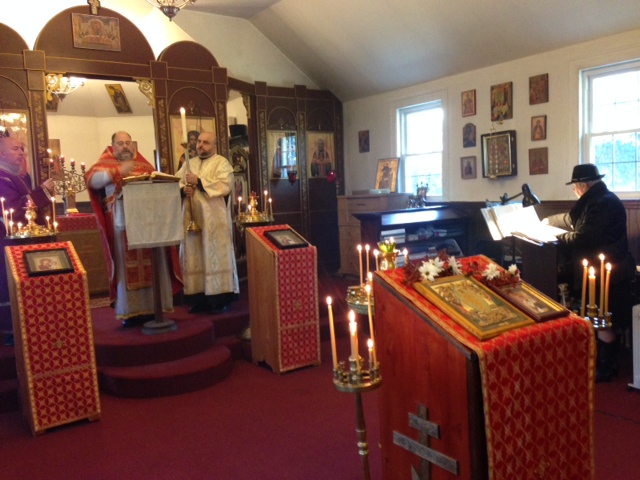
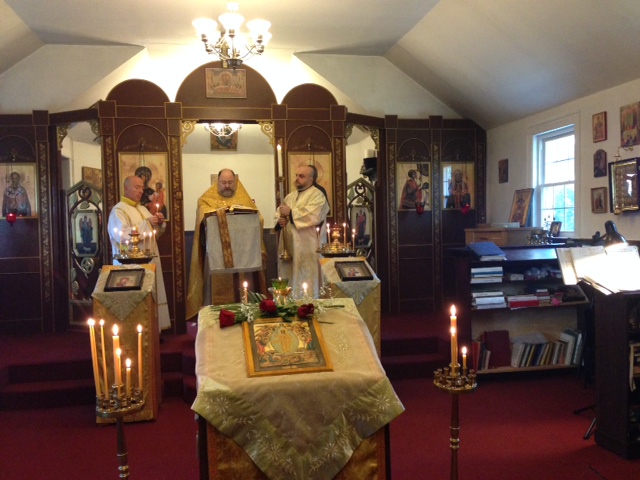
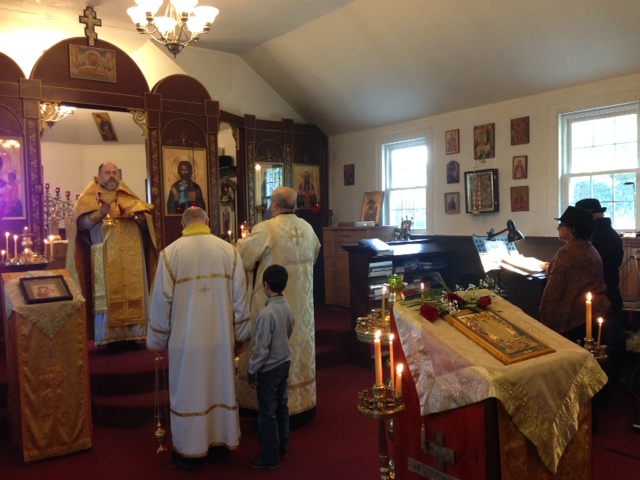
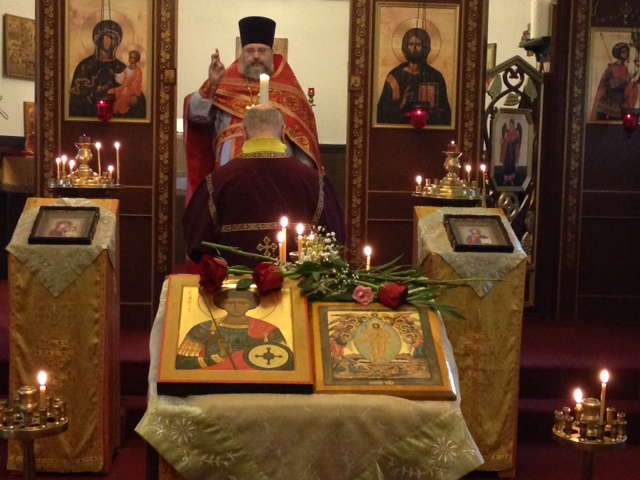
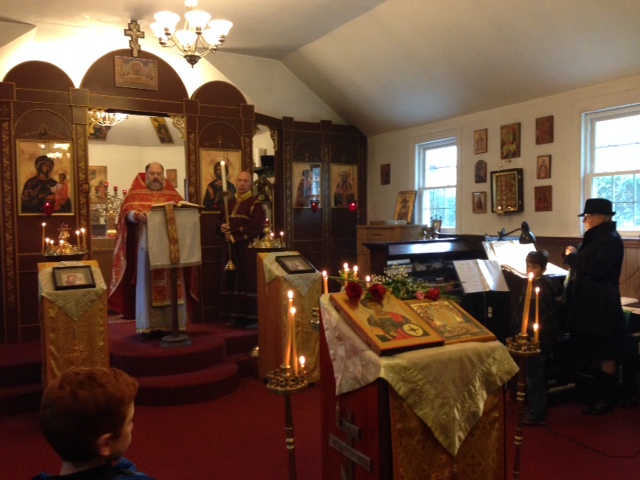
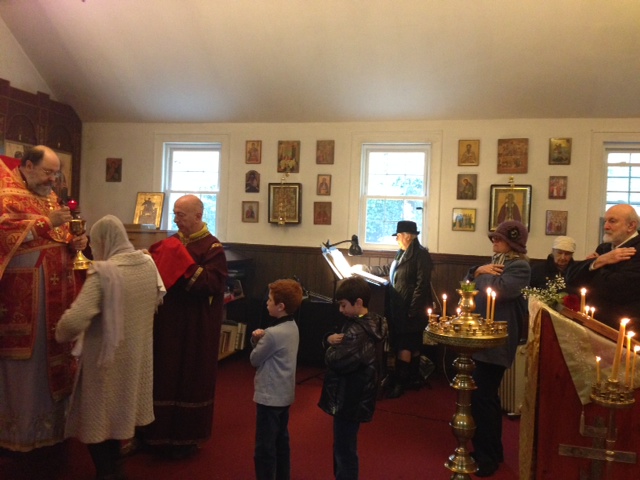
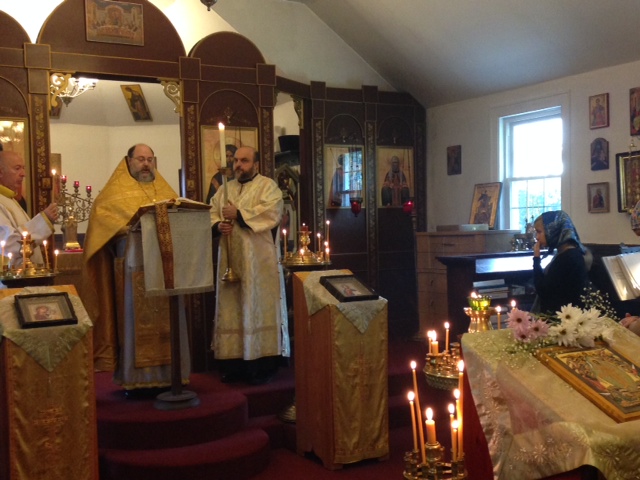
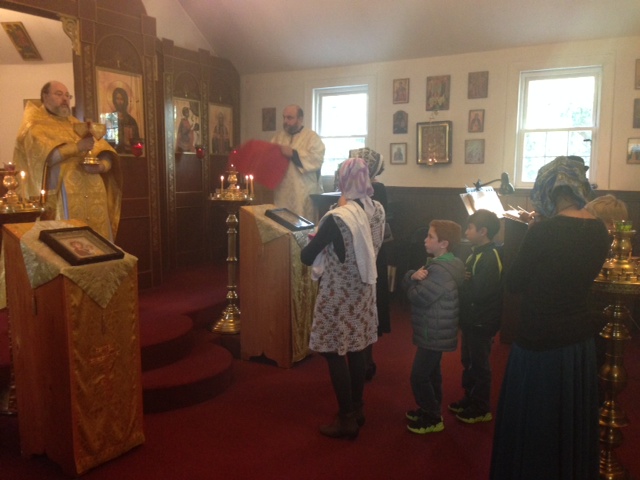
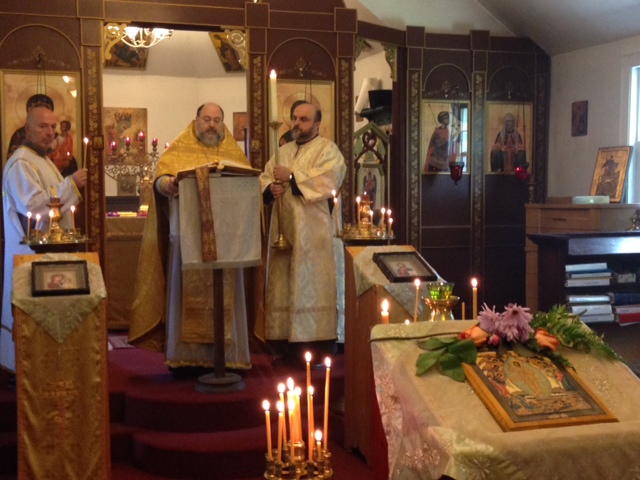
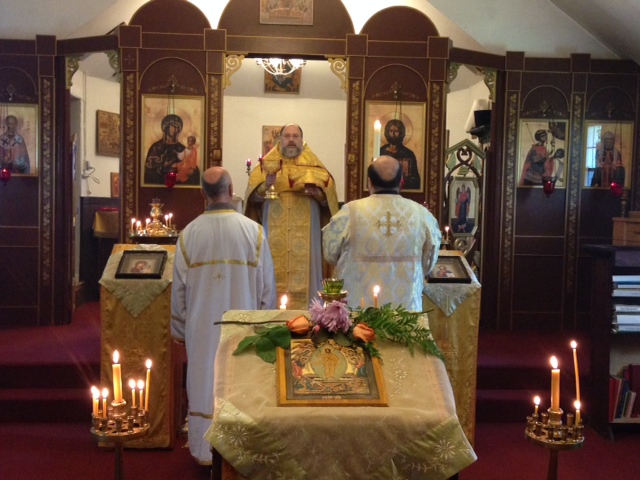
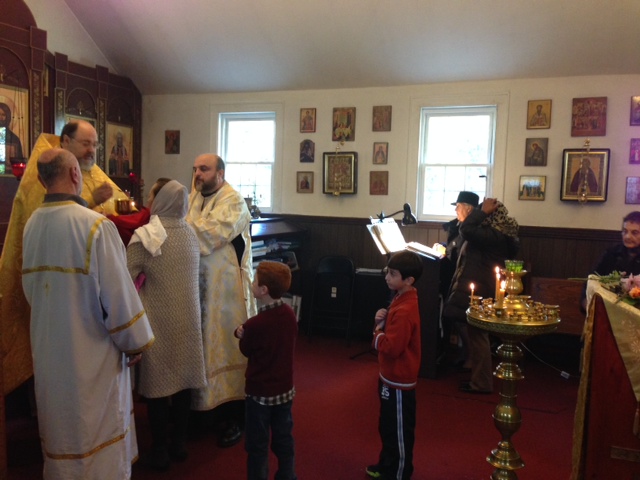
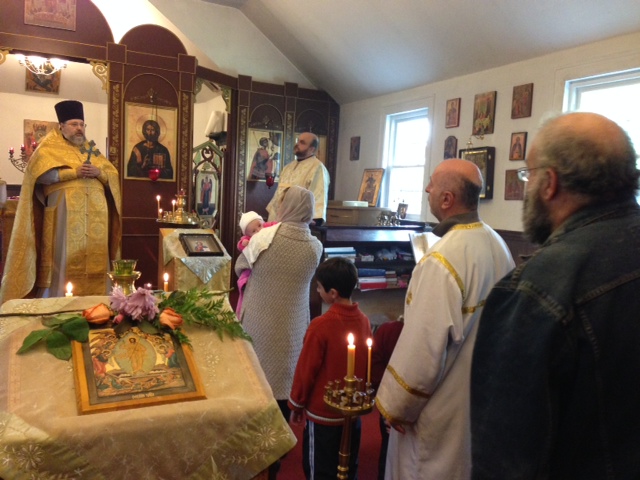
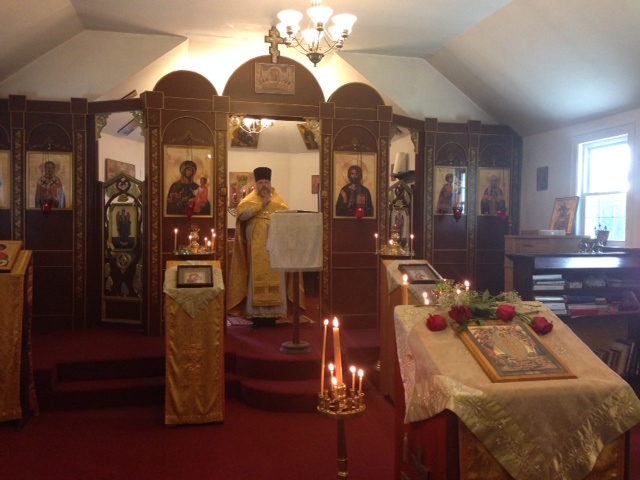
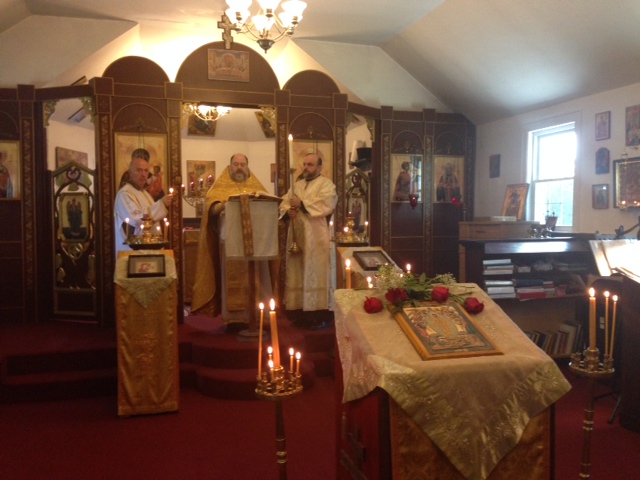
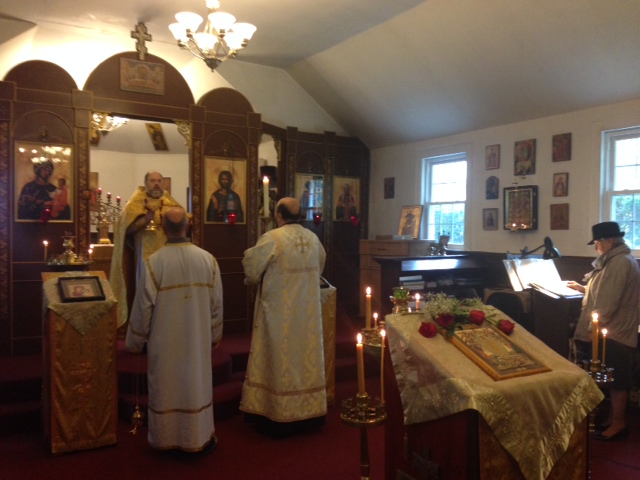
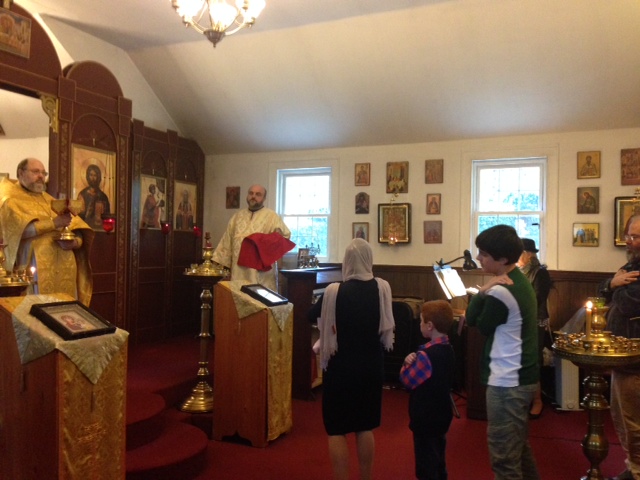
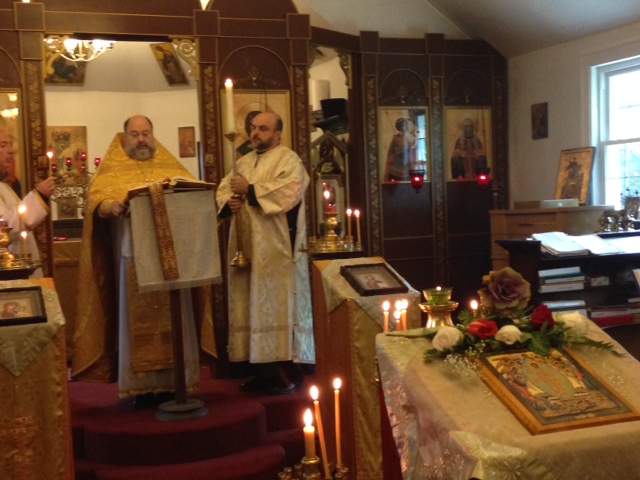
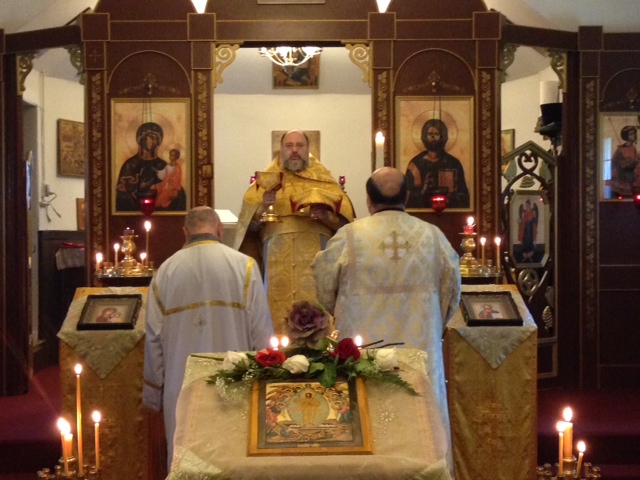
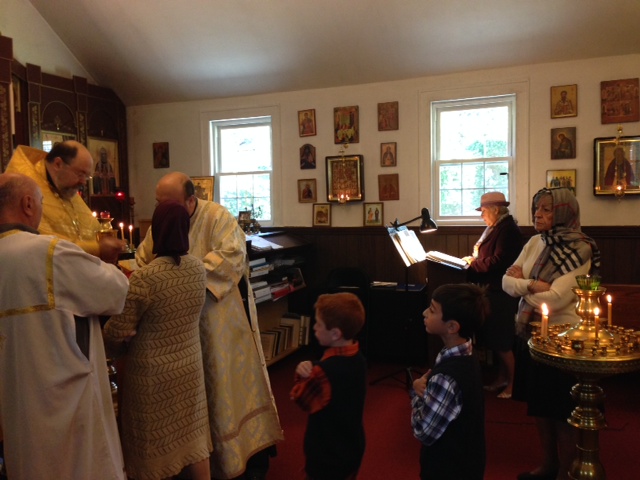
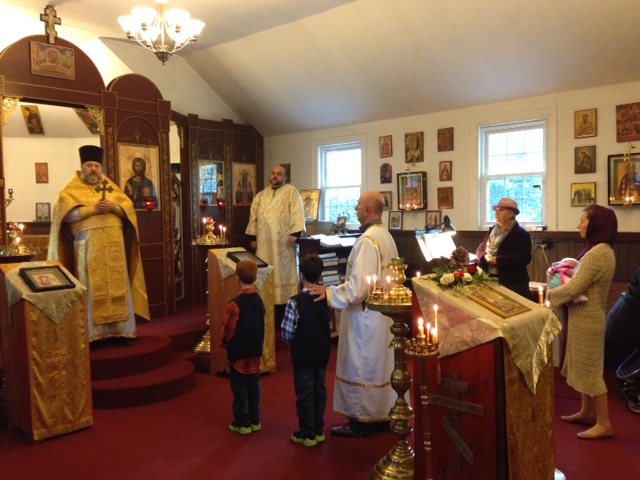
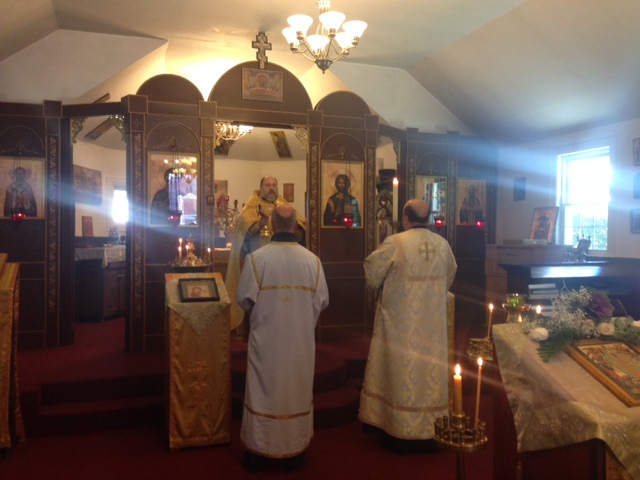
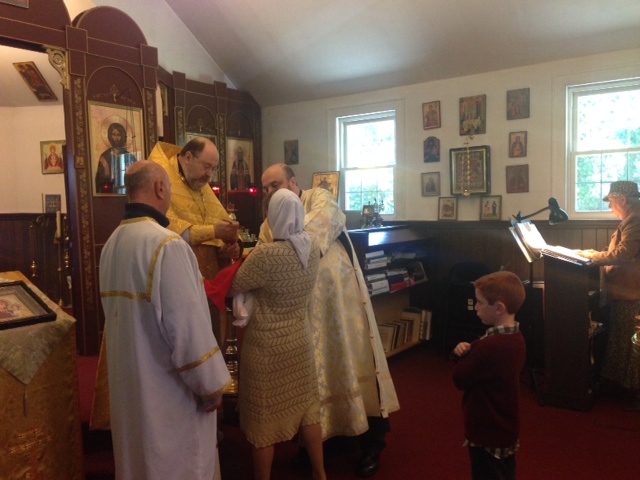
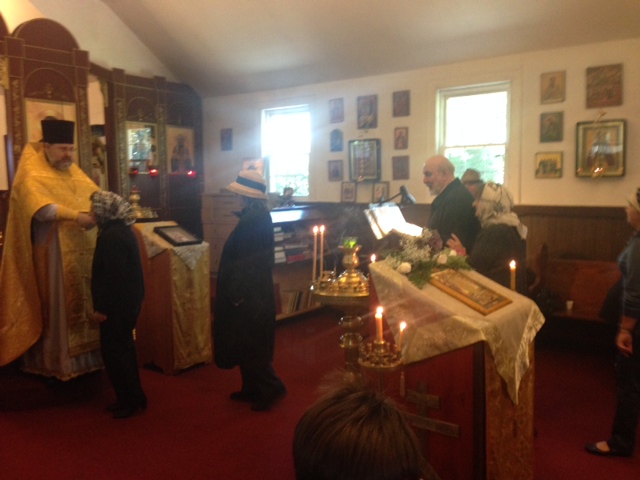
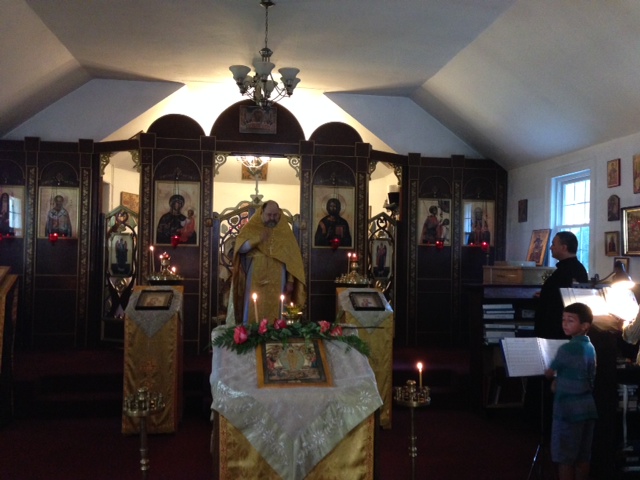
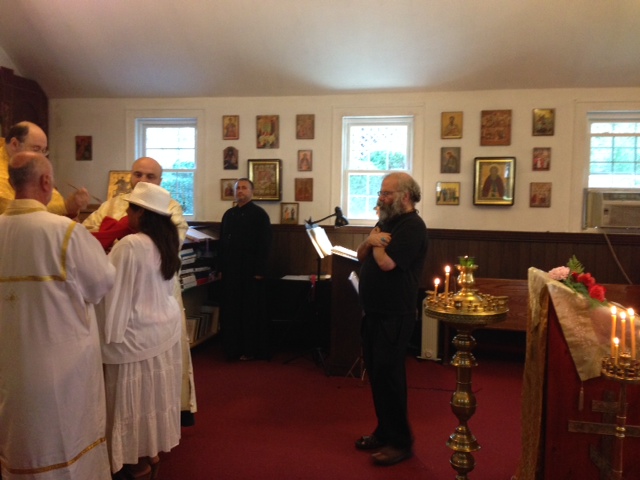
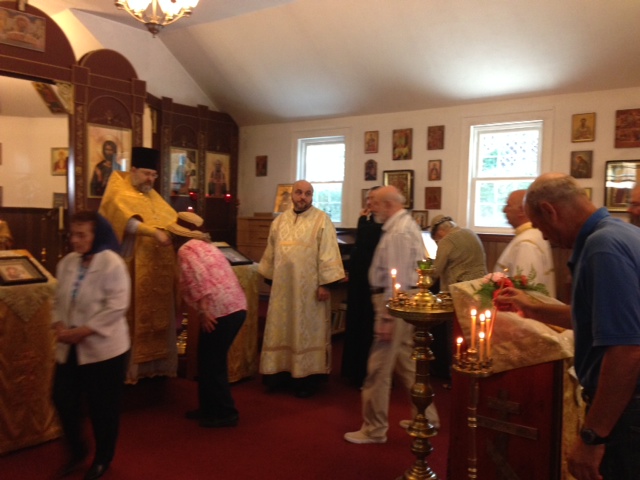
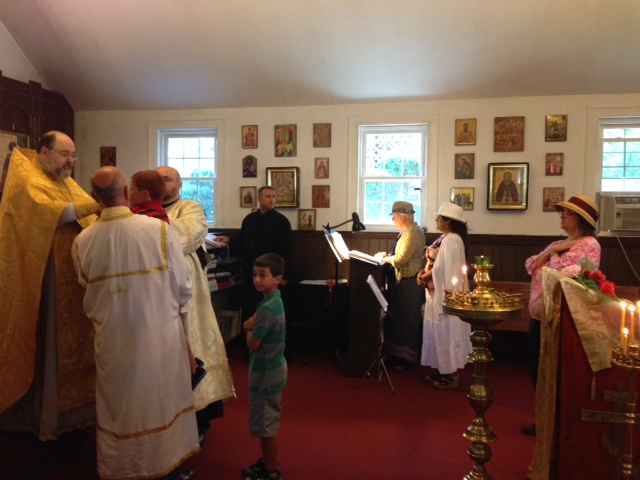
On July 20, on the 6th Sunday after Pentecost, Archpriest Igor Tarasov, Rector of St. George Church celebrated Divine Liturgy in our temple. Since our Cantor and Choir Director, Olga Roussanow went on vacation, a substitute cantor had been summoned to sing the responses at the Liturgy.

Following the Gospel lesson the Rector began to preach. First he pointed out that we are finishing to reason about Sunday lessons from the Epistle, and today is the last sermon from that cycle of homilies. Then the Rector said to the faithful present:

“In today’s Epistle lesson St. Paul is giving many short advises to the Christians in Rome. These are the exhortations to practice certain virtues. They are reminders to the Romans and also to us that true Christian faith is useless without works. St. Paul says, “Let love be without hypocrisy. Abhor what is evil. Cling to what is good. Be kindly affectionate to one another with brotherly love, in honor giving preference to one another; not lagging in diligence, serving the Lord; rejoicing in hope, patient in tribulation, continuing steadfastly in prayer; distributing to the needs of the Saints, given to hospitality. Bless those who persecute you; bless and do not curse” (Rom. 12, 9-16).”
“Each one of those advises could be discussed or interpreted extensively enough to preach a pretty long homily. Therefore, let us choose one of those timeless and precious exhortations and reflect upon it today. For instance, St. Paul today is giving us an interesting command when he says, “Be kindly affectionate to one another with brotherly love, in honor giving preference to one another” (Rom. 12, 10). In other words the Apostle teaches us to outdo one another in showing honor. We have to attempt to show respect, honor and love to our fellow Christians and other people more than it is normally done. And this is the main Christian idea – to outdo something, to do something more than it is expected. Many of the similar advises are contained in the Holy Gospel of our Lord. For instance, Jesus says, “Whoever compels you to go one mile, go with him two” (Mt. 5, 41). And in the same manner, they can be observed in the Apostolic Scriptures. In today’s Epistle St. Paul tells us about honoring our brethren, and outdoing one another in that. In his another Epistle he writes, “Let nothing be done through selfish ambition or conceit, but in lowliness of mind let each esteem others better than himself” (Phil. 2, 3). It means that St. Paul wishes us to practice treating one another as superiors. It means to be so mature in Christ that one does not have to feel superior to anyone – that is the test of a growing Christian.”
“To many people, the most important thing in life is to have a front seat, to be served, to be sought after. The aim of a Christian, on the other hand, is never to place himself on display or to be concerned with his own interests. This is why when two Disciples of the Lord, Apostles James and John approached Jesus with a request to be given two most important, closest seats to Him in His glory, the Lord rebuked them and said, “Whoever desires to become great among you shall be your servant. And whoever of you desires to be first shall be slave of all.” (Mk. 10, 43-44). A Christian way is not to be served, but to serve and to outdo one another in that.”
“In the city of Weimar, Germany there is a statue of Goethe and Schiller, two great poets. The German people honor both of them very much and sometimes argue which one among them is greater. Schiller and Goethe were friends. They met together frequently and enjoyed talking to each other. If Goethe heard people say that he is the master poet of the Germans, he was quick to reply, “But do not forget Schiller”. And Schiller would always say the same about Goethe. The sculptor of the statue in Weimar expressed their mutual friendship beautifully. He has put a wreath of laurel leaves in Goethe’s hands. The poet is raising his hand to place the wreath on his friend Schiller’s head. But Schiller does not wish for the crown, which he thinks Goethe deserves more. He is thrusting it back, as if saying, “No, it is more fit for you to wear than me”. Thus, the two friends nobly disagreed, each refusing to be crowned. But in their hearts they loved one another, appreciating each other’s qualities. They fulfilled St. Paul command of today’s Epistle lesson, “in honor giving preference to one another” (Rom. 12, 10).”
“Dear brothers and sisters! Preoccupation with self causes much trouble and distress in  human life. We need the love of Christ which thinks more of the happiness of others than it thinks of its own. This love is proud to serve. This love outdoes others in showing honor. The Christ-like love knows that in forgetting self it will find self, and that in losing self it will fulfill itself. “For  even the Son of Man did not come to be served, but to serve, and to give His life a ransom for many” (Mk. 10, 45). Our Lord “humbled Himself and became obedient to the point of death, even the death of the cross” (Phil. 2, 8). He outdid others in showing us honor and love. Let us then do likewise!”

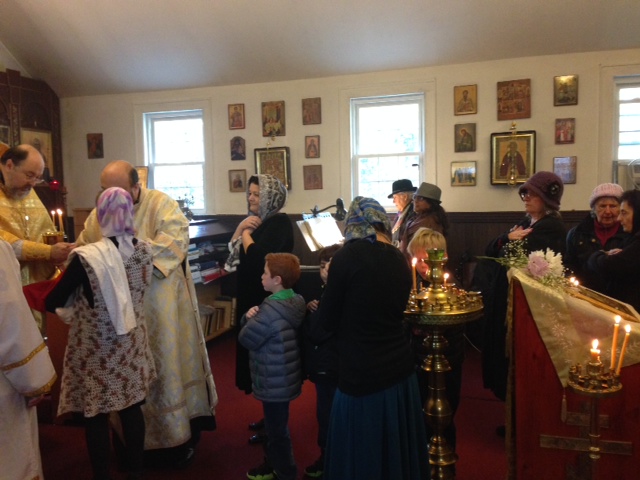
The number of parishioners attending the Liturgy was relatively small but almost everyone present received Holy Communion.


5th Sunday after Pentecost

On July 13, on the 5th Sunday after Pentecost St. George Parish had a nice Sunday celebration in its temple. On that day the Church also commemorated 12 Holy Apostles. Our Rector, Archpriest Igor Tarasov served the Divine Liturgy. Following the Scripture readings he preached a homily:

“Today’s reading from the Epistle of St. Paul to the Romans discusses the differences between the Old Testament, Jewish understanding of righteousness and the New Testament, Christian way of salvation. Among different words of St. Paul, we should pay attention to the final statement of today’s reading: “If you confess with your mouth the Lord Jesus and believe in your heart that God has raised Him from the dead, you will be saved. For with the heart one believes unto righteousness, and with the mouth confession is made unto salvation” (Rom. 10, 9-10). We have to believe in our Lord Jesus Christ in our hearts, and that faith has not to be hidden, but expressed by our words.”
“What is in the heart has to be on the lips. It is not otherwise with Jesus. This is the message of the final statement of today’s Epistle lesson. Our Lord Jesus Christ put it this way: “Whoever confesses Me before men, him I will also confess before My Father who is in heaven. But whoever denies Me before men, him I will also deny before My Father who is in heaven” (Mt. 10, 32-33). In our days many people like to say that they prefer to keep their faith in their souls. “You should believe inside of your soul, not on the outside,” they say. This is an excuse for many people in Russia not to attend the church, not to participate in the liturgical life, not to be the churched people. Today’s Epistle lesson, as well as the words of our Lord Himself put these people to shame. You cannot keep faith in your heart. You must also confess it with your lips. You cannot deny Christ before men.”
“To confess Christ before men was originally the mission of the Apostles. Today the Church commemorates Twelve Holy Apostles who were called by our Lord Jesus Christ to follow Him. After His Ascension into heaven they had to spread the Holy Gospel, to preach the Good News of Christ and to testify before all men about Him. The twelve Apostles were considered “witnesses of the Resurrection” of Christ. They were present in Jerusalem when the Lord was risen from the dead. He appeared to them many times before He ascended into heaven. Today in the second Gospel reading we heard the names of the 12 Apostles. We heard that the last of them was Judas Iscariot who betrayed Christ. Thus Judas was expelled from the gathering of the Apostles. But later the Apostles elected a person to take Judas’ place. And doing that the Disciples said that they needed another witness of Christ Resurrection (Acts 1, 22). They elected Apostle Matthias to become one of the Twelve who took the place of Judas (Acts 1, 23-24).”

“Apostles professed the Resurrection of Christ to the world. Even in today’s reading St. Paul mentions confession that God has raised Jesus from the dead (2 Cor. 10, 9). This mouth confession could end with martyrdom. And almost all holy Apostles were martyred for their faith and its confession before men. Later the same faith of the heart was confessed by the lips by the holy Martyrs. Again, it cost their lives to confess with the mouth the Christ who was in their heart. Today we confess Jesus before men publicly every time when we recite the Nicene Creed during the Liturgy: “I believe in… one Lord Jesus Christ…” But are we confessing Him in our lives, at our home, at our place of work? If it were a crime to be a Christian, would there be enough evidence to convict us?”
“A group of thieves accosted a Catholic nun who was wearing ordinary street clothes, as many of them do at modern times. They forced her into a car. She kept protesting and saying, “I’m a nun.” They did not believe her. She insisted to call her convent, to talk to her mother superior. They did, and found out that she was indeed telling the truth. Before they let her go, however, they stripped her back and carved a cross on it with a knife. “Next time, wear something so that people will know who you are,” they said to her.”
“Do people know who we are? Does my appearance, my life confess Christ before men? Do other people know what I stand for? Do I ever confess to them with my mouth the faith I have in my heart? Am I ashamed of my Savior? Do I hide my faith in Him, like a chameleon, blend in with the colors of the sinful world around me? If so, then I need to recall the words of my Savior: “For whoever is ashamed of Me and My words in this adulterous and sinful generation, of him the Son of Man also will be ashamed when He comes in the glory of His Father with the holy angels” (Mk. 8, 38).”
“Dear brothers and sisters! There cannot be a true Christian faith which is kept inside of our heart and is not confessed with our mouth. There is no true faith “inside the soul”. Let us confess with our mouth the Lord Jesus and believe in our heart that God has raised Him from the dead, as St. Paul teaches us. Let us follow the example of the champions of our faith, holy Apostles who being witnesses of Christ’s  Resurrection confessed that before the whole world, so “their sound has gone out to all the earth, and their words to the ends of the world” (Rom. 10, 18) as the Church sings in their honor. Let us imitate the holy Martyrs who did not wish to spare their lives but confessed Christ before men. May our way of life show that we are really Christian people.”

During the Liturgy the Rector prayed for the repose of the soul of the newly-departed Metropolitan Vladimir of Kiev, the 9th day of whose repose was marked on that very Sunday.


Feast of St. Peter and Paul

On July 12, on the feast of the Holy Major Apostles Peter and Paul we had a beautiful liturgical celebration in our temple. St. George’s Rector, Archpriest Igor Tarasov served the Divine Liturgy.
After the reading from the Holy Gospel he preached a sermon:

“Today we celebrate feast of the Holy Major Apostles Peter and Paul. We finished St. Peter’s, or Apostolic fast, and now it is time to rejoice and celebrate the Apostolic feast. We should note that we do not have a fast before every holy day. Only four feasts in our calendar are preceded by a period of fasting, Holy Pascha, the Nativity of Christ, the Dormition of the Mother of God, and today’s feast of St. Peter and Paul. It is not accidental. In this way the Church reminds us of the most important persons in the history of our salvation: our Lord Jesus Christ, to whom we dedicate our fasts before the Nativity and before His Resurrection, Most Holy Mother of God, and Holy Apostles. Although today’s feast is not so great as, for instance, Holy Transfiguration of Christ, we have a fast before it. And that fast we finished yesterday. We kept the Apostolic fast in order to prepare for the Apostolic feast. We honored the works and endeavors of the Holy Apostles. And today we honor their blessed memory, celebrating the day of the two Major Disciples of Christ, St. Peter and St. Paul.”
“Almost everything about those two men was different. They had different background, different level of education, different personalities. The ways they came to believe in Christ was also different. We may recall that Holy Apostle Peter was one of the twelve Disciples called by our Lord Jesus Christ to follow Him. St. Peter was one of the first-called. He left his fishing nets on the banks of the Sea of Galilee and followed Christ. He was with his Master almost until the end of Jesus’ mission. We know that Peter showed some weakness, got scared when Jesus was taken into custody. He renounced His Teacher three times. But we also know that later Jesus forgave His close Disciple and entrusted to him the care of the Church. Very different was the way of St. Paul. He was first the persecutor of Christians, an enemy of Christ, one of the zealous Pharisees wishing to destroy the Disciples of Jesus. Paul did not follow Christ while the Messiah was on the earth. He persecuted His Disciples after Jesus ascended into heaven. Yet Paul was made worthy to become a major Apostle. Being on his way to the city of Damascus Paul received a revelation from God. It completely changed his life. He turned into a zealous follower of Jesus whom he persecuted before. Paul became a hard laborer in the field of Christ, a fervent preacher of Christianity, an Apostle of the Gentiles.”
“As I said, almost everything was different about those two men. Yet one thing they had in common – their firm and profound faith in the Lord Jesus Christ. This faith made them holy, it made them capable of so many endeavors. That faith finally led both of them to the same purpose – to be with their beloved Teacher, Lord Jesus Christ. It made them die for Christ on the same day in the capital city of Rome, the very day we celebrate their memory today. This is why the Church does not separate those two holy men. We almost never honor them separately, for you do not hear about any Orthodox temple dedicated to St. Peter or St. Paul separately. Only in Rome where they both ministered and martyred, there are two different basilicas of St. Peter and of St. Paul (which are presently Catholic). And we know that there is St. Paul Cathedral in London (which is Protestant).”
“Holy Scripture can tell us about the labors and endeavors of the Holy Apostles. Today’s Epistle lesson enumerates many works made, many tortures undergone and many dangers experienced by St. Paul (2 Cor. 11, 21-12, 9). St. Paul without praising himself, but very specifically describes that saying that compared to other Apostles he is “in labors more abundant, in stripes above measure, in prisons more frequently, in deaths often” (2 Cor. 11, 23). He then says that he will not boast in these heroic things. But he is trying to say that his true worthiness is that he was caught up to the third heaven, to paradise and “heard inexpressible words, which it is not lawful for a man to utter” (2 Cor. 12, 3).”

After the Liturgy dismissal the Rector and altar servers performed the rite of glorification before the icon of the Apostles in the middle of the church. They have sung the troparion, kontakion and magnification of the Saints.


4th Sunday after Pentecost

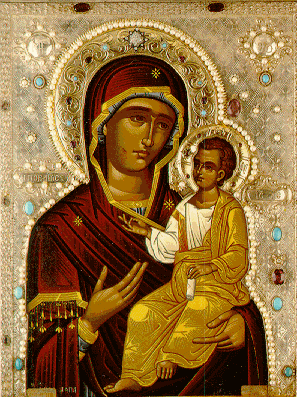
On July 6, on the 4th Sunday after Pentecost and on the feast of the Icon of Our Lady of Vladimir we had a nice celebration at St. George Church. The Divine Liturgy was served by our Rector, Archpriest Igor Tarasov. Following the Scripture lessons the Rector preached a homily:

“In today’s Epistle lesson St. Paul is reasoning about such things as freedom and slavery. Recently we celebrated Independence Day, an American national holiday commemorating acquiring freedom and sovereignty of this nation from the slavery to the British Empire. But even after getting independence the American society knew such thing as slavery. In a number of American states people had other men and women as slaves. The society had to undergo a painful process of Civil War to end that shameful practice of slavery.”
“St. Paul lived in the ancient times when slavery was a normal thing. It became especially spread after Rome became an empire. Every fourth person living in the capital city of Rome was a slave. Slaves had no rights, they were considered a property of their masters. They could not make any important decisions for themselves. They could be punished, tortured or killed by their masters without any consequences. They were bought and sold. This is why when St. Paul was writing his Epistle to the Christians in Rome, he had to consider this reality. And in today’s Epistle he uses the terms ‘slaves’, ‘slavery’ and ‘freedom’ to be better understood by his listeners. He says today, “I speak in human terms because of the weakness of your flesh” (Rom. 6, 19). Let us then try to understand the main ideas of today’s reading of the holy Apostle.”
“Our main slavery is a slavery to sin. It started when man sinned and became fallen. The mission of our Lord Jesus Christ was to set us free from that slavery. His mission was successful. All who follow Christ and become baptized are freed from sin of Adam and are given a right to become admitted to the society of Saints. Now we no longer belong to the devil, to the sin, but to Jesus Christ who is our Lord and Master. This is why St. Paul says in today’s Epistle lesson, “Having been set free from sin, you became slaves of righteousness” (Rom. 6, 18). God means righteousness and justice; God means goodness and truth; God means holiness and purity. This is why, if we now belong to Him, speaking in human terms of the times of St. Paul, we are “slaves of righteousness”. We are slaves of God’s holiness, of His goodness, of His truth and His love.”
“St. Paul further reasons that being enslaved by God demands to fulfill His will. St. Paul says, “For just as you presented your members as slaves of uncleanness, and a lawlessness…, so now present your members as slaves of righteousness for holiness” (Rom. 6, 19). If we wish to belong to Jesus Christ, then our life has to be a service to righteousness and acquiring of holiness. We cannot betray our Master by serving other masters such as our passions, sins and the devil.”
“We should add here that belonging to Jesus Christ, becoming a slave of righteousness is totally voluntary thing. We embrace that kind of service voluntarily. If we truly understand that such slavery is our true home and our true dignity, we accept it and live by it being happy. We also understand that we Christians are by far better off than so called “free men” in the world. St. Paul teaches us in today’s lesson that the fruit of slavery to Christ is holiness and eternal life. But the fruit of being free from Christ is death. He says, “What fruit did you have then in the things of which you are now ashamed? For the end of those things is death. But now having been set free from sin, and having your fruit to holiness, and the end, everlasting life” (Rom. 6, 21-22).”
“Therefore, dear brothers and sisters, humanity needs to choose. As two thousand years ago when St. Paul lived, so today, men have to choose between slavery to righteousness and slavery to sin. Jesus Christ by His sacrifice on the cross, by His Redemption accomplished for us, made this choice possible. But it is up to us which slavery to choose. It is our voluntary choice which master to submit. Either we choose our Jesus Christ, the Son of God to be our Lord and Master and to become slaves of righteousness, or we may choose to become or continue to be slaves of sin. There is no other option. We may be deluded by sin to think that if we are free from religious and other traditional rules, then we are truly free people living according to our own will. Many people fell for that. They did revolutions, they destroyed the churches, they proclaimed the reason and social issues to be supreme in our lives. But in fact, they only served the sin and death. And now, in our times people who wish to be free from the Church, from the traditional values are deluded. They think that they are free, but they are miserable slaves of their own passions, sins and eventually, the slaves of the devil and death. A very painful example is the raise of the gay movement. In our times, American cities hold so-called gay parades which they even call the “parades of pride”. Homosexuals show their pride of being lawless in their lifestyle. Sinners show that they are proud to sin. And every mayor of our city participates in that shameful action putting a disgrace on this city and on its leadership. Well, they can show that but all of them should be aware of the words of St. Paul, “The wages of sin is death” (Rom. 6, 23).”
“Dear brothers and sisters! Our presence here, in this holy temple shows that we made a choice to be slaves of righteousness. Let us then serve our only Master, the Lord Jesus Christ. Let us present our members not as slaves to uncleanness for lawlessness as many people do, but as slaves of righteousness for holiness. This slavery will bring us eternal life. If we do differently, we may inherit eternal death. Let us remember the words of St. Paul: “The wages of sin is death, but the gift of God is eternal life in Christ Jesus our Lord” (Rom. 6, 23).”

During the Liturgy Fr. Igor proclaimed the litany for the deceased at which he commemorated the newly-departed Metropolitan Vladimir of Kiev, the first hierarch of the Ukrainian Orthodox Church who passed away on July 5.

After the Liturgy dismissal the Rector reminded parishioners that during the coming week the Church celebrates two great feasts: the Nativity of St. John the Baptist (July 7) and feast of the Holy Major Apostles Peter and Paul (July 12). While we are not having a service on July 7, we will celebrate feast of St. Peter and Paul on Saturday, July 12.

3rd Sunday after Pentecost

On June 29, on the 3rd Sunday after Pentecost Archpriest Igor Tarasov, Rector of St. George Church served the Divine Liturgy in our temple.
Following the Gospel reading the Rector preached a homily:

“Today’s Epistle lesson is telling us about faith, hope and love. St. Paul teaches that we are justified not by the works of the Old Testament law, but by faith in Jesus Christ. Salvation comes from faith. And faith makes us acquire the grace of the Lord and makes us rejoice in hope of the glory of God (Rom. 5, 2). St. Paul assures us that hope in Jesus does not disappoint, “because the love of God has been poured out in our hearts by the Holy Spirit who was given to us” (Rom. 5, 5). St. Paul also says that the love of God is shown in the fact that God Himself died for us although we were sinners. “In due time Christ died for the ungodly” (Rom. 5, 6).”
“St. Paul further reflects upon that fact that Christ died for us who seemed to be unworthy of such sacrifice, saying that “scarcely for a righteous man will one die; yet perhaps for a good man someone would even dare to die” (Rom. 5, 7). He then comes to an important conclusion: “But God demonstrates His own love toward us, in that while we were still sinners, Christ died for us” (Rom. 5, 8).”
“God loved us always. He loved us although we were sinners. That is what makes God’s love so wonderful. He did not wait until we reformed and found our way back to Him. He did not wait until we loved Him. He loved us before that. He loved us while we still spurned and rejected His love. And He still does love all of us despite our sins. For us, Christians, it is important to remember that God loves us no matter what we are or what we do. However, we should not forget all the things which are wrong with us. We have to be realistic about our sins and our weaknesses and our unworthiness. At the same time we have to be optimistic and remember that God nevertheless loves us.”
“It can be compared to good parenting. A good parent will try to correct a child for wrong behavior, but not humiliate him as a person. There is a difference between a parent saying to a child, “The thing you did was wrong and I will not stand for that, because I love you too much to allow you to grow up with that kind of behavior,” or saying to the child, “You are a terrible person because you did such a thing”. God is like a good and wise parent. He does not like when we do wrong things but He does not belittle us for that. When we think of these things we come to a basic biblical truth: hate the sin but love the sinner. This is the way God loves us. He showed His love by dying for us while we were still sinners. God hates the sin but never withdraws His love from the sinner.”
“The Scripture tells us how God did actually love the sinners. Why did God love Moses or David or Paul or Zacchaeus? Did He love them because of their goodness? Certainly not! They were all sinners. Moses was a murderer. David was a murderer and adulterer. Paul was a persecutor of Christians. Zacchaeus was a thief, a dishonest tax collector. It was because God loved them in spite of their sins that they became Saints. Christ loved harlots and murderers and thieves and adulterers. He shed His precious blood to save them. It was the transforming power of His love that made these people new persons – the same love that can make us new persons.”
“Therefore, when the devil comes to us and tempts us with the thought, “How could God love me? I have been bad – no, God could never love me”, remind the tempter of other sinners before you, like Moses, David, Paul and Zacchaeus. Or, when the devil tempts us with the thought, “How could God love that person? He is so bad! How God could love a criminal, a pervert, a maniac, a godless scoffer?” – again, remind the tempter of other sinners who were loved by God, take him to the Cross, and confront him with the words of today’s Epistle lesson, “God demonstrates His own love toward us, in that while we were still sinners, Christ died for us” (Rom. 5, 8). Christ did not die for Saints. He died for sinners to make them Saints.”
“Today we commemorate St. Tychon, bishop of Amathus. While he was even a young man he performed a miracle. A certain gardener threw away the dried prunings of vines from the vineyard. St Tychon gathered them, planted them in his garden and prayed the Lord that these branches might take root and yield fruit for the health of people. The Lord did so through the faith of the holy youth. The branches took root, and their fruit had a particular and very pleasant taste. It was used during the lifetime of the saint and after his death for making wine for the Mystery of the Holy Eucharist. Something similar God does to us, the sinners. When we sin, we are like the dried branches. But God wishes to plant us and to restore us to life, so we can produce good fruits.”
“Dear brothers and sisters! Let us cherish our faith by which we are saved. Let us rejoice in the hope of Christ by which we understand that God loves us. Let us appreciate His love for He loved us even while we were sinners. And let us love Him in return to become Saints!”

After the dismissal of the Liturgy the Rector congratulated our parishioner and altar server Elisej Flora on his past name day and wished him God’s blessings and intercession of the Holy Prophet Elisha whose memory was celebrated on June 27. Traditional ”Mnogaia leta” was proclaimed and sung.

Following the service our parishioners and the Rector gathered at the table to enjoy coffee and refreshments.

2nd Sunday after Pentecost, of All the Saints of the Church of Rus’

On June 22, on the 2nd Sunday after Pentecost when we celebrate feast of All the Saints of the Church of Rus’, our Rector, Archpriest Igor Tarasov served the Divine Liturgy in our temple. Following the Scripture readings he preached a sermon:

“On the 2nd Sunday after Pentecost we honor All the Saints of our Russian Orthodox Church. If last Sunday we celebrated feast of All Saints who pleased the Lord being members of the universal Orthodox Church, today we glorify those who belonged to our local Church, the Church of Rus’. It is good that this feast had been recently renamed. It used to be called “Sunday of All the Saints who shone in the Russian land”. Last year our Holy Synod renamed it as “Sunday of All the Saints of the Russian Church”. It is appropriate because not all of the holy men and women lived in Russia or were Russian. But all of them belonged to the local Church of Rus’.”
“In today’s Epistle lesson St. Paul teaches us that all the people will be judged by God according to their deeds. God will give “glory, honor, and peace to everyone who works what is good” (Rom. 2, 10). Good works will be rewarded and evil deeds will be punished regardless our social, national or even religious background. St. Paul confirms that saying that “there is no partiality with God” (Rom. 2, 11).”
“As we mentioned once before, for St. Paul the world was divided into two classes of people: the Jews who had the law given to them directly by God in written form, and the Gentiles who, although they did not have the written law, nevertheless had God-implanted instinctive knowledge of right and wrong within their hearts. Both would be judged by God. But Jew on the basis of the written law; the Gentile on the basis of the law that was written not on tablets or books but in the heart. St. Paul writes, “When Gentiles, who do not have the law, by nature do the things in the law, these, although not having the law, are a law to themselves, who show the work of the law written in their hearts, their conscience also bearing witness” (Rom. 2, 14-15). Therefore, the law written in the hearts of men is a God-given sense of right and wrong which we call conscience.”
“Our conscience directs us in a right way and often tells us what should be done. John Milton, famous English classical poet, pictured God saying as He is creating man, “I will put Mine umpire, conscience in his breast”. What better definition of conscience can be given? The God-implanted umpire who calls the plays – fair and foul. St. John Climacus says, “After God, let us have conscience as our aim and rule for everything”.”
“Today, celebrating feast of the Saints of our Russian Church, we should recall that all our holy men and women who came from our Church of Rus’ lived according to the voice of their conscience. One of our first glorified Saints, Metropolitan Hilarion even wrote a book called “The Word on the Law and on Grace” where he suggested that not the works of the law but the grace of Jesus Christ is leading to salvation. Conscience leads to grace. Another Russian Saint, Prince Alexander Nevsky said, “God is not in power but in truth”. Such truth is told us by our conscience.”
“But what should be done if someone’s conscience tells that person to do wrong things? It happens. And we often become witnesses to such things when people do evil and terrible things because they believe that they are correct and do the right thing. We could see that in the last century. On today’s date, on June 22 of the year 1941 Hitler invaded our old country, the lands of the historical Rus’. It happened on the same day as today, on the day the Church celebrated All the Saints of the Russian land. Hitler and the Germans felt that they were correct in their desire to conquer new lands, to get the life space for their nation which they believed was supreme to others. God allowed this evil to happen. He permitted this to occur even on the feast of our Russian Saints. We know and we understand that the Nazis were wrong. And the Lord did not permit them to achieve victory. Similarly, these days we are witnessing a strife on the lands of historical Rus’. Internal strife is taking place in Ukraine. And the Russian state is very much involved in that. There is a great political tension between Russian and Ukrainian people. The two Orthodox nations who both originate from the same ancient Rus’, from the same baptismal font of St. Vladimir are now turned against each other! The blood is shed. Rus’ is destroying Rus’. And both sides feel that they are right. Their conscience tells them that they are on the right side and their rivals on the wrong. How to deal with that?”
“We have to admit that conscience itself is not a safe guide. It cannot stand by itself. It needs to be developed by Godly training. Conscience is a safe guide only when it is properly educated and safely guided by the Holy Spirit. Conscience does not tell us what is really good and what is really bad. It praises us for doing good without telling us what good is. Conscience needs to be educated. As a radio has to be tuned to a certain station, our conscience has to be turned to Christ. The Church can help us with that. We can educate our conscience through spiritual life. Then we will see that hostility, hatred and violence are bad helpers. Political views and national objectives are bad advisors. Only in love, understanding and dialogue you can achieve peace and well-being. This is why, if conscience told Hitler that he is correct, it was not an educated conscience, not a conscience tuned to Christ and guided by the Holy Spirit. And this is why, if someone believes that his conscience is directing him to kill, destroy and fight his compatriots or brothers in faith, does not have conscience tuned to Jesus Christ and is not guided by the Holy Spirit. He will fail and will be judged for his misdeeds.”
“The Saints of Rus’ always attempted to be above strives and hostilities of their times. The lands of Rus’ were divided and underwent a lot of domestic wars between different rulers and regions. But those who wished to tune their conscience to Christ always stayed above those divisions and prayed for unity and called for reconciliation. Such was our famous Saint, Venerable Sergius who labored to unite the Russian lands. Such were many other Saints of our Church.”
“Therefore, dear brothers and sisters, let us tune our conscience to our Lord Jesus Christ. Let us listen to the voice of our conscience if it is really guided by the grace of the Holy Spirit. Let us implore our Saints of the Russian lands to intercede for us and for the suffering land of Ukraine to bring peace and well-being. All the Saints of Rus’, pray God for us!”

During the Liturgy the Rector proclaimed a kneeling prayer for peace in the suffering country of Ukraine, calling the Saints of Rus’ to intercede for the people living in the time of strife.

After the Liturgy dismissal Fr. Igor preached a brief sermon in Russian, touching his main points of the homily proclaimed earlier in English. He also called faithful to attempt to become new Saints of the Russian Church, and said that nothing can stop us to become Saints except our own evil will and our giving up to the temptations of the enemy.

Sunday of All Saints


On June 15, on the 1st Sunday after Pentecost dedicated to All Saints, St. George Church’s Rector, Archpriest Igor Tarasov served the Divine Liturgy. After the Gospel lesson he preached a homily:

“The Epistle lesson gives us today a good instruction on how to become a Saint. St. Paul mentions the glorious and heroic deeds of the Old Testament Saints and then he says to his listeners, “Therefore we also, since we are surrounded by so great a cloud of witnesses, let us lay aside every weight, and the sin which so easily ensnares us, and let us run with endurance the race that is set before us, looking unto Jesus, the author and finisher of our faith” (Heb. 12, 1-2). St. Paul’s instruction has three parts. Let us talk about them today.”
“Life for St. Paul was a race to be run and a crown to be won. Those who win such a race become crowned with holiness, become invited to the Kingdom of God. In order to win that race you need to free yourself from any unnecessary burden and obstacles. This is why the first part of St. Paul’s advice on how to become a Saint is to “lay aside every weight, and the sin which so easily ensnares us” (Heb. 2, 1). One of the known Orthodox preachers compared such weight to the small animals called barnacles. Barnacles are little crusty creatures that accumulate on the bottom of ships. They cause a great headache for shipowners. No bigger than walnuts, they can slow down a ship weighing thousands of tons. Within six months after it goes into the water, a vessel may acquire 2 or 3 inches of these barnacles. The layer can weigh 100 tons and reduce a ship’s speed by more than 10 percent. It increases consumption of fuel and it requires cleaning of the vessels every couple of years.”
“Like ships, we human beings can also accumulate barnacles that slow us down and burden us with unnecessary drag. They make our race for a crown of holiness much harder to win. What kind of barnacles we collect? St. Paul gives us a whole list of barnacles in his Epistle to the Galatians and calls them “the works of flesh”: “adultery, fornication, uncleanness, lewdness, idolatry, sorcery, hatred, contentions, jealousies, outbursts of wrath, selfish ambitions, heresies, envy, murders, drunkenness, revelries, and the like”. And he warns that those who practice such things will not inherit the Kingdom of God (Gal. 5, 19-21).”

“How do we remove the weight of sin, the annoying barnacles that accumulate in our lives? As it is not an easy task with ships, so it is not an easy task for us. St. Paul teaches us to crucify our flesh with its passions and desires. Kill your sinfulness. Our Lord Jesus Christ compares it to the severance of the members that cause us to sin. He says, “If your right eye causes you to sin, pluck it out and cast it from you; for it is more profitable for you that your members perish, than for your whole body to be cast into hell” (Mt. 5, 29). The same advice the Lord is giving about a hand (Mt. 5, 30). Jesus, of course, is not speaking literally here. He does not want us to start dismembering our bodies. But He is using strong language to stress the necessity of removing anything that hinders us, weighs us down, and impedes us in running the race and winning the prize.”
“By far the best way to keep our lives free of the weight of sin is by coming to Jesus daily and letting Him scrape us clean of every weight and sin through heartfelt repentance and honest confession. He alone can make us clean. He alone can present justified before God.”

“The second part of the instruction is “to run with endurance the race that is set before us” (Heb. 12, 1). We understand that that race is our life which needs to be spent in serving God and other people. To complete this task we need endurance. Again, the example of Jesus Christ can help us. St. Paul reminds that our Lord “for joy that was set before Him endured the cross” (Heb. 12, 2). We are also called to endure our own crosses for the joy set before us, the joy of heavenly blessedness.”
“And finally, the third part of the instruction is to look unto Jesus (Heb. 12, 2). As we run the race of life we must keep Jesus in full view at all times, looking to Him, for He is the author and finisher of faith. He is the Creator and the Finisher of everything, Alpha and Omega. He is our God and our Savior. Therefore, dear brothers and sisters, let us run the race of our Christian life laying aside every weight and sin; let us run with endurance the race for holiness which is set before us; let us always keep our spiritual eyes on Jesus, the Author and Finisher of faith. If we will do so, our names will be written in heaven and we will join the Saints.”

After the Liturgy dismissal the Rector congratulated all men in the parish on the occasion of Father’s Day and wished them God’s blessings and assistance in their endeavor of  being good fathers and raising children. Traditional “Mnogaya leta!” was sung. Fr. Igor also reminded that next week we begin St. Peter’s Fast dedicated to the works of the holy Apostles. The Rector called God’s blessings upon parishioners to assist them in undergoing the spiritual journey of the fast.

Following the service parishioners and the Rector enjoyed delicious meals and a good company at the coffee hour.

Pentecost


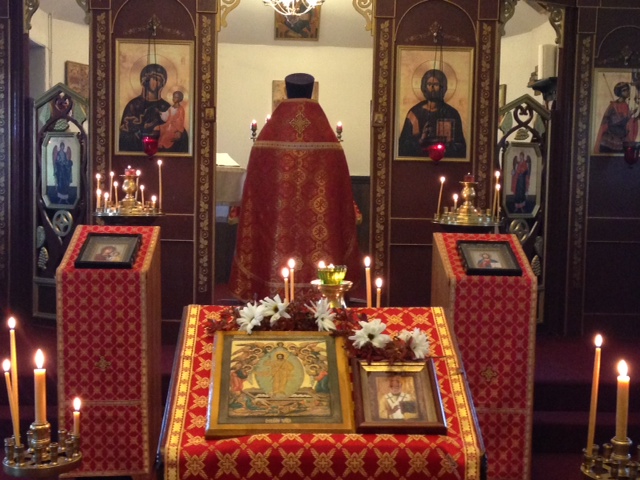
On June 8th, on Pentecost Sunday when the Church celebrates the great holy day of the Most Holy Trinity, we had a solemn service at St. George’s Church. Before the celebration, according to our pious custom, our temple was decorated with the greenery. Our Rector, Archpriest Igor Tarasov celebrated the Divine Liturgy.
Following the Scripture readings of the Liturgy Fr. Igor preached a homily:

“Today we celebrate one of the greatest feasts of our calendar. One of the names of this holy day is Pentecost which is translated as ‘the 50th’ because it is celebrated on the 50th day after Pascha. The real reason of our celebration of that 50th day after Easter is that on this day the Holy Spirit descended upon the holy Apostles.”
“Today’s Epistle lesson vividly describes that holy event. It tells us that the Apostles were all together in one place when the day of Pentecost had fully come (Acts 2, 1). It should be said that the Jews have their own celebration of Pentecost. This feast is called the Feast of Weeks , and it comes 50 days after Passover. It was a celebration of the first fruits of harvest. People use to adorn their homes with greenery, in the same way as we Orthodox Christians do it now for our celebration. It was a feast of the greenery, as it is called now in some Slavic countries, the ‘Green holidays’. The Jews also believe that this was the day when Moses received Ten Commandments from God, the day when the Jews acquired the Law of God. Thus, holy Apostles were in Jerusalem on the Jewish celebration of Pentecost. They stood together as the Lord commanded them to do when He ascended into heaven.”
“The Epistle lesson says that they were together in one place. “And suddenly there came a sound from heaven, as of a rushing mighty wind, and it filled the whole house where they were sitting” (Acts 2, 1-2). Then the Epistle says that divided tongues, as a fire, appeared to the Apostles, and one sat upon each of them (Acts 2, 3). This was the appearance of the Holy Spirit, as a mighty sound of the wind from heaven and the tongues of fire. It also had great results. After each of the fiery tongues sat upon the Apostles, they began to speak with other tongues, as the Spirit gave them utterance (Acts 2, 4). This was the first miraculous sign of the Holy Spirit filling the Apostles. They became able to speak different languages. The Epistle tells that people from different countries who were gathered in Jerusalem for the feast could hear their native tongues from the Apostles. All these people were Jews. They could be born Jewish or were proselytes, Gentiles who converted to Judaism. At those times the Jews already lived in many different countries and spoke different languages. Today’s reading mentions a number of those ancient countries from where the pilgrims came to Jerusalem and became witnesses to that miraculous speaking of the Apostles.”

“We know that the Apostles were not very educated men. Some of them were fishermen from Galilee. However, the Holy Spirit made them wise and enabled them to catch a lot of men to the nets of salvation in Jesus Christ. Today’s festal troparion describes that saying, Blessed art Thou, Christ our God, Who didst make the fishermen wise by sending down upon them the Holy Spirit, and through them didst draw the universe into Thy net…” The Holy Spirit made these people who were not wise in the world wise in Christ.”
“Dear brothers and sisters! If the Old Testament Pentecost celebrated the birthday of the Mosaic Law, our Pentecost is the birthday for the Church. If the Jews celebrated acquiring of the Torah, we celebrate acquiring of God Himself, His Holy and Good and Life-creating Spirit. The same Spirit Who “was hovering over the face of the waters” in the first creation and made order out of chaos came upon the Disciples of Christ. But in the similar way as the Holy Spirit came down upon the Apostles when they expected Him to come praying together, this Spirit continues to come upon us when we are together as members of the same Apostolic Church. Recently, I had a conversation with a person who was once baptized but is not really practicing Christian faith. He was asking why should we assemble in the temples and attend the church services. The answer is in the Apostolic behavior. The Lord Himself commanded them to stay together in Jerusalem, to pray in humility and to wait for the promised gift, the Holy Spirit. Only upon all of them being together the Holy Spirit could descend. Thus, only if we are gathered in the temple the Holy Spirit could come upon us and bestow His abundant gifts, His rich graces. We may pray alone, we may conduct a righteous life alone, but in order to be filled with the Holy Spirit we need to be together, in the community of believers, in one, holy, Catholic and Apostolic Church. This is why I am so concerned with your attendance of the church services. This is why the Church commands us not to miss Sunday Liturgy. Together we may be blessed in a special and unique way.”

“Therefore, dear brothers and sisters, let us be grateful for the gift of the Holy Spirit, the gift of the Church existing for us. Let us pray that today especially, but also on any other day, the Holy Spirit may come and dwell within us, and may cleanse us of all impurity and save our souls!”

After the Liturgy dismissal the Rector and altar servers performed a rite of glorification in front of the festal icon in the middle of the church singing the troparion, kontakion and magnification of the feast.

Following the Liturgy the 9th Hour was read and the Great Vespers followed. At the Vespers traditional kneeling prayers of the Pentecost were read by the Rector.

After services of the feast Rector and parishioners had a luncheon at our favorite Pier 25A restaurant. We enjoyed delicious meals and a nice company.


Sunday of the Holy Fathers of the First Ecumenical Council


On June 1, on the Sunday of the Holy Fathers of the First Ecumenical Council, St. George Church’s Rector, Archpriest Igor Tarasov served the Divine Liturgy. After the reading from the Holy Gospel he preached a homily:

“These days we live after the feast of the Ascension of the Lord and before the celebration of Pentecost. We are under the impression of the glorious lifting up of our Lord into heaven, and, at the same time, we are expecting the Descent of the Holy Spirit. In the same way, holy Apostles were experiencing this double feeling. They were missing their Teacher who ascended from them into heaven, and they were expecting the promised Holy Spirit to come down upon them. Thus this was a special time for the Apostles, a time of being together, joined in a constant prayer, waiting for the Holy Spirit.”
“Today’s Sunday the Church dedicates to the Holy Fathers of the First Ecumenical Council. This is so because the First Council was the result of the Church life after the Apostles. It showed that Christian community needs certain hierarchical authority and definition of true faith. Otherwise, many false teachings and errors may come and spread among Christians. In today’s Gospel lesson our Lord Jesus Christ is praying for His followers that they may be preserved in truth and have eternal life (Jn. 17, 1-13). That truth became endangered when a lot of false teachers appeared among the Christians right after the time of the Apostles. They began to proclaim erroneous opinions about God and about Christ. These teachings are called heresies. This is why the Ecumenical Councils had to define Orthodox faith, the right belief in God and Christ.”
“Despite the Councils and despite the labors of the Holy Fathers the heresies appeared again and again. The communities of the people who called themselves Christians but in fact had deviated and departed from Christ, multiplied. We may be wondering about this but we should read the Scripture carefully. It tells us that all this was supposed to happen. Today’s Epistle lesson describes how St. Paul preached to the elders of the early Church. He tells them: “Take heed to yourselves and to all the flock, among which the Holy Spirit has made you overseers, to shepherd the church of God which He purchased with His own blood. For I know this, that after my departure savage wolves will come in among you, not sparing the flock. Also from among yourselves men will rise up, speaking perverse things, to draw away the disciples after themselves” (Acts 20, 28-30).  We may ask how the Church of Christ could divide into different denominations. But the Scripture told us all about this. St. Paul warned his followers about this in today’s Epistle lesson.”

“Our Lord Jesus Christ purchased us with His own precious blood. But it does not preserve us from going astray. People tend to make mistakes and to fall into errors. Christian communities had always been attacked by strange teachers whom St. Paul calls “savage wolves not sparing the flock” (Acts 20, 29). In the early times these were the influences of paganism or Judaism which attempted to penetrate into the Christian thought. They created numerous heresies of Gnostics or of the communities practicing Jewish customs. In our times these are the influences of different pagan religions, secular philosophies or just the spirit of this world which invades the minds of Christians. St. Paul also mentions that from among Christians “men will raise up, speaking perverse things, to draw away disciples after themselves” (Acts 20, 30). And this was fulfilled many times when among Christian communities, even among the clergy appeared some individuals or groups of people who began to preach false teachings and to draw the Christians away from the true Church. These were a lot of heresies which started to appear in the early times and continue to arise. These people claim to be Christians, but they deviate from Christ and went away from Him. The Scripture is being fulfilled in them. When you drive through a typical American town you may see several different churches, Baptist, Evangelical, Methodist, Adventist, or even so-called “the Churches of Christ”. Who are they? They call themselves the followers of the same Jesus Christ, however they teach differently, pray differently and live differently. They are the followers of those men who once arose among true Christians and began to speak perverse things, leading true Christians away. Not only St. Paul, but our Lord Jesus Christ Himself warned against them saying, “Beware of false prophets, who come to you in sheep’s clothing, but inwardly are ravenous wolves” (Mt. 7, 15).”
“Therefore, dear brothers and sisters, let us beware of the false teachings! Let us be grateful to the Lord who purchased our souls with His own precious blood, who gave us eternal life. And, as He says, eternal life is to know the only true God and His Son, Jesus Christ (Jn. 17, 3). Thus, let us desire eternal life by knowing our true faith, by adhering to the holy Orthodoxy defined by the Holy Fathers of the Councils. Let us fervently pray along with St. Paul of today’s Epistle lesson that we may be commended “to God and to the word of His grace, which is able to build you up and give you an inheritance among all those who are sanctified” (Acts 20, 32).”


Ascension of the Lord


On May 29, on the feast of the Ascension of the Lord into heaven, Archpriest Igor Tarasov, Rector of St. George Church, celebrated Divine Liturgy in our temple. After the Scripture lessons he preached a sermon:

“Today’s feast of the Ascension of our Lord Jesus Christ into heaven has a great significance. Our Lord accomplished His mission of salvation and now He has to return to His heavenly abode. He lived a righteous life of a just Man, He performed glorious miracles, He taught the people, He humbled Himself to die on the cross. Then He was risen from the dead and instructed His disciples, being with them for 40 days. Now it is time for the Lord to return where He came from. Ascending into heaven Jesus takes there both His divine nature, as well as His human nature. Thus, our nature in Jesus is now in heaven, at the right hand of God the Father. Jesus left the Apostles on earth, but He went to prepare a place in heaven for those who follow Him. These are the basic spiritual aspects of this important feast. But today’s Epistle lesson tells us a little different things regarding Ascension.”
“Today we read the very beginning of the book of the Acts of the Apostles. The writer, St. Luke describes the event of the Ascension. He says that the Lord commanded the Apostles “not to depart from Jerusalem, but to wait for the Promise of the Father” (Acts 1, 4). By that Promise of the Father, Jesus meant the Holy Spirit Who was going to be sent upon the Apostles. To confirm that the Lord said, “For John truly baptized with water, but you shall be baptized with the Holy Spirit not many days from now” (Acts 1, 5). The Holy Spirit was going to be poured out on the Apostles very soon. So, the first idea of today’s Epistle lesson is to wait for the descent of the Holy Spirit.”
“However, even after seeing the glory of the Lord in His Resurrection, even after
being instructed by Jesus for forty days after that glorious event, the Apostles still lived by the ideas of this world. They asked the Lord whether He at this time will restore the kingdom of Israel (Acts 1, 6). This was because they have not yet received that promised gift of the Father, the Holy Spirit Who would enlighten them and guide the Apostles in all spiritual matters. Instead of asking about eternal wisdom, they are wondering about earthly, political and temporary things. Jesus patiently instructs them saying, “It is not for you to know times or seasons which the Father has put in His own authority. But you shall receive power when the Holy Spirit has come upon you” (Acts 1, 7-8).”
“Then in today’s Epistle lesson follows the description of the Ascension itself. “Now when He had spoken these things, while they watched, He was taken up, and a cloud received Him out of their sight” (Acts 1, 9). Jesus was taken up, He was received by a cloud. We may note that clouds have a special meaning in the Scripture. They indicate the presence of God. A number of times in the Bible the clouds are mentioned when God appears to someone. A cloud enveloped Mount Sinai when Moses went up there to receive Ten Commandments. When our Lord transfigured on Mount Tabor also a cloud was there from which the Apostles heard the voice of God. As we also see, not only a cloud but a high place, a mountain indicates a special place where men can receive God’s revelation. The Scripture mentions a number of mountains where God revealed Himself or His will to the people. At this point, the Ascension took place on Mount of Olives near Jerusalem. Ascension was a special, supernatural, divine event.”

“But today’s Epistle reading is not so much concerned with the very event of the Ascension, as it is with the future life and deeds of the holy Apostles. As we said the Lord Jesus before being taken up to heaven instructs them regarding the future descent of the Holy Spirit. He commands them to wait for that Promise of the Father. And when He was ascended the Angels also advised the Apostles not to stand idly gazing into heaven, but to go and prepare themselves for receiving the precious gift of God. The Epistle tells us, “And while they looked steadfastly toward heaven as He went up, behold two men stood by them in white apparel who also said, “Men of Galilee, why do you stand gazing up into heaven? The same Jesus, who was taken up from you into heaven, will so come in like manner…”” (Acts 1, 11). The Apostles had to go and begin their ministry, begin to continue the mission of Jesus and await His second coming. They could mot stand gazing into heaven, but to prepare living Christ-like lives, as His servants, filled with the Holy Spirit.”
“Therefore, dear brothers and sisters! Let us honor today’s feast. But let us not just stand staring up into heaven, but go and live Christian life, do the works of faith, love and charity. Let us acquire the Holy Spirit in the Sacraments of the Church. Let us live a Christ-like life awaiting the second coming of the same Jesus, who was taken up from us into heaven, and who will come in like manner as the Apostles saw Him go into heaven (Acts 1, 11).”

Upon the Liturgy dismissal the Rector and the altar servers came out of the sanctuary to the middle of the temple and performed the rite of glorification before the icon of the feast. They sang troparion, kontakion and magnification of the holy day.