Summer Schedule

Please, note that beginning with Sunday, June 1 we switch to our Summer Schedule. Sunday services will start at 9:00 AM.
For more information please check our monthly Service Schedule.

Sunday of the Blind Man


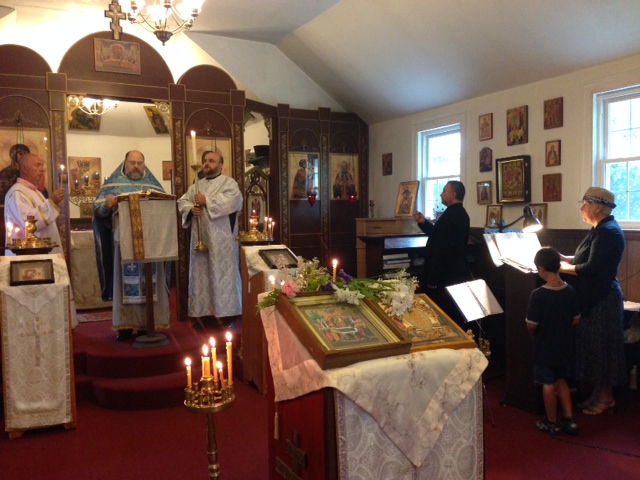
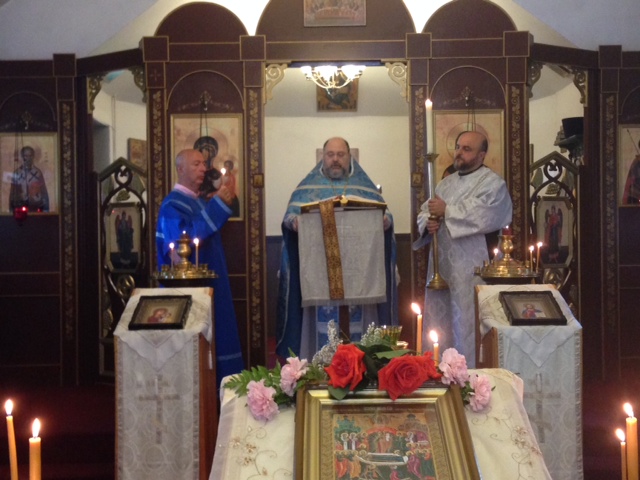
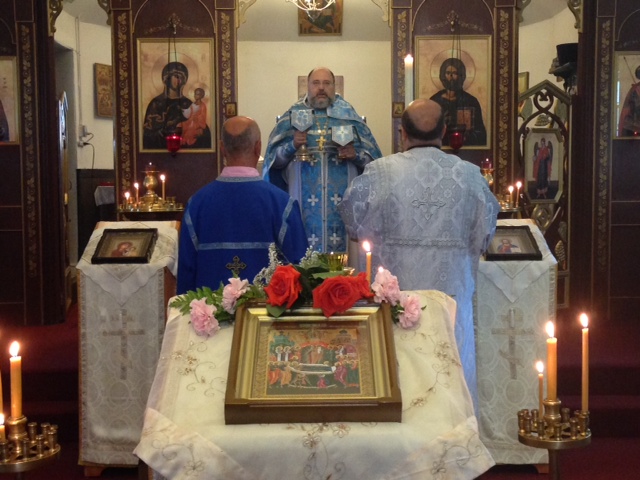
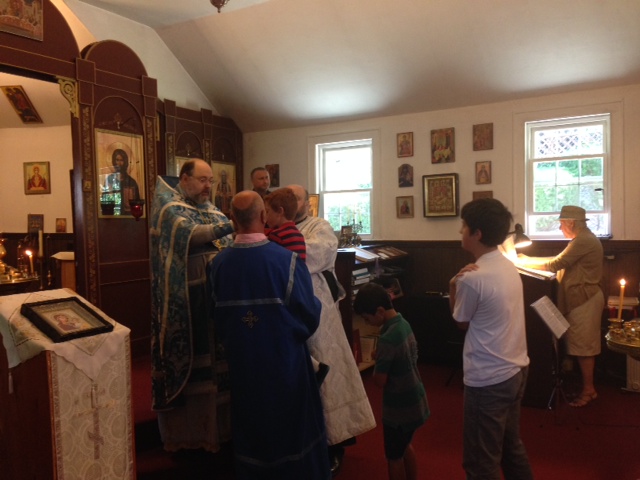
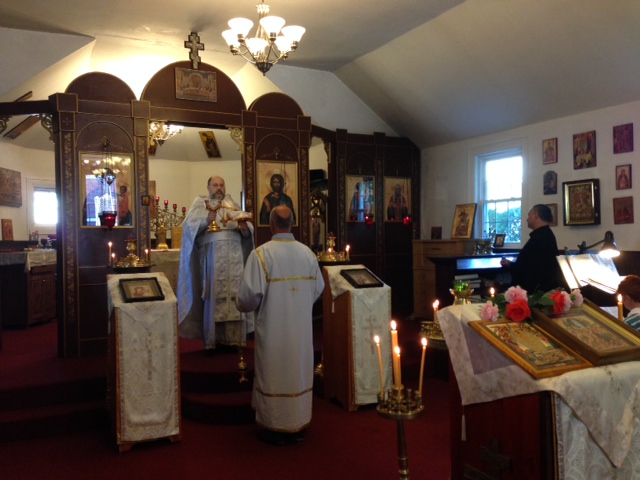
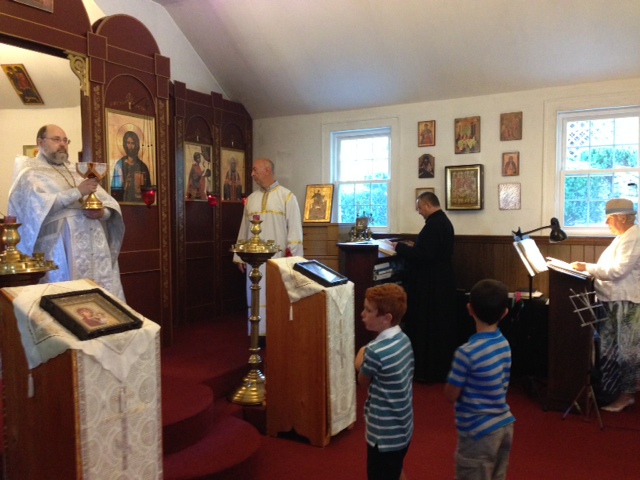
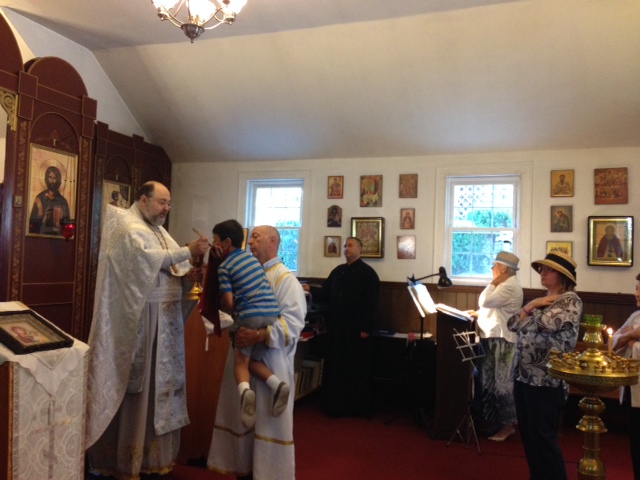
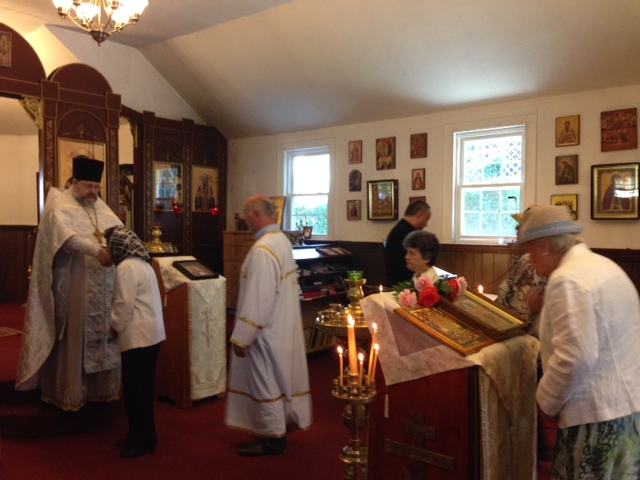
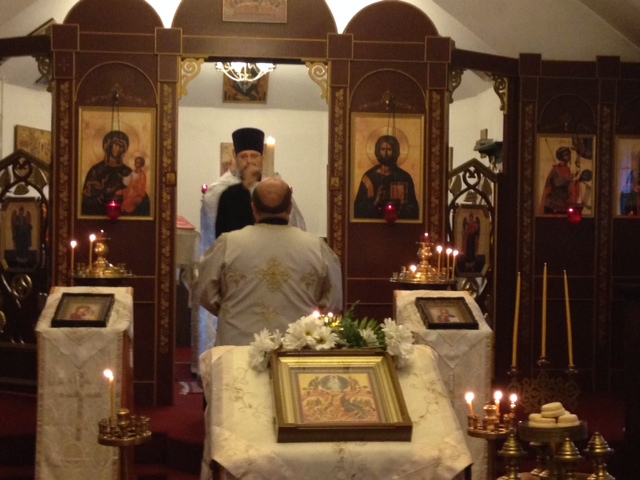
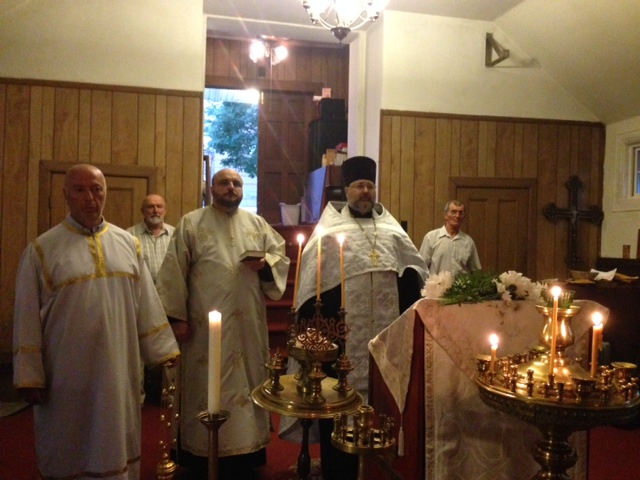
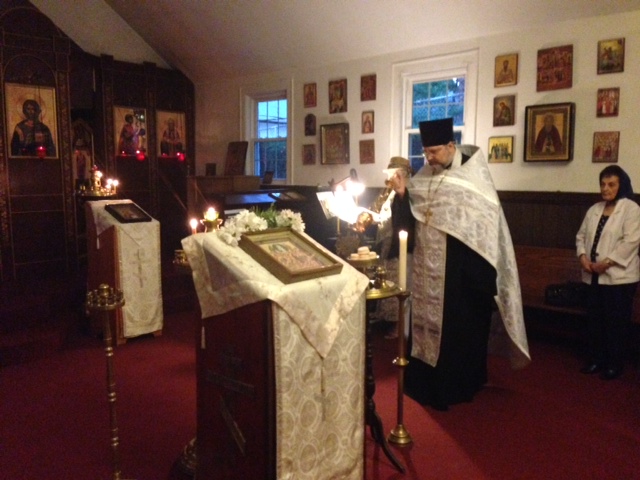
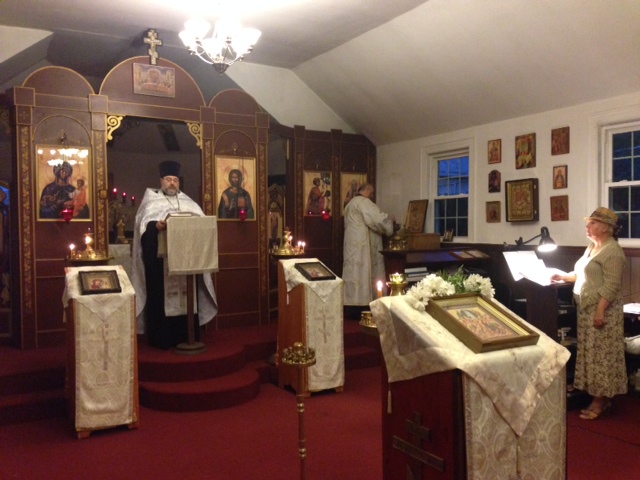
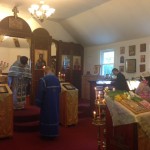
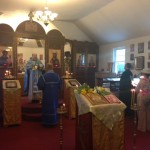
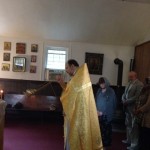
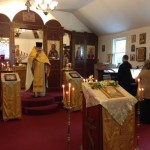
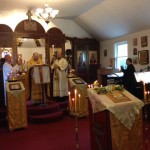
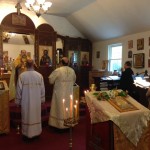
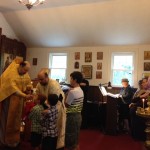
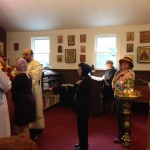
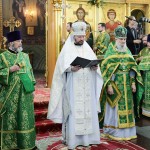
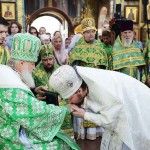
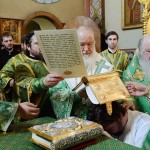
On May 25, on the Sunday of the Blind Man we had a beautiful celebration at St. George Church. Our Rector, archpriest Igor Tarasov served the Divine Liturgy. After the Gospel lesson he preached a sermon:

“In today’s Epistle lesson we heard an adventurous story about holy Apostles Paul and Silas who were put into an inner prison, but released by the keeper of the prison after the city was struck by an earthquake. The jailer asked them an important question, “Sirs, what must I do to be saved?” (Acts 16, 30). Thus we are going to think about that question today.”
“There are many different questions we ask during our life. But there is one question above every other question, what to do to be saved. When we hear the word “saved” some people may think about earthly life. For instance, they may think of being saved from death or a misfortune. But even if we think of salvation in its spiritual, Christian sense, we may simplify that matter. We may think that salvation is escaping hell and achieving heaven. This is true, but it is very limited way to think of that. It puts the whole matter in the future, the time after we die or the time of the Last Judgment. As a result, we forget that we can be saved here and now while we are on this earth. Salvation of Christ is extended to our earthly life as well.”
“We may be wondering from what we may be saved here on this earth? We may be saved from different misfortunes, pains and sufferings of this life if we will be living with Christ. He will heal our pain, help us to solve our problems. Salvation is a process, not a fact. We are being saved, not already saved.”
“Then, along with the prison keeper of today’s Epistle lesson we may ask what must we do to be saved. Holy Apostles Paul and Silas answered and said, “Believe on the Lord Jesus Christ, and you will be saved, you and your household” (Acts 16, 31). The key to salvation is to believe in Jesus Christ. It means to rest the whole weight of your life on Jesus. It means to bet your whole life on Him. “He who believes and is baptized will be saved; but he who does not believe will be condemned”, says the Lord (Mk. 16, 16). It is very clear. Yet some people are tempted to believe that man does not need Jesus as a Savior anymore. They say that science is so progressed today that it can save us from almost everything. Science is the new savior!”
“Man needs science. But science is not the savior. You cannot live by science alone. Science can modernize a house, but it can never turn a house into a home. Jesus can! Science can invent a medicine for the body, but it cannot heal a guilty conscience. Jesus can! Science can give man a great power, but not the moral strength to use this power wisely. Jesus can! His very name, the name “Jesus” means “God saves”. He is able to save. And we must believe in Him in order to be saved.”

“Today’s Epistle tells that the prison keeper and all his family were baptized (Acts 16, 33). If we believe we have to be baptized. Many of us were baptized when we were small children. Our godparents confessed belief in Christ for us. But if we are to be true Christians, there must come time in life when we must say these words for ourselves – a time when we ourselves decide to follow Christ as our personal Lord and Savior and commit our whole life to Him as our God. Unless this happens we are not Orthodox Christians. We are Christians in name only, or Christians by baptismal certificate only – to whom the Gospel of Christ means little or nothing. A baptismal certificate alone is not enough. Payment of church dues is not enough. Occasional church attendance alone is not enough. Believe, lean your whole life upon Lord Jesus Christ, and then you will be saved.”
“It took an earthquake to make the jailer ask Paul and Silas the question: “Sirs, what must I do to be saved?” Will it take another earthquake to make us ask the same question? Haven’t we had enough earthquakes? All the wars, the despair, the anxiety, the meaningless, the boredom, the immorality of our age? Do we need something more devastating than these to make us ask the question, “What I must do to be saved?” We must believe in Jesus Christ, live by that faith. Then we will live in the process of our salvation which will lead us from being saved now to being saved in the eternity.”

On that day our parish was visited by the Rector’s childhood friend, Mitered Archpriest Nicholas Florinschi who is serving in Chisinau (Kishinev), Moldova. Fr. Nicholas was praying at the Divine Liturgy and read the Epistle.

After the Liturgy dismissal Fr. Igor greeted our guest. He recalled that they together belonged to the same cathedral parish in their home city of Kishinev. While future priest Igor was a young boy, future Fr. Nicholas was an altar server and subdeacon serving to the Archbishop. He also stressed that still a lot of things unite him and our parish with Fr. Nicholas, including the fact that he is the Rector of a church also dedicated to Holy Great Martyr George. Answering to Fr. Igor’s greeting Fr. Nicholas expressed his gratitude for the warm welcome and promised to maintain connection between our two St. George Churches.

Following the services the Rector and parishioners enjoyed delicious meals and a nice company at the coffee hour.


Sunday of the Samaritan Woman


On May 18, on the Sunday of the Samaritan Woman, Archpriest Igor Tarasov, Rector of St. George Parish celebrated the Divine Liturgy in our temple. Following the Scripture lessons he preached a homily:

“Today’s Sunday is dedicated to the Samaritan woman who had a very serious and profound conversation with our Lord Jesus Christ described in today’s Gospel lesson (Jn. 4, 5-42). Jews and Samaritans were two hostile communities. But when they were becoming the followers of Christ, they became united in faith and had to forget their past differences. In Jesus Christ all became the same, for in Christ “there is neither Greek nor Jew” (Col. 3, 11). All the true followers of Christ are now called Christians. This is their most important name.”
“Today’s Epistle lesson tells us that the name “Christian” was first given to the followers of Jesus in the city of Antioch (Acts 11, 26). Scholars say that Antioch was known for its ability to produce names. Those names were usually given in derision and contempt. Antiochians called one of the Roman emperors “the Goat”. Thus the name “Christian” was given to the followers of Jesus as a nickname. The people of Antioch had many names in their resourceful language, but they had no name to cover this type of character. These followers of Jesus did things, said things, lived things unheard of in the history of the world. They lived purity, forgiveness, love, humility of Jesus. So, the Antiochians made a new name for these people in whom they saw the behavior of Jesus Christ. They called them in Greek
Christianoi – Christ people.  There was something so new about these people, something so refreshingly different, that they created a new name for them. “And the disciples were first called Christians in Antioch” (Acts 11, 26).”
“The Christians took this name given in mockery and turned it into one of the most revered names in history. The name tells us something very important the Christian: that there is resemblance between Christ and the Christian. The Christian is first and foremost a Christ person.

“If someone were to ask you, “Why are you a Christian?”, what would you reply? Many would reply that they are Christians because they were born in a Christian family, or because they were baptized. This is not good enough. Some would say that they are Christians because they believe in God and try to do good. But to be a Christian means far more than that. To see exactly what it means let us go back to the first Christians, the holy Apostles. How did they become Christians? One day Jesus said to them, “Follow Me!” And they left their past life and past cares and followed Him.”
“Here we have the answer. A Christian is someone who follows Christ consciously and by personal choice, who responds to his call, who says “yes” to Jesus. First and always it is a relationship to a Person, not a code or philosophy. To be a Christian is to be committed to God in Christ. It is to be living member of His Body, the Church.”

“A little boy once asked his father, “What is a Christian?” The father, who knew the Bible well, described to his son what being a Christian really is according to the New Testament. When he finished explaining, the little boy said, “Father, have I ever seen a Christian?””
“The pagans in Antioch did see Christians. In fact, they saw Christ in His followers – so much so that they called them by the very name of Christ. Does the world today see something of Christ in us? Does it see the purity, love or forgiveness of Christ in us? Is our lifestyle, our words and deeds, bear a witness of our faith in Christ? Can anyone point to you or me and say, “This is a Christian!”? Can anyone look at our parish and say, “These are Christians”?”

“Dear brothers and sisters! Our Lord said, “Let your light so shine before men that they may see your good works and glorify your Father in heaven” (Mt. 5, 16). Christians are people who shine before men. They shine by the light of Christ. It was because of such a light of Christ, because of such a Christ-like lifestyle that the early disciples of Jesus came to be called Christians. Let us ask ourselves whether anyone would be able to look at us and guess that we are Christians.”


Sunday of the Paralytic


On May 11, on the Sunday of the Paralytic, Rector of St. George Church, Archpriest Igor Tarasov served the Divine Liturgy in our temple. After the Gospel lesson he preached a homily:

“On this Sunday the Scripture readings tell us about some examples of miraculous healings. In the Gospel lesson, Jesus healed the paralytic at the Pool near the Sheep Gate in Jerusalem (Jn. 5, 1-15). And in the Epistle lesson, the same power of Christ to perform healings is seen in holy Apostle Peter. St. Peter healed the paralytic named Aeneas and raised the woman named Tabitha from the dead. It is interesting that in each one of these three miracles the word “rise”, or “arise” is used. Jesus says to the paralytic, “Rise, take up your bed and walk” (Jn. 5, 8). St. Peter says, “Aeneas, Jesus the Christ heals you. Arise and make up your bed” (Acts 9, 34). He also says, “Tabitha, arise” (Acts 5, 40). The word “rise” is the key word in today’s Scripture readings. Therefore, today we are going to reflect upon this single but important word.”
“We may say that the whole message of the Holy Gospel is contained in that little word “rise”. Jesus was risen from the dead, so we have to rise. He raised us from the depths of sin and death to a new life of peace and power. When Peter began to sink into the sea because of his little faith, Jesus reaches out to raise him, as He raised us in the waters of Baptism lifting us from sin and death to a new life.”
“One of the images of the Resurrection shows the Lord as He victoriously rises from the tomb. It is a very popular image. It depicts Jesus alone or along with the Angels. This picture is known both in the Eastern and Western Church. Another icon, known only in the Orthodox Church, is in reality the icon of Christ’s Descent into Hell. The glorified Christ descends into the abyss. Even while the body of Jesus was in the tomb those three days, His love was active. He used that time to descend with His soul into the very depths of hell, into the abyss of death, to break the bonds of death and to proclaim there the good news of salvation. He, the Second Adam, the perfect Man reaches out to touch, renew and raise the First Adam, the man who had fallen from life, who dwelt in the land of the shadow.”

“That icon of the Resurrection shows Christ not standing alone, but raising, lifting Adam and Eve out of the depths through the broken doors of hell. He frees them, but at the same time He frees us. The hand that reaches out to grasp the hand of Adam reaches out to embrace the descendants of Adam as well. We are also bound by death, held captive by the power of sin. We too, have died and been cast out into the abyss. Yet the Risen Christ comes to us as to lost sheep, descending in His love to seek us out in the darkness and to raise us up with Himself. If we make our bed in hell, He is there, ever present, ever reaching out to raise us with Him into the glory of the resurrected life. From anxiety in the face of death, He raises us to an unshakeable hope in the resurrected life. From fear of the future, He raises us to undiminished joy. From loneliness and separation, He raises us to friendship with God. Because He is risen, He has the power to help us rise from the tombs of slavery, sin and death to fullness of life.”
“Some people say that religion is moonshine. They mean that it does not give enough light and heat, does not really help. But they forget that the power of the moon lifts trillions of tons of water each day to make the tides rise in the oceans of the world. In the moon there is a great power. Greater than the moon’s power is the power of Him Who created the moon. It is the power to help us rise from the deepest abysses in life.”

“Dear brothers and sisters! We all have troubles in life. We are all sinful. What we need more than anything else is power to rise above them. But we cannot rise above all troubles, and difficulties; we cannot rise from the depths of sin unless we have within us Him Who helps us rise, the Risen Lord Jesus Christ. It is by His power Aeneas was raised; Tabitha was raised; the paralytic by the pool at Sheep Gate was raised. This same Jesus gives us the power today to rise above whatever obstacles life can place in our way.”

Following the Liturgy dismissal Fr. Igor congratulated the ladies in the parish on the occasion of Mother’s Day which was celebrated in the United States on this Sunday. Traditional polychronion was sung.


Parish Patronal Feast of St. George


On May 6 the Church commemorates the Holy Great Victorious Martyr George, heavenly Patron of our temple. Our Parish had a solemn celebration of its Patronal feast. St. George Church’s Rector, Archpriest Igor Tarasov served Divine Liturgy. It had been previously planned that our temple be visited by His Eminence, Archbishop Justinian. However, due to the flooding in our church building we were uncertain whether we will be able to serve on that day, thus the visit of His Eminence had to be cancelled.

Upon the Liturgy dismissal the Rector and altar servers came out of the sanctuary to the middle of the temple and performed the rite of glorification in front of the icon of St. George singing the troparia, kontakion and magnification in honor of the Saint.

Following the service Fr. Igor preached a short sermon in English and then in Russian language. He congratulated the faithful on the occasion of the glorious feast of our parish Patron, told about our recent problem with the flooding in the church which changed our plans for having the Archbishop and other clergy guests serving on this feast. The Rector then told a short story of life of St. George. This Saint was glorified by great miracles and he is very much honored by Christians in every Orthodox nation. St. George is also venerated by Christians of other denominations, and even by Muslims. This is why, we, the members of the Parish dedicated to this Saint, are very fortunate to have such a great Patron among those who enjoy blessedness in heaven. Fr. Igor called the faithful to imitate our Patron Saint in their lives. Although today’s life of a Christian may not often demand a martyrdom, it surely requires to be firm and courageous in our faith and to confess it before the unbelieving.

Our service was attended by Hieromonk Zosimas (Krampis), the former Rector of our church (2005-2007) who sang in the choir and read the Epistle lesson.

Celebration was continued at the nearby Pier 25A restaurant where the Rector, our parishioners and guests enjoyed delicious meals and a nice company.


Flooding in the Church building

On May 1 our church building became flooded due to a heavy rain and possible structural problems. We are grateful to our parishioners Natalia Soho, Andrew Malyshew and Olga Roussanow for their dedicated work in pumping the water out and drying the building. We will monitor the situation and appreciate any help.
Due to these circumstances our services on Sunday, May 4 and Tuesday, May 6 will probably be cancelled. Please, call the Rector at (631) 924-5566 to confirm whether services will be performed.

Sunday of St. Thomas


On April 27, on Sunday of Antipascha, or Sunday of St. Thomas, the Rector of St. George’s Church celebrated the Divine Liturgy in our temple. After the Scripture readings he preached a homily:

“Beginning with the feast of Holy Pascha we start the Epistle readings from the book of the Acts of the Holy Apostles. In fact, the Church tradition tells us to read that book in the middle of the temple on Holy Saturday night, before we begin our Easter services. This book of the New Testament is placed in the Bible right after the four Gospels. It was written by the Holy Apostle and Evangelist Luke who wrote one of the four Gospels. The book’s very name indicates that it tells about the holy Apostles. It tells about their mission after our Lord Jesus Christ was risen from the dead and ascended into heaven. But why do we read it during Easter season when we celebrate the Resurrection of Christ? We do it because the message of the Acts of the Apostles is all about the outcome of the Lord’s Resurrection. The book of Acts is often called the Gospel of the Resurrection.”
“Today’s Epistle lesson from the book of Acts tells that the early Apostles were so filled with the power of the Holy Spirit that through their hands “many signs and wonders were done among the people” (Acts 5, 12). The Apostle Peter’s influence was so great that sick people were carried out and placed on the street, so “at least the shadow of Peter passing by might fall on some of them” and heal them (Acts 5, 15).”

“We have to say that everyone has a shadow. Everyone has an influence on others. It may be a good or a bad influence. The impact of our personality on another makes it either easier or harder for the person to live a good life. No one is neutral. We cannot escape from this any more than we can escape casting a shadow on a sunny day. It is either a shadow of healing or a shadow of harm. I read that the Greeks have a word “kaloiskiotos” meaning a person who has a good shadow, to describe a good person, a blessed one.”

“A director of nursing said once that when she trains nurses she says to them, “Be a nutritious person; don’t be a toxic person”. Some nurses in the hospitals are toxic people. Whenever they come close to a patient, they infect that person with the poison of fear, doubt and anxiety. But there are also “nutritious nurses”. The way they walk, touch, listen and talk, they build hope, put strength into a patient. They thus create an attitude in which God can perform a healing ministry.”

“We all cast a shadow in life. We affect the people we live with every time we are with them. We make others either more hopeful about themselves, or more discouraged. Holy Apostle Peter cast a shadow that healed. The person who stands with the light of Christ upon him will cast a shadow that has healing in it. The person who lives in Christ, as Peter did; who enters God’s presence through prayer every day and is filled with the Holy Spirit cannot but be a “nutritious” person whose shadow radiates to others with love, hope, peace, joy, and strength of Christ.”

“Dear brothers and sisters! Let us live under the light of our perfect Sun of Truth, our Lord Jesus Christ. This means to walk before the Lord fulfilling His Commandments, loving Him and our neighbor. This means to be filled with the divine grace, to be the partakers of His Holy Mysteries. This also means to live a life of prayer. Then our shadow may be blessed for those on whom it may be cast. The holy Fathers say that person who goes into perfume shop every day, even if he buys nothing, leaves the shop with a fragrance around him. The perfume shop is God’s presence which we may enter daily through prayer. Remember, as St. Paul says that through us God spreads “the fragrance of His knowledge in every place. For we are to God the fragrance of Christ among those who are being saved and among those who are perishing” (2 Cor. 2, 14-15). Let us be such a fragrance of Christ, let us cast a shadow from being under the light of the Risen Lord.”

After the dismissal of the Liturgy the Rector distributed the particles of the Artos blessed on Pascha. He also reminded parishioners that very soon, on May 6 our church will celebrate its Patronal fest, St. George’s Day. We should prepare for that feast, especially because His Eminence, Archbishop Justinian is going to visit our temple and head our festal service.


Special Convocation of the Patriarchal Parishes in the USA


On Bright Friday, April 24, 2014, clergy and laity of the Patriarchal Parishes in the USA arrived at Sts. Peter and Paul Cathedral in Passaic NJ, for a Special Convocation.
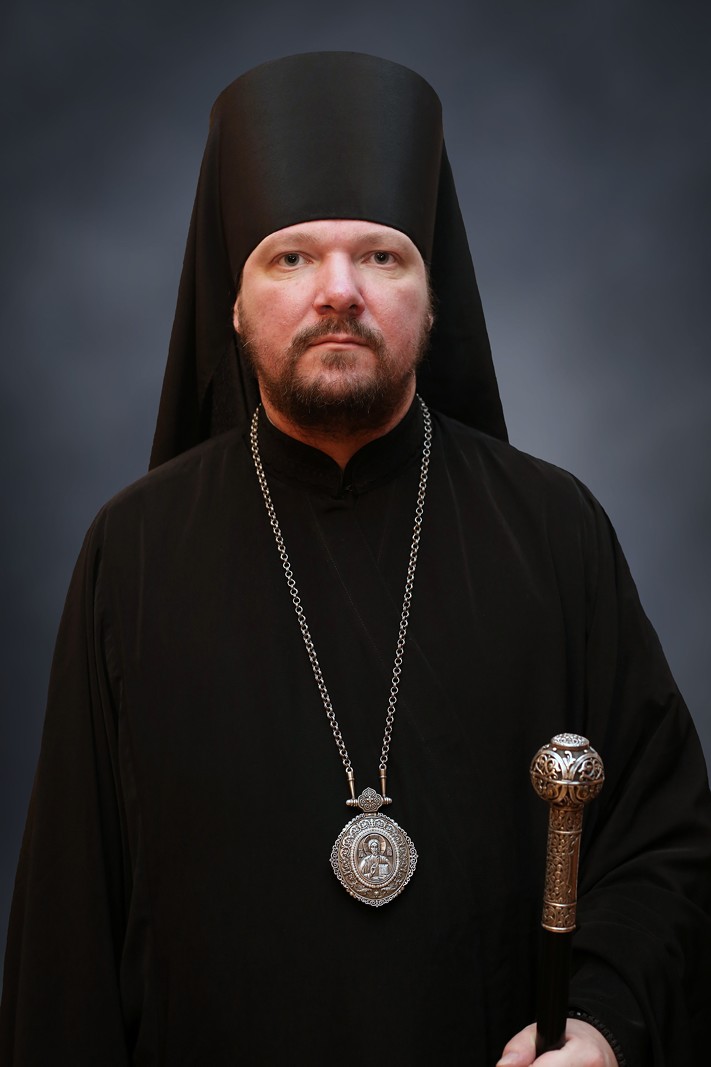
Under the chairmanship of His Eminence Justinian, Archbishop of Naro-Fominsk, clergy and lay delegates were able to deliberate on important key issues in the life of the Patriarchal Parishes in the USA. This Special Convocation held in Passaic, is different compared to the General Convocation of the Patriarchal Parishes held every two years, due to the time sensitive matters requiring discussion. The main issue on the Convocation’s agenda was to adopt the new By-Laws for the Patriarchal Parishes which would make them consistent with the legal requirements of our country, as well as with the Statute of the Russian Orthodox Church adopted in 1989.

Our St. George Parish was represented by its Rector, Archpriest Igor Tarasov and its Warden and Choir Director, Olga Roussanow.

His Eminence, Archbishop Justinian officially opened the Convocation, and stressed the importance of the issues that needed to be resolved. His Eminence expressed his gratitude to all those present, who have traveled long distances to provide their input in the lives of the Patriarchal Parishes.

Those gathered ultimately resolved the issues regarding the adoption of the new By-Laws of the Patriarchal Parishes in the USA, which required an entire Convocation to be held. The clergy and delegates approved the adoption of the new By-Laws.

The Convocation also elected and appointed new members of the Bishop’s Council of the Patriarchal Parishes in the USA. We can proudly inform that representatives of our Parish, Archpriest Igor Tarasov and Olga Roussanow were elected alternate members of the Bishop’s Council.

His Eminence officially closed the Special Convocation of the Patriarchal Parishes in the USA, and wished God’s unending Love, be with each and everyone present.

Later that evening, His Eminence Archbishop Justinian presided at the Paschal Vespers service concelebrated by clergy of the Patriarchal Parishes in the USA.

Next day, on Bright Saturday, clergy and faithful of the Patriarchal Parishes in the USA gathered to celebrate the Divine Liturgy. His Eminence Justinian, Archbishop of Naro-Fominsk presided at the solemn Divine Liturgy at Sts. Peter and Paul Cathedral in Passaic, NJ. At the conclusion of the Divine Liturgy, all clergy participated in a solemn procession around the cathedral. Upon the dismissal of the service His Eminence greeted all those for gathering not only at the Convocation the previous day, but for being able to pray and serve together with the clerics of Patriarchal Parishes.


HOLY PASCHA


On April 20 of this year 2014 all Orthodox Christians celebrated the greatest holy day, the Resurrection of our Lord Jesus Christ, Holy Pascha.
Celebration at St. George Church began at 11:30 PM on Saturday, April 19. Our Rector, Archpriest Igor Tarasov performed Midnight service at the Lord’s Tomb and transferred the holy Shroud to the altar.

Right after midnight joyful Paschal celebration began. The Rector assisted by the altar servers led faithful in the procession around the temple. At the end of the procession everyone stood in front of the closed church doors where Fr. Igor began Resurrection Matins and proclaimed the Easter greeting, “Christ is risen” in Slavonic, English, Greek and Georgian languages. Faithful responded and sung Paschal troparion. Then the priest opened the doors of the temple and faithful entered into the church.

After Matins Archpriest Igor Tarasov served the Divine Liturgy. The Gospel lesson on Pascha is traditionally read in several languages. This time faithful had an opportunity to listen the verses of the reading in Greek, Latin, Hebrew, Church Slavonic, English, Russian, Ukrainian, Georgian, Serbian, Romanian, Belorussian and Spanish. Following the Gospel reading Fr. Igor proclaimed catechetical sermon of St. John Chrysostom on Pascha.

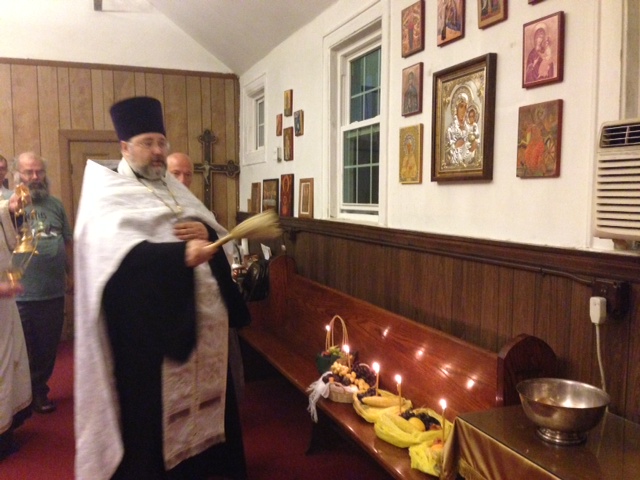
After the Liturgy dismissal the Rector greeted the parishioners on the occasion of the greatest Christian holy day, wished them to be blessed by the Risen Christ. Then he blessed Easter food.
Rector and parishioners continued their celebration of Pascha at the tables where they had an opportunity to enjoy delicious meals after the long time of Lenten restrictions.

 ХРИСТОС ВОСКРЕСЕ!              CHRIST IS RISEN!


Holy and Great Friday


On April 18, on the Holy and Great Friday we had two special services in our parish temple. This day is the most sorrowful day in Christian calendar. On Holy Friday we commemorate crucifixion of our Lord Jesus Christ, His death on the Cross, as well as His burial. St. George Church’s Rector, Archpriest Igor Tarasov served Vespers with the procession of the Shroud at 4:00 PM. At the end of this service holy Shroud had been solemnly carried out from the altar to the middle of the church and placed there for veneration.

At 7:00 PM Fr. Igor celebrated Matins on the Lord’s Tomb. Most of this service was performed before the Shroud placed in the middle of the church. After the Great Doxologion the Rector, altar servers and parishioners performed the procession around the church. The priest carried the holy Shroud resembling burial of the Lord.

At the end of Matins Fr. Igor reminded parishioners of the great and special significance of the Holy Friday and the services of that day. They are unique and unrepeatable, so faithful have to attempt to attend them and to come to the temple to venerate the holy Shroud. Unfortunately, many Christians may be busy with the affairs of their life, so they miss this important opportunity. Fr. Igor pointed out that celebration of the Resurrection of Christ can only be appropriate if we first sympathize with Him in His sufferings and death.